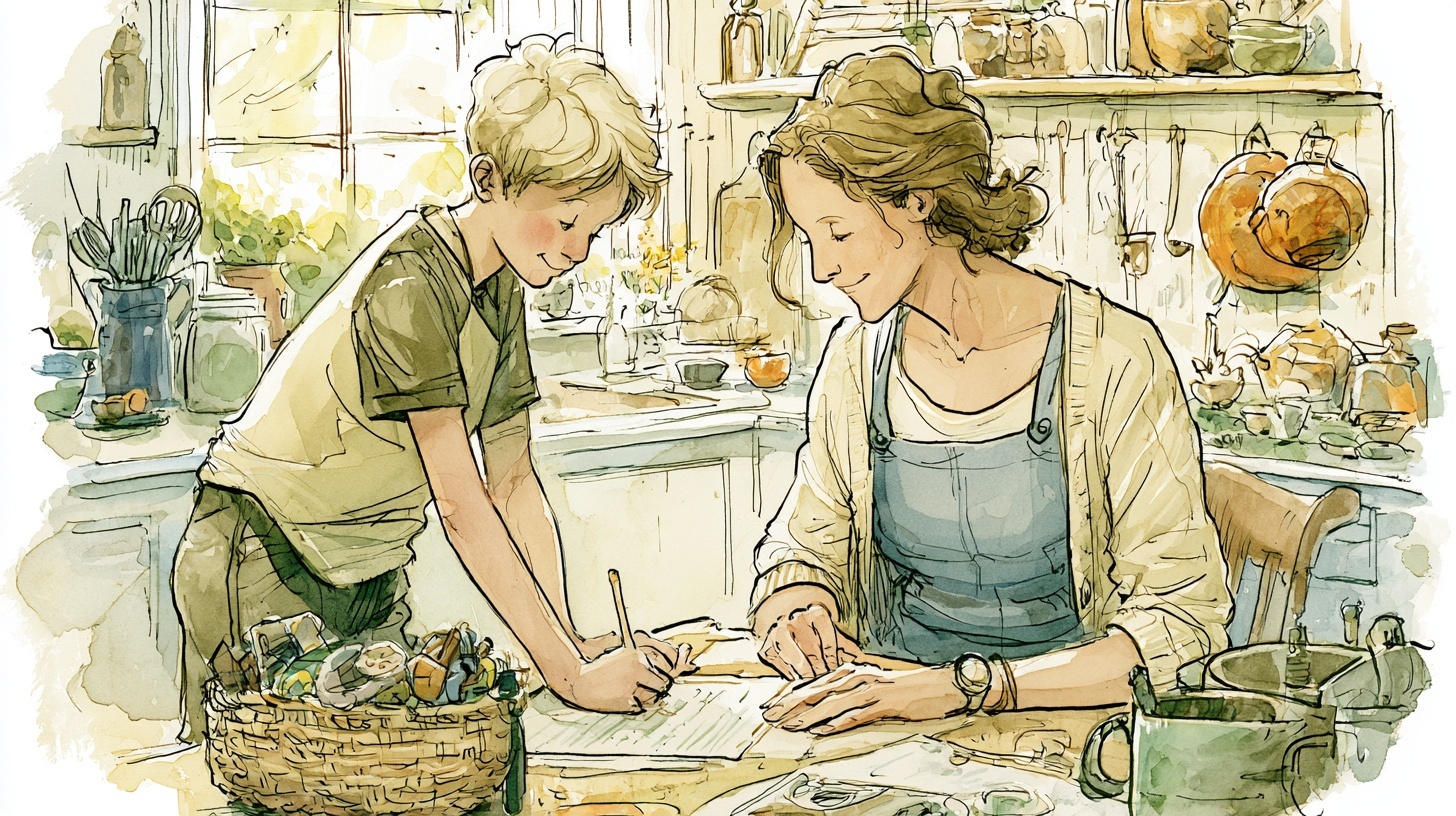
You chose the gentle one on purpose. Short lessons, beautiful books, time outside, nothing that looked like the classroom your child could not survive.
And it is going badly, in ways that make no sense, because this method was supposed to be the accommodating one.
Gentle is not the same as low demand
Here is the thing nobody tells you when you leave school: the homeschool philosophies that attract neurodivergent families are gentle in tone and often quite demanding in structure. Warmth is not the same as low demand, and a method can be kind, unhurried, and beautifully designed while still asking for exactly the thing your child cannot currently produce.
None of what follows is a criticism of these approaches. They are good approaches. The problem is that they were designed around a fairly typical learner, and the adaptations are rarely written down, so parents conclude they are doing it wrong.
Charlotte Mason
The most common choice among homeschooling families, and the one with the sharpest collision points.
Narration. After a single reading, the child tells the passage back in their own words. It is the heart of the method, and it is also a simultaneous demand on working memory, receptive language, expressive language, and performance on request. A child with a language disorder, ADHD, or slow processing can understand a passage completely and produce almost nothing when asked to narrate it. That is not a comprehension failure, it is a retrieval and production failure, and it gets misread constantly.
What helps: separate the two demands. Accept nonverbal narration, pointing to the illustration, acting it out, ordering three picture cards, drawing it. Shorten the span to a paragraph. Offer a starting phrase rather than an open question, so "the fox was" instead of "tell me what happened." Take one word and expand it back gently. Let them narrate to a pet or a recorder, since the audience is part of the load.
Habit training. Consistent daily habits, built deliberately. For a demand avoidant child, a habit is a recurring instruction with a name, and naming it is often what makes it impossible. Build the same routines without announcing them as habits, and let sequence do the work that instruction was doing.
Short lessons. Genuinely helpful for attention. The catch is that they require frequent transitions, and for a child who struggles to shift attention, six transitions can cost more than one longer block would have.
Living books. Rich language, long sentences, older vocabulary. Wonderful for a verbal child, punishing for a child with receptive language difficulty. Audio alongside the text helps, as does reading the same book more than once.
Waldorf
Rhythm, imagination, delayed academics, handwork, and a strong emphasis on the teacher's presence and modeling.
The collisions are usually around imitation, imagination on demand, and pacing. Waldorf leans heavily on children learning through copying the adult, which asks for sustained attention to another person and a willingness to follow rather than direct. Main lesson books require significant fine motor output, which is difficult with dysgraphia or coordination difficulty. And the emphasis on entering an imaginative world can be a poor fit for a concrete, literal thinker who finds it genuinely uncomfortable.
What helps: keep the rhythm and drop the imitation requirement. Allow typing or dictation for main lesson content. Let a literal child engage literally rather than treating that as something to be drawn out of them.
Classical
Memorization, recitation, structured stages, and eventually formal logic and rhetoric.
The grammar stage rests on memorization and reciting aloud, which is a direct hit for a child with retrieval difficulty, a stutter, or selective mutism. Recitation in particular is performance, and performance is where anxiety concentrates. The written output in later stages is heavy.
What helps: separate knowing from performing. Let recitation happen privately, in writing, or with the text visible. Recognition tasks rather than recall tasks, so choosing the right answer rather than producing it cold.
While you're here, take the guide
What's Underneath is free: the three body-state triggers under most meltdowns, what to say in the minute before it tips over, and how to reset afterward.
You'll get the guide instantly, plus five free articles in your inbox every week. Real challenges (meltdowns, school mornings, picky eating, big feelings) and how to actually handle them. Unsubscribe anytime.
Unschooling
Often chosen after a demand avoidant child has made everything else impossible, and frequently the right call.
The hidden demand is subtler. Unschooling asks the child to self-direct, which means generating an idea, initiating it, and sustaining it, and those are precisely the executive functions that are impaired in ADHD. A child with no ideas and no starting point is not refusing to learn, they are stuck at initiation. The other risk is a parent with their own executive function difficulty carrying the entire structural load invisibly.
What helps: strew rather than wait. Leave things out, start something yourself nearby and let them join, offer two options rather than an open field. Autonomy is preserved by narrowing the field, not by removing it.
The pattern underneath all four
Every method has a signature demand, and the question worth asking is not whether the method is good but whether its signature demand happens to land on your child's weakest system.
Charlotte Mason asks for language production. Classical asks for retrieval and performance. Waldorf asks for imitation and fine motor output. Unschooling asks for self-initiation.
If your child's profile happens to sit on that exact spot, the method will feel like it is failing when what is actually happening is a collision. The fix is almost never to abandon the approach. It is to strip that one demand out and keep the rest.
Mixing is allowed
The strongest homeschools for neurodivergent kids are usually not pure anything. Charlotte Mason's books with unschooling's freedom about output. Classical's structure with narration instead of recitation. Waldorf's rhythm with typed work.
Purity is a value in homeschool communities, and it is not a value your child benefits from. Nobody is auditing you.
How to tell a collision from a bad day
Note which specific activity produces the resistance, at what time of day, and how long it lasted. If the resistance is spread evenly across the day, that is capacity, and the answer is less of everything for a while. If it clusters tightly on one activity that is always the same one, that is a collision, and the answer is to change that one thing rather than the whole plan.
If the parent's own executive function is part of the picture, homeschooling when you cannot hold a routine is the companion piece. For demand avoidance specifically, low demand parenting and non-negotiables covers which demands are worth keeping, and developmental language disorder covers the language side that narration and recitation both depend on.
The collision only becomes visible when you can see which activity, which time, and how long. Log it in LightMap for two weeks and the answer usually declares itself, because one subject will be doing almost all of the damage.
You did not choose wrong. You chose a good method that happens to ask your child for the one thing they cannot hand over yet, and that is a much smaller problem than the one you have been imagining.
Sources: Charlotte Mason, Home Education and the subsequent Original Homeschooling Series; peer-reviewed research on working memory, retrieval, and expressive language demands in oral recall tasks (PMC); research on task initiation and self-directed learning in children with ADHD (PMC); Barkley on executive function and ADHD; PDA Society (UK) guidance on demand avoidance and educational approaches; peer-reviewed research on transcription demands in handwritten schoolwork (Berninger; PMC); research on receptive language difficulty and comprehension of complex text (PMC).
For education and reflection, not medical advice. Our terms
See what's underneath
Bring the school evidence, not impressions
LightMap reads your hard days together and gives you answers. Start with one moment today.
Start with 3 moments Not sure where to start? Ask me.Message Tara on WhatsApp. It really is me, I read everything and will personally respond.Click here to message Tara →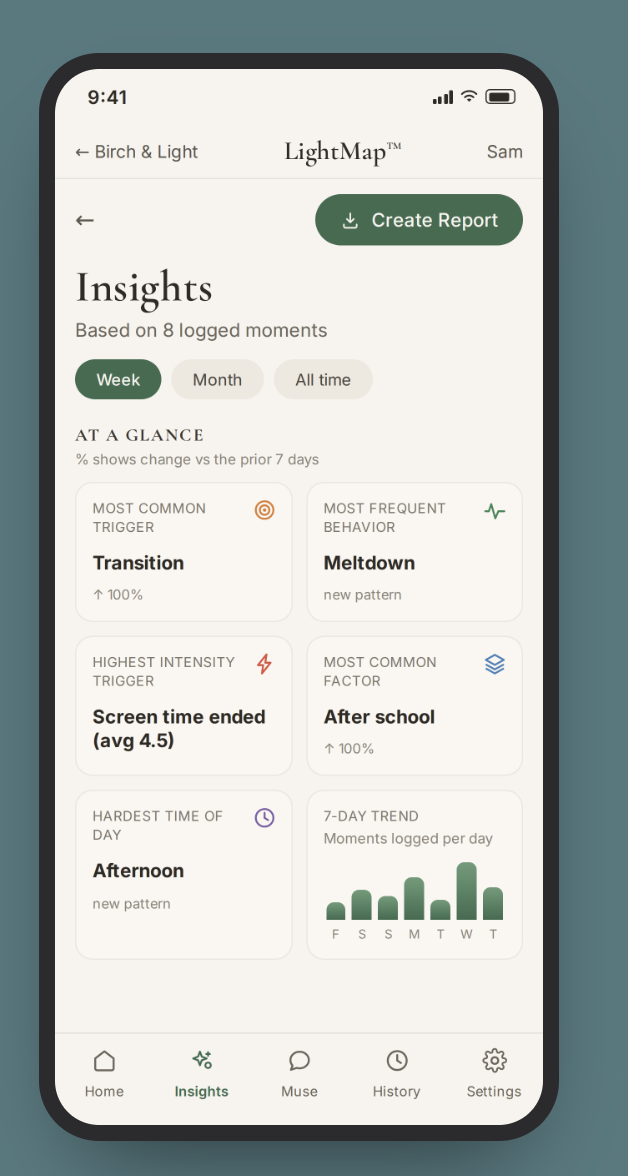
Part of the award-winning Birch & Light Method, honored with the Mom's Choice Gold Award for excellence in family resources.
A story to read together
Sometimes the easiest way in is a story you read side by side.
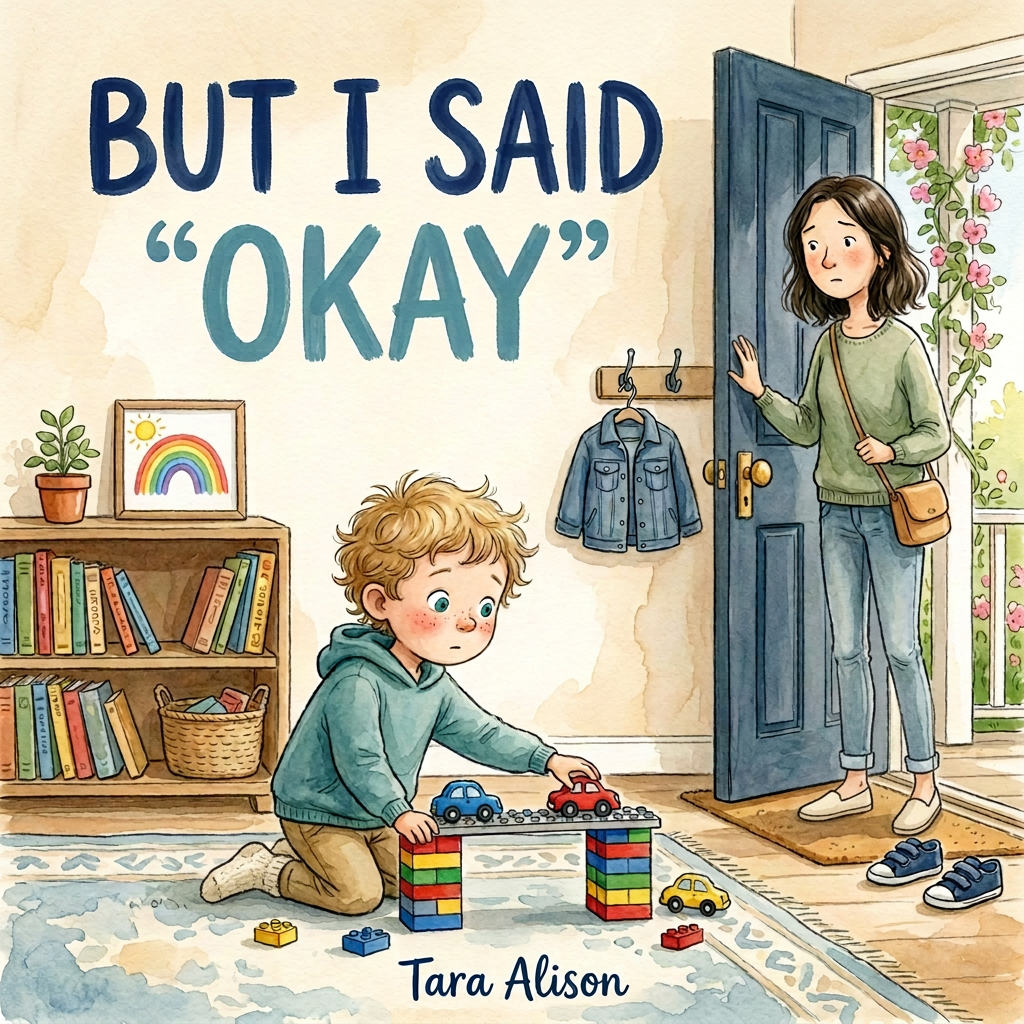 But I Said “Okay”
Owen always says okay. He means it every time. But his attention is still inside the bridge, the dragon, the cave, the music — until Mom realizes that helping him leave one thing matters more than asking him to start the next.
Read the story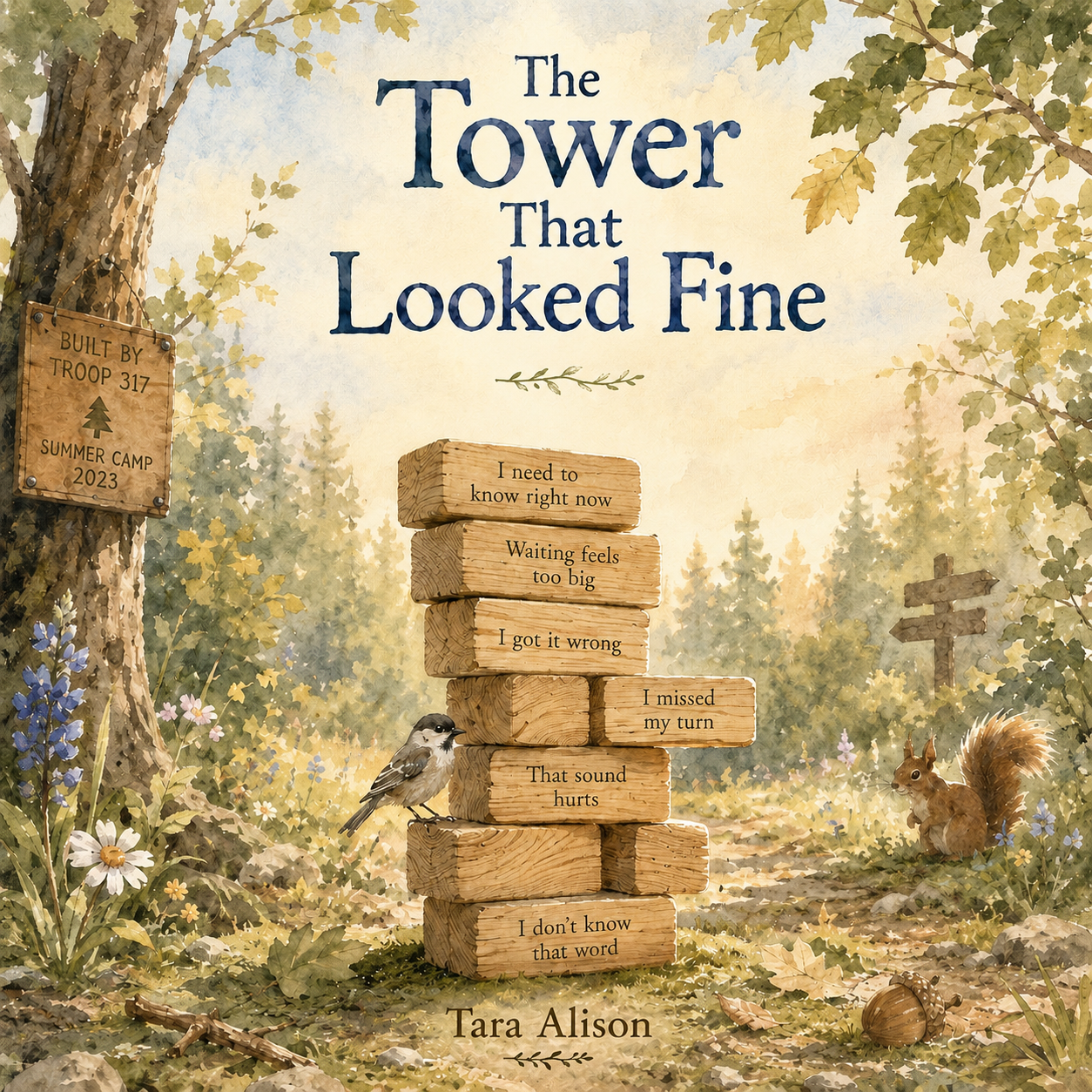 The Tower That Looked Fine
A tower in a quiet clearing tries to stay steady through every small thing nobody else seems to notice — until one tiny breath of wind causes her to fall, and a gentle hand begins to gather the blocks back.
Read the story
If today was one of those days
A few more from the library, free to read.
Researched and drafted with AI assistance, reviewed before publication. Editorial standards