For Therapists & Clinicians
Walk into every session knowing their week.
Your clinical judgment drives the care. LightMap gives you what happened at home between sessions, logged by the parent, organized and ready before you walk in.
Birch & Light is not a clinical tool and does not diagnose, treat, or replace therapeutic care. It is designed to complement the work you are already doing with families.

For Your Practice
What LightMap brings to your work
The week in one report
Moments, intensity, how long each one lasted, triggers and what helped, timestamped by the parent. No more updates by text or five minutes before the hour ends.
The part you never see
Many children hold it together in your office and fall apart at home. The log shows you home, in the parent's own words.
Progress you can measure
Frequency, intensity and duration tracked week over week, so an hour-long meltdown becoming 45 minutes shows up as data, not an impression.
Hypotheses, not diagnoses
LightMap flags possible constructs from the logs, like intolerance of uncertainty or a demand-avoidant profile. You decide what to explore, confirm or rule out.
Medication changes alongside behavior
The care record shows current medications and recent dose changes next to the hard moments, which helps when you're coordinating with a prescriber.
Parents who follow through
Logging takes about a minute and never asks a parent what they did wrong. Small wins show up in the report, and that keeps parents engaged.
One record for the whole care team
Parents can upload evaluations and plans, and share a School Report or an IEP or 504 Report, so home, school and your office work from the same history.
What You Receive
Know what happened at home before the session starts.
Parent updates usually arrive by text, by phone, or at the end of a session. LightMap puts the week in one report: what happened, when, how intense, how long, and what helped.
Therapist summary · before the session
Maya
Nov 3 - Nov 10, 2026
Home observations logged by the parent in LightMap
The week, day by day
Number = the most intense moment that day, as the parent rated it. Time = how long it lasted.
Moments
6
▼ 8 last week
Avg intensity
3.2 / 5
▲ 2.6 last week
Longest moment
15-30 min
same as last week
Hardest time
Afternoon
4 of 6 moments
Moments per week, last 5 weeks
What changed since last week
To explore in session
- 1Afternoon overload after school pickup.
- 2First time logged: hiding under the desk.
In the parent's words
Hardest moment: Monday, Nov 9, intensity 4, lasted 15-30 min. Trigger: transition, change in routine.
She saw the car line was different today and froze at the door. Wouldn't get in for ten minutes. Once home she went straight under her desk.
Questions the parent wants to ask
- ?Is the car line change the trigger or the end of the school day?
- ?Should we warn her about schedule changes the night before?
Themes the parent is wondering about
Below this on page one: what helped, triggers and behaviors, ongoing context and a health snapshot. Page two holds the full log, the parent's context notes and the health record.
Sample report. All identifying information has been changed.
- Parents can generate and share a clean weekly report with you directly
- Observations are timestamped, tagged, and searchable
- Useful for co-parents, school teams, and other caregivers
- Private and parent-controlled — no third-party data sharing
Built on peer-reviewed methods
Observation. LightMap logging follows the ABC model (antecedent, behavior, consequence), the standard observation method in behavior analysis.
Bijou, Peterson & Ault. Journal of Applied Behavior Analysis. 1968;1(2):175-191.
Parent first. Every story starts with the parent, because decades of parent training research show that what a parent learns changes a child's behavior.
Kaminski, Valle, Filene & Boyle. Journal of Abnormal Child Psychology. 2008;36(4):567-589.
Story. The stories draw on therapeutic storytelling research, which uses narrative to help children recognize and name their own experience.
Montgomery & Maunders. Children and Youth Services Review. 2015;55:37-47.
Shaped by clinicians. The LightMap pre-session report and medication log were built on feedback from a practicing therapist.
Created by Tara Alison. BA in Sociology. Certified Coach. Current Practice in ADHD, Harvard Medical School continuing education. The Birch & Light Method holds a Mom's Choice Gold Award.
Research status. The methods above are peer reviewed. Birch & Light was selected for NSF I-Corps at Rutgers, the National Science Foundation's program for innovators bringing new technology to market, where clinicians and families are interviewed about what they need. A research study with university faculty is in development.
Framing It for Families
How to recommend Birch & Light to a family.
Language that works
- A psychoeducational resource that supports what we're working on together
- A way to build shared language at home around what your child is experiencing
- A between-session tool that helps you stay connected to the themes we're exploring
- A way for your child to feel seen without feeling examined
- Something that meets your child where they are, in their world
Language to avoid
- A therapy tool or clinical intervention
- A treatment for anxiety, sensory processing, or any diagnosed condition
- A replacement for the work we're doing in session
- Evidence-based in a clinical research sense
- Something that will fix what your child is going through
For the Families You Serve
Story as the entry point. Understanding as the goal.

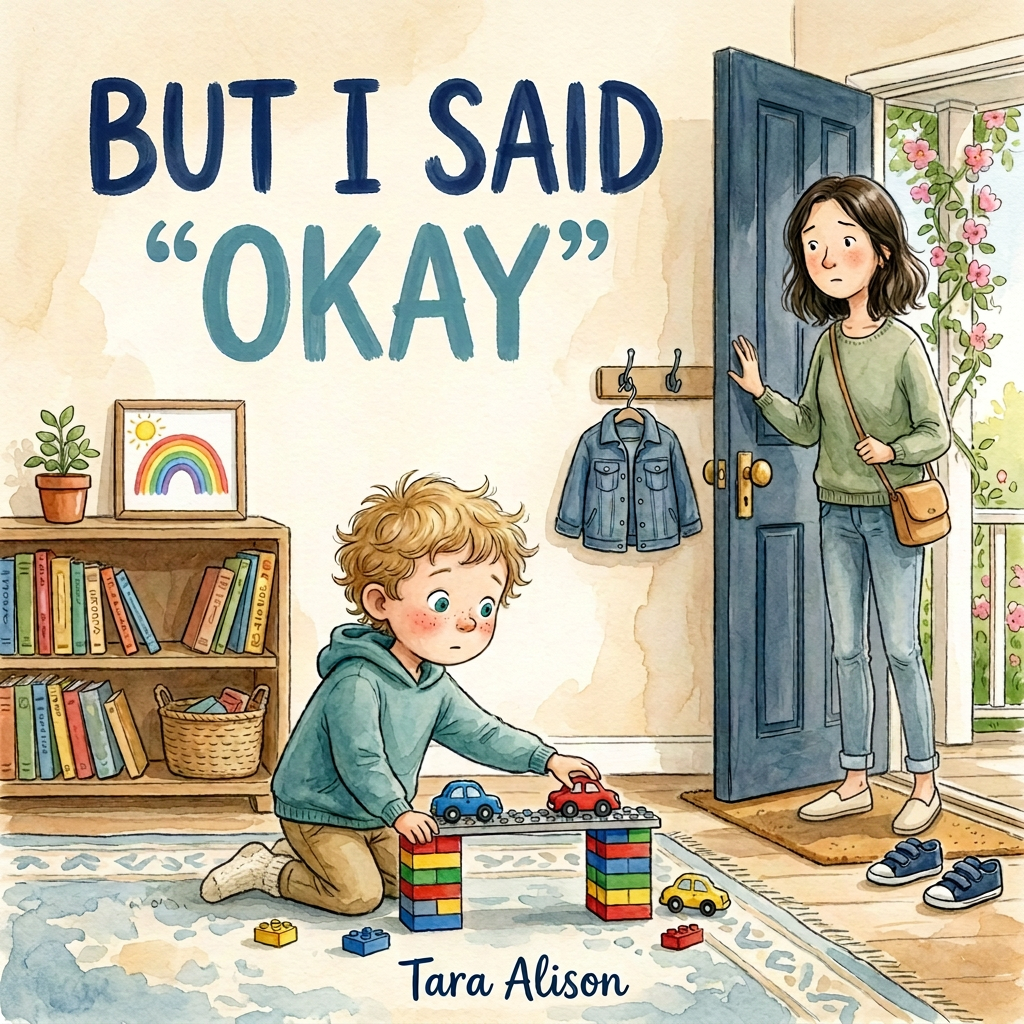

Each Birch & Light story is written to gently mirror a child's emotional experience — separation anxiety, big feelings, sensory overwhelm, social difficulty — without naming it clinically. The story gives a child the picture. The tools that surround it give the parent the language.
See the full Birch & Light MethodFor Professionals
Free access for professionals
We'd love for you to experience the Birch & Light library firsthand, free: the stories, podcasts and music. Email us with your name, role, and organization, and we'll set you up with a sample LightMap account so you can see what families share with you.
Free for you
The library is free for professionals, and every report a family shares with you is free to read. Include your name, credentials, role, and organization.
Request accessFree to start for families
Families start free too: 7 days, no card.
Every family you serve
Want Birch & Light for every family in your practice or program?
Ask about licensingA note on HSA & FSA coverage
Some families may be able to use HSA or FSA funds for Birch & Light when it is recommended as part of a child's emotional wellness support. A written recommendation from a therapist, pediatrician, or other licensed provider can support a family's reimbursement request with their plan administrator. Every plan is different — we encourage families to check with their provider.
A note on clinical positioning
Birch & Light is a psychoeducational storytelling resource. It is informed by developmental psychology, attachment theory, and emotional regulation research, and is created by a certified coach and parent with deep lived experience supporting children through emotional and behavioral challenges.
It is not a clinical tool, does not carry clinical claims, and is not intended to diagnose or treat any condition. It is designed to complement the work of therapists, counselors, pediatricians, and other professionals who support children and families — not to replace it.
If you have questions about how Birch & Light content is developed or reviewed, we're happy to share more. Get in touch.
Get Started
See what a parent can share with you.
Open the full sample report, or request professional access to explore LightMap with a sample account.