
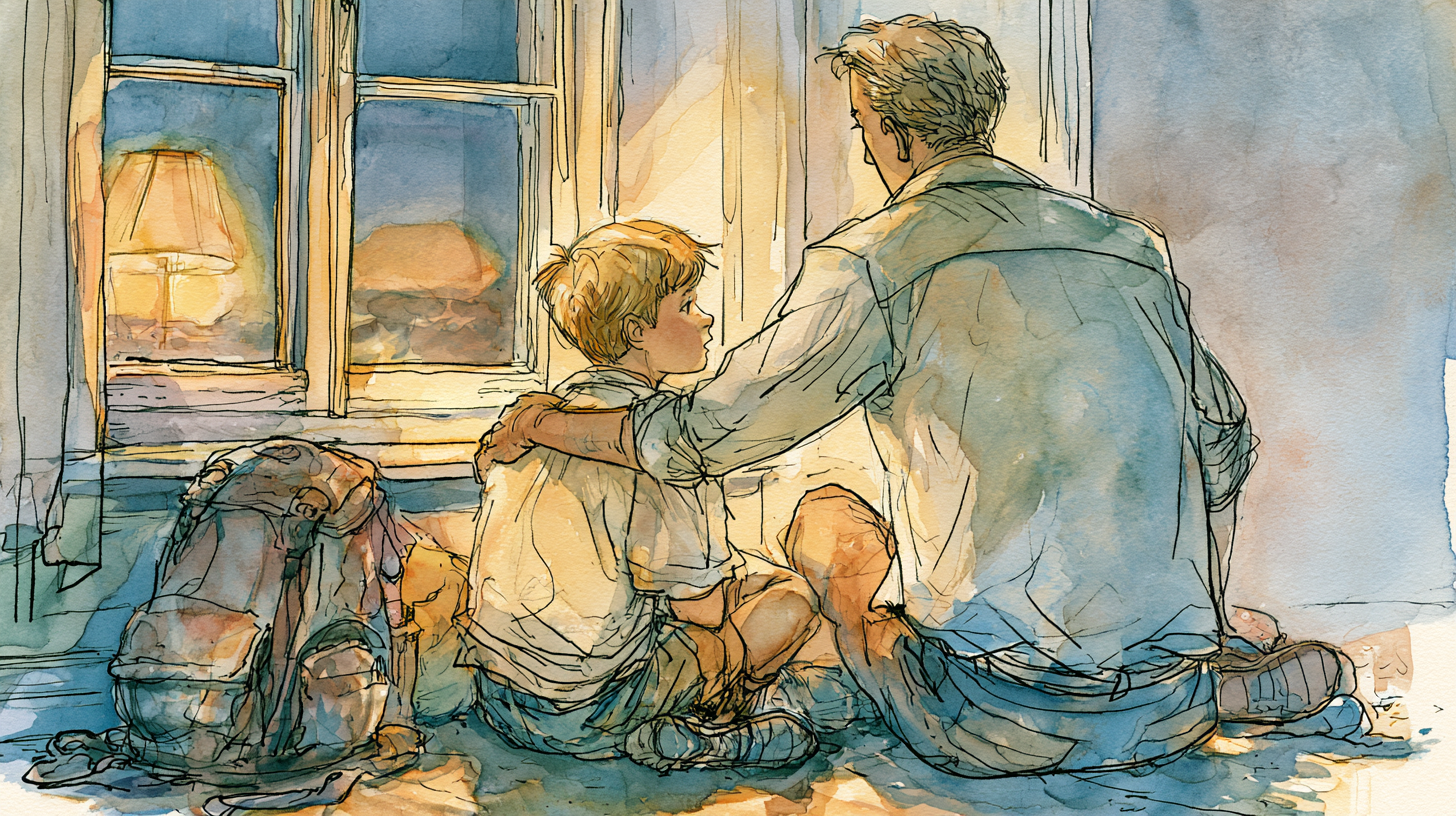
You sit down together with something perfectly reasonable, a worksheet or a few letters, and within four minutes it has become a standoff. She is under the table, or crying, or simply not moving, and you are further into a fight than you meant to be about something that was supposed to take ten minutes.
This happens in nearly every home learning setup at some point, and it happens faster at home than at school for reasons that have nothing to do with your child being difficult or you being bad at this.
Why home is harder than school for this
At school, the work comes from a system. It is what everyone is doing, at a time nobody chose, in a place built for it. There is no relationship at stake and very little to gain by refusing, because the whole room is doing it anyway.
At home, the work comes from you. It is one person asking another person, in the place where she is supposed to be able to relax, with no other children making it feel inevitable. Every request is personal, and every refusal is aimed at someone she loves.
That is the whole difference, and it explains why a child who complied at school digs in at home. She is not comparing this to school. She is comparing it to what home used to be.
The trap that makes it permanent
Here is the pattern that turns an ordinary bad morning into a standing problem.
She refuses. You hold the line, reasonably, because caving seems like it teaches the wrong thing. It escalates. Eventually someone bigger steps in, or a consequence lands, and she does the work.
It worked, so it gets used again. And what she learns over a few weeks is not that schoolwork is important. It is that schoolwork is the thing that makes the adults go serious, and that her mother's requests do not really count until somebody else backs them up.
That second lesson is expensive. It costs you authority in the moment, and it costs you the association between learning and safety at the very age when that association is being built.
Ask what the refusal is made of
Refusal is a single behavior with several different causes, and the fix depends entirely on which one you have.
The work is too hard. Obvious, and often invisible, because a child who cannot do something will usually refuse rather than admit it. Watch what she does when the task is clearly within reach.
The work is boring. Also common and also disguised as defiance. A four year old asked to trace letters she can already write is not being difficult, she is being reasonable.
The physical demand is the problem. This is the big one at four and five. Cognitive readiness and hand readiness run on separate clocks, and plenty of children who can read fluently do not yet have the shoulder, wrist, and finger strength for sustained writing. Pencil work hurts, or is exhausting, and refusing is the only available response.
Being asked is the problem. For some children, particularly those with a demand avoidant profile, a request registers as pressure regardless of content. Those children will refuse things they actively want to do, which is the tell. Elliot's Paths is written for exactly this, a boy whose no arrives before he has had any chance to choose, and it is often the first thing that lets a child explain what is happening to them rather than being told what they are doing.
She is out of capacity. Hungry, tired, coming down from something. The same task that worked yesterday is impossible today, and the variable is not motivation.

There's a story for this exact struggle
Until I Don't
Rosie shines at dance, at school, with neighbors. At home, the smallest thing can tip her over. One quiet hallway moment helps her family finally find language for the part of her nobody else sees.
Free to read. You'll also get five free articles a week. Unsubscribe anytime.
What to change first
Before technique, change three things.
Take the other parent out of enforcement. If schoolwork is the thing that summons a second, sterner adult, learning is now attached to conflict. Whoever is teaching should also be the one who lets it go. This matters more than any curriculum decision you will make this year.
Stop the formal work for a while. Not as surrender. Because at four or five you are not behind on anything, and continuing to fight over it is buying you a poor association with learning at full price. Two or three weeks of no table work costs you nothing academically and often resets the whole dynamic.
Separate the skill from the paper. Almost everything you want at this age can be done without a worksheet. Counting things that matter, sounding out words on signs, math with actual objects, writing with chalk on a wall or a stick in dirt. The learning is the point. The format is negotiable.
Before you go, grab the free guide
The 3 body-state triggers under most meltdowns, a script for the 30 seconds before it tips over, and a reset for after. Free.

You'll get the guide instantly, plus five free articles in your inbox every week. Real challenges (meltdowns, school mornings, picky eating, big feelings) and how to actually handle them. Unsubscribe anytime.
Then make the demand smaller than the refusal
When you do come back to something structured, shrink it until it is smaller than her resistance. Two minutes rather than fifteen. One line, not a page. Do it alongside her rather than assigning it, because for young children the presence of the adult is often the entire difference between possible and impossible.
Offer real choices, since a child choosing between two versions is participating rather than complying, and that alone dissolves a lot of resistance. Let her stop before she wants to, so the memory of the activity ends well.
And stop while it is going fine. Ending on success is worth more than finishing the page.
When refusal is worth a longer look
Most of this is ordinary and passes. Some patterns are worth noticing rather than managing.
If she refuses things she genuinely wants and enjoys, including outings and treats, that is different from disliking schoolwork. If the refusal comes with real panic rather than stubbornness. If she is losing skills she previously had. If avoidance is spreading into everything rather than staying with the table. Or if the physical difficulty with writing is dramatic compared to how easily she does everything else.
None of those mean something is wrong. They mean the thing in front of you may not be about the worksheet, and that is worth understanding before you spend two years fighting the wrong battle.
If refusal turns out to be about pressure itself rather than the task, when a simple request feels like a threat covers what is happening underneath. And the difference between will not and cannot is the distinction that changes what you try next.
For her rather than for you, Elliot's Paths is a story about a child whose no arrives before he does, because the task in front of him looks like a hundred steps rather than one. It works just as well for a child with no diagnosis at all, and it gives her language for something she cannot yet explain.
Which tasks she refuses, what she had already done that day, and how long she lasted before it went wrong: three things, logged in LightMap for a couple of weeks, and the reason usually shows itself.
Sources: Ross Greene, Collaborative and Proactive Solutions; PDA Society (UK) on demand avoidance; peer-reviewed research on parent-as-teacher role conflict and its effect on task compliance (PMC); research on task initiation difficulty in young children (PMC).
For education and reflection, not medical advice. Our terms
See what's underneath
Bring the school evidence, not impressions
LightMap turns scattered hard days into a pattern you can see. Start by logging one moment tonight.
Log today's hard moment, no account needed

Part of the award-winning Birch & Light Method, honored with the Mom's Choice Gold Award for excellence in family resources.
A story to read together
Sometimes the easiest way in is a story you read side by side.
- Until I Don't
Rosie shines at dance, at school, with neighbors. At home, the smallest thing can tip her over. One quiet hallway moment helps her family finally find language for the part of her nobody else sees.
Read the story 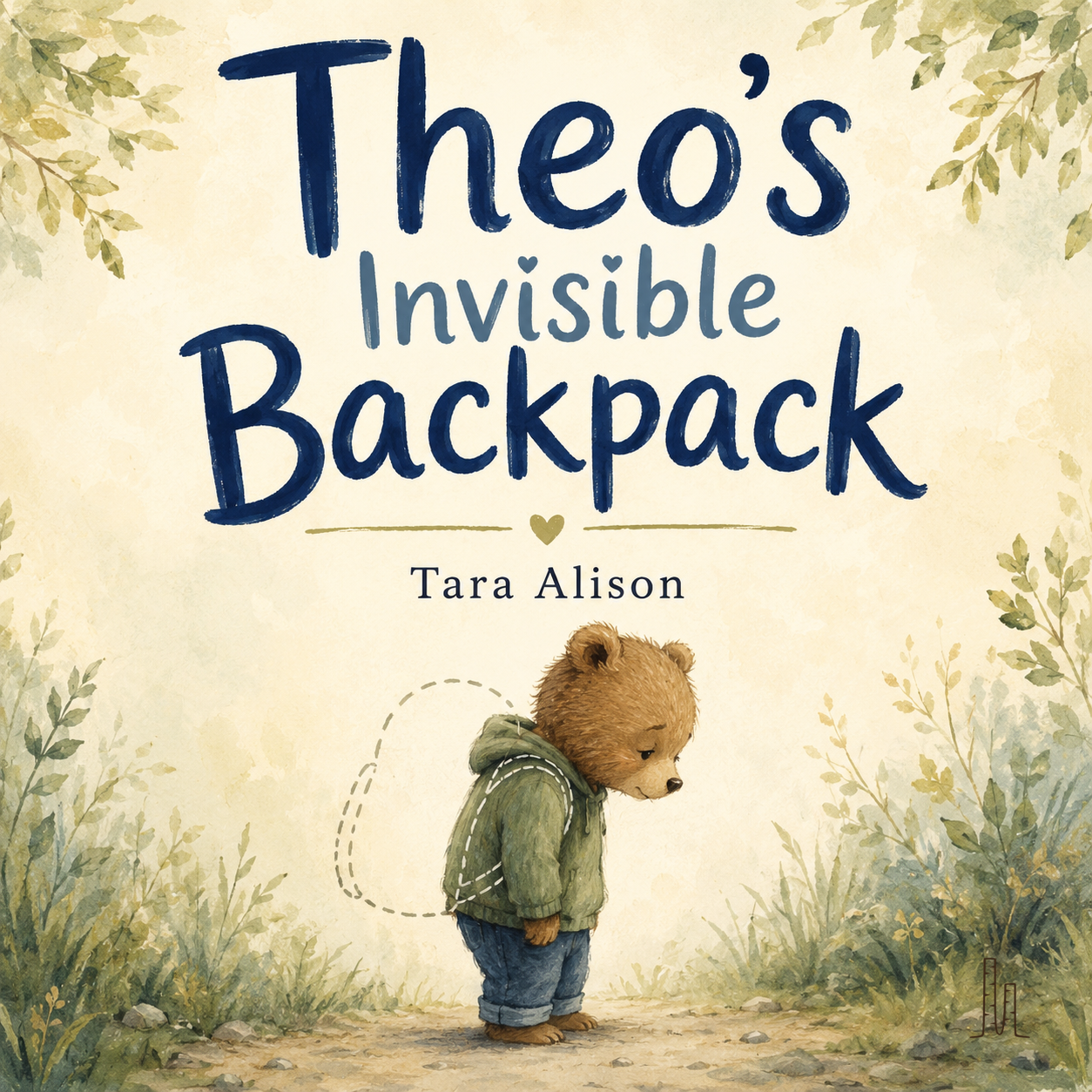 Theo's Invisible Backpack
Theo carries every hurtful word as a stone in an invisible backpack — until the day his mama really sees how heavy it has become, and they begin sorting the stones together.
Read the story
Researched and drafted with AI assistance, reviewed before publication. Editorial standards