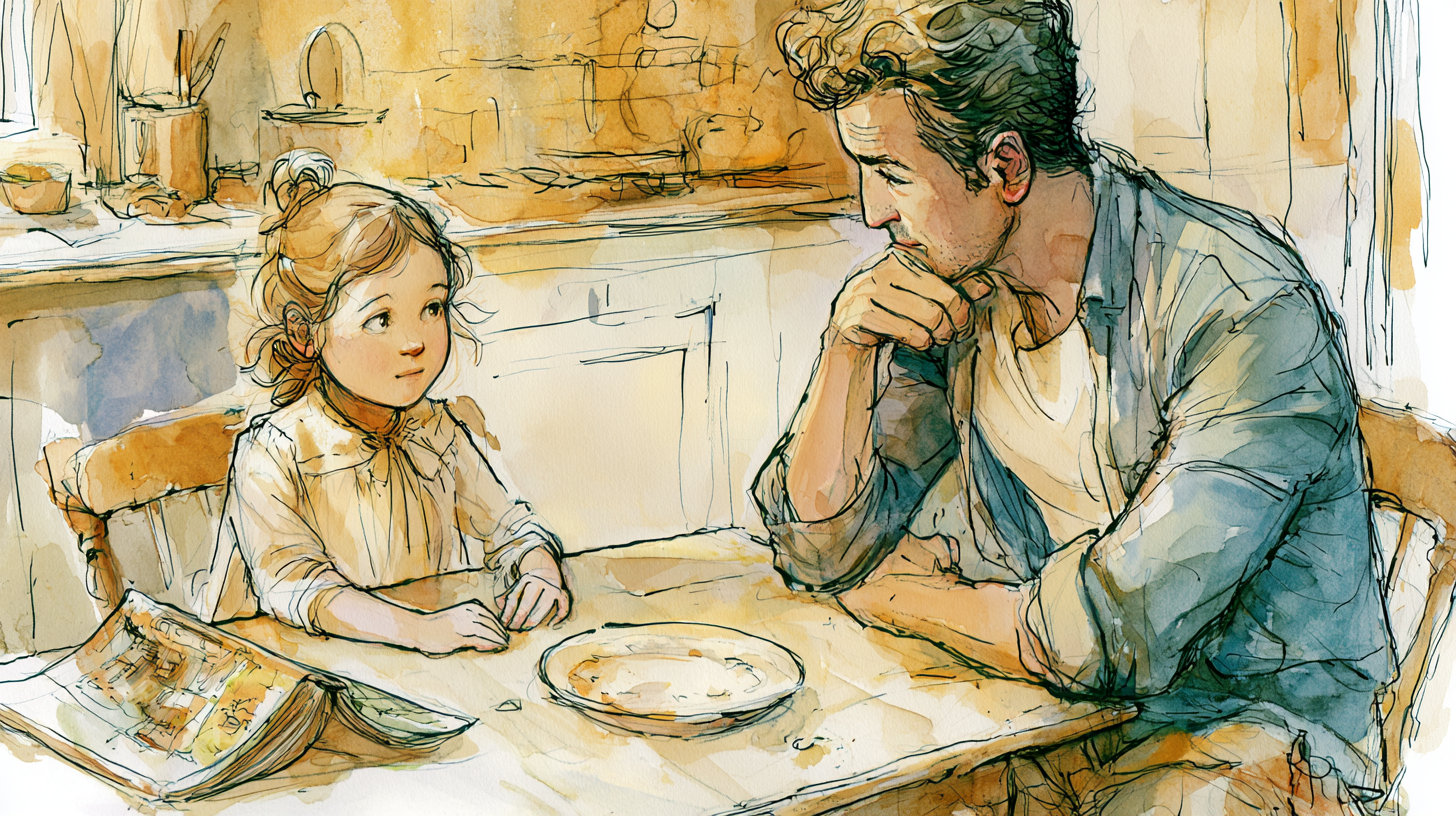
The best books for sensitive eaters treat the child's strong reaction to food as real instead of ending with a brave bite. Look for stories that validate the reaction, explore why a food feels so big, and give a child words for it. Taste Bud 17 is our picture book built that way.
Most picky-eater books end with the kid taking a brave bite and discovering they love it. Cute on the page. Frustrating in real life — because if your child's experience of food is genuinely bigger and louder than everyone else's, that ending isn't relatable. It's another reminder that something is wrong with them.
Sensitive eaters don't need a book that teaches them to override what their mouth is telling them. They need one that takes it seriously.
Why most "picky eater" books miss the point
The classic plot — refuses food, tries it, loves it — subtly teaches two things: that the original refusal was silly, and that bravery means ignoring discomfort. For a child whose mouth genuinely registers certain foods as too much, that message lands as shame.
Sensitive eating isn't a preference. It's how their body is experiencing the food. The right story doesn't try to fix the experience — it helps the child understand it.
What does a good book for a sensitive eater do?
- Validates the reaction. The character's strong response is treated as real, not bad behavior.
- Stays curious about the body. Why did this one taste so big? The story explores instead of correcting.
- No "happy bite" ending. The win is feeling understood, not eating the food.
- Gives the child language. So next time they can say "this one's too big for me" instead of melting down.
One we made for sensitive eaters
Taste Bud 17 is a picture book set inside the mouth. Most of the taste buds have it pretty easy — ice cream tastes like ice cream, noodles taste like noodles. But one taste bud, number 17, tastes everything as hot sauce. Strawberries: hot sauce. Warm cocoa: extra hot sauce. Candy cane: somehow, still hot sauce.
It's a story about being the one whose experience of the world is louder than everyone else's — and learning that it doesn't make you broken.
It's written for kids ages 3–11 who:
- Refuse foods other kids eat without thinking
- Gag, cry, or shut down at the dinner table
- Get called "picky" and have started to believe it
- Feel like their reactions to things — food, sounds, clothes, places — are bigger than other kids' reactions
The story doesn't end with the child trying the food. It ends with the child being understood — which, in our experience, is what eventually makes new foods possible.
While you're here, take the guide
What's Underneath is free: the three body-state triggers under most meltdowns, what to say in the minute before it tips over, and how to reset afterward.
You'll get the guide instantly, plus five free articles in your inbox every week. Real challenges (meltdowns, school mornings, picky eating, big feelings) and how to actually handle them. Unsubscribe anytime.
How do you use it at the table?
- Read it on a calm night, not right before a hard meal.
- Use the language from the book at mealtimes: "Is this one a hot-sauce day?"
- Let your child be the expert on what their mouth is telling them.
- Drop the bite. Keep the book.
What the research says about pressure at the table
The advice to drop the bite has research behind it. A study titled "Finish your soup" tested pressuring young children to eat and found counterproductive effects on how much they ate and how they felt about it. Separate work on food selectivity in autistic children links it to sensory sensitivity, which fits what parents of sensitive eaters report: the refusal is about how the food feels, not about defiance.
Find the patterns underneath the refusals
Hard mealtimes usually have patterns — time of day, who's at the table, what happened at school, how much sleep. LightMap (free for 2 weeks, then $12.99/month) helps you log a mealtime moment in about a minute and surface what's actually driving the hard meals. Most parents are surprised by what shows up.
Story plus pattern recognition is a deeply powerful combination. The book tells your child their experience makes sense. The data tells you the same thing.
Frequently asked questions
Is picky eating really a sensory issue?
Often, yes. For many kids, certain foods genuinely feel overwhelming in their mouth — too strong, too loud, too much. Reframing 'picky' as 'sensitive' usually changes how the whole family approaches mealtimes.
What age is Taste Bud 17 for?
It's written for ages 3–11. Younger kids love the imaginative inside-the-mouth world; older kids recognize themselves in the one taste bud whose experience of food is bigger than everyone else's.
Will reading a book actually help my child try new foods?
Not directly — and that's not the goal. The goal is to help your child feel less ashamed of their reactions, which lowers the stress at the table. Lower stress is what eventually opens the door to more foods.
Should I push my child to try the bite or back off?
Back off the bite, stay close to the child. Pressure usually wires foods more deeply into the 'unsafe' category. Exposure without expectation (the food is on the plate, no comment) tends to work better over time.
Can I track what's actually triggering food refusals?
Yes — LightMap lets you log mealtime moments and tag the context (which food, who's at the table, time of day, what came before). After 10–15 entries, the pattern usually surprises parents.
Sources: Peer-reviewed research on sensory-based food selectivity in children (Journal of the Academy of Nutrition and Dietetics; PMC); Ellyn Satter Institute, Division of Responsibility in Feeding; STAR Institute for Sensory Processing; research on oral sensory sensitivity and mealtime refusal in autistic and sensory-sensitive children (PMC). Primary sources: Cermak SA, Curtin C, Bandini LG. Food selectivity and sensory sensitivity in children with autism spectrum disorders. Journal of the American Dietetic Association. 2010, 110(2), 238-246. doi 10.1016/j.jada.2009.10.032. Galloway AT, Fiorito LM, Francis LA, Birch LL. "Finish your soup": counterproductive effects of pressuring children to eat on intake and affect. Appetite. 2006, 46(3), 318-323. doi 10.1016/j.appet.2006.01.019.
For education and reflection, not medical advice. Our terms
See what's underneath
Find the input before it becomes a meltdown
LightMap reads your hard days together and gives you answers. Start with one moment today.
Start with 3 moments Not sure where to start? Ask me.Message Tara on WhatsApp. It really is me, I read everything and will personally respond.Click here to message Tara →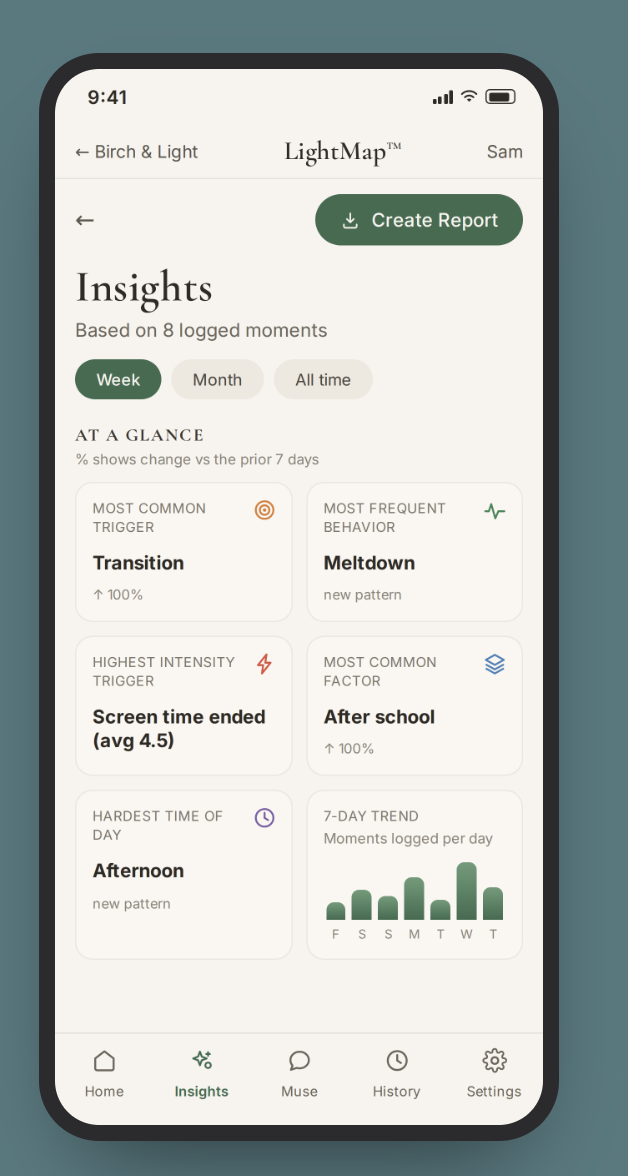

Part of the award-winning Birch & Light Method, honored with the Mom's Choice Gold Award for excellence in family resources.
A story to read together
Sometimes the easiest way in is a story you read side by side.
 Otto Filled Everything
Otto can't stop filling things with water. His family doesn't understand — until Grandma Willow helps them listen to what his body is actually asking for.
Read the story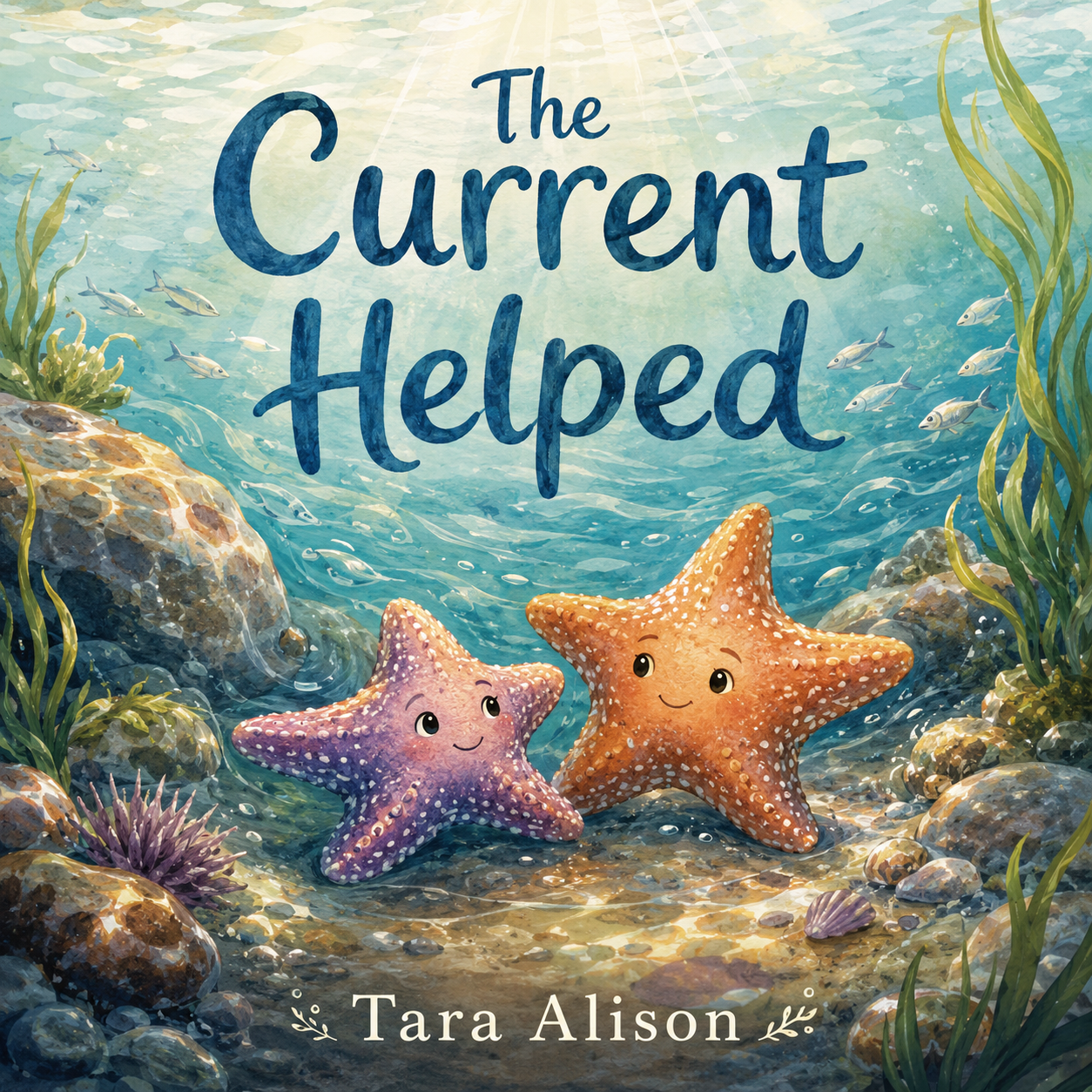 The Current Helped
After a hard day, a shifting tide pulls Miles free of his favorite rock. Papa Dean lets the current carry him too — and side by side, the moving water helps the feeling inside Miles begin to settle.
Read the story
If today was one of those days
A few more from the library, free to read.
Researched and drafted with AI assistance, reviewed before publication. Editorial standards