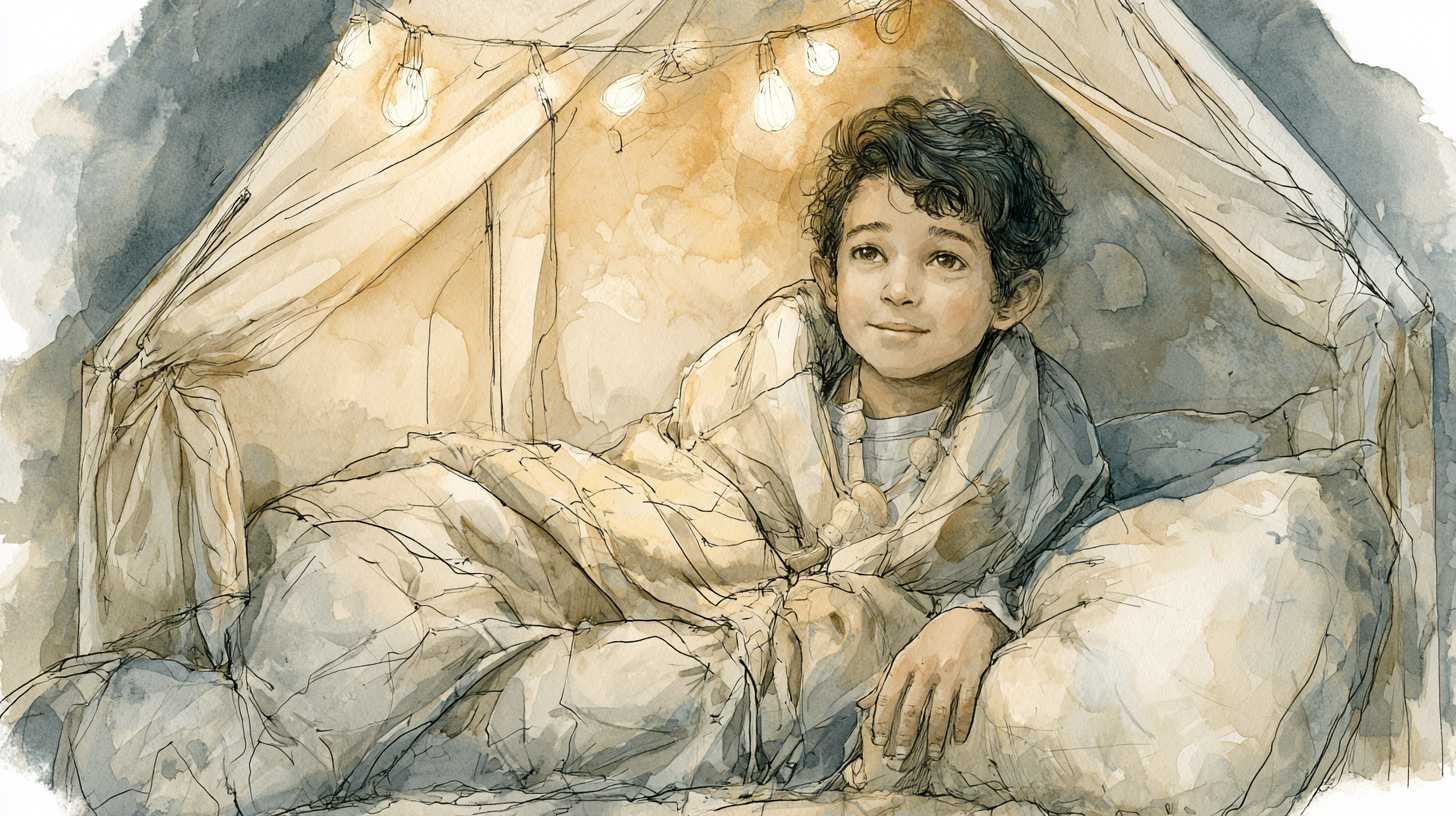
You finally get the beanbag, the fairy lights, the soft rug, the little tent in the corner of his room. You call it his calm-down corner, and the first time he is overwhelmed, he refuses to go anywhere near it.
This happens more often than not, and it does not mean the idea was wrong. It usually means the space was built around what looked calming to you rather than what his body actually needs when it is flooded.
What actually belongs in the space
- Deep pressure. A weighted blanket, a body pillow to squeeze between, or a small tent that presses in slightly. Deep pressure is one of the most reliably calming inputs for an overwhelmed nervous system.
- Movement. A mini trampoline, a wobble cushion, or simply floor space to roll and crash. A lot of kids cannot calm down sitting still, they need to move their way there first.
- Something to chew, squeeze, or bite. Chew necklaces, stress balls, theraputty. Oral and hand input is often the fastest route back to regulated for kids who seek it.
- Low light and low noise. A dimmer switch, blackout curtain, or noise-cancelling headphones do more work than any toy in the space, since sensory overload is frequently what tipped things over in the first place.
- One visual anchor, not ten. A single lava lamp, fidget, or sand timer to look at. A cluttered space with a dozen options asks a dysregulated brain to make choices it cannot make right now.
Why this works
A calm-down space only works if it targets the nervous system, not the behavior. A meltdown is not a decision a child is making, it is a body that has been overloaded and gone into fight, flight, or shutdown. Toys and games ask the thinking brain to engage, and the thinking brain is offline in that moment. Deep pressure, movement, and reduced sensory input speak to the body directly, which is why they work when talking, reasoning, or bribery do not.
How to introduce it so he actually uses it
- Practice when he is calm. Show him the space, let him explore it, use it together during ordinary downtime, not just crisis. A space he has never used when he was fine will not feel safe to use when he is not.
- Let him help build it. Even picking the pillow color or naming the space gives him ownership, which matters more than the actual contents.
- Never send him there. Invite, do not send. "Do you want to go to your space" is different from "go to your space," and the second one turns it into a timeout no matter what is in the room.
- Model it yourself. If you narrate your own overwhelm out loud, "I need a minute to breathe before I keep talking," he learns that stepping away to regulate is something everyone does, not something only he needs.
What turns a good idea into a bad one
The most common mistake is using the space as a consequence. The moment calm-down corner and time-out start meaning the same thing in his mind, he will resist it exactly when he needs it most, since nobody walks willingly toward a punishment.
The second is overloading it. A space with too many options becomes another decision to make, and decision-making is one of the first things to go offline during dysregulation. Fewer, well-chosen items beat a fully stocked sensory bin every time.
The third is requiring stillness or quiet once he is there. Some kids calm down by crashing, jumping, or even briefly yelling into a pillow. If the space demands he be calm to use it, it carries the same bind as being told to calm down in the first place.
While you're here, take the guide
What's Underneath is free: the three body-state triggers under most meltdowns, what to say in the minute before it tips over, and how to reset afterward.

You'll get the guide instantly, plus five free articles in your inbox every week. Real challenges (meltdowns, school mornings, picky eating, big feelings) and how to actually handle them. Unsubscribe anytime.
When a space is not enough
A calm-down space is one tool, not a full plan. If meltdowns are frequent, intense, or happening in places you cannot bring a beanbag, it is worth working with an occupational therapist who can assess what his nervous system is actually seeking or avoiding, and build a broader sensory diet that travels with him, not just a corner of his bedroom.
Where LightMap helps
Knowing which input actually helps him takes tracking, not guessing. A weighted blanket calms one kid and irritates another, movement helps some and overstimulates others. Logging what precedes a meltdown and what actually brought him back down over a few weeks turns a shelf of sensory tools into a short list of the two or three things that reliably work for your specific kid.
Every behavior is a clue.
Once you know what actually calms him, the space becomes worth building. Explore LightMap at birchandlight.com/lightmap.
Frequently asked questions
What age is this appropriate for?
Even a two or three year old can start learning to use a designated calm space, though at that age it works best with you right there beside him rather than as a place he goes alone. Independent use tends to develop gradually as he gets older and more practiced with it.
My child refuses to go to the space when upset. What now?
Refusal in the moment is common, especially early on, and it usually means the space has not been practiced enough during calm times or has picked up an association with being sent away. Bringing one item from the space to him, rather than asking him to go to it, can bridge the gap while that association fades.
Is it okay to use it in public too, like a car or a bag?
Yes, and this is often where it matters most. A small portable version, a chew item, noise-cancelling headphones, and a weighted lap pad in a bag, gives him access to the same tools outside the house, which matters since meltdowns rarely wait for a convenient location.
How do I know what to put in it if I am not sure what he needs?
Start broad with one item from each category, deep pressure, movement, oral or hand input, and reduced light or sound, then watch which ones he actually reaches for over a few weeks. What he gravitates toward tells you more than any general list can.
Sources: Peer-reviewed research on deep pressure stimulation and weighted blankets for arousal and anxiety in children (American Journal of Occupational Therapy; PMC); research on sensory rooms and calming spaces in school settings (PMC); research on stress physiology and the limits of verbal reasoning during acute dysregulation (PMC); American Academy of Pediatrics guidance on effective discipline and the appropriate use of time-out; STAR Institute for Sensory Processing.
For education and reflection, not medical advice. Our terms
See what's underneath
Find the input before it becomes a meltdown
LightMap turns scattered hard days into a pattern you can see. Start by logging one moment tonight.
Log today's hard moment, no account needed Not sure where to start? Ask me.Message Tara on WhatsApp. It really is me, I read everything and will personally respond.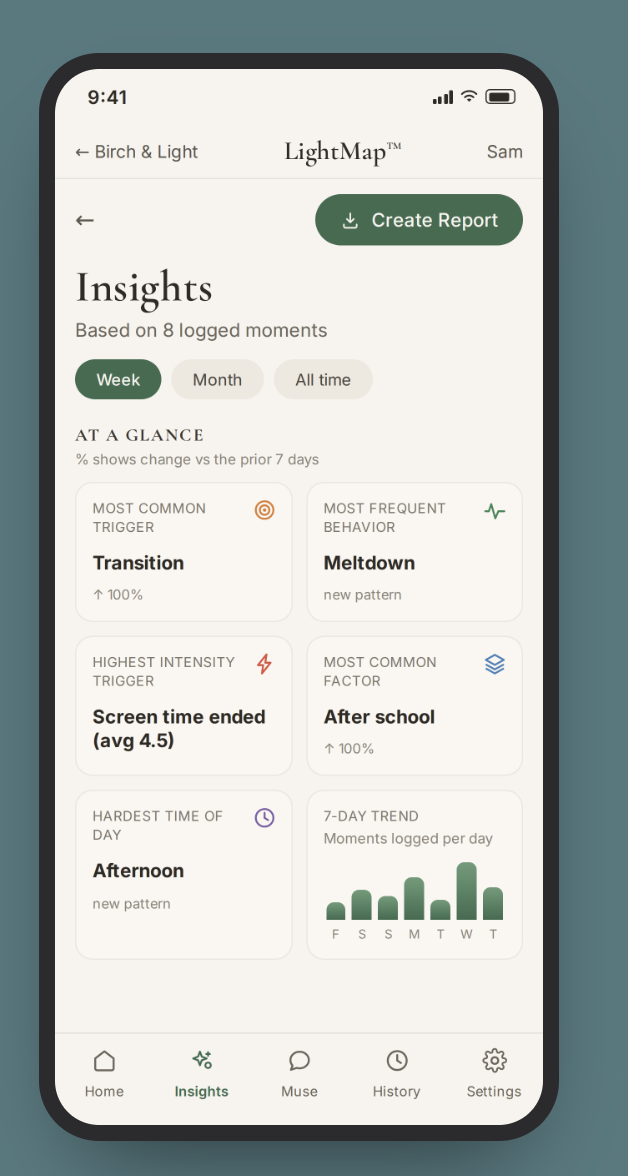

Part of the award-winning Birch & Light Method, honored with the Mom's Choice Gold Award for excellence in family resources.
A story to read together
Sometimes the easiest way in is a story you read side by side.
 Taste Bud 17
Taste Bud 17 feels everything more — and learns that big sensory feelings deserve the same care as everyone else’s.
Read the story Otto Filled Everything
Otto can't stop filling things with water. His family doesn't understand — until Grandma Willow helps them listen to what his body is actually asking for.
Read the story
Researched and drafted with AI assistance, reviewed before publication. Editorial standards