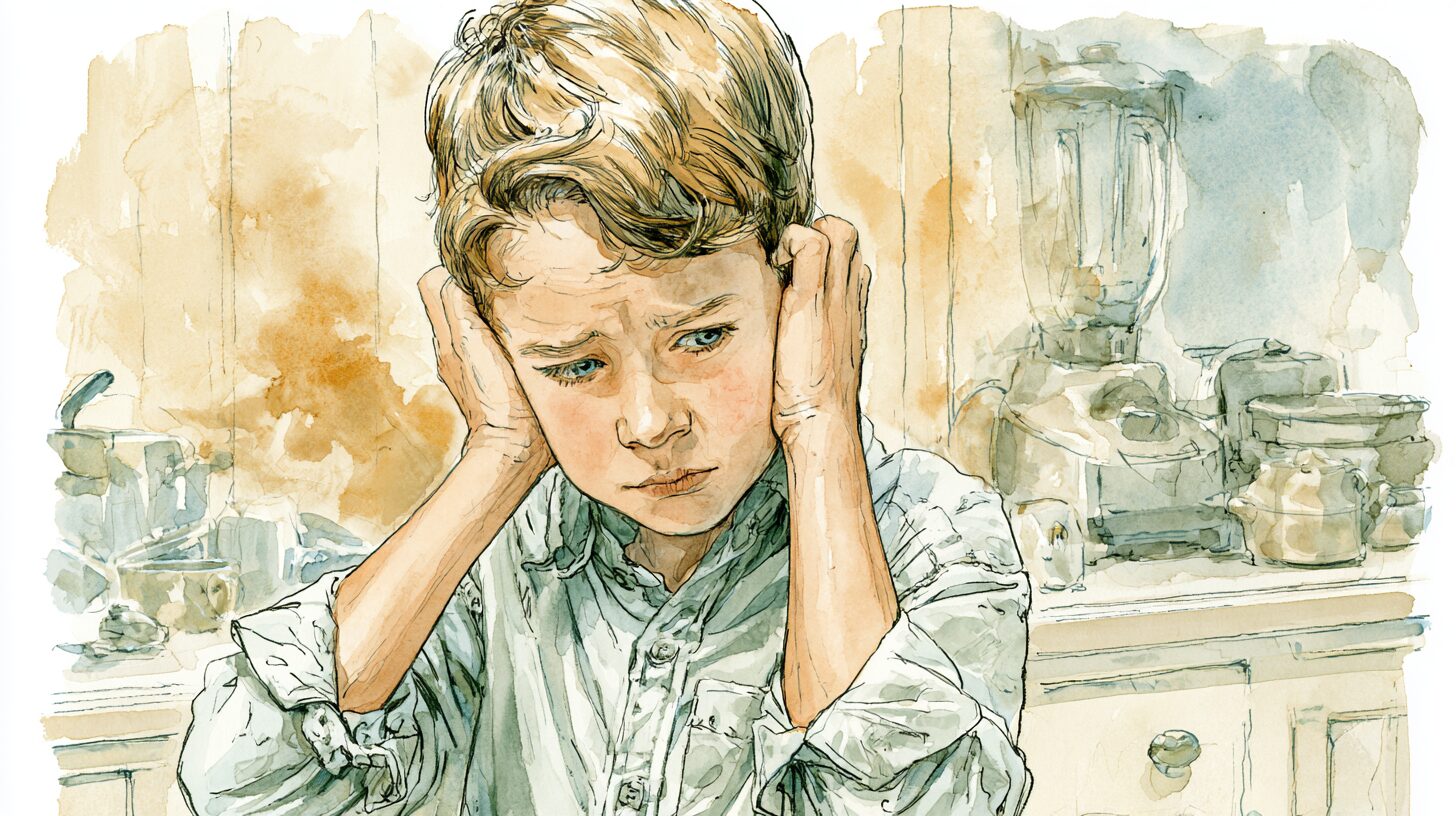
Chewing sounds trigger rage in some children because of misophonia, a strong, involuntary reaction to specific sounds, usually quiet, repetitive ones that other people make. The reaction is physiological, not manipulation or bad manners. Forced exposure makes it worse. Headphones, masking noise, and an easy exit make meals bearable.
Dinner has become the worst part of the day. He hears his sister chewing and something in him detonates. He screams at her, or he cries, or he leaves the table shaking.
He is not being dramatic and he is not being cruel to her. This has a name.
What is misophonia?
Misophonia is a strong, involuntary aversive reaction to specific sounds, usually quiet, repetitive, and human-produced. Chewing, swallowing, sniffing, throat clearing, breathing, pen clicking, keyboard tapping, cutlery on plates.
Triggers are not always the sound itself. The consensus definition covers stimuli associated with the sound, which is why the sight of someone reaching for a bag of chips, or the movement of a jaw across the table, can set the reaction off before anything is audible.
It is not a formal diagnosis in either the DSM-5 or the ICD-11, though an international group of researchers and clinicians published a consensus definition in 2022, and the research base is growing quickly.
The reaction is physiological. Heart rate rises, muscles tense, and the response arrives as rage, panic, or intense disgust before any thought has happened. Children describe it as needing to make it stop or needing to get out.
Onset is usually in childhood, and often earlier than parents expect. In a clinical sample of 102 young people, the average age of onset was 8.8 years, and a separate pediatric study documented cases beginning as early as 3, most commonly around 7. Anxiety and OCD co-occur frequently. The picture for ADHD and autism is mixed: some samples show elevated rates, and at least one controlled pediatric study found no difference from peers.
What it is not
Not the same as being sensitive to loud noise. Hyperacusis is about volume. Misophonia is about specific patterns, usually at low volume, and a hand dryer may be entirely tolerable while a person eating an apple is not.
Not about the person. Though it will look that way, because triggers are frequently strongest when the sound comes from a close family member. That is a documented feature, not evidence that he has a problem with his sister.
Not manipulation. The autonomic response has been measured. Whatever it looks like at the table, he is not choosing it.
What makes it worse
Forced exposure. The instinct to make him sit through it so he gets used to it is understandable and it is the wrong move. Habituation-based exposure, meaning repeated passive listening until the distress fades on its own, is not recommended for misophonia and does not have evidence behind it. Structured work with a clinician is a different thing, and it is covered below.
Treating it as rudeness. Consequences for leaving the table, or for the outburst, add shame to something already involuntary, and they teach him to suppress the reaction rather than reduce it.
Removing his coping tools. Banning headphones at meals because it seems antisocial takes away the one thing making the meal survivable.
Everyone tiptoeing. The opposite failure. A household where nobody may chew, breathe, or move becomes its own problem, and it tends to shrink his world rather than protect it.
While you're here, take the guide
What's Underneath is free: the three body-state triggers under most meltdowns, what to say in the minute before it tips over, and how to reset afterward.

You'll get the guide instantly, plus five free articles in your inbox every week. Real challenges (meltdowns, school mornings, picky eating, big feelings) and how to actually handle them. Unsubscribe anytime.
What helps
Accommodate the practical things without argument. Headphones or earplugs at meals, a fan or background music to mask, seating further away or facing away, and permission to leave and come back without it being a scene.
Give him control over the exit. Much of the distress is the trapped feeling, and knowing he can leave often reduces how often he needs to.
Sound masking rather than silence. A quiet room makes trigger sounds more prominent, so low background noise usually helps more than hush.
Name it in front of the family, including the sibling producing the sound. She needs to know it is not about her and not her fault, because otherwise she takes it personally and starts doing it on purpose.
At school
The cafeteria is the hardest room in the building. The testing room is often second, because silence makes every sniff and pen click carry. Ask for specific things rather than a general note about sound sensitivity: permission to eat somewhere quieter, headphones or earplugs allowed during independent work and testing, seating away from the worst source, and permission to leave the room without asking first each time.
Put it in writing. If this is disrupting his day, it belongs in a 504 plan rather than a private understanding with one teacher, because a private understanding disappears in September. Accommodation or rescuing covers how to tell a real support from an avoidance trap.
What treatment is there?
There is now trial evidence, and it is still early. The first randomized controlled trial in children compared a transdiagnostic cognitive behavioral protocol, the Unified Protocol for Children and Adolescents, against psychoeducation and relaxation training across 10 telehealth sessions. Roughly half the children on the Unified Protocol responded, against about a quarter on relaxation training, and families rated both as acceptable. The single adult randomized trial used a group cognitive behavioral approach that deliberately did not rely on exposure.
Ask a clinician about the Unified Protocol by name, since most therapists will not have a misophonia-specific protocol on the shelf. An audiologist can rule out hearing problems and advise on sound therapy. Be cautious about expensive proprietary protocols promising resolution, because the evidence does not currently support strong claims.
Look at the load underneath too. Tolerance drops sharply with fatigue, hunger, and a hard day, which is part of why the evening meal is so often the flashpoint. Sensory overload covers that, and masking at school explains why there may be nothing left by dinner.
Log the specifics: which sounds, from whom, in which room, at what time of day, and what the hours before looked like. In LightMap, that shows both the trigger list and the capacity pattern, and the capacity pattern is usually the one you can actually change.
He is not choosing this, and he has probably been apologizing for it already.
Sources: Swedo et al., Consensus Definition of Misophonia: A Delphi Study (Frontiers in Neuroscience, 2022, 16:841816); Kumar et al., The Brain Basis for Misophonia (Current Biology, 2017); Edelstein et al., Misophonia: Physiological Investigations and Case Descriptions (Frontiers in Human Neuroscience, 2013); Guzick et al., Clinical characteristics, impairment, and psychiatric morbidity in 102 youth with misophonia (Journal of Affective Disorders, 2023, 324:395-402); Siepsiak et al., Misophonia in Children and Adolescents (Child Psychiatry and Human Development, 2023); Jager et al., Cognitive behavioral therapy for misophonia: A randomized clinical trial (Depression and Anxiety, 2021, 38:708-718); Lewin et al., Treatment of Youth Misophonia: A Randomized Controlled Trial Comparing Transdiagnostic Cognitive-Behavioral Therapy to Psychoeducation and Relaxation Training (Behavior Therapy, 2026, 57:63-78).
For education and reflection, not medical advice. Our terms
See what's underneath
Find the input before it becomes a meltdown
LightMap reads your hard days together and gives you answers. Start with one moment today.
Start with 3 moments Not sure where to start? Ask me.Message Tara on WhatsApp. It really is me, I read everything and will personally respond.Click here to message Tara →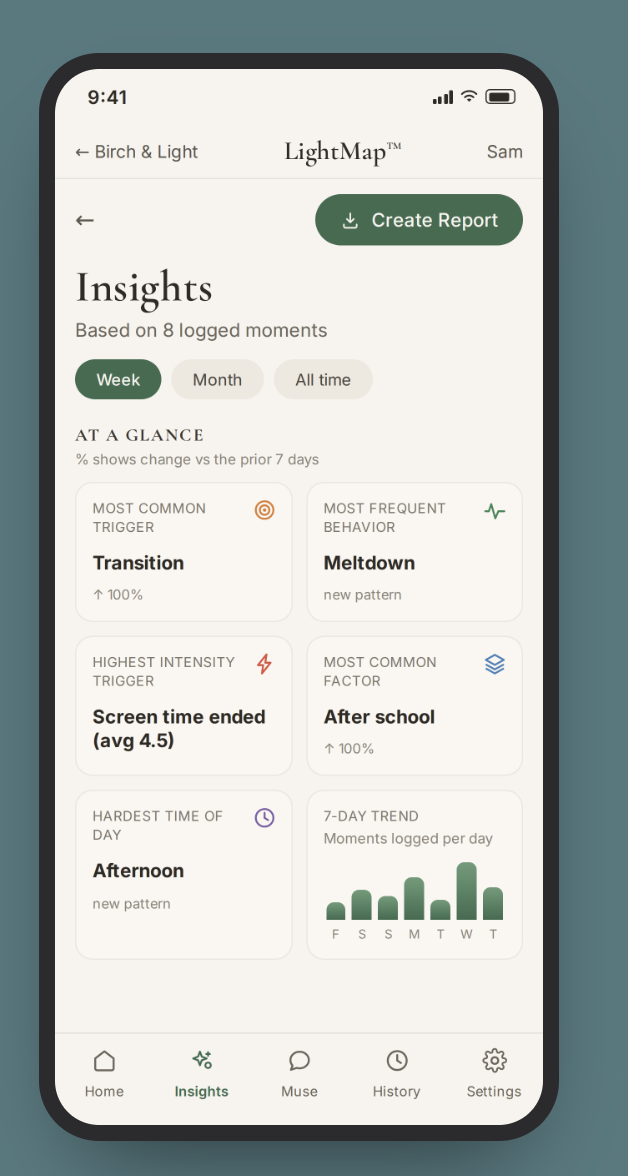

Part of the award-winning Birch & Light Method, honored with the Mom's Choice Gold Award for excellence in family resources.
A story to read together
Sometimes the easiest way in is a story you read side by side.
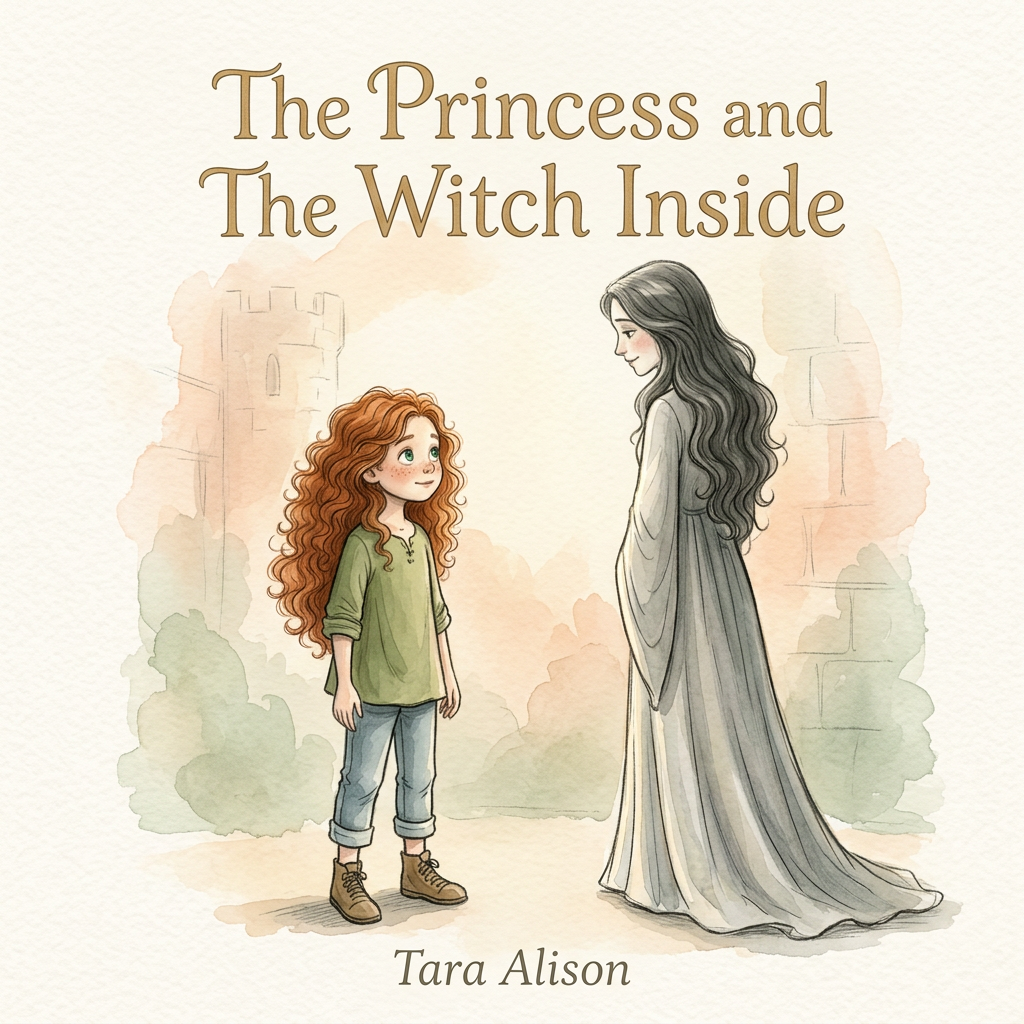 The Princess and the Witch Inside
Esme is loved, but a fast protective part keeps rushing in before she gets a turn. A quiet visitor helps her meet the witch inside — not as an enemy, but as a worried protector — and find her way back to the people she wanted to be with all along.
Read the story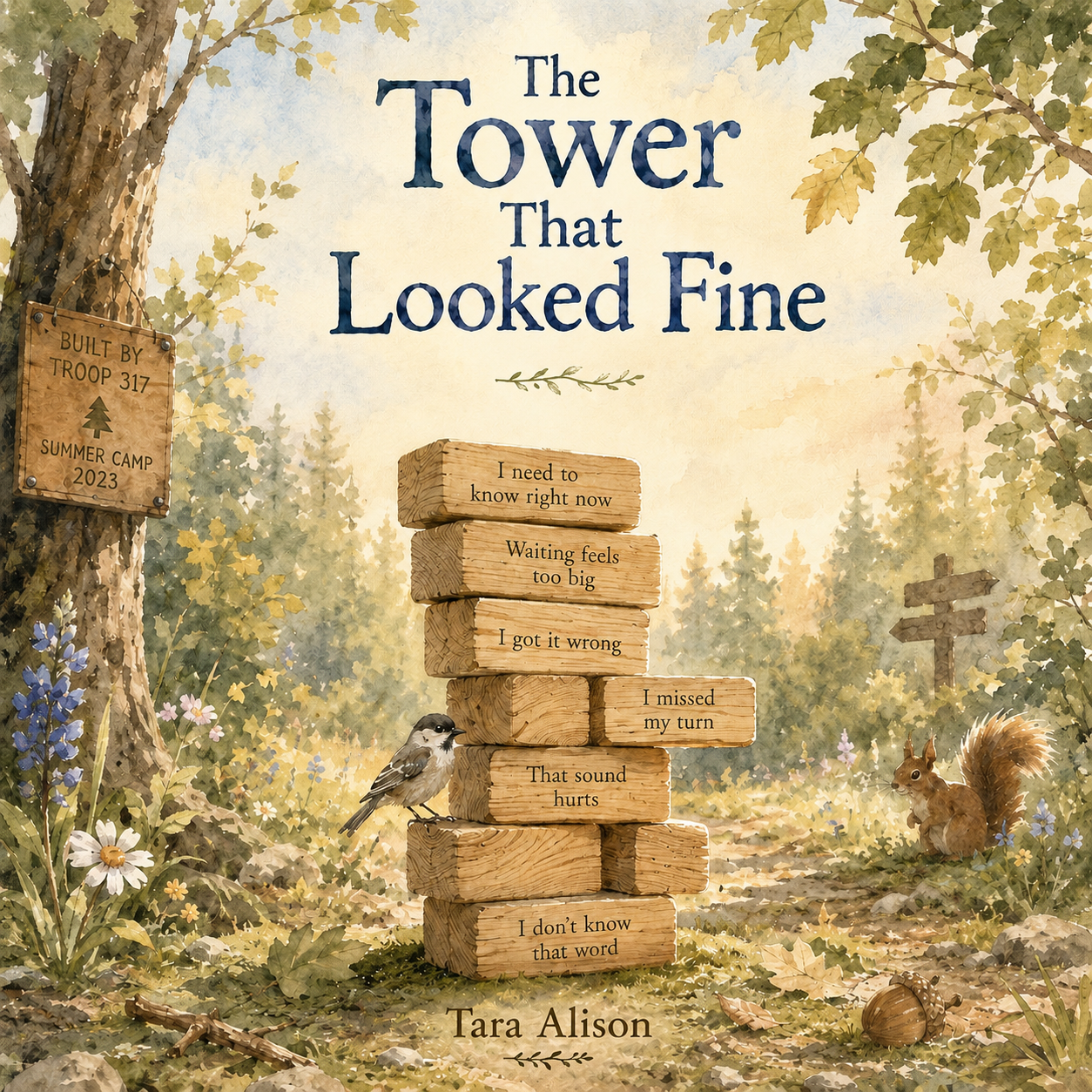 The Tower That Looked Fine
A tower in a quiet clearing tries to stay steady through every small thing nobody else seems to notice — until one tiny breath of wind causes her to fall, and a gentle hand begins to gather the blocks back.
Read the story
If today was one of those days
A few more from the library, free to read.
Researched and drafted with AI assistance, reviewed before publication. Editorial standards