
One minute your child is fine. The next, they're under the table, screaming, hitting, or completely shut down — at the birthday party, in the grocery store, in the middle of a family dinner. You're left wondering what just happened.
Often, what happened is sensory overload: their nervous system took in more than it could process, and the brain hit the emergency brake. Here's how to recognize it, what helps, and how to spot your child's specific triggers.
What sensory overload actually is
Every brain filters sensory input — sound, sight, touch, smell, movement, and the less-talked-about senses of body position (proprioception) and balance (vestibular). For most adults, the filter runs in the background.
For many children, especially during a long day or a big environment, that filter gets overwhelmed. Once the system is full, even small inputs (a tag in a shirt, a sibling's voice, fluorescent lights) feel huge. The brain shifts into protection mode — fight, flight, freeze, or fawn — and what we see is "behavior."
Early warning signs (before the meltdown)
Sensory overload is much easier to interrupt than to recover from. Watch for these early-stage signals:
- Covering ears, eyes, or pulling up a hood
- Getting suddenly silly, loud, or "out of body"
- Getting suddenly quiet or withdrawn
- Complaining about clothes, food textures, or smells
- Hiding, climbing under furniture, or asking to leave
- Repetitive movements (bouncing, spinning, pacing)
- Unusual aggression toward siblings or pets
These aren't misbehavior. They're your child's nervous system asking for less input.
Common triggers most parents miss
- Cumulative load. Nothing acute — just a long, busy week.
- Background noise. Restaurants, gyms, open-concept classrooms.
- Fluorescent lighting. Stores, schools, doctor's offices.
- Smells. Cleaning products, perfumes, cafeteria food.
- Clothing. Tags, seams, tight waistbands, "scratchy" fabric.
- Hunger and thirst. Always amplify everything.
- Transitions. The shift between activities is often harder than either activity itself.
What helps in the moment
- Lower the volume. Move to a quieter, dimmer space if possible.
- Use fewer words. "I'm here. You're safe." Then stop talking.
- Offer deep pressure. Tight hug, weighted blanket, or pressure on shoulders — if your child welcomes it.
- Water and a snack. Often resets the system more than anything else.
- Don't teach right now. The conversation about behavior comes later, after the nervous system recovers.
What helps over time
- Sensory diet. Daily access to movement, deep pressure, quiet time.
- Predictable routines. Reduces the cognitive load of unknown input.
- Headphones, sunglasses, fidgets. Tools, not crutches.
- Permission to leave. Knowing they can leave often means they don't need to.
- An OT evaluation if patterns are severe, frequent, or affecting daily life.
While you're here, take the guide
What's Underneath is free: the three body-state triggers under most meltdowns, what to say in the minute before it tips over, and how to reset afterward.

You'll get the guide instantly, plus five free articles in your inbox every week. Real challenges (meltdowns, school mornings, picky eating, big feelings) and how to actually handle them. Unsubscribe anytime.
Find your child's specific pattern
Sensory triggers are highly individual. The same child might be fine in a loud sports arena but undone by a quiet classroom under fluorescent lights. The fastest way to see what's actually happening for your child:
Open LightMap, log moments as they happen, and tag the location, the time, and what was going on. After 10–15 entries, the Insights tab usually shows clear patterns — often things parents never would have connected from memory alone.
From there, you can start preventing instead of just reacting. And if you're working with an OT or therapist, you can share read-only access so they have real data to work from instead of trying to reconstruct weeks of moments in a 50-minute session.
One last thing
A child in sensory overload isn't choosing to be difficult. Their nervous system is protecting them from input it can't process. The most powerful thing you can do is be the calm, low-stimulation place they can land — and over time, learn the patterns well enough to keep their cup from overflowing in the first place.
Frequently asked questions
What is sensory overload in kids?
Sensory overload happens when a child's nervous system receives more sensory input — sound, light, touch, smell, movement — than it can process. The brain shifts into fight, flight, or freeze, and behavior often follows: meltdowns, shutdowns, hiding, or aggression.
Is sensory overload the same as a sensory processing disorder?
No. All children experience sensory overload sometimes (think: birthday parties, loud restaurants, busy malls). Sensory Processing Disorder (SPD) describes children whose nervous systems are consistently more sensitive or under-responsive across many situations. If you suspect SPD, an occupational therapist can evaluate.
What are the early warning signs?
Covering ears, hiding, becoming unusually quiet, getting silly or wild, complaining about clothes or food textures, asking to leave, or 'shutting down.' These are signals that the system is filling up — earlier intervention prevents meltdowns.
How can I help in the moment?
Reduce input: quieter space, dimmer light, fewer words, deep pressure (tight hug, weighted blanket) if your child likes it, and water or a snack. The goal isn't to fix the feeling — it's to lower the volume so the nervous system can recover.
How do I know if it's sensory or something else?
Track moments in LightMap with the location and what was happening. Sensory triggers often show up as patterns: certain rooms, times of day, fabrics, foods, or events. Once you see the pattern, you can prevent — not just react.
For your child: The Tower That Looked Fine is about a block tower that wobbles a little at every small thing that lands on her, until one breath of wind knocks her over.
Sources: Dunn's Model of Sensory Processing and the Sensory Profile; Ben-Sasson et al. on sensory over-responsivity prevalence and its social-emotional correlates (Journal of Abnormal Child Psychology; PMC); STAR Institute for Sensory Processing; American Occupational Therapy Association practice guidance on Ayres Sensory Integration and sensory diets; peer-reviewed research on deep pressure input and arousal regulation (American Journal of Occupational Therapy; PMC).
For education and reflection, not medical advice. Our terms
See what's underneath
Find the input before it becomes a meltdown
LightMap reads your hard days together and gives you answers. Start with one moment today.
Start with 3 moments Not sure where to start? Ask me.Message Tara on WhatsApp. It really is me, I read everything and will personally respond.Click here to message Tara →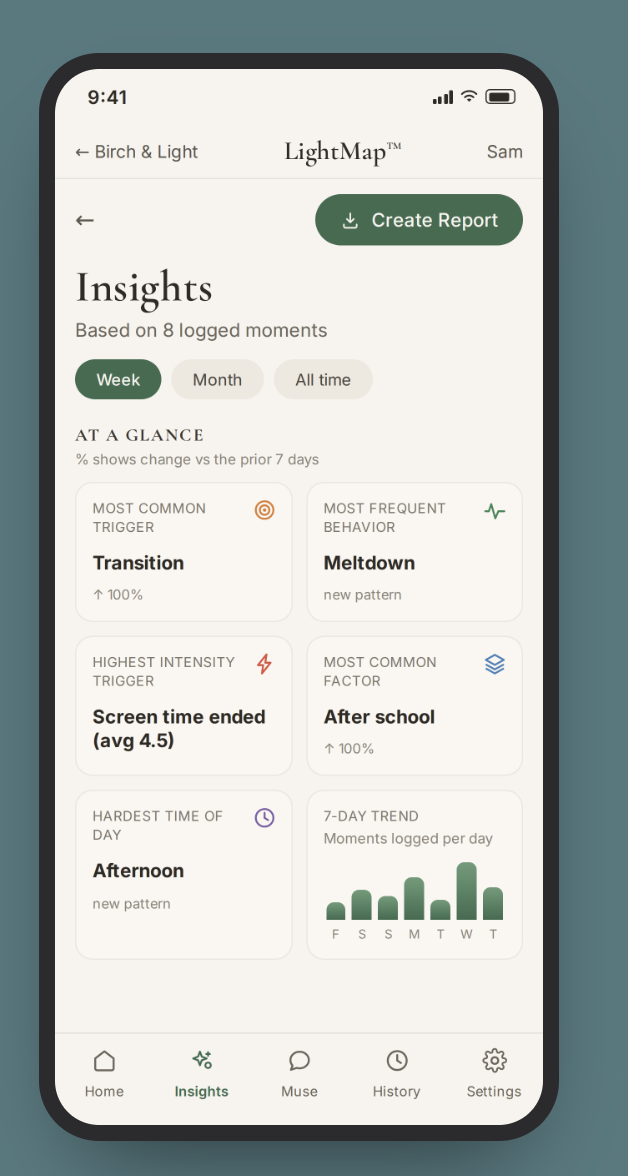

Part of the award-winning Birch & Light Method, honored with the Mom's Choice Gold Award for excellence in family resources.
A story to read together
Sometimes the easiest way in is a story you read side by side.
 Taste Bud 17
Taste Bud 17 feels everything more — and learns that big sensory feelings deserve the same care as everyone else’s.
Read the story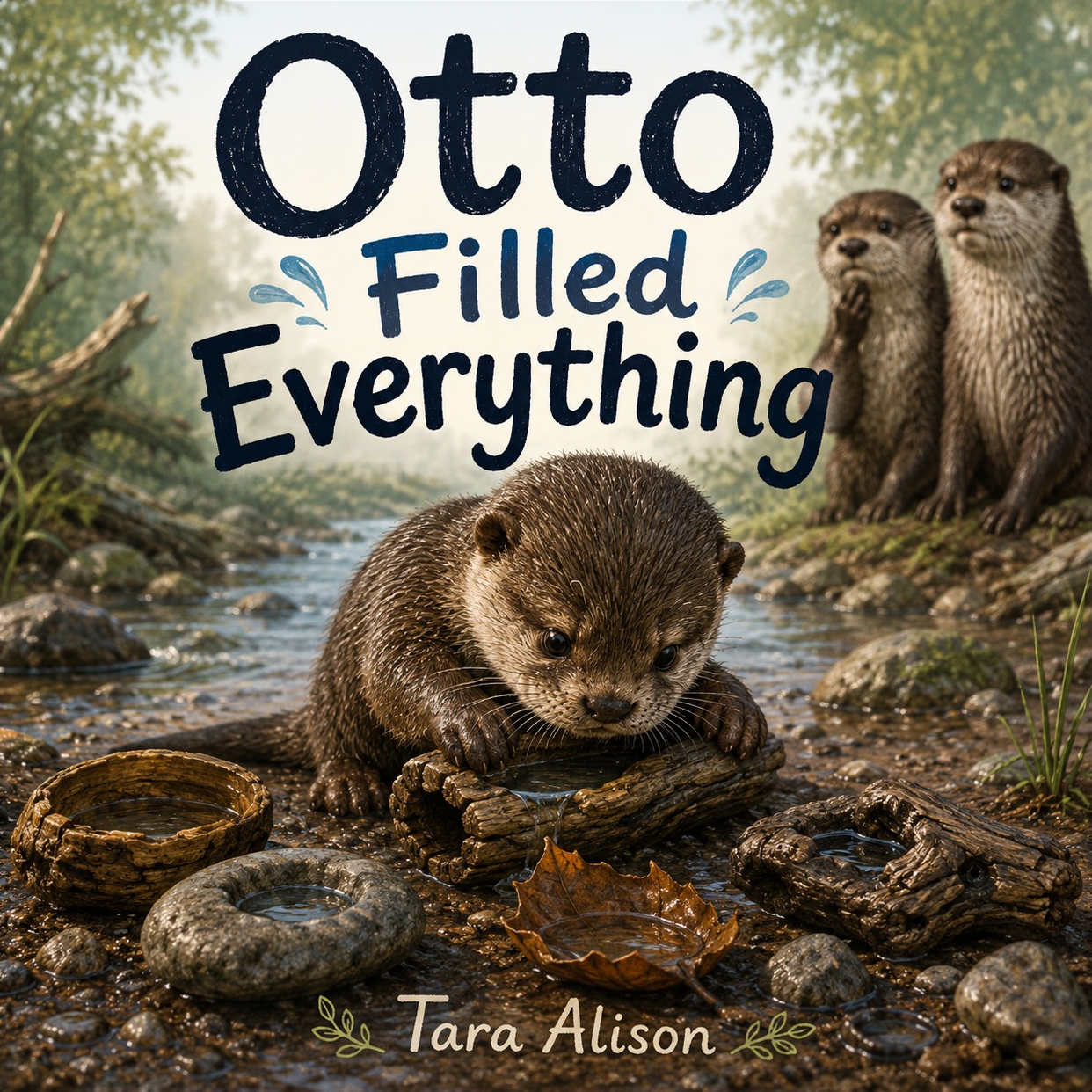 Otto Filled Everything
Otto can't stop filling things with water. His family doesn't understand — until Grandma Willow helps them listen to what his body is actually asking for.
Read the story
If today was one of those days
A few more from the library, free to read.
Researched and drafted with AI assistance, reviewed before publication. Editorial standards