
Six hours of your child's day happen without you, and she cannot tell you about any of it. Someone sat beside her at lunch. Something in the afternoon went badly. All of it is held by adults who clock out at three, and unless one of them decides to pass it along, it never reaches you.
That is not a small inconvenience. When a child cannot narrate her own day, the people in that room hold the only record of it, and living outside that record is heavier than anyone who has not done it assumes. It is also not something you should have to renegotiate every few weeks.
Stop asking nicely
Most parents in this position start where you would expect. A friendly note at drop-off. A message through the app. A request at conferences. It works for a week or two, and then a substitute arrives, or testing week lands, or a new student joins the class who needs more than anyone has, and the notes stop.
The problem is not that the teacher does not care. The problem is that a favor is the first thing to go in a hard week, and in a classroom like that every week is a hard week. What you need is not a better way to ask. You need the thing to stop being a favor.
What the law says, which is less than you have been told
Be careful here, because walking into a meeting citing a right that does not exist gets you shut down in one sentence.
IDEA does not require a school to send home a daily communication sheet. It does not mention them. It also does not prohibit them, and that gap is where the real argument lives.
Two of the load-bearing principles of special education are meaningful parent participation and individualization. You are a member of your child's IEP team. If you cannot get basic information about how her day went, you cannot take part meaningfully in decisions about her program. For a child who can narrate her own day, that information arrives free at dinner. For yours it does not, and closing that gap is what individualization is for.
There is a second law that helps, if your child's school receives Title I funding. The Every Student Succeeds Act requires those schools to ensure regular, two-way, meaningful communication between families and school staff about a child's academic learning and other school activities. It applies to every family at a Title I school, not only families of children with disabilities, but the language is still useful to have in hand at the table.
The move: put it in the IEP
A log that lives in the IEP is not a favor anymore. It is part of the program the district agreed to deliver, and it survives substitutes, bad weeks and staff changes because it is written down.
Ask for it under progress monitoring rather than as a courtesy. Request the meeting in writing, by email, to the case manager and the special education administrator, and say plainly what you want and why: your child cannot give you an account of her own day, and you need this information to participate in her program.
Two things to know before you go in. The teacher does not have to be the person who fills it out. An aide or paraprofessional can do it, and offering that yourself removes the most common objection before anyone raises it. And if the district declines to hold the meeting you asked for, they owe you prior written notice, which forces the reason onto paper. The piece on putting school requests in writing covers how that document works and how to ask for it by name.
While you're here, take the guide
What's Underneath is free: the three body-state triggers under most meltdowns, what to say in the minute before it tips over, and how to reset afterward.

You'll get the guide instantly, plus five free articles in your inbox every week. Real challenges (meltdowns, school mornings, picky eating, big feelings) and how to actually handle them. Unsubscribe anytime.
Design the form so it survives until May
This is where most communication logs die, and it is entirely preventable. Parents ask for a narrative, staff manage it for three weeks, and then it quietly stops.
Build something a rushed adult can finish in under a minute. Checkboxes wherever a checkbox will do. Ratings instead of descriptions, so low, medium and high rather than a paragraph about the afternoon. One open line at the bottom for anything the boxes missed, with no expectation that it gets used every day.
Then cut the list down to what you will actually read. Ate lunch. Toileting. Mood at arrival and at dismissal. One thing she joined in with. Anything that went sideways. Five or six items, not fifteen. A short form that comes home every day beats a thorough one that comes home in September and never again.
Make it go both ways
Offer your half without being asked. A rough night, a skipped breakfast, a medication change, a birthday coming up. Staff are working with a child who cannot tell them any of that either, and an adult who knows she slept four hours reads the entire day differently.
Framing it as two-way also changes how the request lands at the table. It stops being a demand on their time and becomes a shared instrument, which is harder to say no to and more likely to be used.
The long game
Where this eventually goes is your child carrying it herself. Not writing it, at first. Just being the one who moves the notebook from the bag to the teacher's desk, then choosing a picture card for how the day went, then more. It is a small self-advocacy goal and it can sit in the IEP alongside the log.
For now the point is simpler. You are not asking for a favor and you are not being difficult. You are asking for the information every other parent in that building gets for free at dinner.
Once the notes start coming home, the pattern inside them is the part that matters: which days went badly, what came before them, what was happening at home that week. Kept in LightMap next to what you see after school, a stack of forms turns into something you can put in front of the next IEP meeting.
Sources: Individuals with Disabilities Education Act parent participation provisions, 34 C.F.R. §300.322 and §300.501; Every Student Succeeds Act parent and family engagement provisions, 20 U.S.C. §6318; Center for Parent Information and Resources, Q&A on Part B parent participation.
For education and reflection, not medical advice. Our terms
See what's underneath
Bring answers to the table, not a worry
LightMap reads your hard days together and gives you answers. Start with one moment today.
Start with 3 moments Not sure where to start? Ask me.Message Tara on WhatsApp. It really is me, I read everything and will personally respond.Click here to message Tara →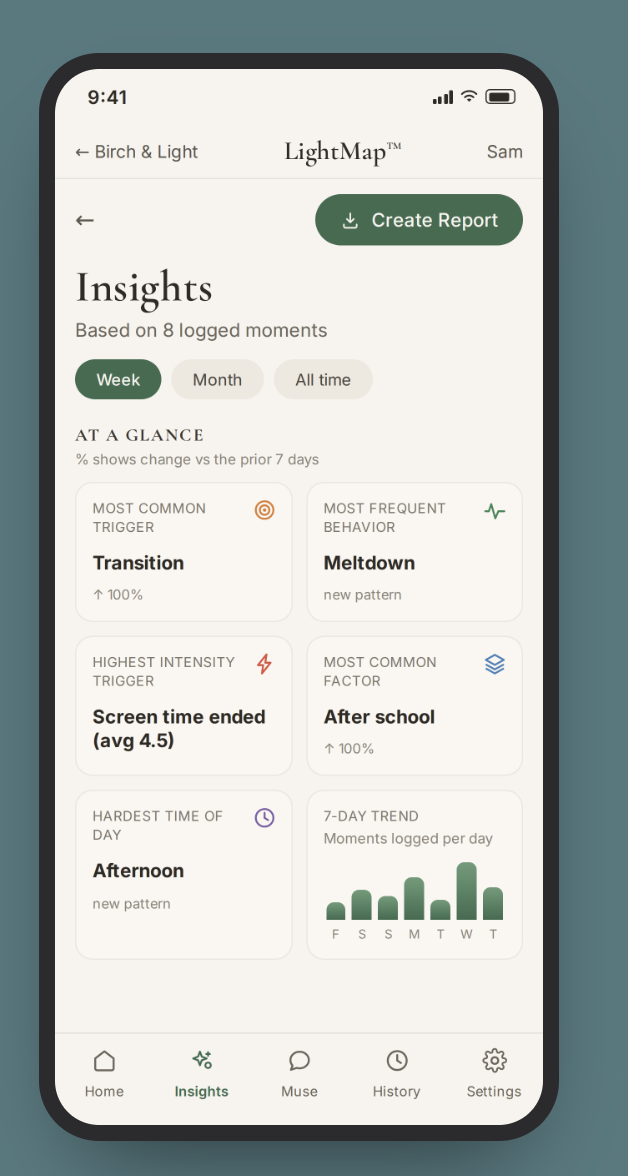

Part of the award-winning Birch & Light Method, honored with the Mom's Choice Gold Award for excellence in family resources.
A story to read together
Sometimes the easiest way in is a story you read side by side.
 Until I Don't
Rosie shines at dance, at school, with neighbors. At home, the smallest thing can tip her over. One quiet hallway moment helps her family finally find language for the part of her nobody else sees.
Read the story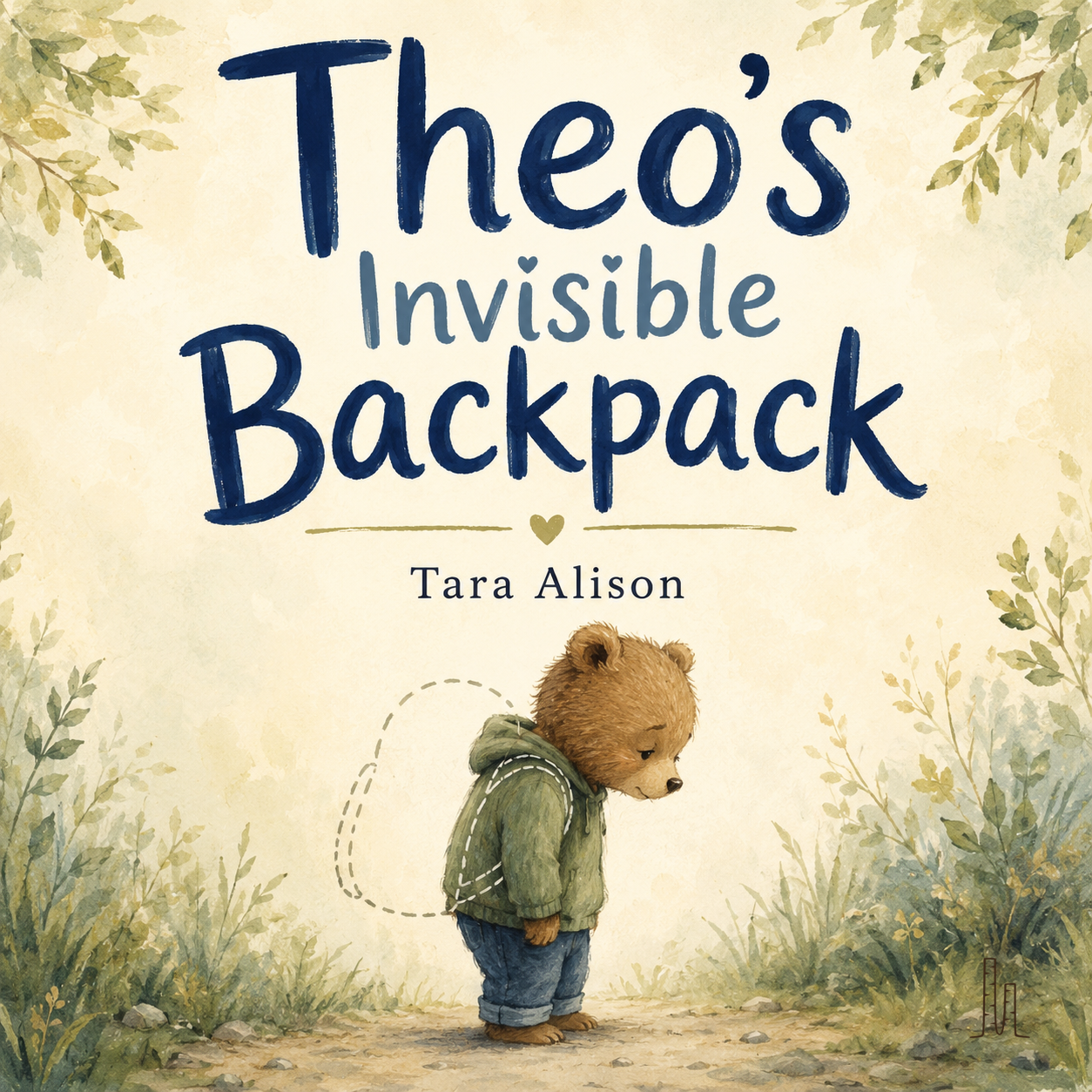 Theo's Invisible Backpack
Theo carries every hurtful word as a stone in an invisible backpack — until the day his mama really sees how heavy it has become, and they begin sorting the stones together.
Read the story
If today was one of those days
A few more from the library, free to read.
Researched and drafted with AI assistance, reviewed before publication. Editorial standards