
The call comes at 1:40 on a Tuesday. Or the note comes home in the folder. Or the teacher catches you at pickup and says, gently, that she wanted you to know about something that happened.
And somewhere in that conversation is a version of the sentence that sends thousands of parents into a spiral every September: you might want to get him looked at.
Here is what almost nobody tells you at that moment. If a school believes your child may have a disability affecting their education, the obligation to evaluate is theirs, not yours. It is free. And you can start the clock on it today, from your phone, with one email.
What the law actually says
Every public school in the United States operates under a federal law called IDEA, the Individuals with Disabilities Education Act. Two things in it matter enormously and are routinely left out of the conversation.
Child Find. Schools have an affirmative duty to identify and evaluate children who may need special education. They are not supposed to wait for a parent to ask. If staff have noticed a pattern, the duty is already triggered.
Parent request. You can request an evaluation in writing at any time, and doing so starts a legally binding timeline. In most states the district has 60 days from receiving your written consent to complete the evaluation, though some states set their own shorter or longer window. That 60-day clock starts when you sign the consent form, not the day you send the request. But federal law sets no timeline at all for a conversation that was never put in writing, so send the email today rather than mentioning it at pickup.
That last distinction is the single most useful thing in this article. A verbal conversation creates nothing. An email creates a legal obligation.
What a school cannot do
Some of what parents are told is simply not accurate, and it helps to know which parts.
A school cannot require you to obtain a private evaluation as a condition of being assessed for special education. They can suggest it. Many parents choose to, and there are real advantages to having your own. But it cannot be a condition of your child receiving support, and it cannot be presented as your responsibility to arrange. That rule covers the referral and eligibility process. It does not cover the separate situation described below, which is where most families get caught.
A school cannot make a deadline for you to produce one, and cannot use the threat of a report to child protective services as leverage to make you comply. If that happens, ask them to put the requirement in writing, including who issued it and what district policy it rests on. That request alone usually ends it.
A school cannot refuse to evaluate simply because your child is passing. Academic performance is one factor among many. A child who is achieving grades while falling apart socially, behaviorally, or emotionally may still qualify.
A school cannot delay by putting your child through a series of interventions first. Multi-tiered support systems are legitimate and often useful, but they cannot be used to postpone an evaluation once a parent has requested one in writing.
And a school cannot conduct the evaluation without your written consent, which cuts both ways: nothing happens until you sign, and once you sign, the timeline is running.
When the school demands an evaluation before your child can come back
This is a different thing, and it is happening more and more. After an incident, a threat, a statement about self-harm, or behavior that frightened staff, families are told the child cannot return until a psychiatrist or other clinician clears them. It goes by several names: psychiatric clearance, risk assessment, clearance letter. Many parents end up in an emergency room the same day, because that is the fastest place to get one.
Schools can do this, and districts have been upheld in doing it. There is very little regulation of how it gets used. In New Jersey, for example, the state has still not set rules on who may perform the clearance, how long a child can be kept out waiting for it, or what the district has to accept when it arrives.
Three things to hold on to if this happens to you. If your child has an IEP, or has been referred to the child study team, keeping them home pending clearance is an informal removal, and the New Jersey Department of Education said in a February 2023 memo that it can trigger a manifestation determination review, the same protection that applies to a suspension. That guidance also treats a clearance the district requires as an assessment at public expense, which means the cost is not supposed to land on your family. And your child remains entitled to instruction while they are out, so ask in writing what is being provided and starting when.
Before you go anywhere, ask for the school's request in writing: what is being required, who is qualified to perform it, and what the clearance letter has to state. Bring that written request to whoever evaluates your child. Parents who arrive at an emergency room without it often come home with a letter the district then refuses to accept.
While you're here, take the guide
What's Underneath is free: the three body-state triggers under most meltdowns, what to say in the minute before it tips over, and how to reset afterward.

You'll get the guide instantly, plus five free articles in your inbox every week. Real challenges (meltdowns, school mornings, picky eating, big feelings) and how to actually handle them. Unsubscribe anytime.
Writing the email
It does not need to be long or legal-sounding. It needs to be dated, specific, and sent to more than one person so that nobody can later say they were unaware.
Send it to the principal, the special education director or coordinator, and the school psychologist, all on the same email. Use your own email account rather than a text or a message through a school app, and save a copy.
Include these five things.
The request itself, in the legal language. State that you are requesting a full and individual special education evaluation under IDEA and that you consent to it. Those words matter more than anything else in the email.
What you are seeing. Two or three sentences, concrete and dated. Not he struggles with focus, but on these dates the following happened. Behavior, academics, social difficulty, anything relevant.
Your child's own words, if you have them. Children frequently explain their own difficulty more accurately than any adult observation of it. A child who says there were too many kids and they kept telling me to go faster has described a capacity problem precisely. Quote it directly.
Any specific assessments you want included. If behavior is part of the picture, ask explicitly for a functional behavior assessment and a behavior intervention plan. If writing is the issue, ask for occupational therapy and assistive technology assessments. If speech or social communication is involved, name that. You can ask for these to be added later, but naming them now saves a round of meetings.
A request for written confirmation. Ask them to confirm receipt and to tell you the date the timeline begins. This gives you a paper trail and quietly signals that you know one exists.
What happens next
The district responds, usually with a consent form to sign. Sign it and return it promptly, because in many states the clock runs from consent rather than from your request.
The evaluation itself typically involves several people: a school psychologist, sometimes a speech language pathologist, an occupational therapist, a special education teacher, and observations in the classroom. You will be asked to complete rating scales. So will teachers.
Then comes an eligibility meeting. This is where the team decides whether your child qualifies under one of the disability categories in the law, and whether the disability affects their access to education. Both parts have to be true.
If your child qualifies, an IEP is written. If they do not qualify for an IEP but do have a disability, ask about a 504 plan, which operates under different legislation, has a lower threshold, and can still provide accommodations like movement breaks, extended time, preferential seating, and a designated adult to check in with.
You are a full member of the team at every one of these meetings. You can bring someone with you. You can ask for the draft documents before the meeting rather than being handed them across the table, and asking for them in advance is completely normal.
If they say no
A district can decline to evaluate, but they have to tell you why in writing, in a document called prior written notice. Ask for it by that name if it is not offered.
That document is useful. It forces them to state their reasoning, and reasoning that sounded solid in a meeting often looks thin on paper. You can then request an independent educational evaluation at public expense, disagree formally, or go to your state's parent training and information center, which exists in every state specifically to help parents in this position and costs nothing.
When there has been a suspension
If your child has been disciplined for behavior connected to a disability, there is a protection you should know about. Once a child with an IEP has been removed for more than ten school days in a year, the team must hold a manifestation determination review to decide whether the behavior was caused by the disability or by the school failing to implement the plan.
If either is true, the discipline cannot stand as it is, and the team has to address the underlying need instead.
The second half of that matters more than parents realize. If your child's plan requires a support that was not in place when the incident happened, and the incident happened during that gap, the failure belongs to the school. Say so plainly and in writing.
The part that is hard to hear
None of this happens because you asked nicely. It happens because you created a record.
That is an uncomfortable thing to absorb about people you want to trust with your child. Most teachers and administrators are working hard inside a system with too few staff and too little money, and the paper trail is not an accusation against them. It is simply how the system responds. Parents who put things in writing get evaluations. Parents who have warm conversations at pickup often wait a year.
You can be entirely kind and entirely documented at the same time. In fact that combination works better than either one alone.
Write the email today. It takes ten minutes and it starts a clock that has not been running.
Sources: Individuals with Disabilities Education Act, 20 U.S.C. §1400 et seq., including Child Find obligations at §1412(a)(3) and evaluation timelines at §1414; Section 504 of the Rehabilitation Act of 1973; U.S. Department of Education, Office of Special Education and Rehabilitative Services guidance on parental requests for evaluation and on the use of multi-tiered systems of support; Center for Parent Information and Resources; New Jersey Department of Education memorandum of February 8, 2023, "Guidance Regarding the Use of Psychiatric Clearances for Students with Disabilities," and New Jersey Administrative Code N.J.A.C. 6A:14-1.1(d), 6A:14-2.8, 6A:14-3.3(f), and 6A:16-7.2 and 7.10; New Jersey Department of Education Office of Special Education, "Discipline Requirements for Students with Disabilities" (2025), including its sections on informal removals and psychiatric clearances. Note on federal guidance: the July 2022 U.S. Department of Education guidance on the discipline of students with disabilities, which the 2023 New Jersey memorandum cites, has since been formally rescinded by the Department. The underlying obligations described here rest on the IDEA, on Section 504 and its implementing regulations at 34 C.F.R. Part 104 including 104.35 and 104.36, and on New Jersey administrative code, none of which changed. Evaluation timelines vary by state, and readers should confirm the specific timeline in their own state.
For education and reflection, not medical advice. Our terms
See what's underneath
Send the email with something behind it
LightMap reads your hard days together and gives you answers. Start with one moment today.
Start with 3 moments Not sure where to start? Ask me.Message Tara on WhatsApp. It really is me, I read everything and will personally respond.Click here to message Tara →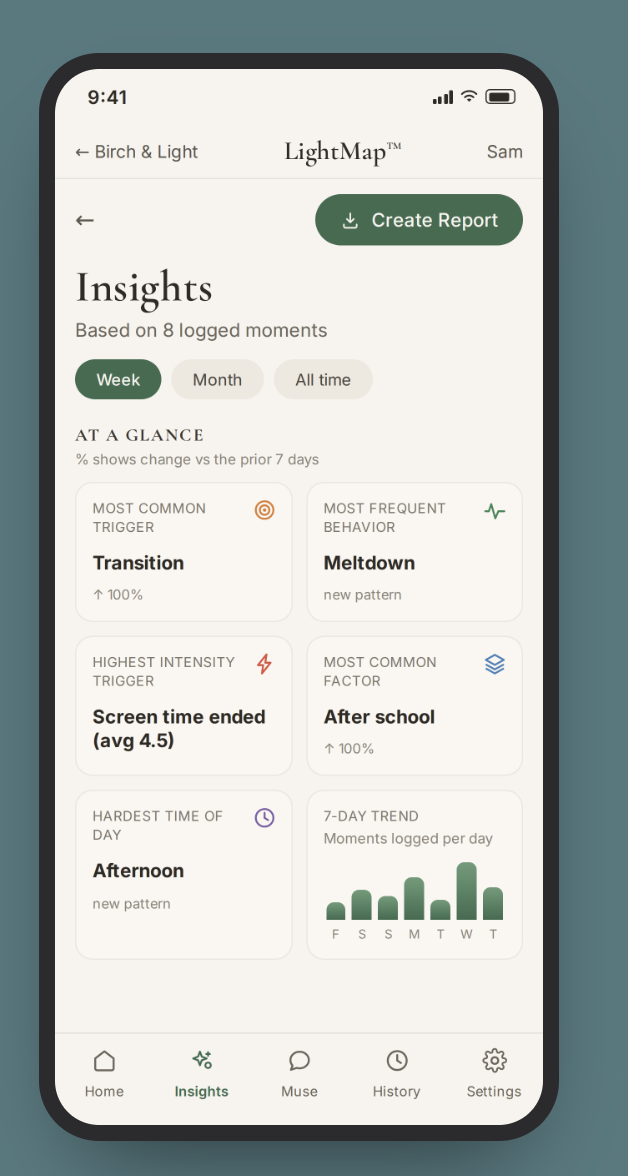

Part of the award-winning Birch & Light Method, honored with the Mom's Choice Gold Award for excellence in family resources.
A story to read together
Sometimes the easiest way in is a story you read side by side.
 Until I Don't
Rosie shines at dance, at school, with neighbors. At home, the smallest thing can tip her over. One quiet hallway moment helps her family finally find language for the part of her nobody else sees.
Read the story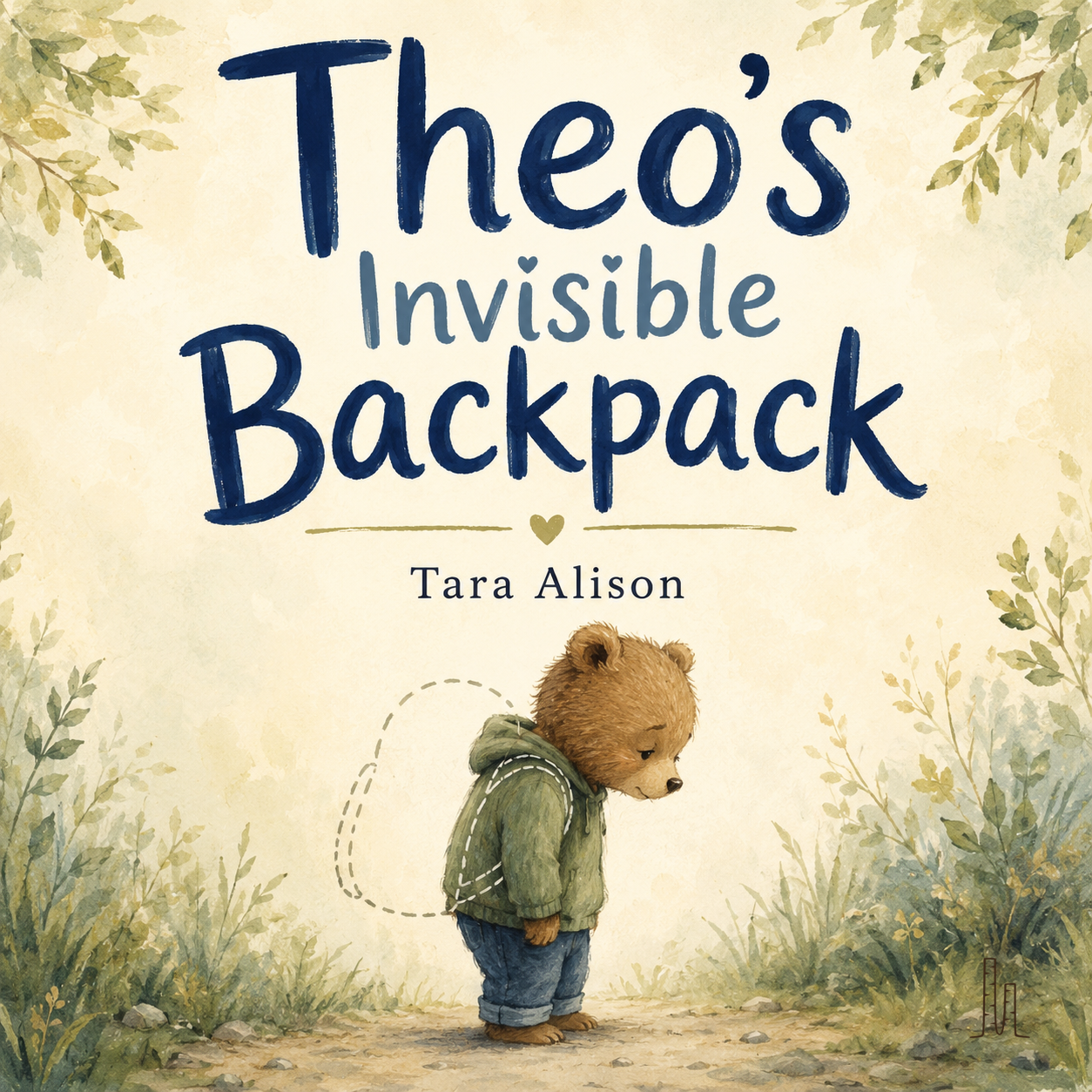 Theo's Invisible Backpack
Theo carries every hurtful word as a stone in an invisible backpack — until the day his mama really sees how heavy it has become, and they begin sorting the stones together.
Read the story
If today was one of those days
A few more from the library, free to read.
Researched and drafted with AI assistance, reviewed before publication. Editorial standards