
You pulled him out because school was breaking him. The mornings, the stomach aches, the teacher who kept saying he was capable if only he applied himself. Home was going to fix it.
And for a while it did. Then somewhere around the second or third month you noticed that some of it had come with him, and now you are sitting with a question you did not expect to be asking, which is whether the problem was ever really the school.
What school was actually doing
Two things at once, and removing it removed both.
It was applying enormous pressure: noise, transitions, social performance, sitting still, being watched, being compared. That was the part hurting him, and taking it away was the right call.
It was also supplying structure he was borrowing. Someone else decided when things started and stopped. Someone else set the sequence. A lot of children look more capable inside that scaffolding than they are without it, and when the scaffolding goes, what is left is his own executive function, unassisted, at whatever age it actually is.
So the first few months at home are rarely a clean read on anything. You have removed the harm and the support in the same move.
The honeymoon and what comes after
Most families get a real improvement early. Sleep gets better, the stomach aches stop, the child is recognizably himself again. That is not an illusion and it is worth trusting.
What often happens next surprises people. Somewhere after the relief wears off, difficulty reappears. Refusal, meltdowns, an inability to start, big feelings over small things. Parents read this as homeschooling failing, or as their own inadequacy, and it is usually neither.
It is what was underneath the school problem becoming visible now that the school problem is out of the way.
Why home reveals what school hid
This is the part nobody warns you about.
A child who masked all day at school was spending everything he had on looking fine, and you got the collapse at four o'clock. Now there is no audience to perform for, so the mask comes off earlier and stays off. That looks like deterioration. It is closer to the opposite.
If you want him to have language for it rather than only you, Until I Don't is a story about a girl who shines at school and at dance and with the neighbors, and falls apart over small things at her own kitchen table. Children who recognize themselves in it often say so out loud, which is frequently the first useful conversation a family has about masking. The Tower That Looked Fine does the same job for the end of day collapse, showing the small things stacking up long before the one that knocks it over.
You are also with him all day. Things you previously saw for two hours in the evening, when he was depleted, you now see across every hour and every kind of task. Patterns you could not see before become obvious, not because they are new but because you are finally in the room.
And one to one changes what is visible. There is no class to hide inside, no thirty other children setting a pace, nobody to copy. What he can and cannot do on his own is suddenly unavoidable.
What environment change does and does not fix
Some things resolve almost entirely once the setting changes. Anxiety about the building. Social exhaustion. Sensory load from noise and fluorescent light. Refusal that was really about one particular teacher or one particular subject.
Other things travel, because they are not about setting at all. Difficulty starting a task he wants to do. Emotional reactions that run bigger than the trigger. Trouble moving between activities. Losing track of time completely. Wildly uneven ability, brilliant at one thing and stuck on another. Reacting to a request as though it were a threat, however gently it was made.
If the second list is still fully present six months in, with school long gone, that is worth paying attention to. It is not evidence you did the wrong thing. It is evidence that school was making something harder rather than causing it.
There's a story for this exact struggle
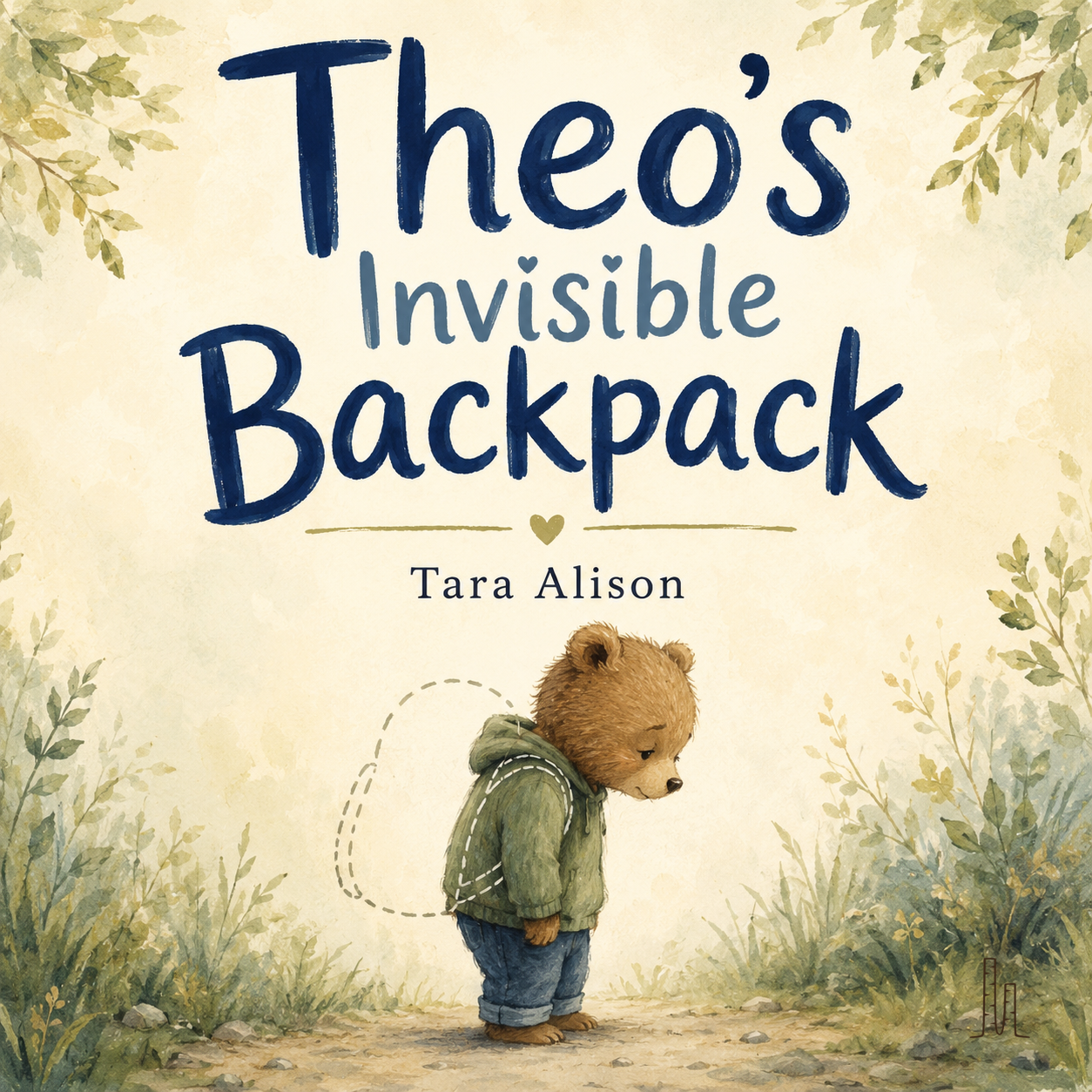
Theo's Invisible Backpack
Theo carries every hurtful word as a stone in an invisible backpack — until the day his mama really sees how heavy it has become, and they begin sorting the stones together.
Free to read. You'll also get five free articles a week. Unsubscribe anytime.
Before you go, grab the free guide
The 3 body-state triggers under most meltdowns, a script for the 30 seconds before it tips over, and a reset for after. Free.

You'll get the guide instantly, plus five free articles in your inbox every week. Real challenges (meltdowns, school mornings, picky eating, big feelings) and how to actually handle them. Unsubscribe anytime.
You do not need a label to change your approach
The useful thing to say here is that nothing you might do differently requires a diagnosis first.
If demands land badly, lowering them helps whether or not anyone has ever written PDA on a form. If starting is the barrier, doing the first step alongside him helps regardless. If he can only sustain twenty minutes, building the day in twenty minute pieces works either way. You can respond to what is in front of you now.
What a diagnosis buys you is different and comes later: access to services, funding in some places, accommodations if he ever returns to a school or sits exams, and a language other adults will take seriously. Those matter, and they are reasons to pursue assessment when you are ready rather than reasons to wait before adapting.
What to do with the next few months
Watch rather than test. Write down what you notice as you notice it, because six months of observation is worth more to an assessor than any amount of describing it afterward from memory, and because patterns are close to impossible to see from inside the days.
Specifically, note what he can do without you and what needs you present. Note how long a good stretch lasts. Note what happens right before things fall apart, because the trigger is often thirty minutes earlier than the explosion. Note the difference between tasks he refuses and tasks he starts and abandons, since those are two different problems.
If you do decide to pursue an assessment, ask whoever you approach what they want from you. Many will look for evidence across more than one setting, which is harder to supply when you homeschool, so a written record plus input from anyone else who sees him, a coach, a co-op leader, a grandparent, tends to matter more than it would otherwise.
This is not homeschooling failing
I say this because a lot of parents in this position quietly conclude they have made everything worse.
You removed a source of daily harm. That was correct, and the improvement you saw early was real. What you are dealing with now is a different question that was always there, and you are dealing with it in the best possible conditions: one to one, at his pace, with the person who knows him best, and years of runway.
Most parents who arrive at this point describe it later as the moment things actually started getting better, because it is the point where you stop trying to fix the situation and start understanding the child.
If you are early in it and the whole thing still feels shapeless, starting to homeschool a child with ADHD and anxiety covers deschooling and what the first months usually look like. And if what you are seeing is refusal rather than difficulty, the difference between will not and cannot is the distinction to get right first.
If getting started is the wall he keeps hitting, Elliot's Paths is a story about how big a simple task can look from the inside, and it is worth reading together rather than explaining.
What he manages alone, how long the good stretches run, and what happened in the half hour before it fell apart: log it in LightMap as it happens, and in a few months you are reading a pattern instead of wondering.
Sources: Peer-reviewed research on avoidance as an anxiety-maintaining mechanism (PMC); Raymaker et al. on autistic burnout and recovery timelines (Autism in Adulthood; PMC); Kearney on the functions of school refusal behavior (PMC); PDA Society (UK) on demand avoidance.
For education and reflection, not medical advice. Our terms
See what's underneath
Bring the school evidence, not impressions
LightMap turns scattered hard days into a pattern you can see. Start by logging one moment tonight.
Log today's hard moment, no account needed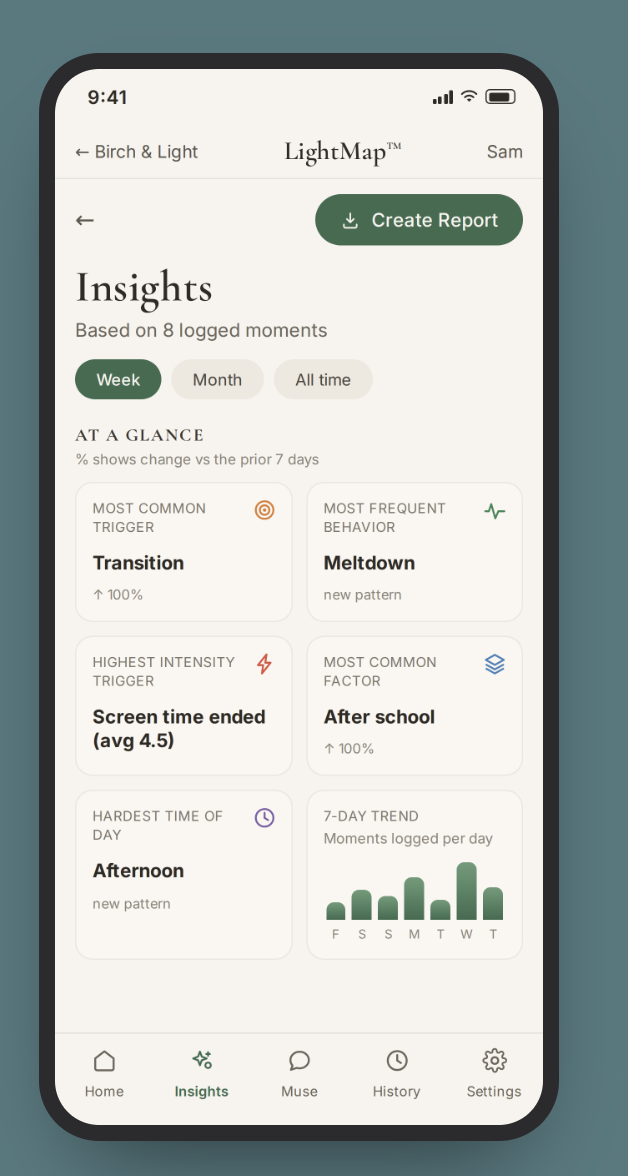

Part of the award-winning Birch & Light Method, honored with the Mom's Choice Gold Award for excellence in family resources.
A story to read together
Sometimes the easiest way in is a story you read side by side.
- Theo's Invisible Backpack
Theo carries every hurtful word as a stone in an invisible backpack — until the day his mama really sees how heavy it has become, and they begin sorting the stones together.
Read the story  The Mosquito Who Thought He Was a Dragonfly
Raised by dragonflies after a summer storm, Miro learns one night that the world sometimes sees him differently than the family who loves him — and that being misunderstood isn’t the same as being bad.
Read the story
Researched and drafted with AI assistance, reviewed before publication. Editorial standards