
Every morning is a battle. Your child says they can't go to school — a stomachache, a headache, tears, sometimes a flat refusal at the door, sometimes a complete shutdown the moment the backpack comes out. It is exhausting, it is daily, and somewhere in the middle of it you have probably reached for a label to make sense of it. School refusal. School anxiety. As if those were two names for the same thing.
They aren't quite — and the difference matters more than it might seem, because what actually helps depends on which one you are looking at. Getting this distinction right is often the difference between mornings that slowly ease and mornings that escalate week after week.
The short version: anxiety is usually the engine, and refusal is what it looks like from the outside. When you treat the refusal without understanding the anxiety underneath, you tend to make the mornings bigger, not smaller. So it is worth slowing down to see what each term actually describes.
What "School Anxiety" Describes
School anxiety is the internal experience — the dread, the worry, the physical symptoms that rise up before and around school. It is what is happening inside your child.
It can attach to something specific and identifiable: a particular class, a particular teacher, the bus, the cafeteria, the unstructured chaos of recess, the moment of separating from you. Or it can be diffuse and hard to name — a general, full-body sense of dread that your child cannot trace to a single source. Either way, the key thing to understand is that the child is not manufacturing the fear. Their body is producing it, often well before they can explain why, and frequently before they consciously understand it themselves.
What "School Refusal" Describes
School refusal is the behavior — the not-going, the resisting, the inability to get out the door, the stomachache that appears at 7am and vanishes by 10. It is what you can see and measure from the outside.
And here is the connection that changes everything: school refusal is, very often, anxiety in action. The refusal is not the core problem to be overridden. It is the visible edge of a fear the child cannot manage any other way. The behavior is downstream of the internal state. When you understand that, you stop seeing a child who is choosing not to cooperate and start seeing a child whose body has hit a wall.
Calling it "refusal" can make it sound like a choice. For many children, it's less a decision and more a body that simply cannot cross the threshold.
Why the Distinction Changes What You Do
This is where the two readings lead to opposite parenting moves — which is exactly why the distinction is not just semantics.
If you see only the refusal, the instinct is to push harder. More consequences. More insistence. More getting-them-through-the-door at any cost, on the theory that giving in will only reinforce the avoidance. And if the refusal were a simple behavior problem, that logic might hold.
But if anxiety is the engine — if the refusal is a frightened nervous system hitting its limit — then pushing harder into the fear, without addressing the fear, usually raises the stakes rather than lowering them. The alarm gets louder, not quieter. The mornings get bigger. The child learns that the place that already frightens them is also a place they will be forced toward no matter how scared they are, which tends to deepen the dread rather than dissolve it.
When you see the anxiety underneath, the entire question reframes. It is no longer "how do I make them go." It becomes "what is frightening enough that their body is refusing — and how do I help them carry it?"
While you're here, take the guide
What's Underneath is free: the three body-state triggers under most meltdowns, what to say in the minute before it tips over, and how to reset afterward.

You'll get the guide instantly, plus five free articles in your inbox every week. Real challenges (meltdowns, school mornings, picky eating, big feelings) and how to actually handle them. Unsubscribe anytime.
What Tends to Help
Get curious about the specific fear. Is it one class? One person? The unstructured parts of the day? The separation from you at drop-off? The lunchroom, the noise, the social maze of it all? The exact trigger points to the exact support. You cannot reduce a fear you haven't located, and "school" is rarely the real answer — it's the container for something more specific.
Lower the alarm before the demand. A frightened nervous system cannot be reasoned through the door. Logic, consequences, and pep talks all land on a system that is already in alarm and cannot hear them. Calm and connection have to come first; problem-solving comes after the alarm has come down, not before.
Look at when it spikes. Does it cluster on certain days? Around specific subjects? After weekends, after breaks, before tests, around particular events? The timing is information, and it often points straight at the trigger you're trying to identify.
Work with the school, not around the child. Accommodations that genuinely reduce the specific fear — a check-in person, a quiet space, a modified drop-off, a plan for the hardest part of the day — frequently do more than pressure ever could. The school can be an ally in shrinking the fear rather than a force the child is shoved toward.
The Shift Worth Making
School refusal and school anxiety are not two separate problems. They are, in most cases, the outside and the inside of the same one — the visible behavior and the internal experience driving it.
The child standing frozen at the door is not refusing to cooperate. They are showing you, in the only way available to them, that something about school feels bigger than they can handle right now. Understanding what that something is — and helping them carry it — comes before getting them through the door. Get the order right, and the door tends to get easier on its own.
One more thing worth saying: if the anxiety is intense, persistent, or escalating, this is exactly the situation to bring in the school and a professional who can help you build a plan together. You do not have to figure out the morning alone.
Every behavior is a clue.
If mornings keep ending in tears at the door, LightMap can help you track what surrounds them — which days, which triggers, what comes before — so the pattern beneath the refusal becomes easier to see. Explore LightMap at birchandlight.com/lightmap.
Sources: Kearney's functional model of school refusal behavior (Clinical Psychology Review; PMC); research distinguishing anxiety-based school refusal from other school attendance problems (PMC); Ross Greene, Collaborative and Proactive Solutions, on lagging skills; research on school attendance problem taxonomies (PMC).
For education and reflection, not medical advice. Our terms
See what's underneath
Bring the school evidence, not impressions
LightMap reads your hard days together and gives you answers. Start with one moment today.
Start with 3 moments Not sure where to start? Ask me.Message Tara on WhatsApp. It really is me, I read everything and will personally respond.Click here to message Tara →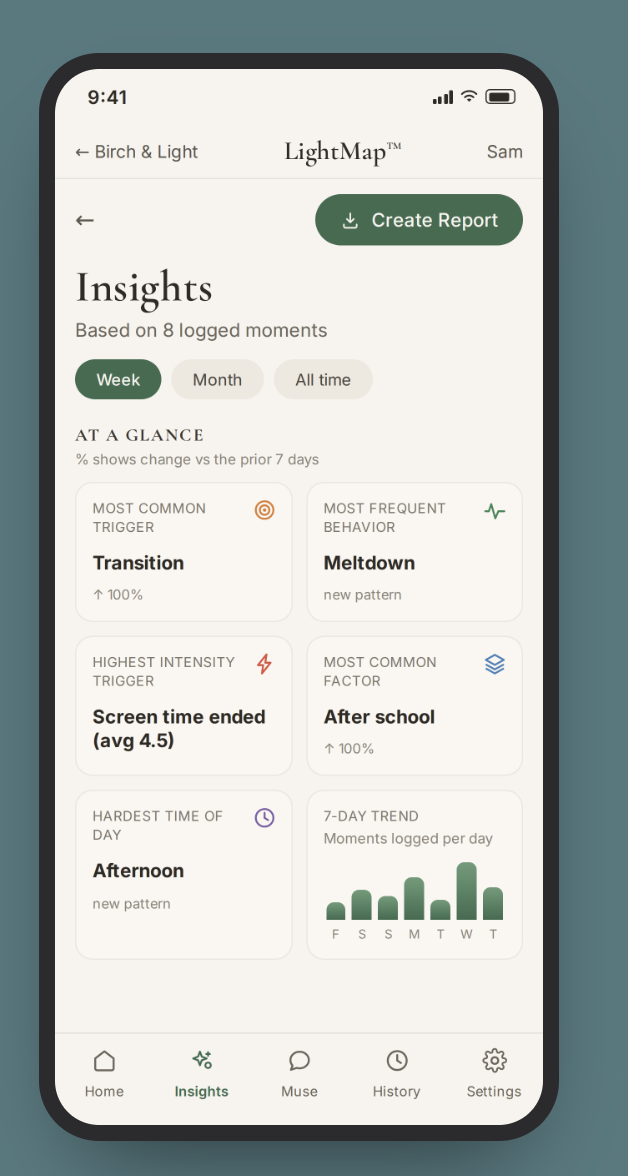

Part of the award-winning Birch & Light Method, honored with the Mom's Choice Gold Award for excellence in family resources.
A story to read together
Sometimes the easiest way in is a story you read side by side.
 Until I Don't
Rosie shines at dance, at school, with neighbors. At home, the smallest thing can tip her over. One quiet hallway moment helps her family finally find language for the part of her nobody else sees.
Read the story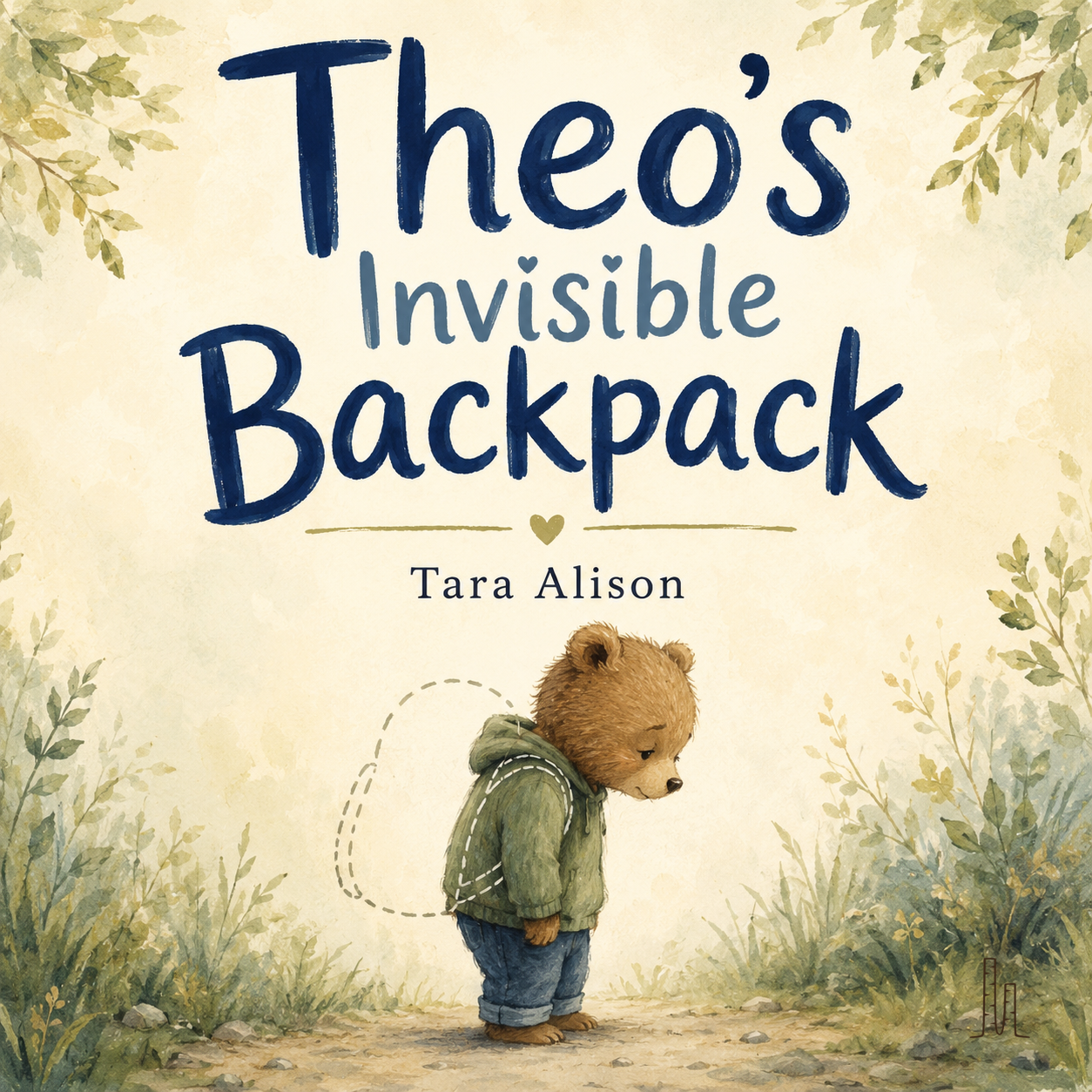 Theo's Invisible Backpack
Theo carries every hurtful word as a stone in an invisible backpack — until the day his mama really sees how heavy it has become, and they begin sorting the stones together.
Read the story
If today was one of those days
A few more from the library, free to read.
Researched and drafted with AI assistance, reviewed before publication. Editorial standards