
There is a decision point many parents hit years after a diagnosis, not at the moment of it. You have known for a while. You have handled it privately, through your own doctors, on your own terms. School never needed to be part of it, because school was the one place your child held it together. And then one year, usually around a big transition, the holding-together stops. The missing assignments pile up. The emails from teachers start. And you find yourself wondering whether it is finally time to tell the school what you know.
If that is where you are, this is the honest version of the pros, the cons, and the parts nobody explains clearly.
Keeping it separate was not a mistake
Let us start here, because parents in this position often feel a flicker of guilt, as if they have been hiding something. You were not hiding anything. A diagnosis belongs to your child and your family. If it was not affecting school, there was nothing for school to act on, and plenty of families reasonably decide that fewer people knowing means fewer chances for a label to travel ahead of their kid.
That logic holds right up until the struggles cross the building threshold. Once your child is losing points, losing track, or losing it in a classroom, the school is already involved. The only question is whether it is involved with information or without it.
What teachers do when they do not know
Here is the part that changes most parents' minds. When a teacher sees a student who is bright but chronically late with work, chatty, distracted, or disorganized, the teacher does not see a blank. They fill in an explanation. Without the real one, the explanations they reach for are the defaults: not trying, does not care, needs firmer consequences.
So the choice is rarely between the school knowing and the school not knowing. It is between the school working from accurate information or working from a guess, and the guess is usually less kind than the truth.
What a 504 plan actually is
In US public schools, the most common formal support for a student with ADHD (or anxiety, or a medical condition that affects learning) is a 504 plan. It is not special education. There is no separate classroom, no pull-out, no aide trailing your child down the hallway. It is a short written document that says: this student has a condition that affects a major life activity, and here are the specific adjustments teachers will make.
An IEP is the more intensive route, with specialized instruction and services, and it exists for kids who need more than adjustments. Plenty of students with ADHD never need one. For a kid who is capable but struggling with attention, organization, and time, a 504 is usually the right-sized tool.
Who actually sees it
This is the question underneath the question, especially if your child is at the age where being perceived is the worst thing that can happen. The answer: a 504 plan is shared with the adults who need it to do their jobs. Teachers, a counselor, an administrator. It is a confidential record. It is not announced, not posted, and classmates have no access to it and no way to know it exists.
What classmates might notice is a different matter, and it is worth being straight about. If an accommodation is visible, kids can see it. But here is what most parents do not realize until they read an actual 504: the accommodations that help most are nearly invisible.
What accommodations look like in real life
Parents imagine something conspicuous. The reality, for a student with attention and organization struggles, tends to be things like:
- A seat near the front, which no one questions because seating charts exist everywhere
- Teachers checking that assignments made it into the planner or portal
- An extra day on certain deadlines, arranged over email, witnessed by no one
- Breaking large projects into checkpoints
- A discreet cue to refocus instead of a public callout
- Extended time on tests, often taken in the same room
Notice what these have in common. They happen between one adult and one student, quietly. A well-written 504 for a privacy-sensitive kid can be built almost entirely from supports that no classmate would ever clock.
While you're here, take the guide
What's Underneath is free: the three body-state triggers under most meltdowns, what to say in the minute before it tips over, and how to reset afterward.

You'll get the guide instantly, plus five free articles in your inbox every week. Real challenges (meltdowns, school mornings, picky eating, big feelings) and how to actually handle them. Unsubscribe anytime.
The kid who would rather struggle than stand out
Some kids hear the word accommodations and translate it instantly: everyone will know something is wrong with me. If that is your child, do not steamroll it, because their buy-in genuinely matters. A few things help.
First, give them the vocabulary shift. Accommodations are not a verdict, they are logistics. Kids with glasses sit where they can see the board. Nobody considers that a scandal.
Second, give them a seat at the table. Depending on age, students can attend part of the 504 meeting or send input through you. Let them veto the accommodations that feel loud and keep the ones that feel like relief. A plan they helped shape is a plan they will actually use.
Third, name the trade honestly. The alternative to quiet support is not invisibility. It is visible struggle: the public reminders about missing work, the grades, the lunch detentions. Those are far more conspicuous than a front-row seat.
The honest cons
It would be dishonest to present this as all upside. A few real considerations:
It creates a record. A 504 lives in your child's school file. It does not follow them to college applications (colleges cannot ask, and high schools do not send it), but it exists, and some families are uncomfortable with that on principle.
Not every teacher implements well. A 504 is legally binding, but enforcement in practice depends on follow-through. You may occasionally have to be the parent who emails, politely, about the plan.
Disclosure is one-directional. You cannot untell the school. That is a real asymmetry, and it is fair to weigh it. Most families in the thick of school struggles find the trade worth it, but it is your call to make, not anyone else's.
How to start if you decide to move
Skip the hallway conversation and put it in writing. Email the school counselor or the principal, state that your child has a diagnosed condition affecting their education, and formally request a 504 evaluation. The written request matters, though not the way many parents assume. Federal law gives you no automatic right to an evaluation just for asking, and it sets no deadline for how fast the district must act. What the written request does is put the district on record: if they decide not to evaluate, they owe you a written explanation and the steps for challenging that decision, and a hallway conversation leaves no such trail. Attach or offer the diagnostic documentation you already have. The school will schedule a meeting, and you and your child get input on what actually goes in the plan.
You do not have to share everything. You control the level of detail. The school needs enough to justify support, not your child's entire medical history.
The bottom line
Telling the school is not surrendering your child's privacy. Done carefully, it is the opposite: it replaces a dozen teachers guessing with a small circle of adults who know just enough to help quietly. Your child does not need the whole building to understand them. They need three or four adults working from the truth instead of a stereotype, and a plan that makes the hard parts of the day slightly less hard, without a single classmate ever noticing a thing.
Whatever you decide to share, the school will ask what it looks like at home. Logging it in LightMap means you arrive with specifics rather than adjectives.
Sources: Family Educational Rights and Privacy Act (FERPA); U.S. Department of Education Office for Civil Rights on Section 504; CHADD (Children and Adults with ADHD).
For education and reflection, not medical advice. Our terms
See what's underneath
Bring the school evidence, not impressions
LightMap reads your hard days together and gives you answers. Start with one moment today.
Start with 3 moments Not sure where to start? Ask me.Message Tara on WhatsApp. It really is me, I read everything and will personally respond.Click here to message Tara →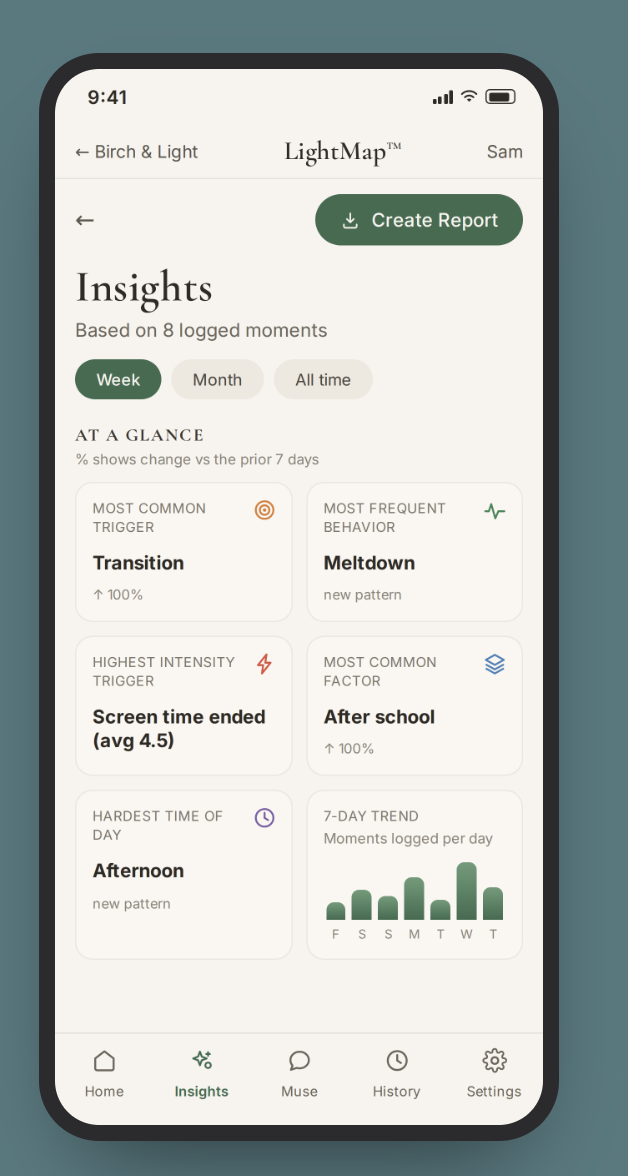

Part of the award-winning Birch & Light Method, honored with the Mom's Choice Gold Award for excellence in family resources.
A story to read together
Sometimes the easiest way in is a story you read side by side.
 Until I Don't
Rosie shines at dance, at school, with neighbors. At home, the smallest thing can tip her over. One quiet hallway moment helps her family finally find language for the part of her nobody else sees.
Read the story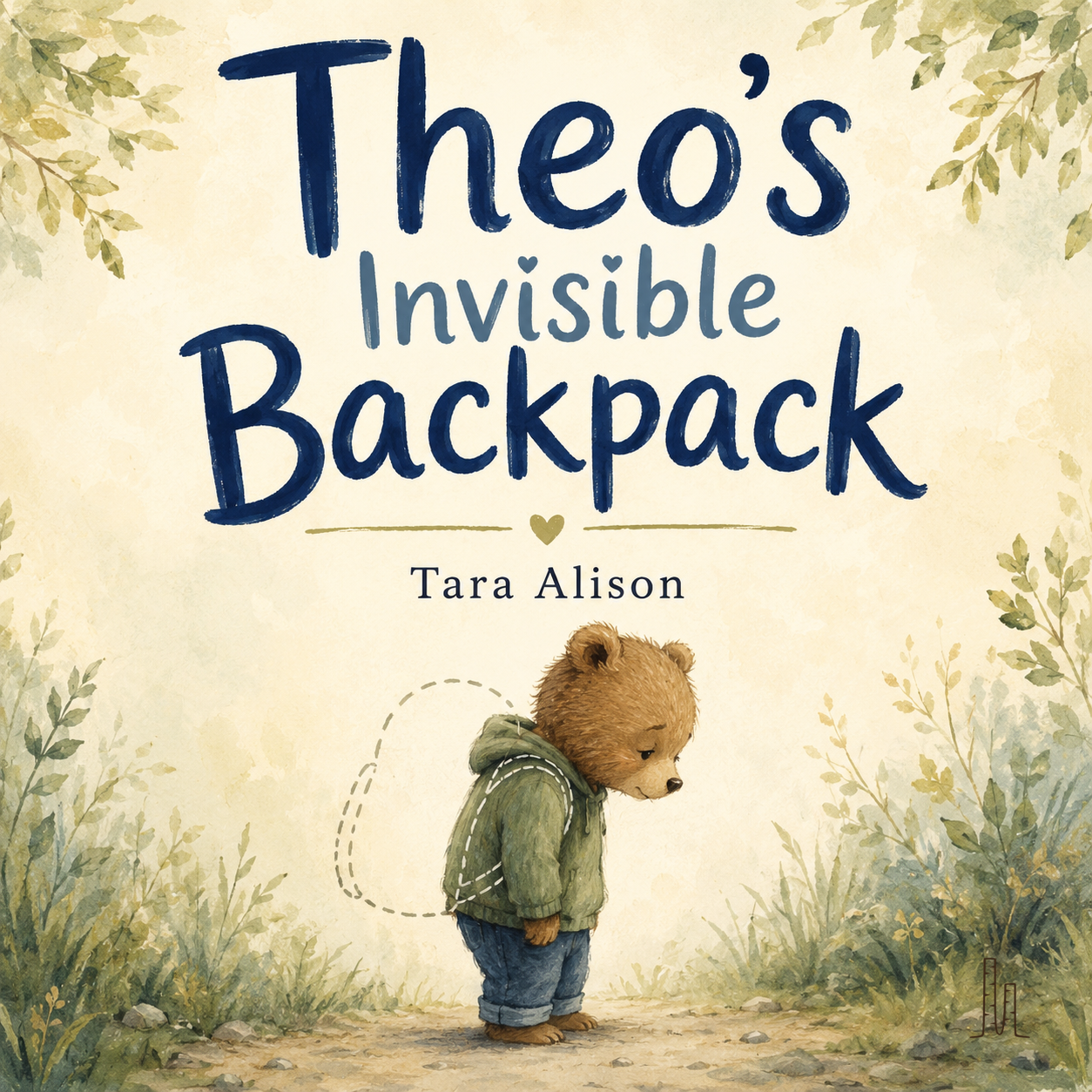 Theo's Invisible Backpack
Theo carries every hurtful word as a stone in an invisible backpack — until the day his mama really sees how heavy it has become, and they begin sorting the stones together.
Read the story
If today was one of those days
A few more from the library, free to read.
Researched and drafted with AI assistance, reviewed before publication. Editorial standards