
You made the decision most parents agonize over for a year: you are bringing your child home. Maybe school meant daily meltdowns. Maybe there was bullying, and the building itself became a trigger. Maybe you watched a bright, feeling kid get smaller every semester until the choice made itself. Now it is summer, the curriculum tabs are open, and underneath the relief there is a quieter feeling: I need this to work, and I am not sure how to help him feel settled here, let alone motivated.
Here is the orientation that changes everything: if school was hard enough to leave, you are not just switching schools. You are running a recovery. Your child is arriving home with a nervous system that spent years learning that learning means threat, that desks mean danger, that being asked a question means being exposed. That association does not dissolve on the last day of school. It has to be actively unlearned, and the first months at home are when that happens, or does not.
Deschooling is the step almost everyone skips
Veteran homeschoolers have a name for the transition period: deschooling. A common rule of thumb is roughly a month of decompression for every year the child spent in school; take the number loosely, but take the idea seriously. For a ten-year-old leaving a painful school situation, that can mean most of the fall semester before formal academics fully start, and yes, that is allowed, and in most places entirely legal within homeschool requirements you can meet gently. Check your state's rules, then relax inside them.
Deschooling is not doing nothing. It is deliberately rebuilding three things in order: safety, connection, and curiosity. It looks like sleeping until his body is done, reading whatever he wants including graphic novels, going interesting places on empty weekday mornings, cooking, building, long conversations in the car. What you are watching for is the moment curiosity comes back online, when he starts asking questions again, wondering about things, going deep on an interest without being asked. That is the sign the threat system has quieted enough for learning to restart. Parents almost always panic partway through deschooling because it looks like falling behind. Expect that panic, name it, and hold the line anyway. A regulated child learns in months what a dysregulated child cannot absorb in years.
Do not rebuild school in your kitchen
The most common first-year mistake is loving recreation: a desk, an 8:30 start, six subjects in a row, because that is what school looks like. But your child's nervous system does not distinguish the furniture from the feeling. Recreate the structure of school and you often recreate the meltdowns of school, now with you cast as the teacher he melts down at.
The entire advantage of home is that it does not have to work like school. Learning can happen on the couch, on a walk, at 4pm, out loud, lying upside down. One-on-one instruction is so much more efficient than classroom instruction that a full academic day can genuinely fit into two or three focused hours, sometimes less at age ten. You are not doing school at home. You are doing something better suited to the actual child in front of you.
How ADHD motivation actually works
ADHD motivation does not run on importance or consequences; it runs on interest, novelty, challenge, and urgency. At home you can finally build around that instead of fighting it.
Lead with interest. Whatever he already loves is the front door to everything else. A kid obsessed with a video game is available for the history, math, economics, and writing that connect to it. Interest-led does not mean academics-free; it means the engine starts before the cargo loads.
Work in short blocks with movement between. Ten to twenty focused minutes, then real movement, trampoline, bike, wrestling the dog, then another block. Three good blocks beat three hours at a table, every time.
Sit with him. Body doubling, simply being nearby doing your own quiet task, is one of the most reliable ADHD supports there is. Expect to be the co-regulator and start-up battery for a while. Independence is a later milestone, not a day-one requirement.
Shrink every start. The hardest moment for an ADHD brain is starting. Make the first step so small it is almost silly, one problem, one sentence, five minutes with a timer he sets, and let momentum do what discipline will not.
While you're here, take the guide
What's Underneath is free: the three body-state triggers under most meltdowns, what to say in the minute before it tips over, and how to reset afterward.

You'll get the guide instantly, plus five free articles in your inbox every week. Real challenges (meltdowns, school mornings, picky eating, big feelings) and how to actually handle them. Unsubscribe anytime.
What the anxiety needs
The anxiety side of your child needs rhythm rather than schedule: a predictable shape to the day, breakfast, morning block, outside time, without minute-by-minute stakes that turn 9:07 into a failure. It needs advance notice of what is coming, low-stakes ways to be wrong (whiteboards that erase, answering out loud, no red pen for a long while), and your calm when he freezes on something that was easy yesterday. Freeze is anxiety, not laziness, and the fastest way through is making the task smaller and warmer, not the consequences bigger.
And watch for one subtle trap: a quiet child is not automatically a calm child. Anxious kids comply while flooded. You are aiming for genuinely settled, shoulders down, humor back, questions flowing, not merely cooperative.
After bullying, socialization on his terms
Everyone will ask about socialization, usually within a week. Here is what matters: a child recovering from bullying does not need immediate immersion in a new group of kids, and forcing it can re-injure. He needs low-dose, interest-based, adult-supervised social contact where he can succeed, one friend at a time, a small class built around something he loves, a co-op day when he is ready and not before. Depth over volume. School-sized peer chaos is the thing that hurt him; it is not the thing that heals him.
How to know year one worked
Not by finished workbooks. Measure year one by regulation and relationship: Is he calmer than he was in March? Is curiosity coming back? Does he believe learning can feel safe? Is your relationship recovering from the enforcement role school pushed you into? Get those four, and the academics catch up with almost anticlimactic speed, because a regulated one-on-one learner covers ground at a pace classrooms cannot touch. Lose those four to curriculum panic, and no boxed program will save the year.
Two last things. If the bullying left marks that time and safety are not softening, nightmares, self-loathing talk, fear that generalizes beyond school, bring in a therapist who works with kids; recovering from that is not a curriculum subject, and you do not have to be teacher, parent, and trauma support all alone. And find yourself other homeschool parents, because the doubt gets loud some weeks, and borrowed perspective from people two years ahead of you is worth more than any planner.
One more reframe before you begin: this is a joint project, and the goal belongs to both of you. Success this year is not a grade level. It is a boy who feels safe learning again, in a home that proved it could be different.
Deschooling is hard to judge from inside it, because the progress is invisible day to day. Logging the good hours in LightMap gives you something to look back on when a bad week makes it feel like nothing has changed.
Sources: American Academy of Pediatrics Clinical Practice Guideline for ADHD, on evaluating and treating coexisting anxiety; peer-reviewed research on comorbid ADHD and anxiety in children and its effect on learning (PMC; Journal of Attention Disorders); research on routine, predictability, and academic engagement for children with executive function difficulties (PMC).
For education and reflection, not medical advice. Our terms
See what's underneath
Walk into the next appointment with answers
LightMap reads your hard days together and gives you answers. Start with one moment today.
Start with 3 moments Not sure where to start? Ask me.Message Tara on WhatsApp. It really is me, I read everything and will personally respond.Click here to message Tara →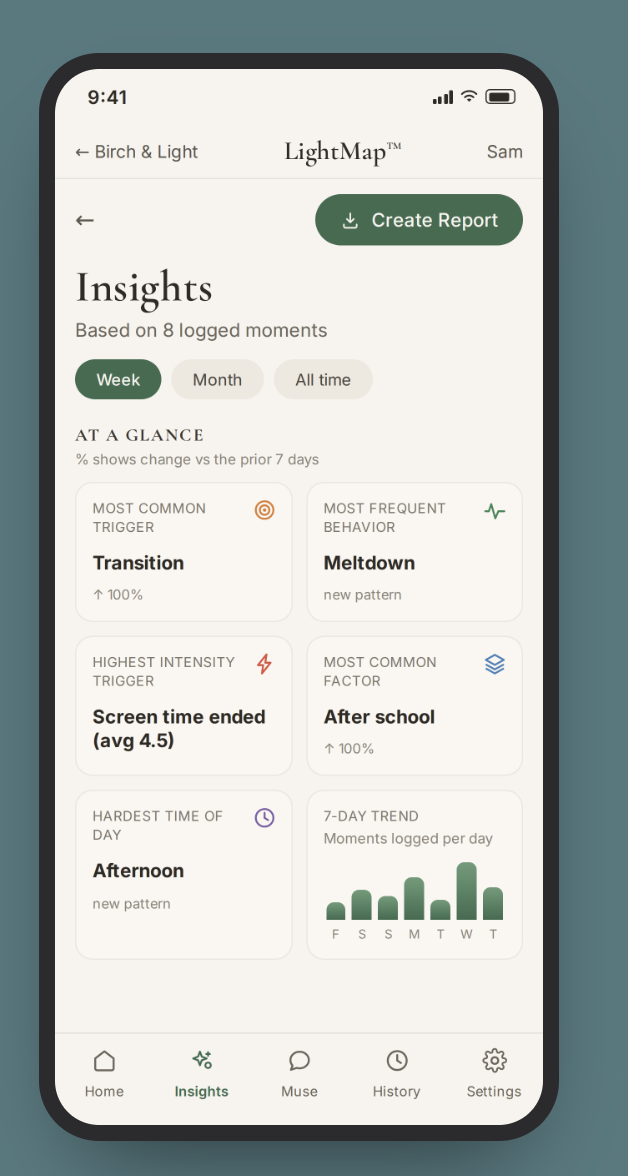

Part of the award-winning Birch & Light Method, honored with the Mom's Choice Gold Award for excellence in family resources.
A story to read together
Sometimes the easiest way in is a story you read side by side.
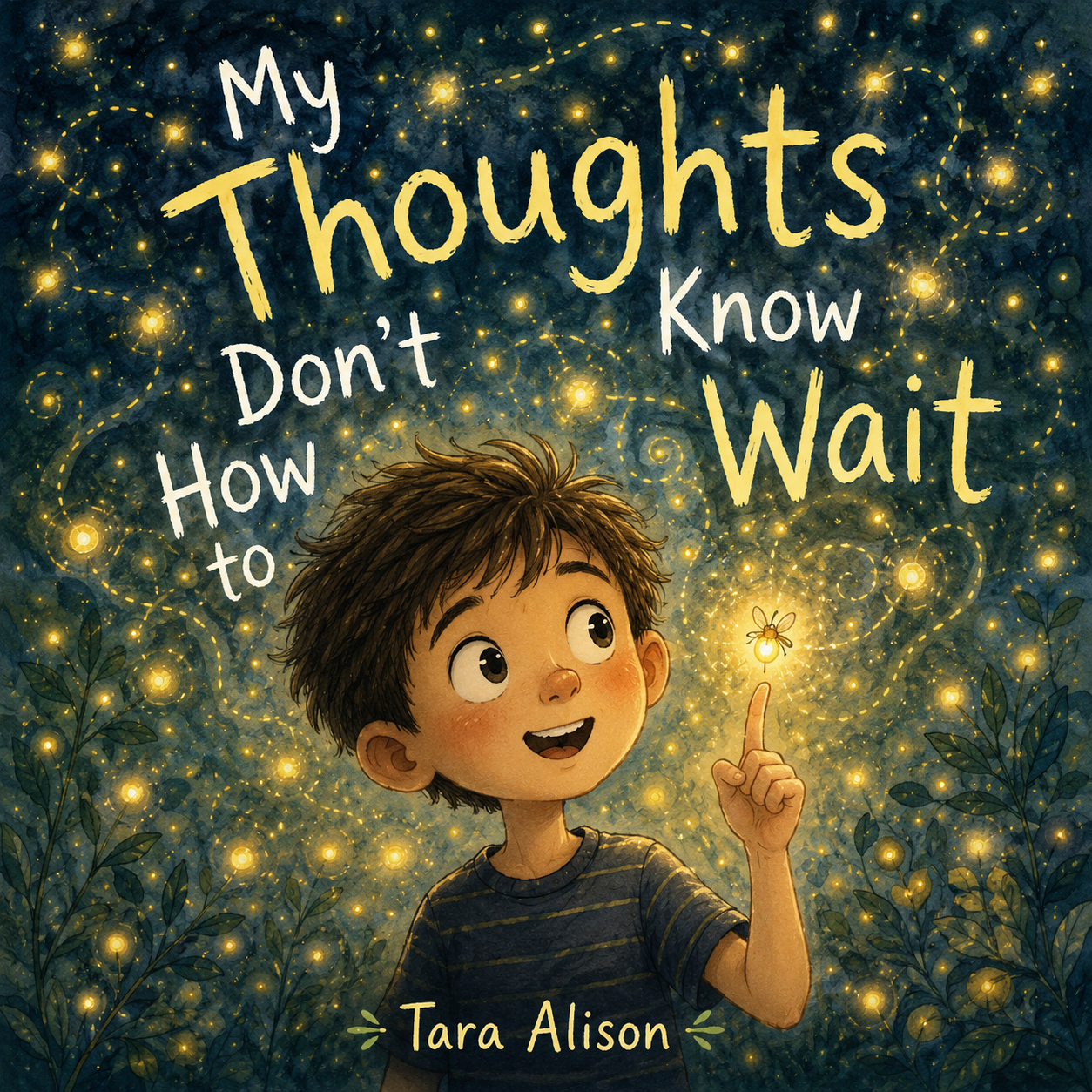 My Thoughts Don't Know How to Wait
Simon's thoughts arrive bright and fast — and feel like they will disappear if he doesn't say them right away. One quiet night beside fireflies, he discovers a small, surprising space between noticing a thought and chasing it.
Read the story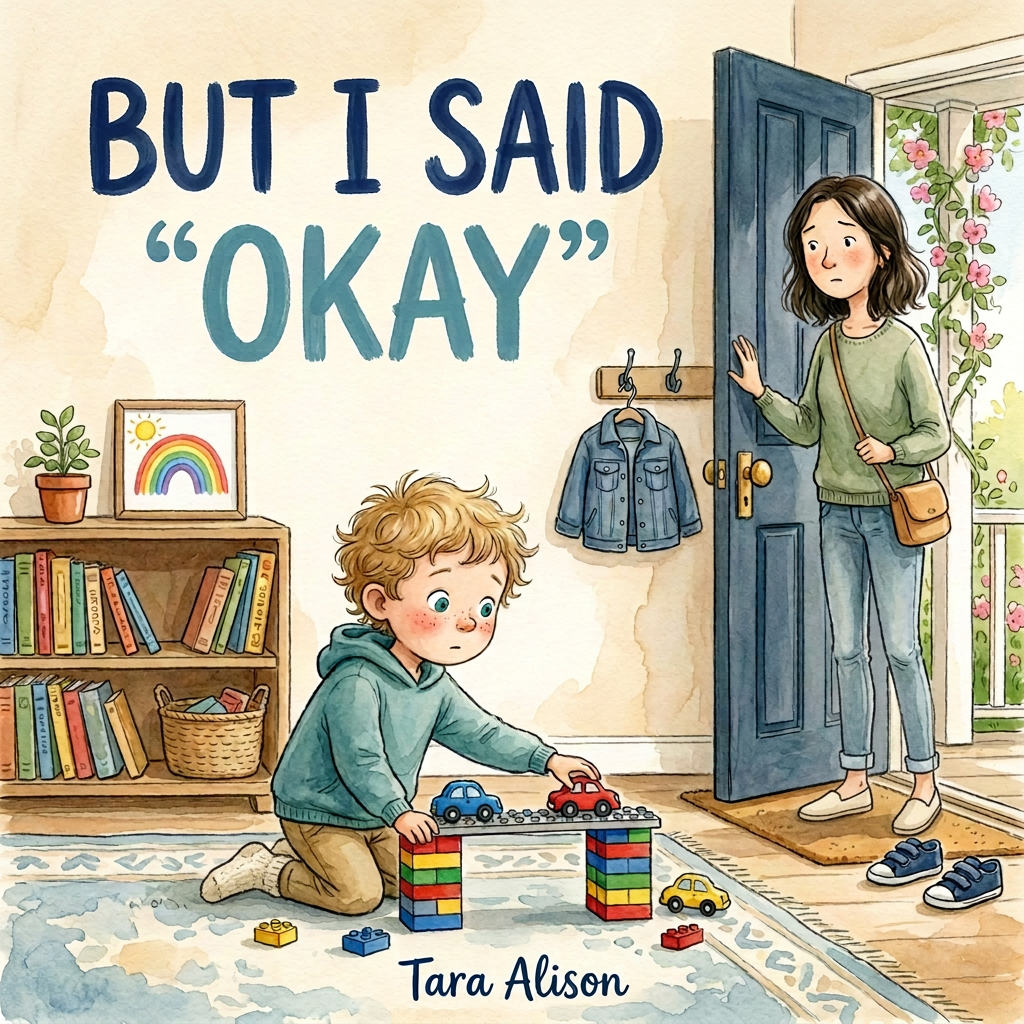 But I Said “Okay”
Owen always says okay. He means it every time. But his attention is still inside the bridge, the dragon, the cave, the music — until Mom realizes that helping him leave one thing matters more than asking him to start the next.
Read the story
If today was one of those days
A few more from the library, free to read.
Researched and drafted with AI assistance, reviewed before publication. Editorial standards