
Evening meltdowns and risky behavior after school are most often the ADHD medication wearing off, not a character flaw or a parenting failure. Stimulants leave the body on a schedule, so a child who holds together at school can lose coverage by the time he gets home. Tell the prescriber when the hard window starts and ends.
The school reports are fine, more or less. Then the bus arrives, the afternoon deepens, and a different child emerges: impulsive, destructive, drawn to every dangerous fascination in the house, doing things he demonstrably knows better than to do. Families in this spot start asking painful questions. Is this the ADHD? Is this his character? Is it something about how we parent, whose authority failed, what we should have been stricter about?
Here is the unglamorous answer that dissolves most of those questions: you are watching pharmacology. Stimulant medications leave the body on a schedule. When school behavior is manageable and evenings are chaos, the most common explanation is that the medication covers the school day and stops covering the child around the time he walks through your door. The evening child is not a character revealed or a discipline failure exposed. He is the same boy, minus coverage, at the end of a day that drained whatever self-control his brain generates on its own.
Girls hit the same wall, and it often looks nothing like this. Less demolition, more tears over small things, snapping at everyone, or going quiet and flat and losing interest in something they normally love. It reads as moodiness or a bad attitude rather than a medication window closing, which is one reason it goes unreported for so long.
Not because he is a boy, and not about authority
Two explanations deserve to be retired on the spot, because both quietly poison a family. The first is temperament by gender: boys will be boys explains nothing about why the same boy is fine at 11am and demolishing things at 6pm. Chemistry explains that cleanly.
The second is the authority theory, the idea that this happens because one parent has no control over him. When a child's behavior tracks the clock this precisely, it is not tracking either parent's authority. And the authority theory has a real cost: it sets the two adults against each other, auditing whose discipline failed, at the exact moment the household needs them running one aligned playbook. The problem is a coverage window, not a parenting verdict. Solve it like one.
The half of this that belongs to the prescriber
The wear-off window is one of the most adjustable problems in ADHD care, and prescribers can only adjust what they hear about. Report it plainly: the medication seems to cover school, and the hours after it fades are when the dangerous and destructive behavior happens. Bring specifics, when the hard window starts and ends, what happens in it, a week of examples. Clinicians have real options for exactly this pattern, involving timing, formulation, and how the day's coverage is shaped, and which option fits is their call. Families routinely live with a brutal evening window for years without ever framing it to the doctor as a coverage question, because it looks like a behavior problem from inside the house. Frame it as a coverage question and medicine can often shrink it.
The CDC describes the same process: providers may need to try different medications and doses, and should observe and adjust the dose to find the right balance between benefits and side effects.
While you're here, take the guide
What's Underneath is free: the three body-state triggers under most meltdowns, what to say in the minute before it tips over, and how to reset afterward.

You'll get the guide instantly, plus five free articles in your inbox every week. Real challenges (meltdowns, school mornings, picky eating, big feelings) and how to actually handle them. Unsubscribe anytime.
The half that belongs to you: engineer the window
Whatever the prescriber adjusts, evenings will still hold the day's tiredness and a decompressing child, so the environment has to do work that willpower cannot. Three moves.
Lock down the genuinely dangerous. If matches, lighters, blades, or anything that burns or cuts has ever featured in the evening chaos, that is not a teaching opportunity, it is an access problem: gone, locked, out of the equation entirely, today. A ten-year-old with depleted impulse control and a fascination with fire is a hardware question, and it is also worth mentioning to the prescriber and any therapist in his life, calmly and specifically, because dangerous-object fascination is information his team should have.
Fill the window on purpose. The mischief formula is reliable: unmedicated plus unsupervised plus unstructured. Remove any one leg and the stool falls. The wear-off hours should have a shape he can see, and the most effective filler is physical: bike, pool, trampoline, a park, hard play, because a body that has spent its charge does dramatically less freelance demolition. Boredom is not neutral for this brain; it is fuel looking for a project. Give the project.
Keep eyes on, without hovering resentment. In the hard window, he simply is not a child who can be alone with the run of the house yet, and treating that as a fact to plan around, rather than a failure to punish, keeps everyone saner. Proximity is the cheapest intervention there is: the same boy does less damage in the kitchen with you than in a room with a door closed.
Do supplements help with the evening window?
Someone in every thread suggests supplements, so here is the truthful version. Nothing sold over the counter does what the medication does; the evening gap cannot be filled from a vitamin aisle. The supplement with the most legitimate research behind it in ADHD is omega-3 fish oil, and its measured effect is real but small (a 2011 meta-analysis of 10 randomized trials in 699 children found an effect size of 0.31, against 0.78 for methylphenidate), a fraction of medication's, nowhere near enough to cover a wear-off window on its own. It is not harmful to add with your doctor's blessing. It is harmful to spend six months and several hundred dollars trialing powders while the actual fix, a coverage conversation with the prescriber, sits unmade. Sequence matters: prescriber first, engineering alongside, supplements a distant and optional third.
One last reframe for the dinner-table despair. The child in the evening window is not the truth about your son finally coming out, any more than the medicated student is a mask. Both are him: same values, same heart, different amounts of braking power available. The evenings feel personal, and they are the least personal thing in the whole picture. Fix the coverage, shape the window, and the boy you see at 11am starts showing up at 6.
The week of specifics that makes the prescriber conversation work, when the window opens, what happens inside it, what helped, is what LightMap is for: log the evenings as they happen and hand over the pattern, not a memory.
Sources: Bloch & Qawasmi meta-analysis on omega-3 fatty acids and ADHD, Journal of the American Academy of Child & Adolescent Psychiatry (2011); clinical research on stimulant medication rebound effects. Centers for Disease Control and Prevention, "Treatment of ADHD," reviewed July 30, 2026.
For education and reflection, not medical advice. Our terms
See what's underneath
Walk into the next appointment with answers
LightMap reads your hard days together and gives you answers. Start with one moment today.
Start with 3 moments Not sure where to start? Ask me.Message Tara on WhatsApp. It really is me, I read everything and will personally respond.Click here to message Tara →

Part of the award-winning Birch & Light Method, honored with the Mom's Choice Gold Award for excellence in family resources.
A story to read together
Sometimes the easiest way in is a story you read side by side.
 My Thoughts Don't Know How to Wait
Simon's thoughts arrive bright and fast — and feel like they will disappear if he doesn't say them right away. One quiet night beside fireflies, he discovers a small, surprising space between noticing a thought and chasing it.
Read the story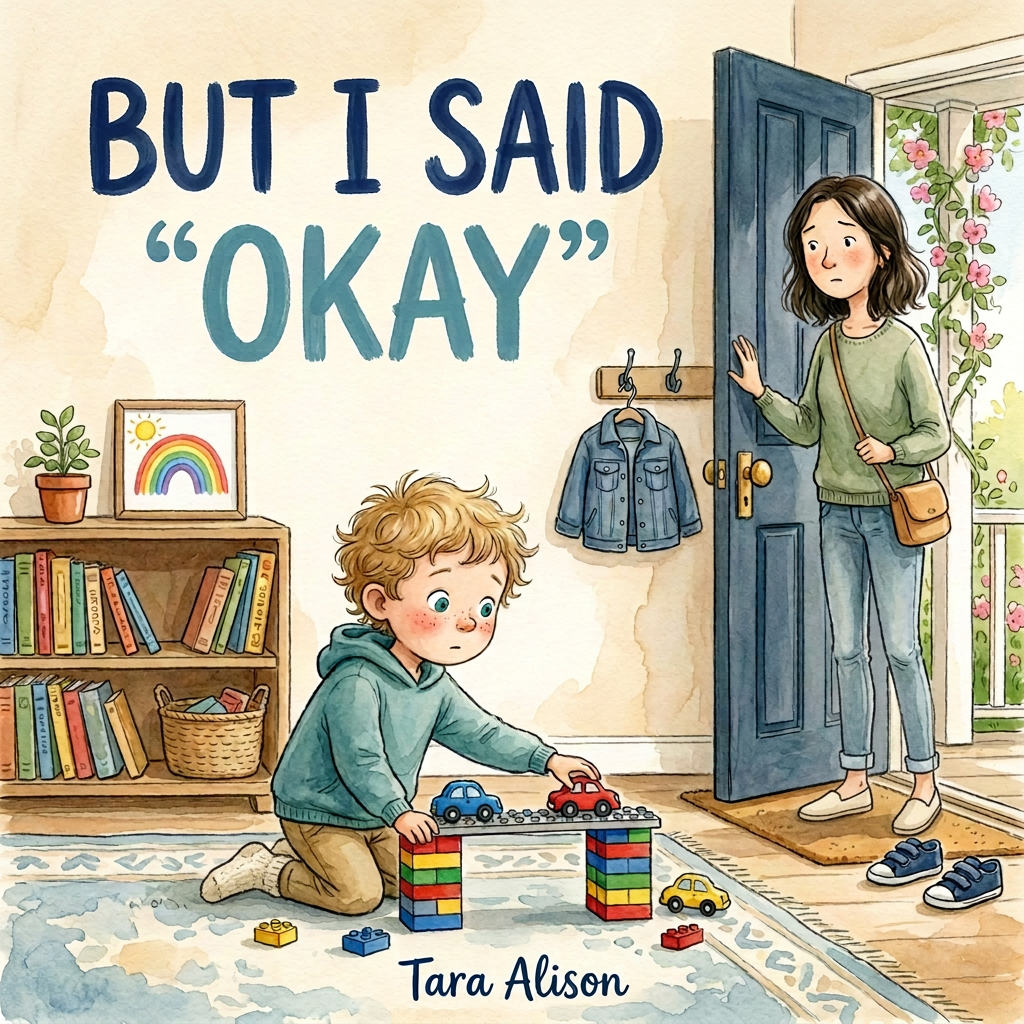 But I Said “Okay”
Owen always says okay. He means it every time. But his attention is still inside the bridge, the dragon, the cave, the music — until Mom realizes that helping him leave one thing matters more than asking him to start the next.
Read the story
If today was one of those days
A few more from the library, free to read.
Researched and drafted with AI assistance, reviewed before publication. Editorial standards