
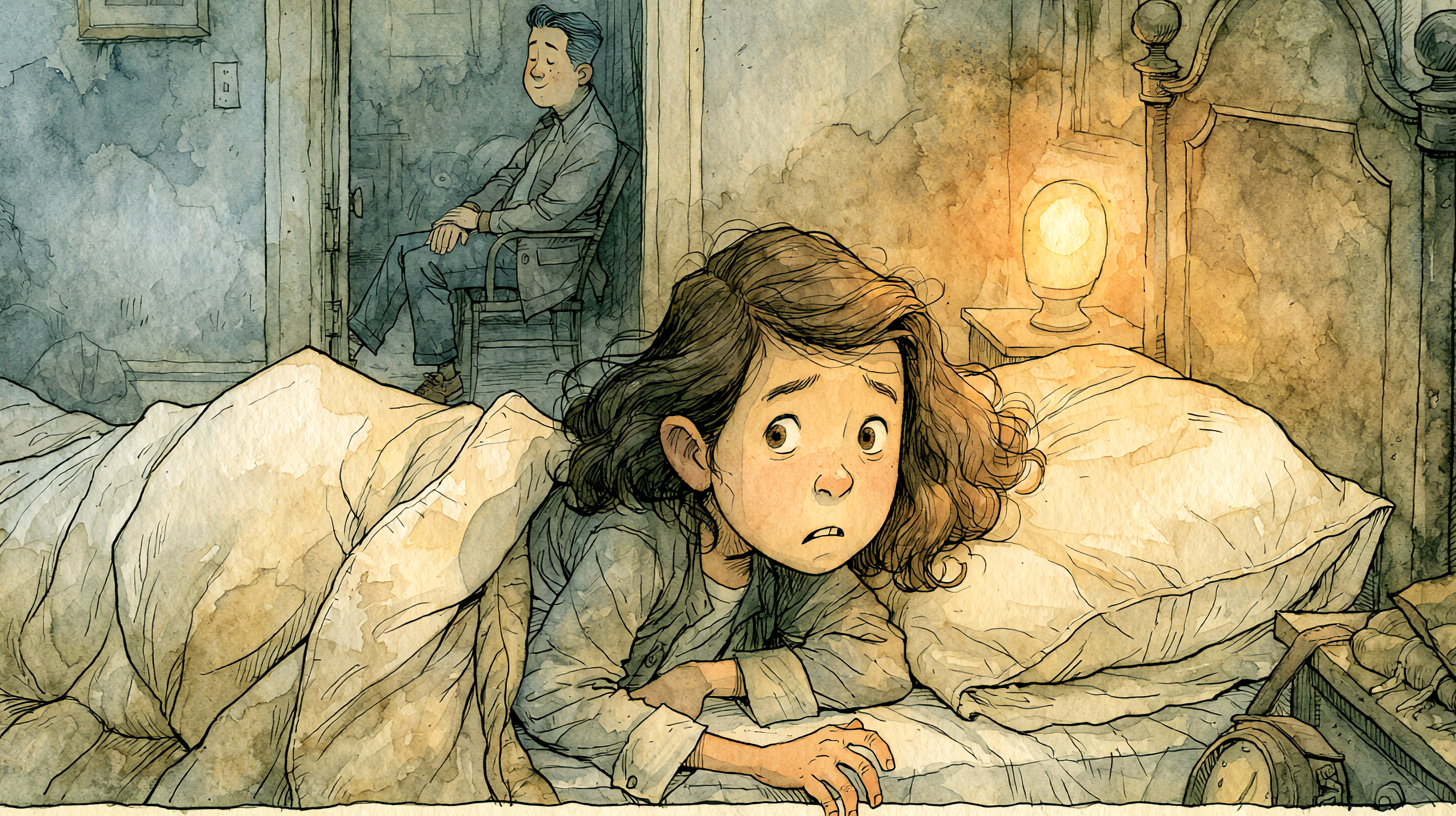
She used to be a good sleeper. Her own room, her own bed, no drama. And then something shifted, and now the nights are hours long: whining, crying, unable to say what is wrong except that she does not want to be alone. You have tried the rewards. You have tried the consequences. You have tried melatonin, and reading quietly, and letting her cry it out, and being firm, and being kind. Nothing holds. She wakes the whole house, night after night, and you are running on empty and starting to feel like you have failed at something other parents seem to manage.
You have not failed. What you are most likely looking at is separation anxiety at night, and there is a good chance you have been aiming every tool at the wrong target. Once you see what is actually driving this, the whole thing starts to make more sense.
Tired of guessing what set your child off? Log tonight's moment in LightMap.
When the timeline points at a medication
Start with something concrete, because it often gets lost in the exhaustion: when did this begin? For a lot of families, a child who was a solid sleeper changes right around a medication trial and does not change back, even after the medication is stopped or swapped. Some ADHD medications affect sleep architecture, and occasionally the new pattern outlasts the drug that started it. That is not a parenting problem and it is not something a reward chart can undo. It is medical information your prescriber would want to hear, framed plainly: she slept well before this trial, the trial changed her sleep, and it has not recovered. Ask directly whether the change could be connected. This is worth doing before you conclude the problem is behavioral, because if the roots are physiological, no amount of behavior work will reach them.
Why the usual tools keep failing on separation anxiety
Here is the piece that reframes everything. Rewards, consequences, grounding, and extinction all assume the same thing: that the child is choosing to resist, and that the right incentive or the right removal of comfort will tip the choice the other way. Those tools work when a behavior is driven by will.
But a child who lies awake for hours whining and crying, who cannot name what is wrong, who only knows she does not want to be alone, is usually not running a negotiation. She is frightened. Separation anxiety at night is extremely common in these kids, and an ADHD nervous system that struggles to settle and self-soothe feels that fear more sharply and has fewer internal tools to manage it. When the driver is fear, a reward does not touch it, because she is not withholding sleep to earn a prize. A consequence does not touch it, because you cannot punish a child out of being scared, you can only make the fear feel more lonely. And extinction, leaving her to cry, is close to the worst fit of all, because the exact thing she is afraid of is being alone, and extinction delivers more of it. The tools are not failing because you are doing them wrong. They are failing because they were built for a different problem.

There's a story for this exact struggle
When Axel's Engine Stayed On
After a big, exciting day, Axel's body is tired but his engine won't quiet down. A gentle story about overstimulated kids who can't settle — and the calm grown-ups who help them.
Free to read. You'll also get five free articles a week. Unsubscribe anytime.
The verbal gap underneath it
It is worth naming why she is not just telling you what is wrong. Plenty of children this age, especially with ADHD, cannot yet put an internal state into words in the moment, particularly a diffuse night-time dread that has no single cause to point at. So it comes out as whining and crying, which reads to an exhausted parent as manipulation or stalling. It usually is not. It is the sound of a feeling she does not have language for yet. Reading her behavior as fear rather than defiance does not make the nights shorter tonight, but it changes what you reach for, and that is what eventually makes them shorter.
What actually helps
When the driver is fear of being alone, the goal is not to win a standoff. It is to slowly rebuild her sense that her room is safe and that she can be there without you, one small step at a time.
- Fade your presence gradually instead of removing it all at once. If she needs someone in the room, start there on purpose, then over many nights move the chair a little farther, then to the doorway, then the hall. Slow and boring is the point. You are teaching her nervous system that alone is survivable in doses it can handle.
- Keep your presence calm and low-key. Minimal talking, minimal engagement, no screens, no big interactions. You are a steady, dull anchor, not a reward for staying awake.
- Name the feeling for her. Something like, it feels scary to be alone in here at night, and I am going to help you feel safe. Giving the fear a name lowers it and tells her you are not fighting her.
- Protect the daytime, not just the night. A child running on broken sleep has less regulation for everything, which feeds the next night. Keeping days as steady as you can takes some pressure off bedtime.
- Drop the consequences for the crying itself. Grounding a frightened child for being frightened adds shame to fear and tends to make nights worse. You can hold a firm, kind boundary about staying in her own bed while still treating the fear as real.
The bottom line
Months of this is genuinely exhausting, and running out of answers does not make you a bad parent. It usually means the answers you were handed were built for defiance, and what you have is separation anxiety. Check the timeline against her medication and raise it with her prescriber, then aim your energy at helping her feel safe alone rather than at making not-sleeping cost more. That shift is slow, but it is the one that fits the actual problem, and it is the one that tends to finally move it.
Sleep changes slowly and unevenly, which makes it almost impossible to judge from inside a bad week. Logging the nights in LightMap shows you the direction of travel.
This is general information for parents, not medical advice. Any sleep change you suspect is linked to a medication should be discussed with your child's prescriber.
For your child: The Mouse Who Heard Everything is about a mouse who hears every creak at night, and the mother who finally sits beside her and names each sound until the alarm quiets.
Sources: Neurotherapeutics journal review of ADHD treatments and sleep; peer-reviewed research on lasting sleep/circadian effects following methylphenidate discontinuation (Psychopharmacology, 2025); graduated extinction ("camping out") research in pediatric behavioral sleep medicine.
For education and reflection, not medical advice. Our terms
See what's underneath
Walk into the next appointment with a pattern
LightMap turns scattered hard days into a pattern you can see. Start by logging one moment tonight.
Find out why it keeps happening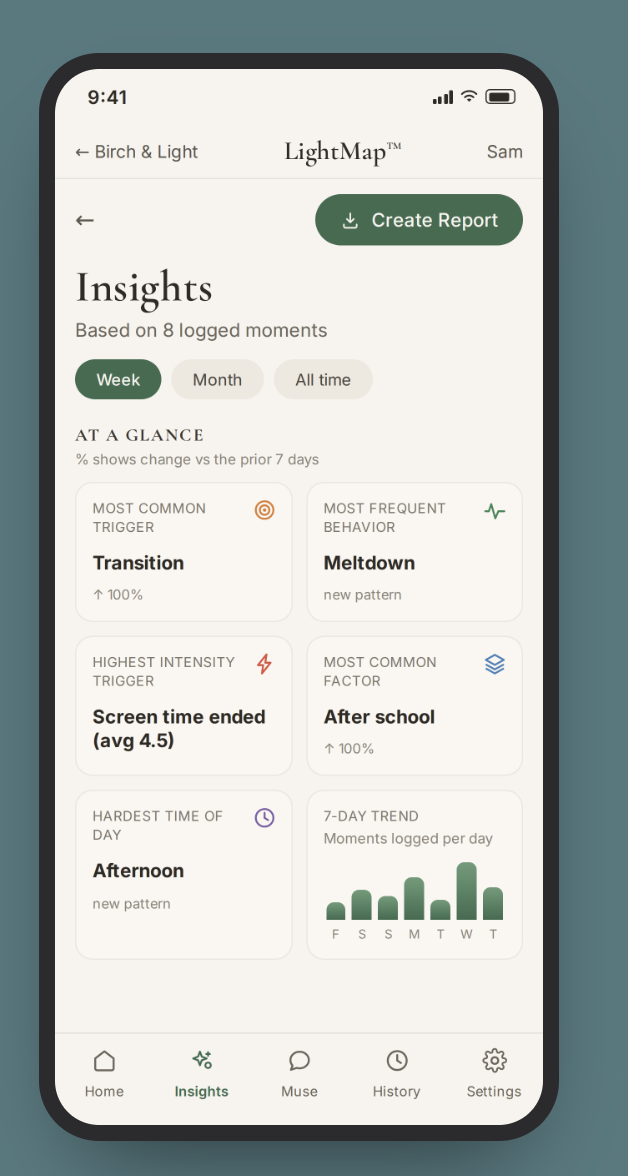

Part of the award-winning Birch & Light Method, honored with the Mom's Choice Gold Award for excellence in family resources.
Before you go, grab the free guide
The 3 body-state triggers under most meltdowns, a script for the 30 seconds before it tips over, and a reset for after. Free.

You'll get the guide instantly, plus five free articles in your inbox every week. Real challenges (meltdowns, school mornings, picky eating, big feelings) and how to actually handle them. Unsubscribe anytime.
A story to read together
Sometimes the easiest way in is a story you read side by side.
- When Axel's Engine Stayed On
After a big, exciting day, Axel's body is tired but his engine won't quiet down. A gentle story about overstimulated kids who can't settle — and the calm grown-ups who help them.
Read the story  My Thoughts Don't Know How to Wait
Simon's thoughts arrive bright and fast — and feel like they will disappear if he doesn't say them right away. One quiet night beside fireflies, he discovers a small, surprising space between noticing a thought and chasing it.
Read the story
Researched and drafted with AI assistance, reviewed before publication. Editorial standards