

You explain it clearly, more than once, and your child still lands on the opposite of what you meant. Up is down, hot is cold, and the child who just came in dead last is beaming because he is sure he won. You know he is bright, his memory is remarkable, so the confusion feels like it cannot be a real not-understanding. It starts to read as not listening, or not trying, or some stubborn refusal to accept how things obviously are.
It is usually none of those. A specific and very common feature of ADHD is behind this, and once you see the machinery, the daily baffled feeling changes shape.
Tired of guessing what set your child off? Log tonight's moment in LightMap.
What is actually happening in this brain
The concepts that keep coming out backwards share a hidden ingredient. Hot and cold, before and after, first and last, earlier and later, winning and losing: these are not standalone facts you can simply memorize. They are relational. To understand any one of them, the brain has to hold two or more things in mind at once and compare them. Winning is not a thing you observe, it is a judgment you build by holding the whole field in working memory, tracking each position, sequencing them, and only then deciding where you landed.
Working memory and processing speed are exactly the systems ADHD taxes most. So the moment a task requires holding several pieces steady and comparing them in real time, the ADHD brain is working uphill. The pieces slip before the comparison finishes. The child does not arrive at a scrambled answer because he failed to listen. He arrives there because the mental holding-and-comparing step, the part that has to happen before the concept can land, did not fully complete. A strong memory for facts does not rescue this, because facts sit still and relational concepts do not.
Why winning and losing is its own trap
The race example shows all of this at once. To know he came in last, your son has to notice where everyone else finished, hold those positions in mind, line them up against his own, and land on the comparison, all while the race is moving and his attention is pulled toward a dozen other things. That is a heavy working-memory load delivered in real time. What is far easier to hold onto is the feeling: I ran, I finished, I feel proud. So the feeling becomes the verdict, and \"I won\" is the honest output of a brain that never got to complete the comparison. Add in that effort and outcome feel connected to a child, and you get genuine confusion about why trying hard did not equal winning.
Time is the same problem wearing a different coat
This is why \"zero concept of time\" rings true for so many ADHD parents. Before, middle, after, yesterday, tomorrow, earlier, later: every one of them is relational, a comparison between points the child has to hold and order. Time also has no sensory signal, nothing to see or touch, so it leans even harder on the exact internal machinery that is already stretched. A child can be years past where you expected and still be sorting before from after, not because the idea is too advanced, but because it asks for the one operation that is hardest for this brain.
There's a story for this exact struggle
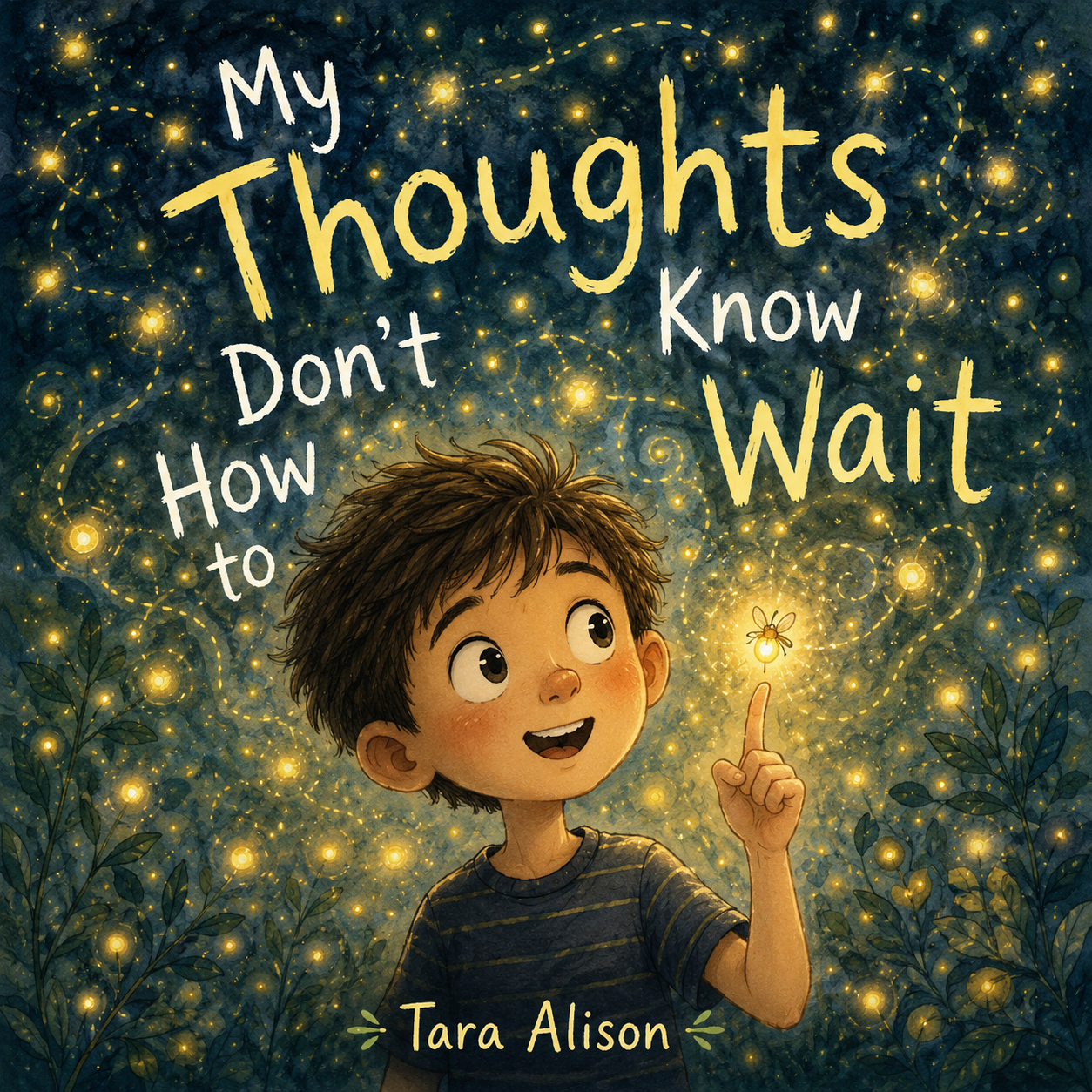
My Thoughts Don't Know How to Wait
Simon's thoughts arrive bright and fast — and feel like they will disappear if he doesn't say them right away. One quiet night beside fireflies, he discovers a small, surprising space between noticing a thought and chasing it.
Free to read. You'll also get five free articles a week. Unsubscribe anytime.
What actually helps
The throughline is simple: take the comparison out of your child's head and put it where they can see it. When the brain does not have to hold and sequence everything internally, the concept has a chance to land.
- Make position visible. Instead of \"you came in last,\" walk through it out loud as it maps to something concrete: she crossed first, then him, then you. Point. Let the order be seen, not just heard.
- Give time a body. Visible timers, a sand timer, a clock face with color, a simple sequence of pictures for the morning. Anything that turns an abstract before/after into something the eyes can track.
- Anchor comparisons to one fixed point. Relational words are easier when one side is nailed down. \"Colder than the bath\" is easier than cold in the abstract. \"After lunch\" is easier than later.
- Separate effort from outcome, kindly. You can be proud of how hard he ran and still help him see he finished third. Both are true, and holding them together protects the pride while slowly building the concept.
- Expect it to firm up unevenly. Maturation helps a lot here, and many kids close this gap with time. If reversals, number-flipping, or persistent trouble with sequencing stick around, it is reasonable to ask about a learning evaluation alongside the ADHD picture, since these can travel together.
The bottom line
When your child understands the opposite of what you intended, it is rarely defiance and rarely a sign that something is wrong with how smart he is. It is a working-memory and processing-speed load showing up right where relational concepts live. He is not refusing the idea. His brain ran out of room to build it in the moment. Make the comparison visible, give time a shape, and you hand him the missing piece his own working memory could not hold onto.
Which concepts slip and which ones hold is worth tracking, because the pattern tells you where making it visible will pay off. LightMap is a place to keep that.
For your child: Oliver Octopus Used Arm Number Three is about an octopus who draws beautifully with the wrong arm and is told at school that everyone uses arm one.
Sources: Barkley on working memory as a core executive function affected in ADHD; peer-reviewed research on relational and comparative concept acquisition in children (PMC); research on working memory load and language comprehension in children with ADHD (Journal of Attention Disorders; PMC).
For education and reflection, not medical advice. Our terms
See what's underneath
Walk into the next appointment with a pattern
LightMap turns scattered hard days into a pattern you can see. Start by logging one moment tonight.
Find out why it keeps happening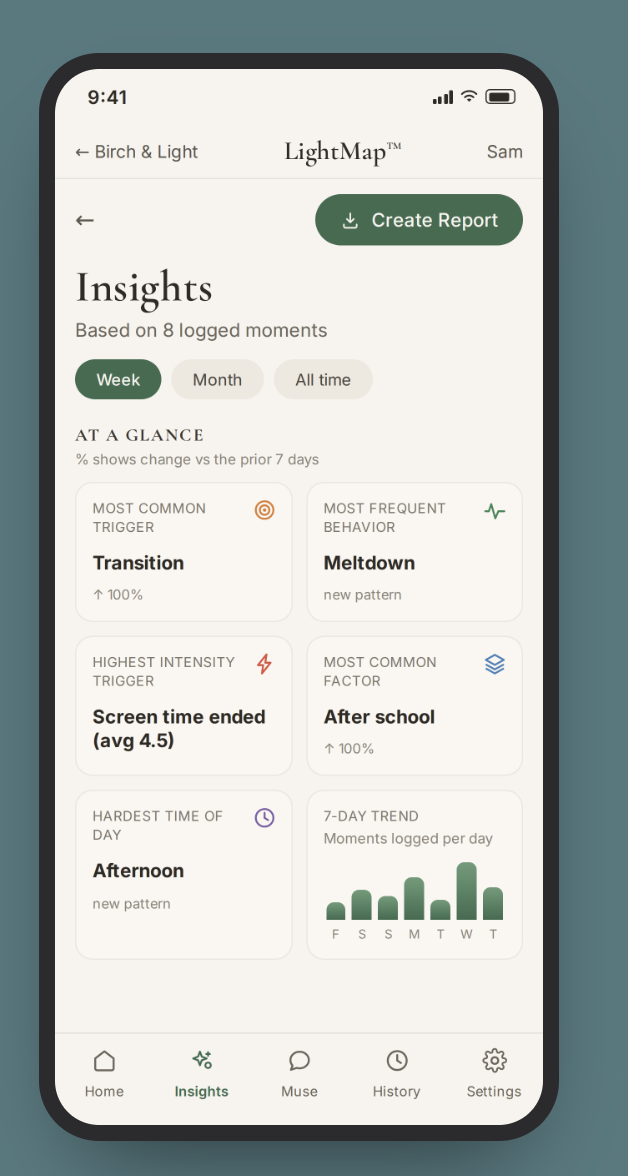

Part of the award-winning Birch & Light Method, honored with the Mom's Choice Gold Award for excellence in family resources.
Before you go, grab the free guide
The 3 body-state triggers under most meltdowns, a script for the 30 seconds before it tips over, and a reset for after. Free.

You'll get the guide instantly, plus five free articles in your inbox every week. Real challenges (meltdowns, school mornings, picky eating, big feelings) and how to actually handle them. Unsubscribe anytime.
A story to read together
Sometimes the easiest way in is a story you read side by side.
- My Thoughts Don't Know How to Wait
Simon's thoughts arrive bright and fast — and feel like they will disappear if he doesn't say them right away. One quiet night beside fireflies, he discovers a small, surprising space between noticing a thought and chasing it.
Read the story 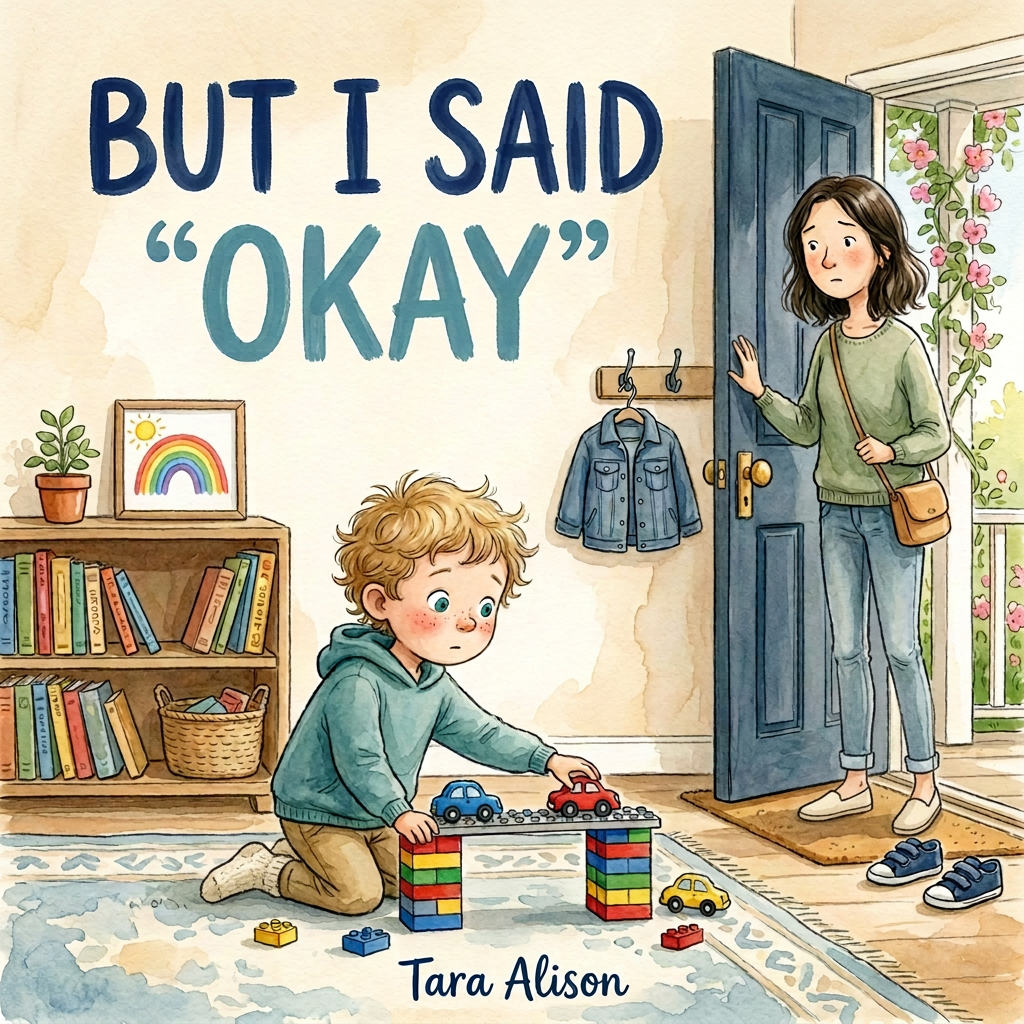 But I Said “Okay”
Owen always says okay. He means it every time. But his attention is still inside the bridge, the dragon, the cave, the music — until Mom realizes that helping him leave one thing matters more than asking him to start the next.
Read the story
Researched and drafted with AI assistance, reviewed before publication. Editorial standards