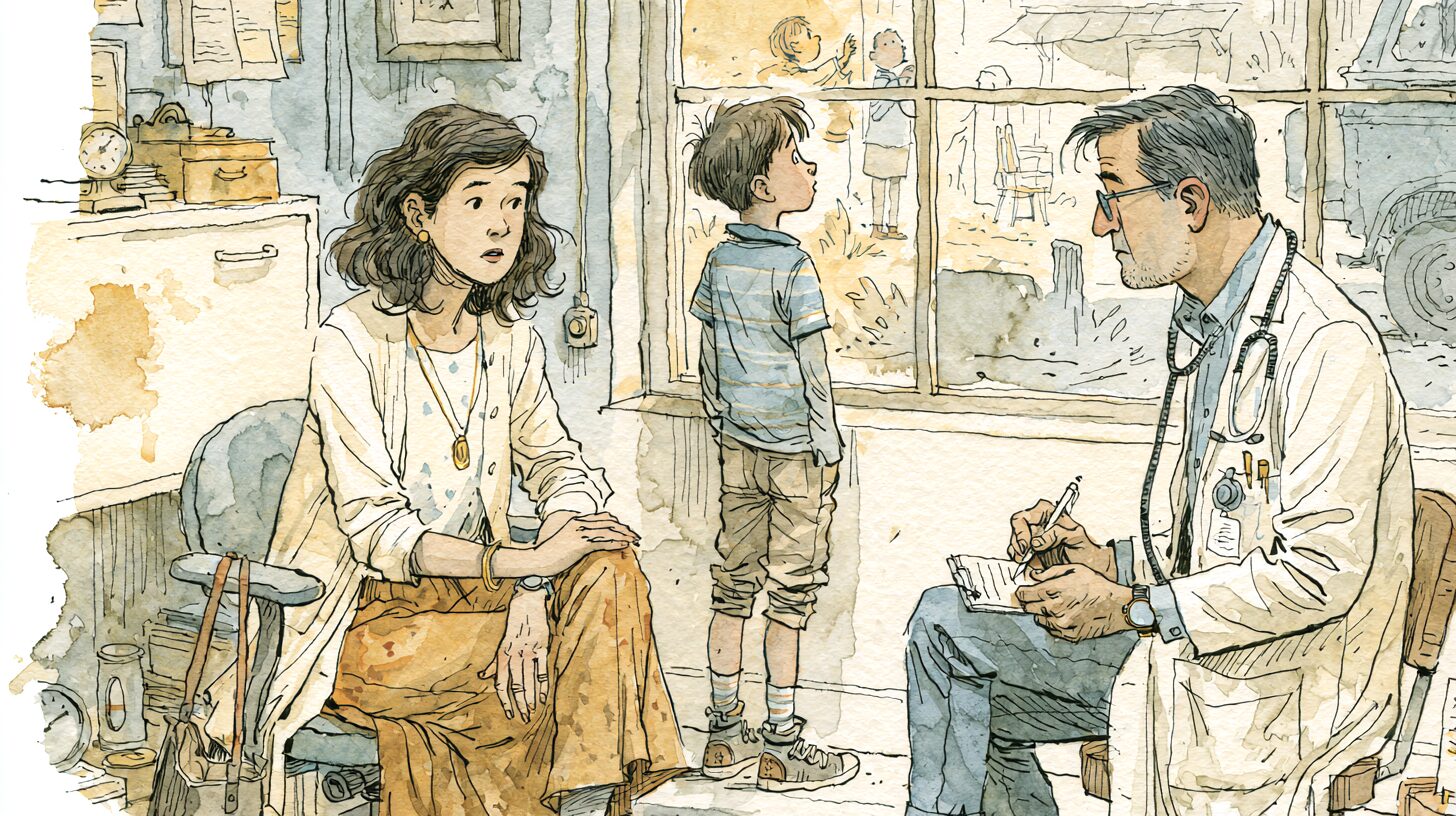
The pediatrician says your child is too young for medication. The pediatrician has also never spent a Tuesday in your house. When a four-year-old's intensity is running the whole family into the ground, "come back when they're older" can land less like caution and more like a door closing on the only exit you could see. So let's look at what the actual guidance says, because it is more nuanced than a flat no, and the nuance points to a concrete next step.
What "too young" actually means in the guidelines
For children diagnosed with ADHD before age six, the major pediatric guidance is clear about the order of operations: the first-line treatment is not medication, it is parent training in behavior management, a structured program that coaches the adults, not the child. But here is the part that often goes unsaid in a fifteen-minute visit: the same guidance does not ban medication before six. It positions it as a real option for moderate to severe cases when behavioral treatment alone has not produced enough improvement, or is not available. In other words, "too young" is shorthand for "not first, and not casually." It is not "never," and a family in genuine crisis is exactly the situation the exception exists for.
Why the caution is legitimate
The caution is not arbitrary gatekeeping. The largest study of stimulant medication in preschoolers, the NIMH-funded PATS trial, found that it can help, but less reliably than in older children, with smaller average effect sizes and side effects common enough that about eleven percent of children in the trial stopped the medication because of them. The most frequent were irritability, emotional outbursts, decreased appetite, and trouble falling asleep, and dosing has to be threaded more carefully because young children process these medications differently. Some preschoolers do beautifully on a carefully managed low dose. Others get the side effects without much benefit. That coin-flip quality is why thoughtful clinicians want the behavioral foundation in place first and want a specialist's hand on the prescription pad when medication does enter the picture for a child this young.
The complication nobody mentions for demand-avoidant kids
One honest caveat if your child fits a PDA profile. The standard parent-training programs are built largely on rewards, consequences, and consistent contingencies, and families of demand-avoidant kids routinely report that this exact toolkit escalates their child rather than settling them, because every sticker chart and every consequence is one more demand on a nervous system that experiences demands as threat. That does not make behavioral support useless for your child. It means the version worth doing is the adapted one: lowering the overall demand load, declarative language instead of commands, collaboration and autonomy wherever possible. If a program or provider treats escalation under their method as proof your child needs more of the method, that is a fit problem, not a you problem.
While you're here, take the guide
What's Underneath is free: the three body-state triggers under most meltdowns, what to say in the minute before it tips over, and how to reset afterward.

You'll get the guide instantly, plus five free articles in your inbox every week. Real challenges (meltdowns, school mornings, picky eating, big feelings) and how to actually handle them. Unsubscribe anytime.
Should you see a specialist? Yes, and here is the reframe
When a general pediatrician says "too young for meds," it sometimes means exactly what it says. But often it quietly means "this is beyond what I am comfortable prescribing at this age," which is honest and appropriate, and it is also an arrow pointing somewhere: prescribing for a four- or five-year-old is specialist territory. A developmental-behavioral pediatrician or a child psychiatrist is the right level of care for a preschooler whose presentation is severe, and asking for that referral is not going around your pediatrician. It is following the system the way it is designed to work.
Here is the reframe worth holding onto: the severity itself is the argument for the referral, regardless of what treatment ends up being right. You are not asking a specialist to hand over a prescription. You are asking for an evaluation that matches the size of what is happening in your home. Sometimes that ends in carefully managed medication. Sometimes it ends in a different or additional diagnosis that changes the whole plan. Sometimes it surfaces support the pediatrician could not offer. All three outcomes beat waiting a year to find out.
What moves a specialist evaluation
Specialists triage on evidence of impairment, so bring it in writing: what a hard day actually looks like, how often, what settings, what it is costing, sleep, safety moments, preschool reports if they exist, what you have already tried. Two weeks of dated notes beats a year of memory. And if the waitlist is long, which it may be, ask to be on the cancellation list, ask whether the practice offers parent-training or interim support while you wait, and keep documenting, because the record you build in the meantime makes the eventual appointment twice as useful.
Wanting relief is not a failure of patience, and asking about medication does not make you a parent looking for a shortcut. It makes you a parent taking the situation as seriously as it deserves. The path just runs through a specialist's door, and there is nothing on the other side of that door you need to be afraid of.
The dated record of hard days, what preceded them, and what helped is exactly what a specialist evaluation runs on. LightMap builds it as you go, so when the appointment finally comes, your child's story walks in the door with you.
Sources: American Academy of Pediatrics Clinical Practice Guideline for ADHD (2019); Preschool ADHD Treatment Study (PATS), National Institute of Mental Health.
For education and reflection, not medical advice. Our terms
See what's underneath
Walk into the next appointment with answers
LightMap reads your hard days together and gives you answers. Start with one moment today.
Start with 3 moments Not sure where to start? Ask me.Message Tara on WhatsApp. It really is me, I read everything and will personally respond.Click here to message Tara →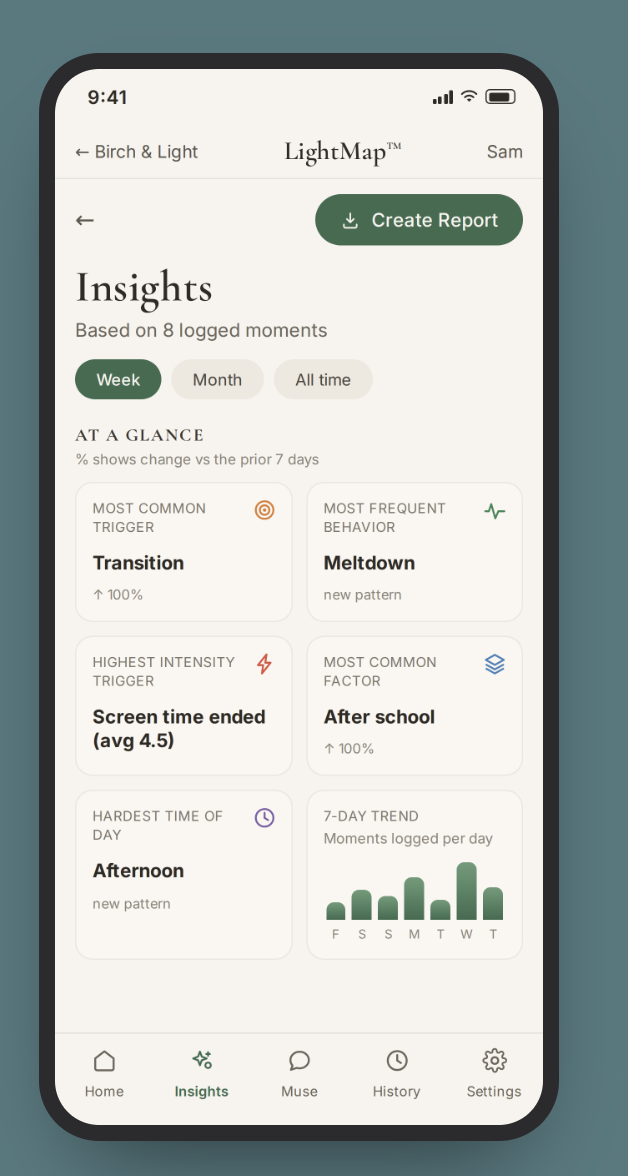

Part of the award-winning Birch & Light Method, honored with the Mom's Choice Gold Award for excellence in family resources.
A story to read together
Sometimes the easiest way in is a story you read side by side.
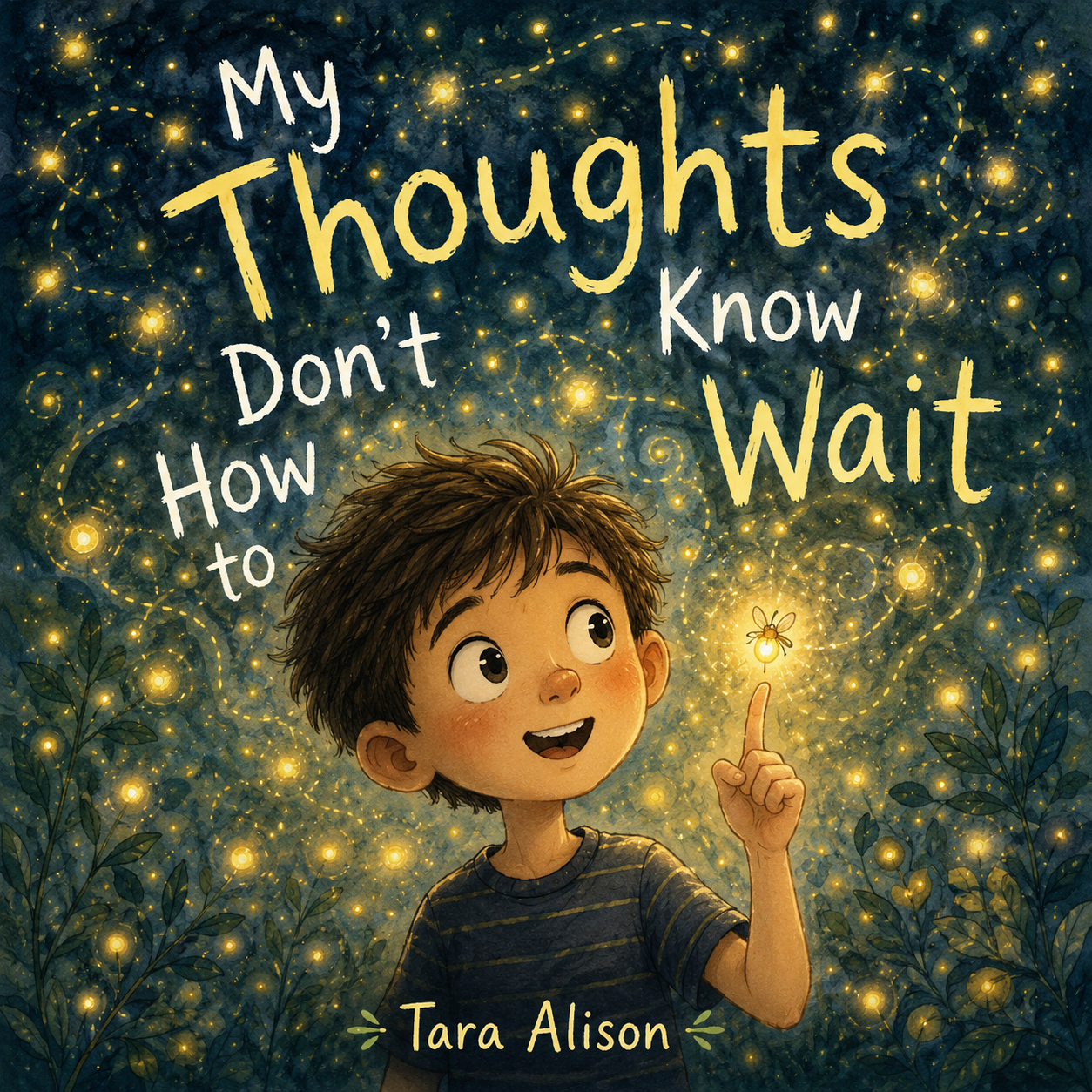 My Thoughts Don't Know How to Wait
Simon's thoughts arrive bright and fast — and feel like they will disappear if he doesn't say them right away. One quiet night beside fireflies, he discovers a small, surprising space between noticing a thought and chasing it.
Read the story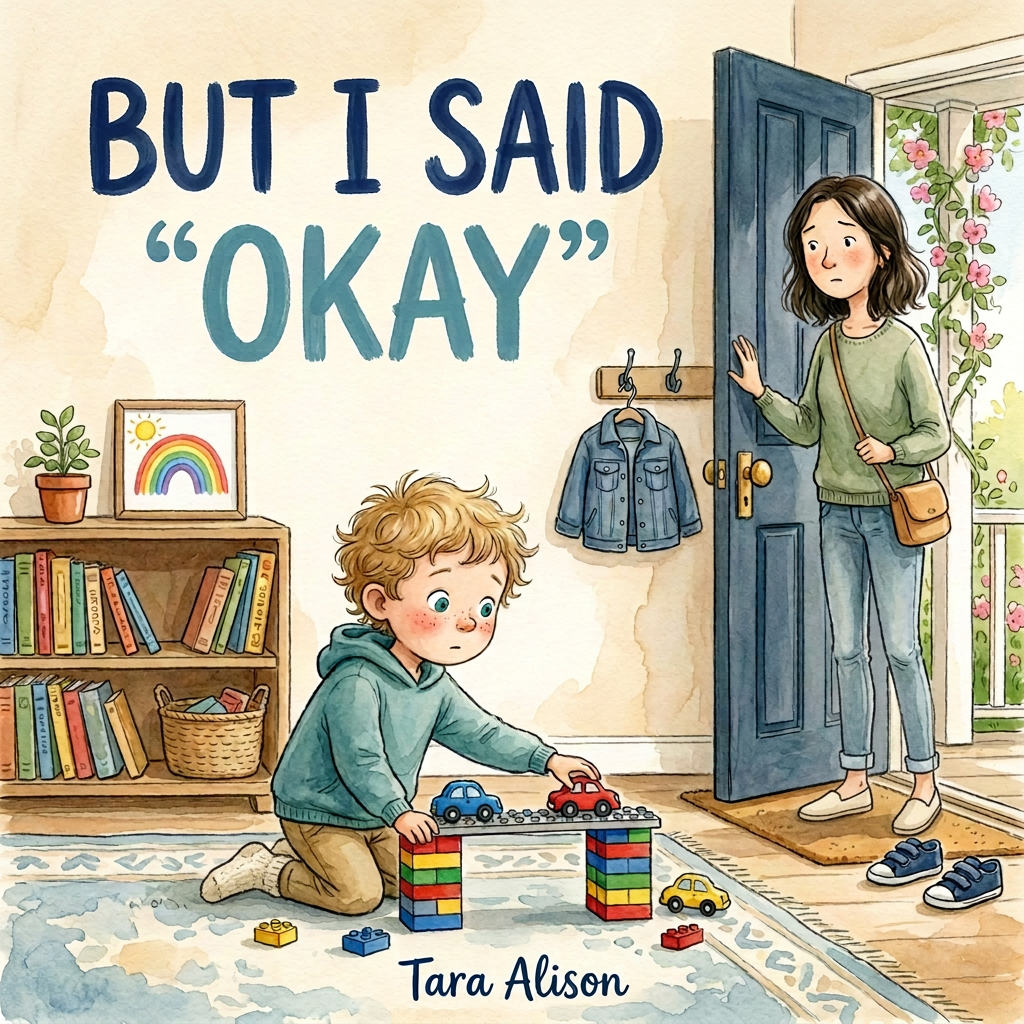 But I Said “Okay”
Owen always says okay. He means it every time. But his attention is still inside the bridge, the dragon, the cave, the music — until Mom realizes that helping him leave one thing matters more than asking him to start the next.
Read the story
If today was one of those days
A few more from the library, free to read.
Researched and drafted with AI assistance, reviewed before publication. Editorial standards