
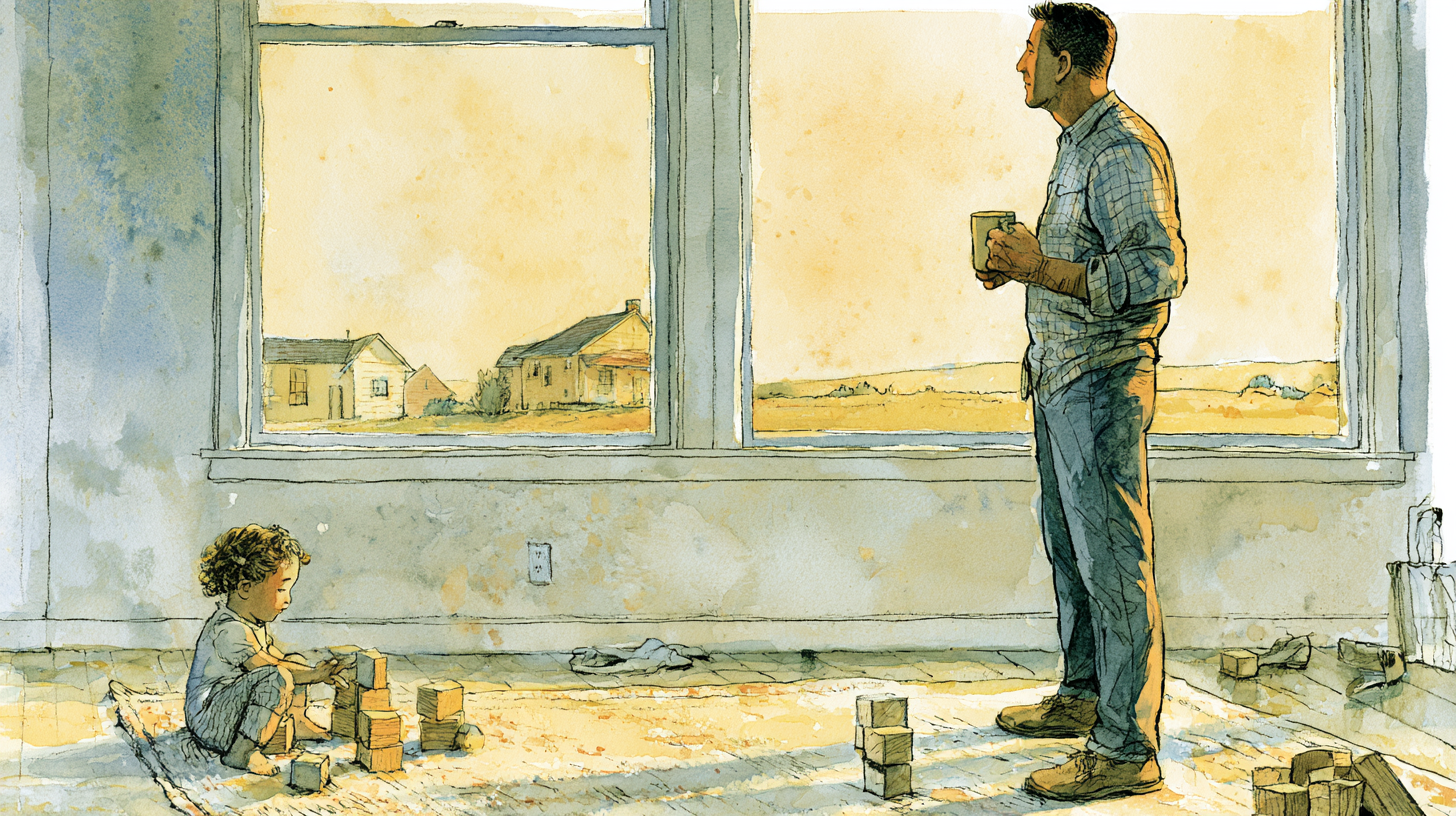
You have good reasons. You have thought about it more carefully than most people think about anything. And you are still lying awake wondering whether you are about to make your family strange, and whether you will be doing it alone.
These feel like one worry. They are two, they have completely different answers, and only one of them needs solving.
The judgment
Mostly not about you.
When someone reacts badly to a homeschooling decision, what is usually happening is that your choice has raised a question they had settled. If your kid does not have to go, theirs did not have to either, and that is uncomfortable in a way that comes out as concern about socialization.
Which is why the judgment fades so reliably once you stop defending the decision. Defending it keeps the question open. Treating it as settled, in the same tone you would use about which school district you live in, closes it. Most people follow your lead on how big a deal something is.
A short flat answer works better than a good argument. It suits us, they are doing well, and then move on. The people who want a debate are not going to be convinced by your reasons anyway, and the ones who are genuinely curious will ask a real question later.
The isolation
This one is real and it deserves actual work.
Not because homeschooling is isolating in itself, but because a great deal of adult social life is quietly built on the school calendar. The gate, the pickups, the class chat, the birthday circuit, the other parents you got to know by standing next to them for years. Leaving school removes all of that at once, and nothing replaces it automatically.
Families who thrive socially are almost always the ones who treated this as a task in the first term rather than something that would sort itself out. The ones who struggle usually assumed it would happen naturally, and then found themselves six months in with a lovely child and no adults.
The work is unglamorous. Join the co-op even if it is imperfect. Go to the park day even when you do not feel like it. Say yes early and often, and keep going long enough for repetition to turn acquaintances into friends. Then, once you have found two or three people you actually like, invest there rather than trying to maintain a crowd.
It also helps to keep at least one thing on a fixed weekly schedule, because a standing commitment does the work that the school calendar used to do.
There's a story for this exact struggle
Magnolia, Willow, and Pine
When the wind shifts in the clearing and Willow drifts toward Pine, Magnolia learns hurt feelings don’t have to mean closing forever.
Free to read. You'll also get five free articles a week. Unsubscribe anytime.
The socialization question, answered properly
You will be asked constantly, so it is worth having thought about it beyond irritation.
The concern people are voicing is that children need to be around other children. That much is true. What they are assuming is that a classroom of thirty same age children, mostly forbidden from talking, is how that happens best, which is a strange model when you say it out loud.
What children actually need socially is practice with a range of ages, unstructured time where they have to negotiate, conflict they resolve themselves, and adults modeling how to behave. Some of that is abundant at school and some of it is scarce there.
The honest version is that homeschooled children do fine socially when they get regular time with other children, and do not when they do not. It is not automatic in either direction, which is precisely why the isolation piece is worth taking seriously rather than dismissing.
If your child is the one feeling it, rather than you, The Only Blue Macaroon is about being the one nobody picks, and it handles the feeling without pretending it away.
The version of the pressure that comes from inside
The judgment you are bracing for is largely other people's noise. The harder pressure is the one you generate.
Because when you have chosen this, every ordinary difficulty gets read as evidence. A bad week is a normal bad week for a school family and a referendum for you. A child struggling with reading is a phase for them and proof for you.
Worth deciding in advance that a bad week is a bad week. Every family has them. Yours will simply be more visible to you.
Before you go, grab the free guide
The 3 body-state triggers under most meltdowns, a script for the 30 seconds before it tips over, and a reset for after. Free.
You'll get the guide instantly, plus five free articles in your inbox every week. Real challenges (meltdowns, school mornings, picky eating, big feelings) and how to actually handle them. Unsubscribe anytime.
Write down your reasons
The most practical thing in this article.
Before you start, write down why you are doing this, in detail, and keep it somewhere you will find it. Not for anyone else. For the February evening when a relative raises an eyebrow and your child has been feral for four days and you cannot remember a single one of the things that seemed so clear in July.
Confidence now will not survive that evening. Paper will.
And be wary of the opposite crowd
One last thing, because it does more damage than the critics.
You will meet people who insist homeschooling is nothing but freedom and joy, and that finding it hard means you are doing it wrong or have not deprogrammed enough. That is as unhelpful as the judgment, and it leaves you unable to say when you are struggling.
It is a trade. You are swapping one set of difficulties for a different set you would rather have. That is a completely sound reason to do something, and it does not need to be effortless to be right.
If you are homeschooling because school stopped working for your child, what happens when the difficulty follows them home is worth reading early. And if the day itself is what keeps collapsing, homeschooling when you are the one who cannot hold a routine covers building structure that holds you.
Which weeks went well and what was different about them: logged in LightMap, that becomes the evidence you can look at in February when your memory tells you none of it is working.
Sources: Medlin's reviews of homeschooling and socialization research (Peabody Journal of Education; PMC); research on social skills, peer interaction, and civic engagement outcomes among homeschooled students (PMC).
For education and reflection, not medical advice. Our terms
See what's underneath
Bring the school evidence, not impressions
LightMap turns scattered hard days into a pattern you can see. Start by logging one moment tonight.
Log today's hard moment, no account needed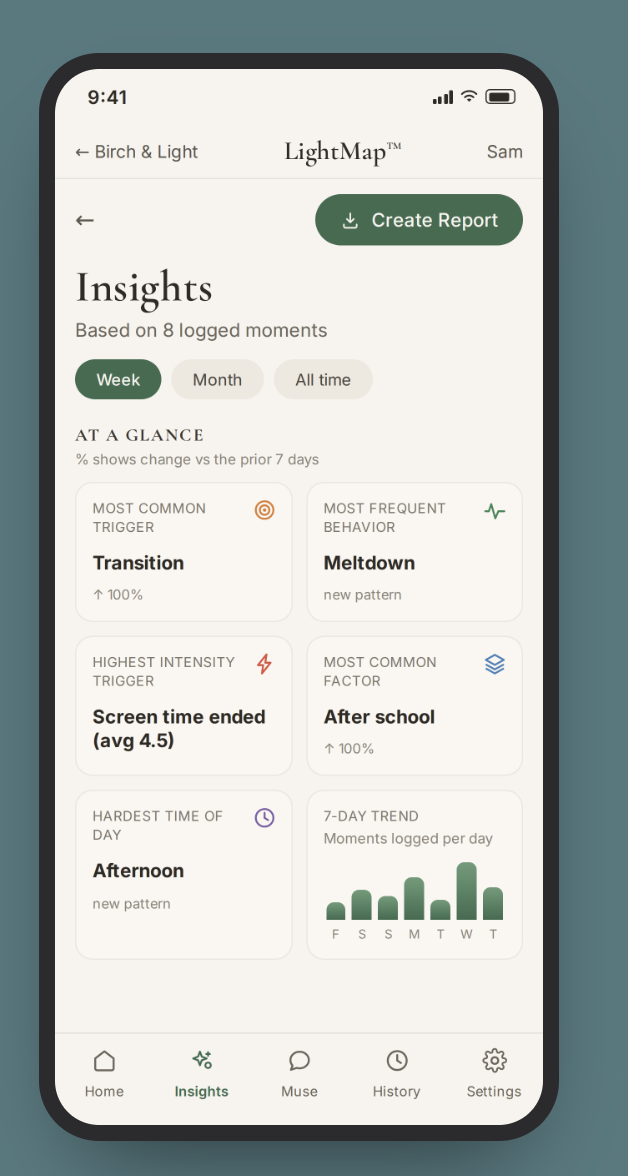
Part of the award-winning Birch & Light Method, honored with the Mom's Choice Gold Award for excellence in family resources.
A story to read together
Sometimes the easiest way in is a story you read side by side.
- Magnolia, Willow, and Pine
When the wind shifts in the clearing and Willow drifts toward Pine, Magnolia learns hurt feelings don’t have to mean closing forever.
Read the story 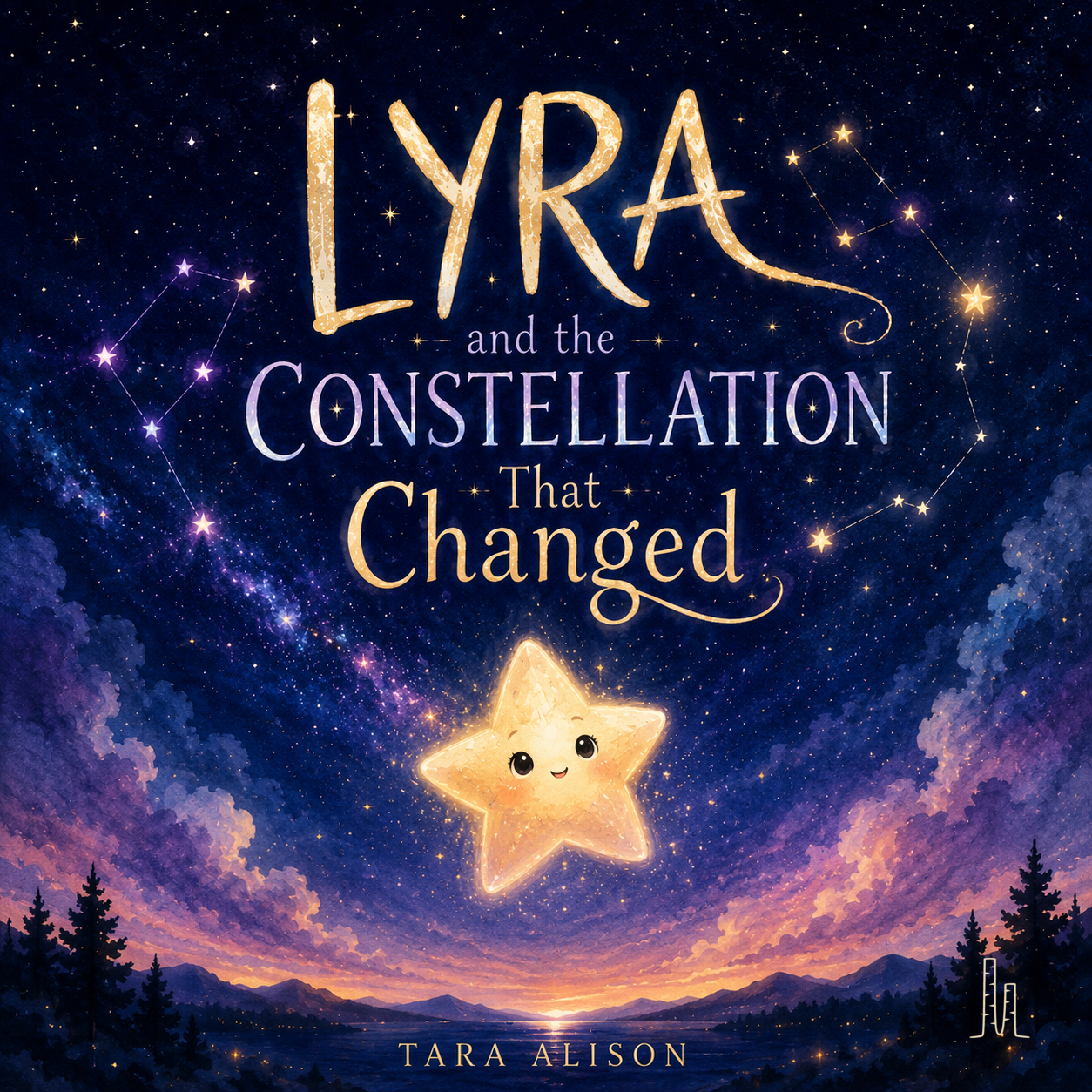 Lyra and the Constellation That Changed
A small star watches her closest friend slowly drift away — and learns that her light was never measured by who stayed beside her.
Read the story
Researched and drafted with AI assistance, reviewed before publication. Editorial standards