
Your child is struggling and the school keeps saying they are already doing what they can at SEN support. Somebody in a Facebook group has told you to apply for an EHCP. And you have no idea whether you are allowed to do that yourself, what it involves, or what happens if they say no.
The short version is that you can apply yourself, today, in writing, without the school's agreement, and the process that follows has legal deadlines attached to it.
Note before you read on: this covers England. Wales, Scotland, and Northern Ireland run different systems entirely.
Who can ask
A parent or carer can request an EHC needs assessment directly from the local authority. A young person aged sixteen to twenty five can request one for themselves. A school or another professional can also make the request, and none of them need to be involved for your application to be valid.
You do not need a private report. You do not need a diagnosis. You do not need a solicitor. Applying is free, and so is appealing.
Send it in writing to the local authority SEND team. Keep the date you sent it, because every deadline that follows counts from there.
The twenty week clock
From the date the local authority receives your request, it has twenty weeks to complete the whole process and issue a final plan if one is needed. Inside that period sit two decision points, and each one carries a right of appeal.
Week six. The authority tells you whether it will carry out the assessment. If it refuses, that letter must explain why, and you can appeal.
Week sixteen. If the assessment went ahead, the authority tells you whether it will issue a plan. If it decides not to, it has to notify you and tell you about your right of appeal.
Week twenty. The final plan is issued, naming a setting.
Before the final version you get a draft plan, and you have at least fifteen calendar days to respond to it. That window is where you say which school you want named and where you argue with how needs and provision have been described. Ask for an extension if you need one.
The twenty weeks is a legal deadline. Waiting lists, staff shortages, and professionals who have not sent their reports are not lawful reasons to go past it. Authorities exceed it constantly and many parents assume they simply have to wait.
The sections that matter
An EHC plan is divided into lettered sections, and three of them carry legal weight in a way the others do not.
Section B describes your child's special educational needs.
Section F sets out the special educational provision to meet them.
Section I names the setting.
Those three are the ones you can appeal. They are also where vague language does the most damage. Provision described as access to speech and language therapy as required commits nobody to anything. Provision described as forty minutes weekly, delivered by a qualified therapist, is enforceable.
When you review the draft, go through Section F line by line and ask of each entry: who, how often, for how long, and delivered by whom. Anything missing those four is not provision. It is a sentiment.
While you're here, take the guide
What's Underneath is free: the three body-state triggers under most meltdowns, what to say in the minute before it tips over, and how to reset afterward.

You'll get the guide instantly, plus five free articles in your inbox every week. Real challenges (meltdowns, school mornings, picky eating, big feelings) and how to actually handle them. Unsubscribe anytime.
When they say no
Refusals are common and they are frequently overturned. You can appeal to the SEND Tribunal if the authority refuses to carry out an assessment or reassessment, refuses to issue a plan after assessing, refuses to amend the education sections of an existing plan, or decides your child no longer needs a plan. You can also appeal the contents of a plan you have been given.
Two things to know about the mechanics.
First, in most cases you have to contact a mediation adviser before you can lodge an appeal. You do not have to go through mediation itself in every case, but you need the certificate that says you considered it.
Second, the deadline is two months from the date of the decision letter, or one month from the date on your mediation certificate, whichever is later. Miss it and you are relying on the tribunal's discretion. Do not let an authority talk you into waiting while they reconsider. Lodge the appeal, and withdraw it later if they change their minds.
Get the evidence you already paid for
Whatever assessments were carried out belong in your hands. Ask the local authority for copies of all reports, including the one from the school, and ask the school directly as well.
Parents routinely appeal without ever reading the evidence the authority used to refuse them, which is the equivalent of arguing a case you have not been shown.
What SEN support is and is not
A school saying they are already meeting needs at SEN support is not an answer to your request, and it does not stop you applying. SEN support has no legal timescale, no enforceable provision, and no appeal route. An EHC plan is a legal document that must be followed.
Needs also span four broad areas, not just falling behind academically: communication and interaction, cognition and learning, social emotional and mental health, and sensory or physical. A child who is coping academically while falling apart in every other way can still need a plan.
Free help, and use it
Two organisations exist for this and cost nothing. IPSEA gives free legal advice on SEND law and has model letters for every stage. SENDIASS is your local statutory information and advice service, and there is one in every area.
Check whether you qualify for legal aid as well.
The thing to remember
The system runs on the assumption that most parents will accept the first no. Deadlines get missed because nobody chases them. Draft plans get signed off because nobody knew to read Section F line by line. Refusals stand because nobody appealed.
Every stage of this has a rule attached to it. Knowing which rule applies to which week is most of the advantage.
Our research says this is how the process works in England, based on our reading of the GOV.UK guidance and the SEND Code of Practice as of August 2026. It is not legal advice. Check it directly before you act on it. The guidance is free at gov.uk, IPSEA gives free legal advice on SEND law and publishes model letters for every stage, and SENDIASS is your local statutory advice service.
Sources: GOV.UK guidance on appealing an EHC plan decision; Children and Families Act 2014; SEND Code of Practice; SEND Regulations 2014.
For education and reflection, not medical advice. Our terms
See what's underneath
Build the record before you apply
LightMap reads your hard days together and gives you answers. Start with one moment today.
Start with 3 moments Not sure where to start? Ask me.Message Tara on WhatsApp. It really is me, I read everything and will personally respond.Click here to message Tara →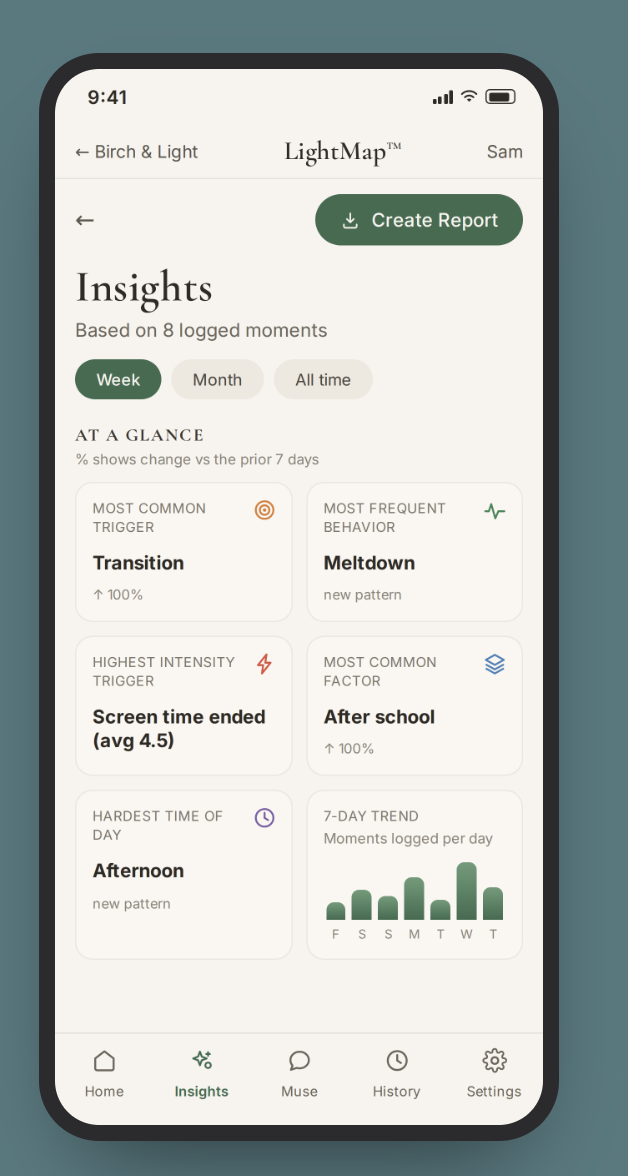

Part of the award-winning Birch & Light Method, honored with the Mom's Choice Gold Award for excellence in family resources.
If today was one of those days
A few more from the library, free to read.
Researched and drafted with AI assistance, reviewed before publication. Editorial standards