
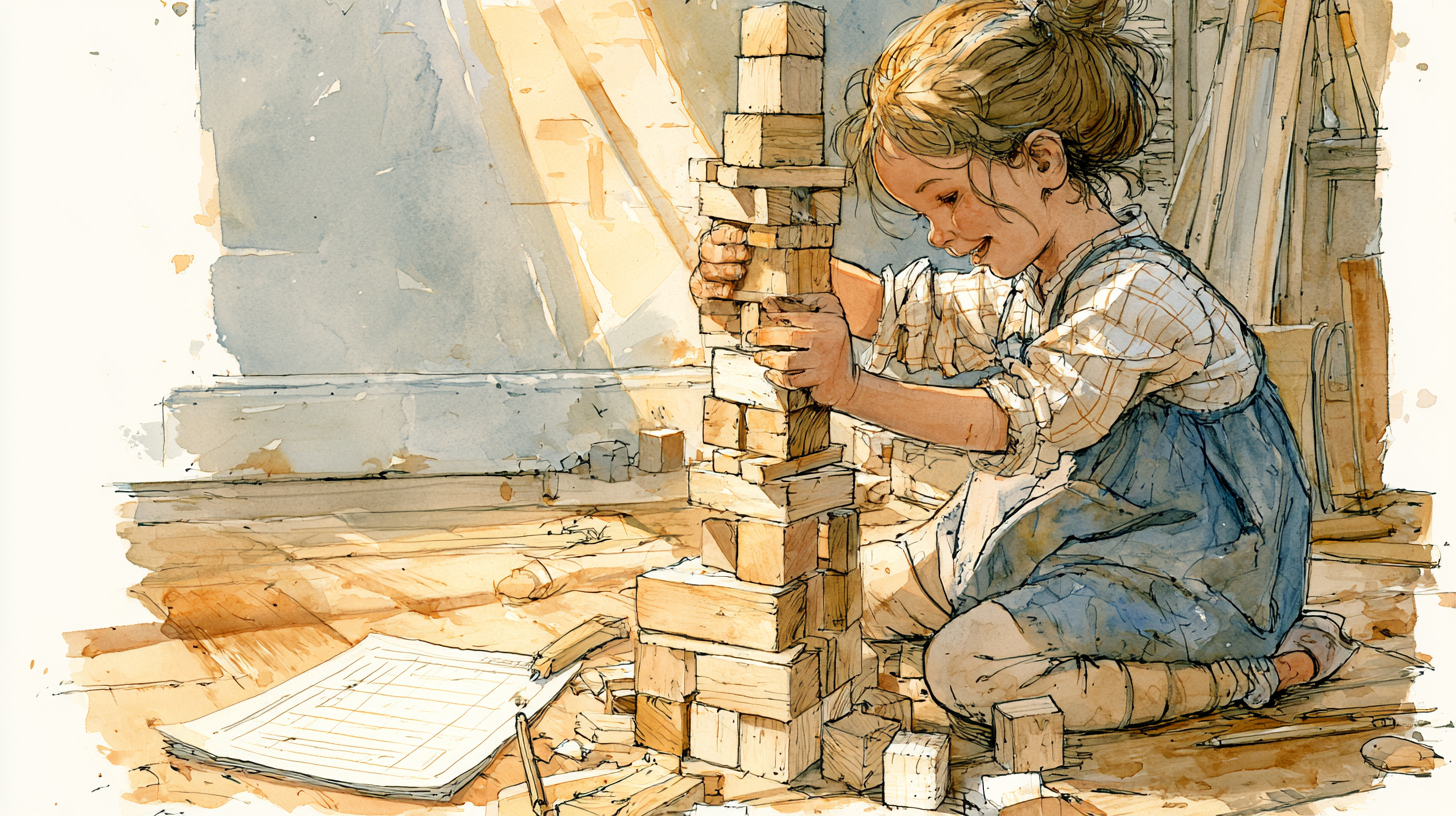
Your four year old can read, count past a hundred, and asks to do math at breakfast. He also will not touch a pencil, hates coloring, and turns to liquid at the sight of a tracing sheet.
Parents in this position usually assume they are missing a next step. Almost always they are not. What is happening is two developmental clocks running at different speeds, and understanding that changes what you do with the next two years.
Reading and writing are not the same skill
Decoding words is a cognitive task. Forming letters is a physical one, and the physical one depends on things that are still being built.
Handwriting requires shoulder stability, then wrist and forearm control, then finger strength and fine coordination, roughly in that order, because the body develops from the center outward. A child whose shoulder girdle is not yet strong enough has nothing to stabilize the arm that is supposed to move the hand that is supposed to control the pencil.
Which means a bright four year old refusing to write is frequently not refusing at all. He is telling you, in the only way available, that this hurts or exhausts him.
Push it anyway and you get a child who can write badly and hates it. Wait, build the underlying strength, and you get a child who writes later and does not associate it with misery. The second one is a better trade almost every time.
Oliver Octopus Used Arm Number Three is a good one to read together if this is already a sore subject, since it is about an octopus who draws beautifully with the wrong arm and is told at school that everyone uses arm one.
What actually builds writing
Very little of it happens at a table.
Vertical surfaces. Chalk on a wall, paint at an easel, a whiteboard mounted at his height. Working with the arm raised builds shoulder stability and naturally puts the wrist in the position writing needs. This is the single highest value change most families can make.
Hanging and climbing. Monkey bars, climbing frames, hanging from anything. Grip strength and shoulder loading do more for eventual handwriting than any amount of tracing.
Resistance for the hands. Playdough, clay, tearing paper, tongs, spray bottles, squeezing sponges, threading beads. Anything that makes small muscles work against something.
Crossing the middle. Activities that make one hand cross to the other side of the body, which sounds obscure and matters for coordination.
Big movement generally. Balance, spinning, swinging, rough play. The vestibular and proprioceptive systems underpin the fine control that comes later.
If you want a rule of thumb, an hour of climbing does more for handwriting at four than a workbook page, and it does not cost you his willingness.
Why workbooks backfire at this age
Not because worksheets are evil, but because of what they teach alongside the content.
A daily workbook teaches a four year old that learning means sitting still, working alone, on paper, on something chosen by someone else, at a time you did not pick. For a child who already loves finding things out, that is a downgrade, and the association sticks.
The other problem is that they make progress look like completed pages, which is the least reliable measure of learning available at this age and the easiest one for a parent to become anxious about.
There's a story for this exact struggle
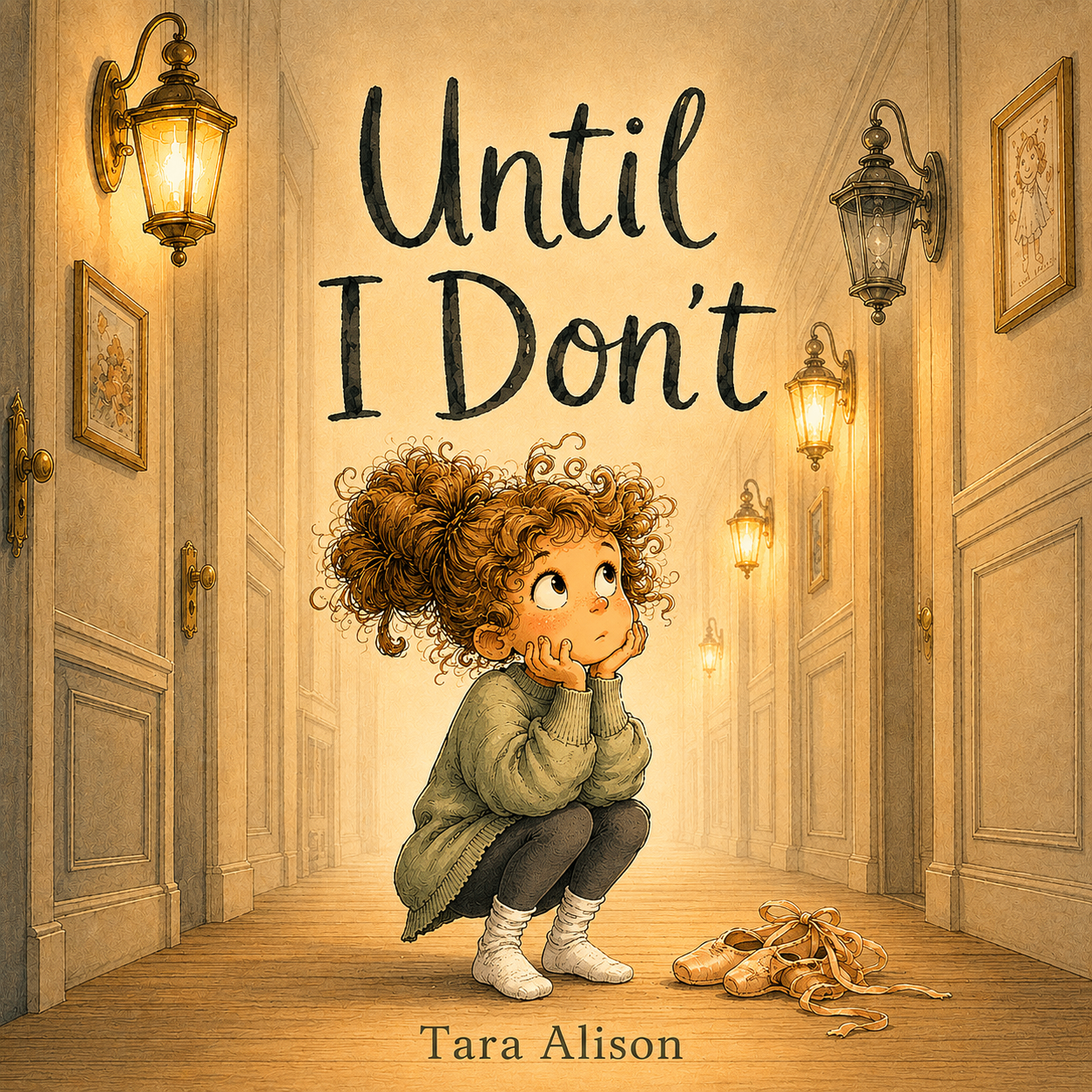
Until I Don't
Rosie shines at dance, at school, with neighbors. At home, the smallest thing can tip her over. One quiet hallway moment helps her family finally find language for the part of her nobody else sees.
Free to read. You'll also get five free articles a week. Unsubscribe anytime.
What is worth building instead
If you want a list of things that actually pay off before six, it looks nothing like a curriculum.
Being read to, far above his own reading level. Vocabulary, sentence structure, and the ability to hold a long narrative all come from listening, and they are the strongest predictors of later comprehension. Read him things he could not possibly read himself.
Talking, at length, about real things. Back and forth conversation with an adult builds more language than any program. Answering his questions properly, including the tedious ones, is the work.
Unstructured play, including with other children. Negotiating, taking turns, losing, changing the rules, being bored and inventing something. This is where executive function gets built, and it cannot be taught directly.
Being outside a lot. Movement, distance vision, weather, risk, and the kind of attention that does not come from a screen.
Doing real tasks. Cooking, measuring, sorting laundry, counting change, building things. Math and sequencing arrive free with the activity.
Before you go, grab the free guide
The 3 body-state triggers under most meltdowns, a script for the 30 seconds before it tips over, and a reset for after. Free.
You'll get the guide instantly, plus five free articles in your inbox every week. Real challenges (meltdowns, school mornings, picky eating, big feelings) and how to actually handle them. Unsubscribe anytime.
Following him instead of a scope and sequence
A child asking daily to do math already has the best curriculum available, which is his own interest. Answer the question in front of you and add a little each time.
That approach frightens parents because it has no plan. But at four the plan is doing nothing for the child, it is doing something for the adult, which is providing reassurance. Worth knowing which one you are buying.
If you do want structure, lean toward read aloud based approaches and away from workbook based ones at this age. Anything that keeps learning verbal, physical, and shared rather than solitary and paper based.
The skill nobody builds and everybody needs
Here is what I would spend the next two years on with a child who finds everything easy.
Being bad at something. Tolerating difficulty. Continuing after a mistake.
Children who are far ahead early often meet real difficulty for the first time at eight or nine or twelve, and having never practiced it, they fall apart, quit, or refuse to attempt anything they might not do well. That is a much harder problem than a delayed academic skill, and it is almost entirely preventable by deliberately putting him in situations where he is not the best.
Sport he is mediocre at. An instrument. Games with older children where he loses. Anything that requires many attempts. Then praising the persistence rather than the result, and letting him see you be bad at things without minding. June and the Window That Took Time is about a girl who wants to do something and finds it far harder and slower than she expected, and it gives a young child words for the feeling before they need them.
That is the thing that will matter at fifteen. The letters will come.
If he is already refusing paper work and it has become a fight, why young children refuse schoolwork at home covers what to change first. And what growth mindset actually looks like is worth reading if the fear of getting things wrong is already showing up.
If the falling apart when something is hard is already showing up, Ember's Eruption is a story about feelings building before the explosion and learning to notice the early cracks. It suits any child with big reactions, diagnosis or not.
Which activities he chooses, how long he stays with them, and what he does when something is hard: logged in LightMap over a few months, that is a far better record of learning than any workbook.
Sources: Peer-reviewed research on the divergence between early decoding ability and fine motor development (PMC); American Occupational Therapy Association guidance on handwriting readiness; research on developmental readiness and the effects of early academic pressure (PMC).
For education and reflection, not medical advice. Our terms
See what's underneath
Bring the school evidence, not impressions
LightMap turns scattered hard days into a pattern you can see. Start by logging one moment tonight.
Log today's hard moment, no account needed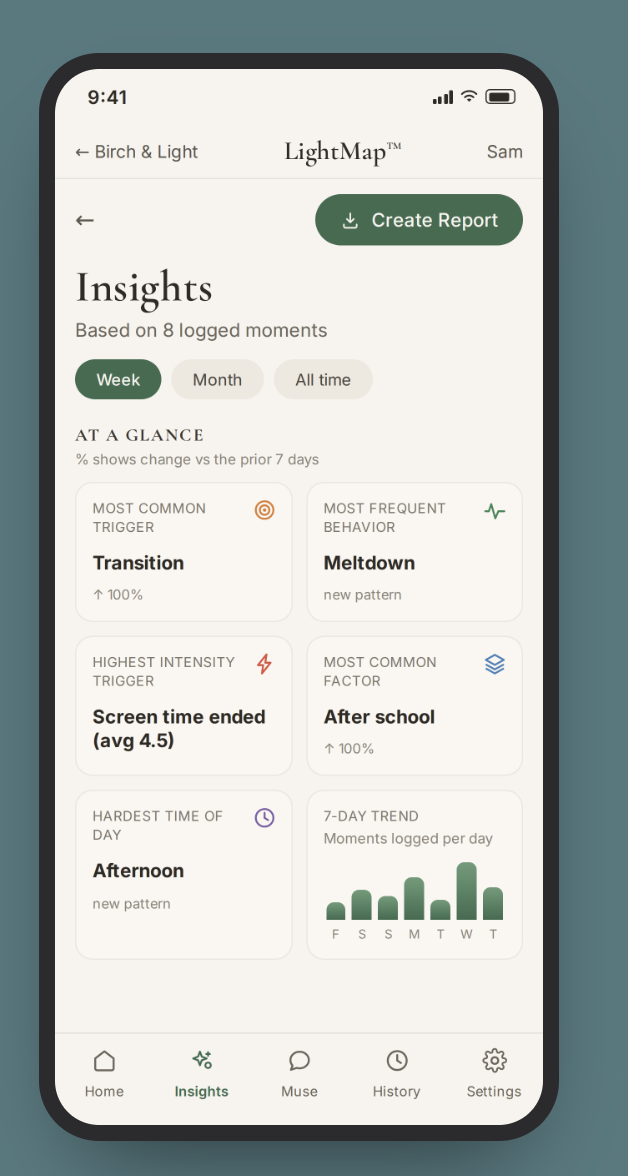

Part of the award-winning Birch & Light Method, honored with the Mom's Choice Gold Award for excellence in family resources.
A story to read together
Sometimes the easiest way in is a story you read side by side.
- Until I Don't
Rosie shines at dance, at school, with neighbors. At home, the smallest thing can tip her over. One quiet hallway moment helps her family finally find language for the part of her nobody else sees.
Read the story 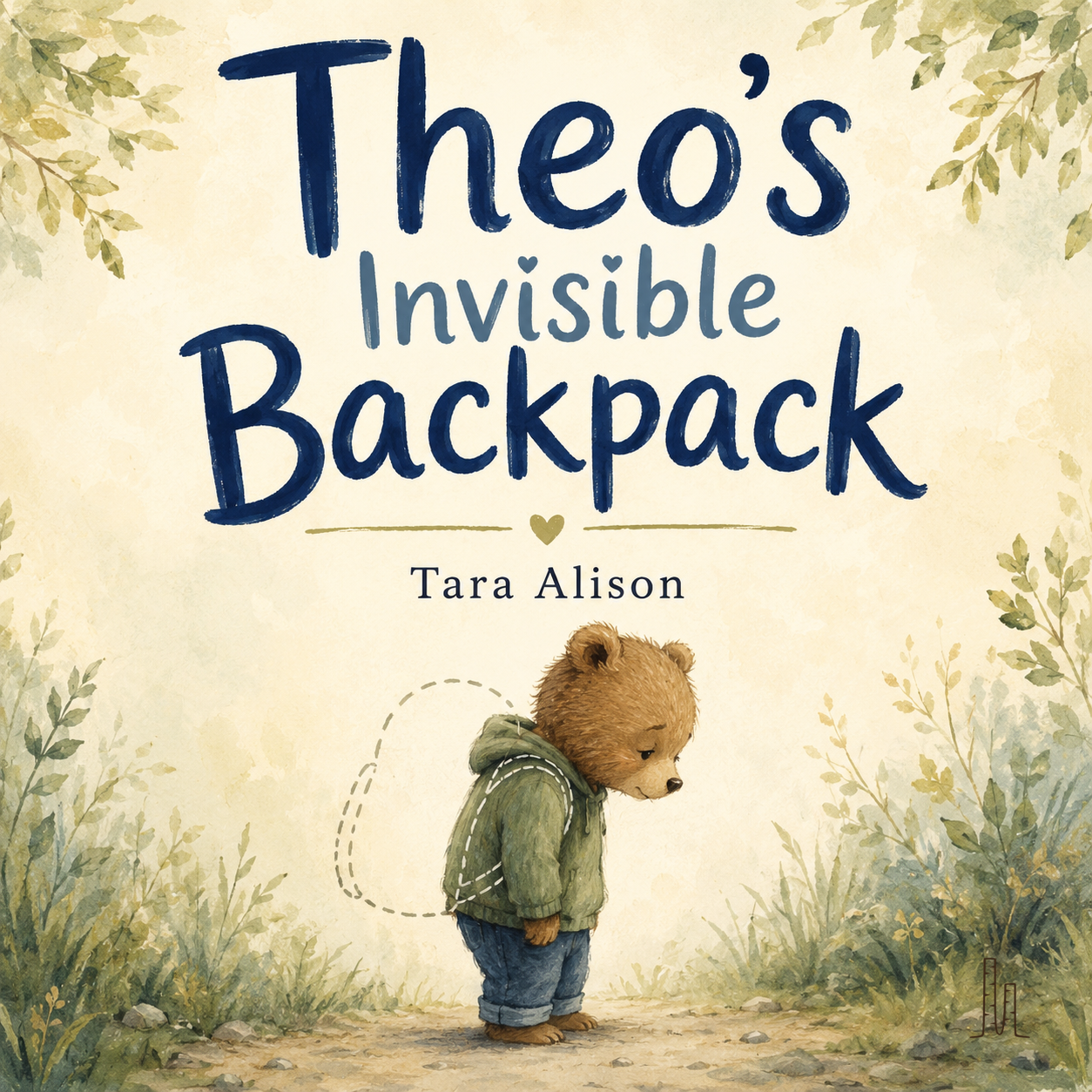 Theo's Invisible Backpack
Theo carries every hurtful word as a stone in an invisible backpack — until the day his mama really sees how heavy it has become, and they begin sorting the stones together.
Read the story
Researched and drafted with AI assistance, reviewed before publication. Editorial standards