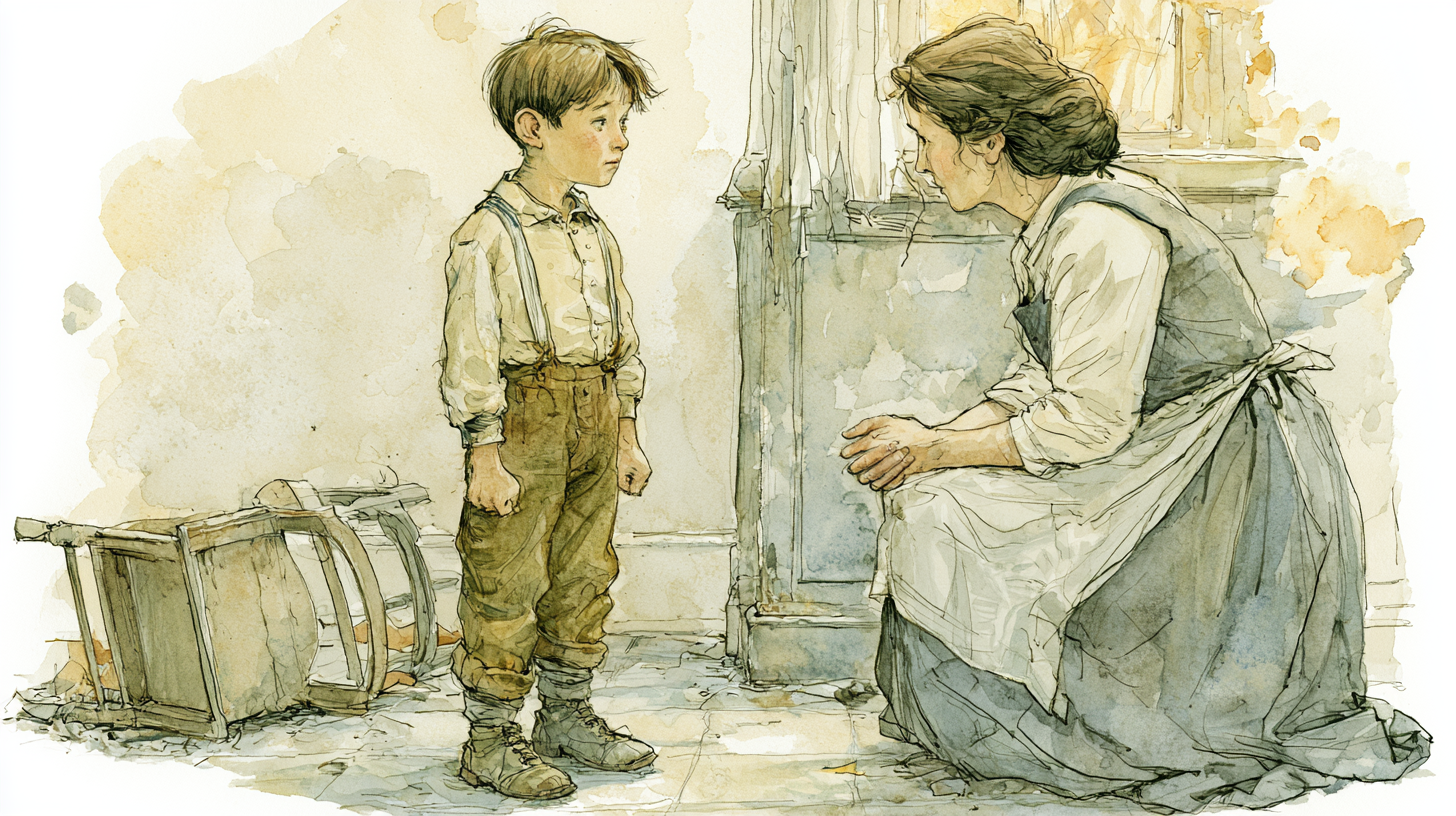
Your child has an ADHD diagnosis, so when the aggression started, it seemed to fit the picture. Impulsive. Reactive. Can't-stop-themselves. Isn't that part of what ADHD is? So you filed it there, and you waited for the strategies that work for ADHD to bring it down.
But the aggression kept escalating. And somewhere underneath the exhaustion, a quieter thought began to surface: this feels bigger than ADHD. That instinct deserves to be taken seriously, because it is often right. ADHD can absolutely bring impulsivity and a short fuse. What it does not usually explain, on its own, is severe, repeated, frightening aggression. When that is the pattern, the ADHD label may be telling only part of the story — and the rest of the story is where the help is.
What ADHD Does and Doesn't Tend to Explain
It is worth being precise here, because the goal is not to dismiss the diagnosis but to understand its edges. ADHD genuinely can make a child quicker to react, slower to pause before acting, and more easily frustrated when things don't go their way. A flash of temper, an impulsive shove, a too-big reaction to a small setback — these can reasonably sit within the ADHD picture.
But ongoing, severe aggression — the kind that frightens the household, that recurs day after day, that feels wildly out of proportion to whatever triggered it — usually has more underneath it. Impulsivity explains a child who acts before thinking. It does not, by itself, explain a child who is repeatedly flooded with the kind of rage or panic that drives serious aggression. When the aggression is that big and that persistent, ADHD is rarely the whole of it.
What Else Might Be Going On
This is not a diagnostic checklist, and it is not a substitute for a professional evaluation. It is a set of possibilities worth holding at the same time — because each one points toward a different kind of support, and the value is in widening the lens beyond "it's just the ADHD."
An overwhelmed nervous system. Aggression is very often what a flooded nervous system looks like from the outside. When a child is pushed past their threshold — past what their system can tolerate — the body's alarm response can tip into fight. This is not a child choosing to lash out. It is a triggered, automatic response from a system that has run out of capacity.
Anxiety wearing a different face. In children especially, anxiety frequently does not look like worry. It looks like anger. A child who is frightened, cornered, or overwhelmed by dread may present as aggressive rather than visibly anxious. The fear is underneath; the fight is what shows. Treat only the fight and the fear keeps generating new ones.
Sensory overload. For a child whose system cannot filter the flood of sensory input most people screen out automatically — noise, light, texture, crowding — aggression can be the overflow. When the input becomes unbearable and there is no other release, it can come out as lashing out.
Unmet needs or lagging skills. Sometimes — what psychologist Dr. Ross Greene calls lagging skills — the demand placed on a child simply exceeds what they are able to do in that moment — emotionally, socially, or cognitively. When the gap between what's being asked and what's possible gets wide enough, it can come out sideways, as an explosion. The aggression marks the place where the child hit a wall.
Something painful or unspoken. A hard situation a child cannot yet name — bullying at school, a social wound, a physical discomfort, a frightening experience — can surface as aggression long before it ever surfaces as words. The behavior may be the only language available for something they don't have the words to tell you.
Demand avoidance rather than defiance. For some children the trigger is not the task itself but being asked, so the aggression arrives at the moment a demand lands rather than when a limit is set. That distinction changes the whole approach, and it is the reason an ODD label fits some children badly. ODD or PDA works through the difference.
A mood picture rather than a behavior one. Disruptive mood dysregulation disorder, or DMDD, is a mood diagnosis rather than a behavior one, and the distinguishing feature is not the size of the outbursts but what sits between them. The DSM-5 criteria describe severe recurrent outbursts averaging three or more times a week, alongside a mood that is persistently irritable or angry most of the day, nearly every day, in at least two settings, for twelve months or more, with onset before age ten. It is not diagnosed before age six or for the first time after eighteen. That last part matters, because a child who returns to baseline once a rage has passed is a different picture from one who is rarely settled, and both get called ODD by adults who are only watching the explosions.
Something medical and sudden. This one is easy to miss because it does not look medical. When rage appears abruptly in a child who was not like this before, particularly alongside new obsessive thoughts, tics, a change in handwriting, urinary frequency, restricted eating or separation anxiety, and especially in the weeks after an infection, it is worth asking whether something inflammatory is driving it. That picture has a name, PANS, and its strep-associated form is PANDAS. The tell is the abruptness. Behavior that built over years is a different question from behavior that arrived in a fortnight. Sudden onset OCD in PANS covers what that presentation looks like, and PANS testing: which tests to ask for sets out what to request while the window is still open.
Severe aggression is usually a signal, not the disorder itself. The real question is what it's signaling.
While you're here, take the guide
What's Underneath is free: the three body-state triggers under most meltdowns, what to say in the minute before it tips over, and how to reset afterward.
You'll get the guide instantly, plus five free articles in your inbox every week. Real challenges (meltdowns, school mornings, picky eating, big feelings) and how to actually handle them. Unsubscribe anytime.
Why the Distinction Matters So Much
This is not an academic point. When aggression gets filed entirely under "that's just the ADHD," the thing actually driving it tends to go unseen — and therefore unaddressed. The anxiety nobody named keeps producing explosions. The sensory overload nobody tracked keeps overflowing. The unmet need nobody identified keeps generating the same wall, over and over.
A label applied too broadly can quietly close the investigation at exactly the moment it should be opening. "It's the ADHD" can feel like an answer, when it is sometimes a way of stopping the search one layer too early. The children who are helped are usually the ones whose parents stayed curious past the obvious explanation.
What Tends to Help
Look for the pattern around the aggression. When does it happen? After what? With whom? In what kind of environment? Aggression that clusters around transitions, demands, noise, hunger, fatigue, or particular social situations is not random — it is pointing directly at its trigger. The pattern is the lead.
Treat the behavior as communication. Instead of only asking how to stop it, ask what it is trying to say. What need is going unmet? What state is it responding to? What is your child telling you that they cannot tell you another way?
Bring data, not just descriptions, to professionals. "He's aggressive" gives a clinician very little to work with. Specific patterns — what precedes the aggression, when it spikes, what helps it settle — give them something they can actually use to see what's underneath.
Stay curious longer than feels comfortable. The real explanation is often one layer below the first one. The willingness to keep looking past "it's the ADHD" is frequently what makes the difference.
The Shift Worth Making
"It's the ADHD" can be true and still be incomplete. When the aggression is severe and recurring, the more useful question is not "how do I make this stop" but "what is my child's behavior trying to tell me that I haven't understood yet?"
The aggression is the smoke. The work — the work that actually changes things — is finding the fire. And that almost always begins with watching the pattern beneath the moments, rather than reacting only to the moments themselves.
One important note: if any of this raises real safety concerns for your child or your family, please don't carry it alone. This is exactly the kind of situation where a professional who can look closely alongside you is worth reaching for.
Every behavior is a clue.
If your child's aggression feels bigger than ADHD explains, LightMap can help you track what surrounds it — the triggers, the timing, the conditions — so the pattern beneath it becomes easier to see. Explore LightMap at birchandlight.com/lightmap.
Sources: Wolraich ML, Hagan JF, Allan C, et al. "Clinical Practice Guideline for the Diagnosis, Evaluation, and Treatment of Attention-Deficit/Hyperactivity Disorder in Children and Adolescents." Pediatrics, 2019;144(4):e20192528, on screening for coexisting conditions. American Psychiatric Association, Diagnostic and Statistical Manual of Mental Disorders, Fifth Edition, Text Revision (DSM-5-TR), 2022, for the criteria for oppositional defiant disorder, conduct disorder, and disruptive mood dysregulation disorder, including the three-or-more-outbursts-per-week frequency, the twelve-month duration, the two-settings requirement, and onset before age ten. Swedo SE, Leckman JF, Rose NR. "From Research Subgroup to Clinical Syndrome: Modifying the PANDAS Criteria to Describe PANS." Pediatrics and Therapeutics, 2012;2(2):113, for the abrupt-onset presentation. Greene RW, Ablon JS. Treating Explosive Kids: The Collaborative Problem-Solving Approach. Guilford Press, 2006, for the lagging skills framing.
For education and reflection, not medical advice. Our terms
See what's underneath
Walk into the next appointment with answers
LightMap reads your hard days together and gives you answers. Start with one moment today.
Start with 3 moments Not sure where to start? Ask me.Message Tara on WhatsApp. It really is me, I read everything and will personally respond.Click here to message Tara →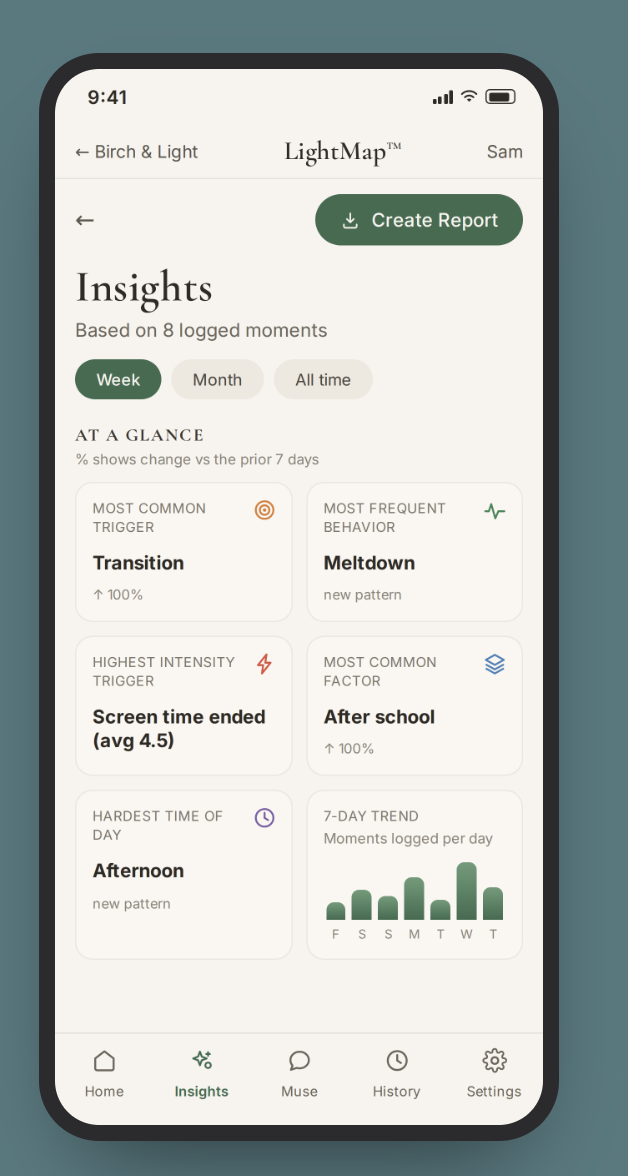

Part of the award-winning Birch & Light Method, honored with the Mom's Choice Gold Award for excellence in family resources.
A story to read together
Sometimes the easiest way in is a story you read side by side.
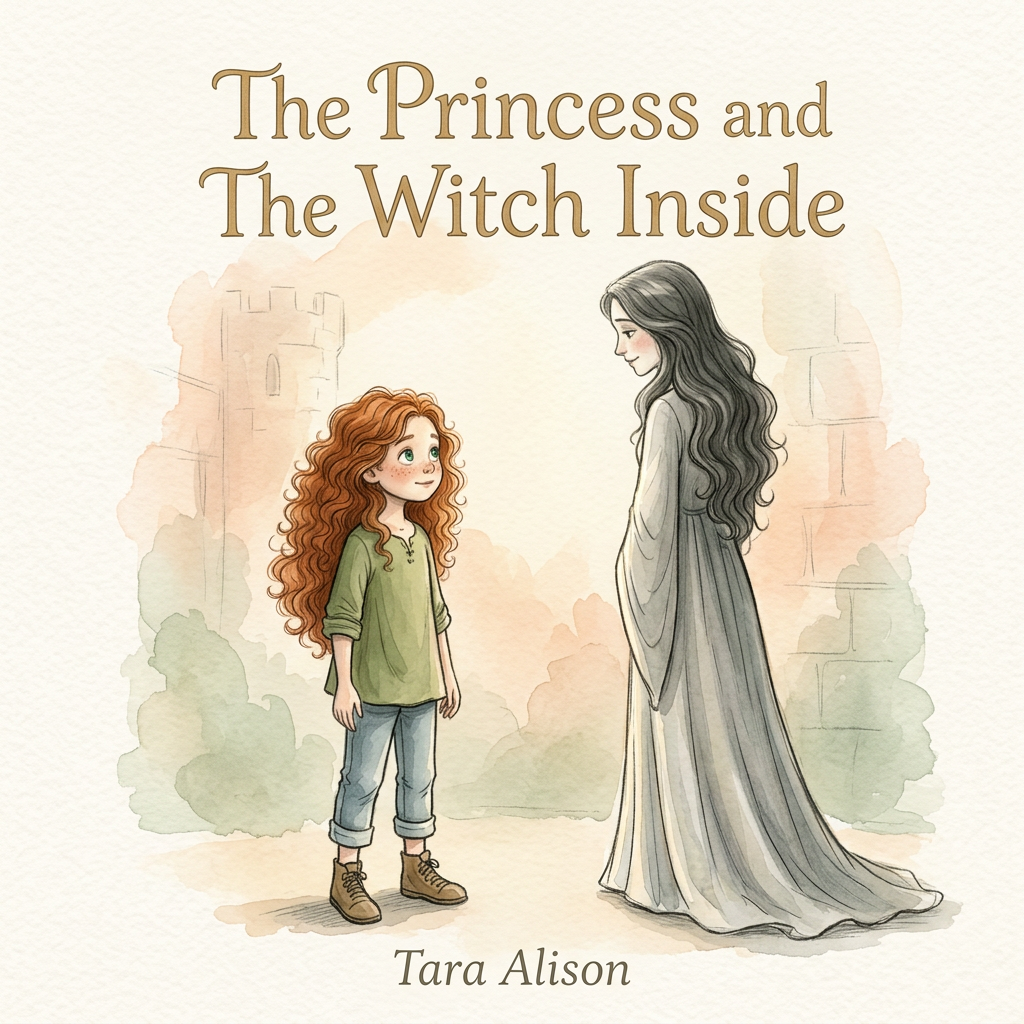 The Princess and the Witch Inside
Esme is loved, but a fast protective part keeps rushing in before she gets a turn. A quiet visitor helps her meet the witch inside — not as an enemy, but as a worried protector — and find her way back to the people she wanted to be with all along.
Read the story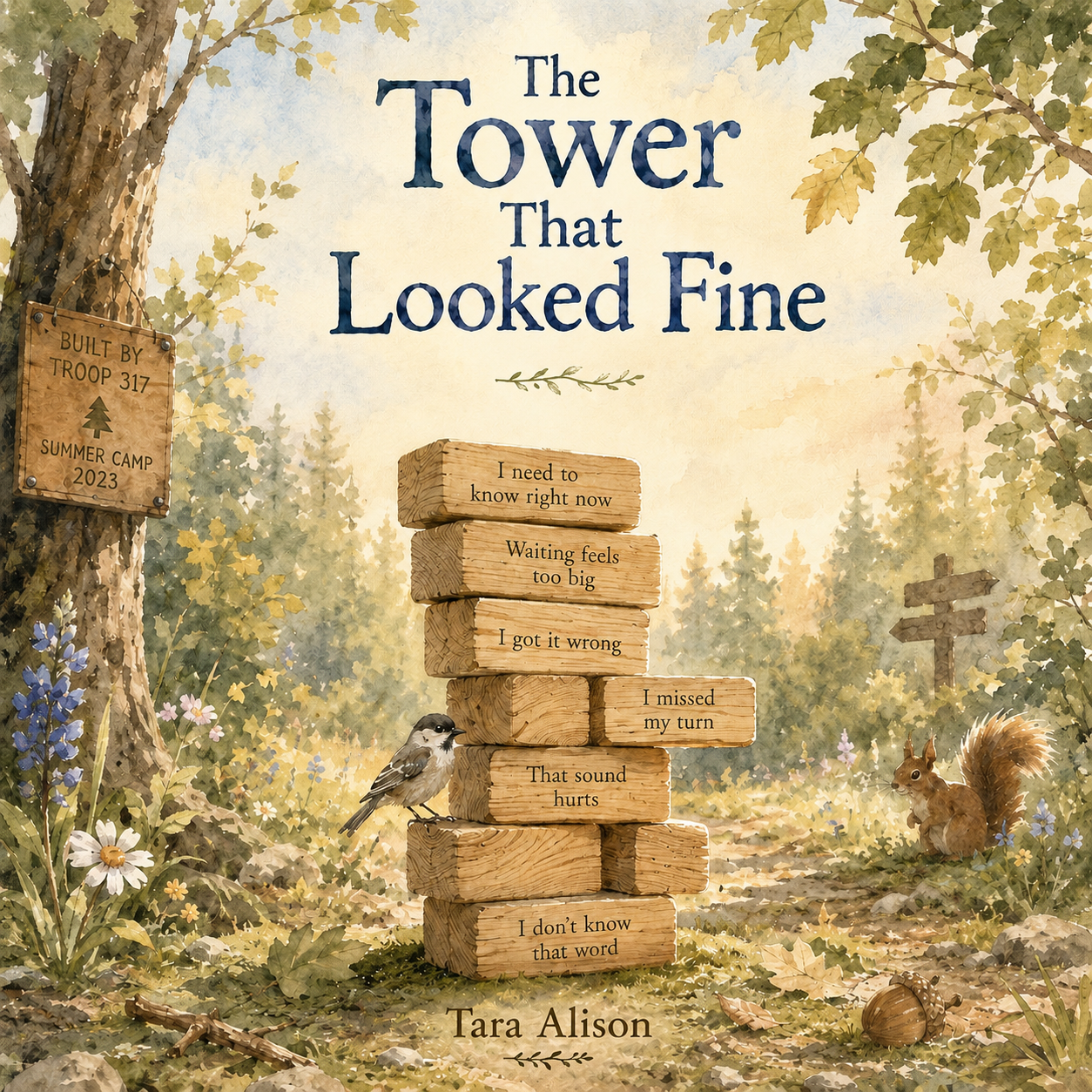 The Tower That Looked Fine
A tower in a quiet clearing tries to stay steady through every small thing nobody else seems to notice — until one tiny breath of wind causes her to fall, and a gentle hand begins to gather the blocks back.
Read the story
If today was one of those days
A few more from the library, free to read.
Researched and drafted with AI assistance, reviewed before publication. Editorial standards