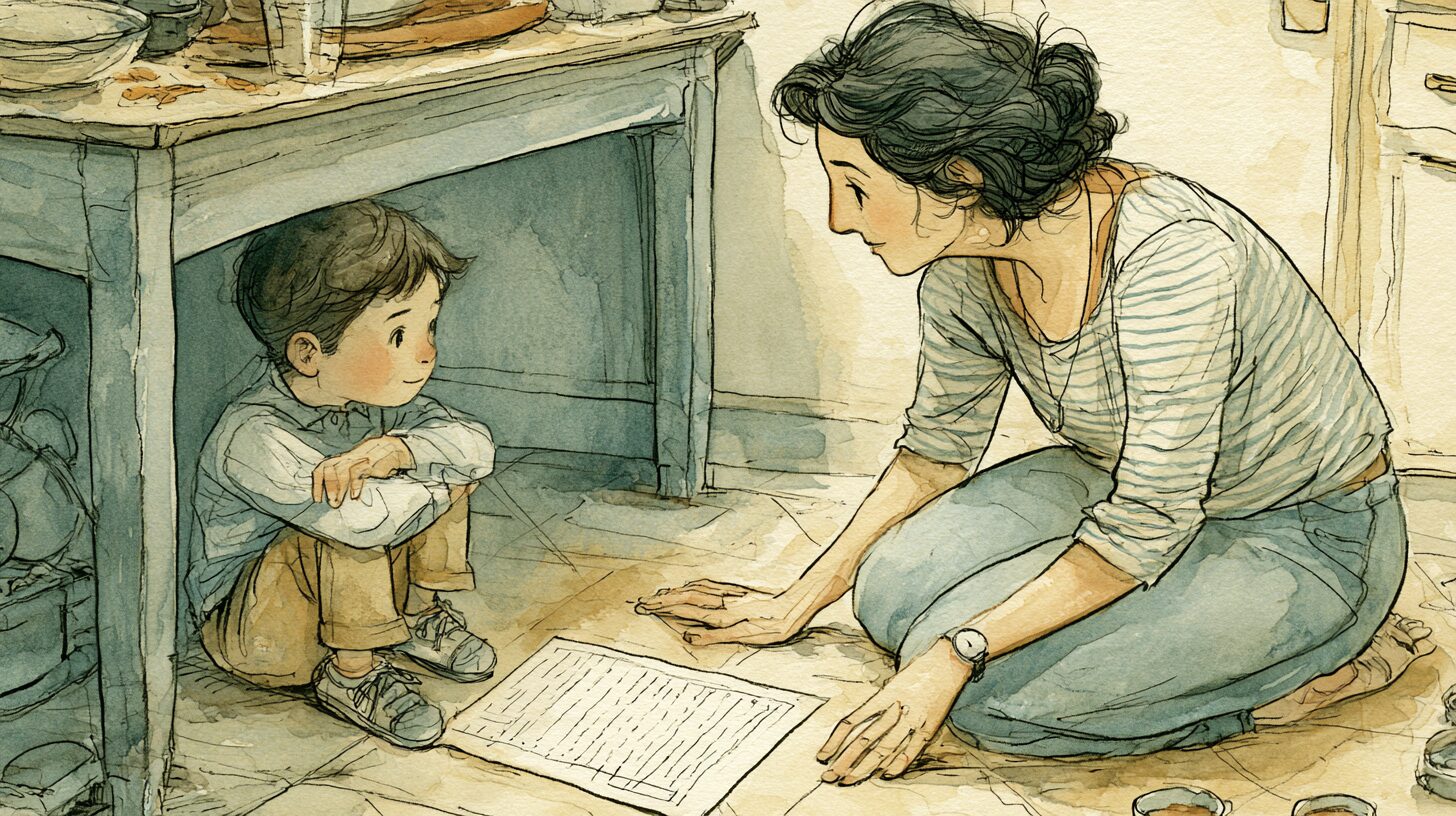
A good ADHD workbook for kids has short pages a child can finish in five or ten minutes, activities that involve doing rather than writing about behavior, a reward built into each page, and a parent section that explains what each activity builds. It supports skill practice at home. It does not replace evaluation, therapy, or school support.
Most ADHD workbooks for kids ask a child to sit still, read a paragraph, and write a thoughtful answer about their behavior. If your child could reliably do that, you probably would not be searching for an ADHD workbook.
A workbook that helps a fast brain has to work with the wiring, not against it. Short pages. Something to do, not just something to read. A reason to care right now, not later. And a grown-up section that explains what each activity is actually building, so you are not guessing.
What should you look for in an ADHD workbook for kids?
Pages that finish. A page a child can complete in five or ten minutes gives them the thing they rarely get: proof they finished something. Long multi-step chapters quietly teach the opposite lesson.
Doing, not confessing. Kids with ADHD get asked to explain themselves constantly. A good workbook asks them to sort, draw, choose, rate, build, and test instead of narrating their own failures.
Immediate reward built in. The ADHD brain reliably prefers a smaller reward now over a bigger one later. That is not a character flaw, it is delay discounting. Activities that make waiting visible and a little bit fun work better than activities that ask a child to simply try harder at waiting.
A real parent section. You should be able to read what a page targets and why before you sit down with your child. Without that, a workbook becomes another thing on the counter.
Printable, so you can repeat it. Skills like planning and calming down are not learned once. Being able to reprint the page that worked is more useful than a beautiful bound book with one copy of everything.
What ADHD workbooks cannot do
A workbook does not replace evaluation, therapy, school support, or medical care, and it will not stop meltdowns on its own. What it can do is give you and your child a shared, low-pressure way to practice a skill in a calm moment, so the skill has a chance of showing up in a hard one. Practice happens outside the storm. That is the whole point.
While you're here, take the guide
What's Underneath is free: the three body-state triggers under most meltdowns, what to say in the minute before it tips over, and how to reset afterward.
You'll get the guide instantly, plus five free articles in your inbox every week. Real challenges (meltdowns, school mornings, picky eating, big feelings) and how to actually handle them. Unsubscribe anytime.
The Fast Brain workbooks
These are the printable ADHD workbooks we make at Birch & Light. Each one is $9, or $21 for all three. They are built for kids roughly ages 6 to 12, and every activity comes with a science section for the grown-up explaining what it targets and why.
Money and My Fast Brain
A save, spend, and give workbook for kids who spend money the second it lands in their hand. It works with the brain's preference for a reward now instead of scolding it: jars, the Want-O-Meter, a 3-day wait challenge, and a kid Q&A.
My Big Feelings and My Fast Brain
A calm-down workbook for kids with big feelings. It builds the three skills underneath a meltdown: noticing the early warning signs, having real tools ready before capacity runs out, and repairing afterward without shame.
My Plan and My Fast Brain
A doing-things workbook for ages 7 to 10. Twelve mission pages cover the skills researchers call executive function: picking a goal, chunking it into steps, getting started, feeling time pass, remembering, switching gears, handling plan changes, pausing, and finishing all the way.
Get all three in the Fast Brain Workbook Bundle for $21, or browse everything in the shop.
How do you use a workbook with an ADHD child?
Pick the moment, not the schedule. Ten calm minutes on a Saturday beats a nightly plan that collapses by Wednesday.
One page at a time. Close the workbook while they still want more. Ending on wanting more is what brings them back.
Do it beside them. Fill out your own copy of the page. It turns the workbook from an assignment into something you are doing together.
Never use it as a consequence. The second a workbook is what happens after a bad day, it stops being useful.
Reprint the page that landed. If the Want-O-Meter or the warning-signs page clicks, use it again next week. Repetition is where the skill sticks.
Where a workbook fits next to other ADHD care
The American Academy of Pediatrics publishes a clinical practice guideline for diagnosing, evaluating, and treating ADHD in children and adolescents. Your child's pediatrician or clinician builds the treatment plan from it. A workbook sits beside that plan. It gives your child a place to rehearse a skill in a calm moment, and it gives you a way to see which skills are still hard.
What progress looks like
Expect small signs first. Your child reaches for the page that worked. They use the workbook's words in a hard moment, like saying where they are on the Want-O-Meter before they spend. They tell you an early warning sign before a meltdown instead of after.
If several weeks of calm practice change nothing, bring the pages and what you saw to your child's clinician. Adding more workbooks will not answer that question.
If the hard moments are the bigger problem
Workbooks help in the calm. If what you actually need is help in the middle of the hard moment, and a way to see what keeps setting it off, that is what LightMap is for: log a tough moment, see the pattern and the time of day it tips, and get one thing to try next.
Watching together helps too: Your Amazing ADHD Brain is a short video that explains the ADHD brain to kids, in language a nine year old can hear without shame.
For education and reflection, not medical advice. Our terms
See what's underneath
Walk into the next appointment with answers
LightMap reads your hard days together and gives you answers. Start with one moment today.
Start with 3 moments Not sure where to start? Ask me.Message Tara on WhatsApp. It really is me, I read everything and will personally respond.Click here to message Tara →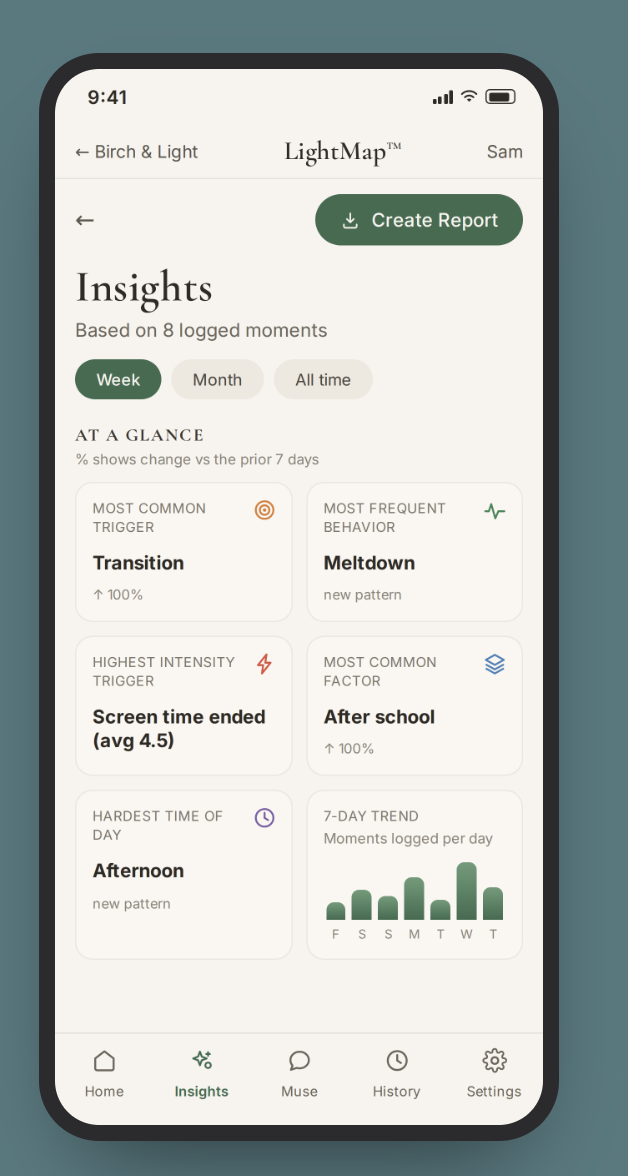

Part of the award-winning Birch & Light Method, honored with the Mom's Choice Gold Award for excellence in family resources.
If today was one of those days
A few more from the library, free to read.
Researched and drafted with AI assistance, reviewed before publication. Editorial standards