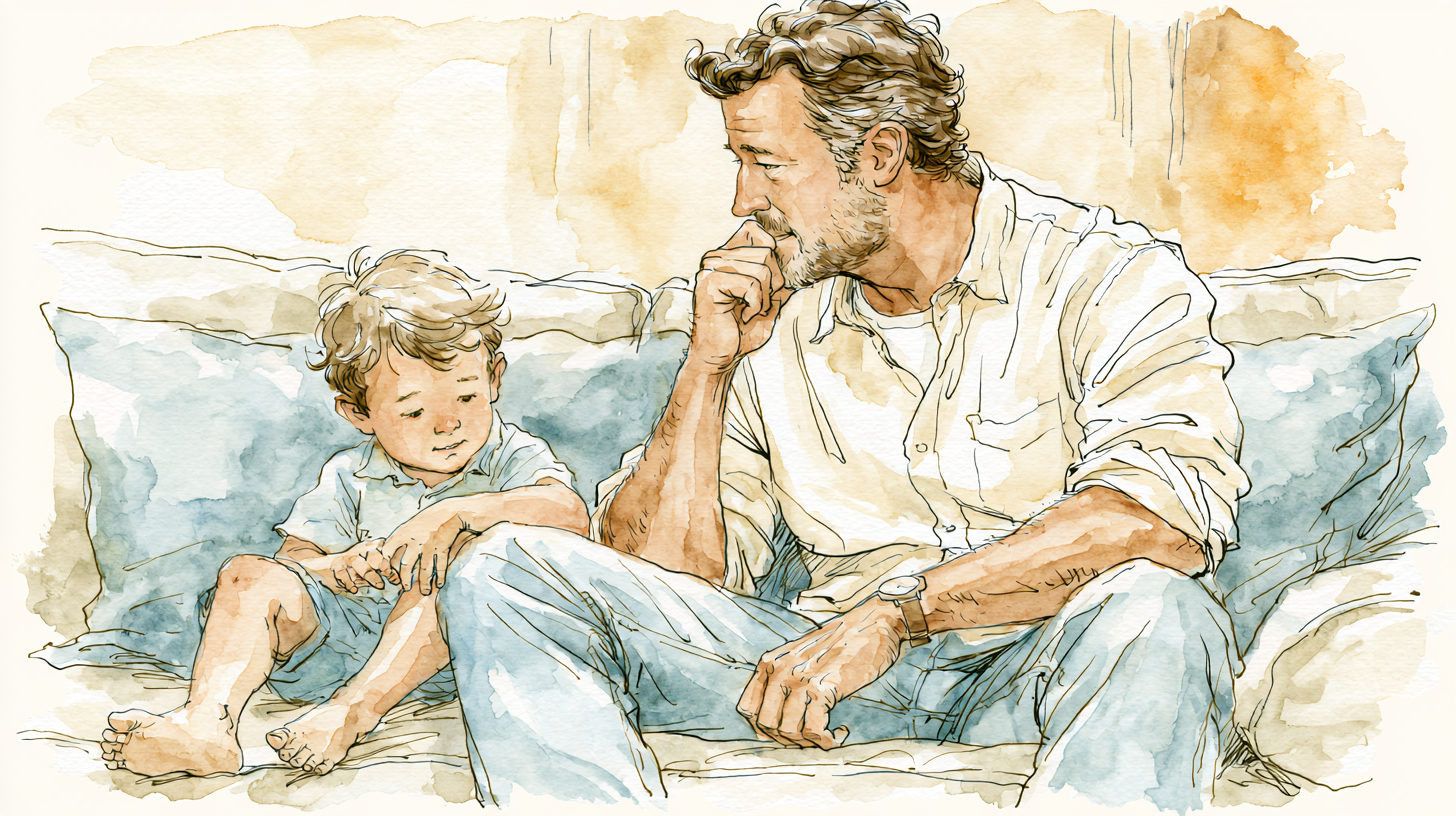
A child gets an ADHD diagnosis, and something unexpected happens across the room. A parent goes quiet. Because everything the evaluator is describing, the lifelong struggle to focus, the lost time, the sense of running twice as hard to stay in place, is not just a description of the child. It is the clearest mirror that parent has ever been handed. And so two people get diagnosed that day, even if only one of them has the paperwork.
If that is happening in your family, whether you are the parent watching your partner recognize himself, or the one seeing yourself in your kid, there is a particular and under-discussed grief here worth naming, along with what actually helps.
The grief is real, and it has a shape
An adult diagnosed in their forties is often described as relieved, and that is part of it. But underneath the relief is frequently a deep, disorienting grief, and a partner who cannot quite read the book or move forward is not being difficult. He is mourning.
The grief usually has a few distinct strands. There is the mourning of the lost years: the jobs, the relationships, the potential that a name-and-support might have changed. There is the reframing of a whole life story, every past failure suddenly reread not as evidence of being lazy or broken, but as an untreated condition, which is liberating and devastating at once. And there is a specific parental ache, watching your child get at seven or ten the understanding you did not get until your forties, glad for them and grieving for the kid you were. That is a lot to carry, and it does not resolve in a weekend.
Why the book sits unread
There is a quiet irony that the very tools for managing ADHD, the dense parenting book, the multi-step reward system, the insurance referral maze, all demand precisely the executive function that ADHD impairs. Asking a newly diagnosed, grieving adult with untreated ADHD to power through a demanding book and build a structured behavior system is asking him to use the exact muscle that does not yet work. His stalling is not a lack of will. It is the disability itself, showing up right on cue.
This reframe matters, because the answer is not to push harder. It is to lower the executive-function cost of every next step.
If you are the supporting partner
You may be carrying the household's learning, the child's system, and now a grieving spouse, which is its own kind of exhausting. A few things that genuinely help:
Let go of doing it in order, or by the book. A reward system does not require every adult to have read the same text and agreed to a formal plan. Start with the one small piece you can do without full buy-in, and let momentum build. Waiting for everyone to be on board can mean waiting forever.
Swap the book for lower-effort inputs. A grieving ADHD brain often cannot sustain a dense book but can absorb a podcast on a drive, a short video, or a single-page summary. Meeting him where his attention actually works is not lowering the bar, it is using the right door.
Protect his path to treatment without becoming his executive function forever. Untangling a referral or insurance snag once, to break a stall, can be an act of love. Doing all of it indefinitely quietly casts you as manager of another adult, which serves neither of you. The aim is his own treatment, where medication and support can make the next steps possible from the inside.
Name that his diagnosis is not a detour from your child's. It can feel like one more thing on the pile. But a parent who understands ADHD from the inside, and gets treated, often becomes the most effective possible ally for a child who shares it. His grief today is the on-ramp to that.
While you're here, take the guide
What's Underneath is free: the three body-state triggers under most meltdowns, what to say in the minute before it tips over, and how to reset afterward.

You'll get the guide instantly, plus five free articles in your inbox every week. Real challenges (meltdowns, school mornings, picky eating, big feelings) and how to actually handle them. Unsubscribe anytime.
Where a newly diagnosed adult can actually start
Since the original question was where to point someone, some honest starting places, chosen for low activation energy rather than completeness. Well-regarded, accessible books on adult ADHD exist that read more gently than the clinical parenting texts, several written by clinicians who have it themselves. Podcasts are often the ideal format for a newly diagnosed adult, letting them learn during a commute or a walk without having to sit and focus. Reputable ADHD organizations, including the national adult-ADHD nonprofits, keep updated resource and treatment-finder pages. And an ADHD-informed therapist or an ADHD coach can help specifically with the executive-function and emotional side, which is often exactly where a newly diagnosed adult is stuck.
The single most useful principle when handing resources to a grieving, newly diagnosed adult: offer one thing, not a syllabus. A list of twelve resources is itself an executive-function demand that guarantees none get used. One podcast episode, one chapter, one call. Then the next.
The hopeful part
Families who move through this often describe something they did not expect: a child and a parent learning to understand their shared brain together, in a way neither could alone. The parent gets language for their whole life. The child gets a parent who does not just sympathize but genuinely knows. And the grief, given room, tends to slowly convert into something steadier, the relief of finally understanding, and the quiet resolve that this generation gets to grow up knowing. If the two of you differ on how to handle any of it, navigating when two parents see it differently may help.
When the two of you are running the same kind of brain, it gets hard to tell which hard days are hers, which are yours, and which are the two of you colliding. Logging both in LightMap sorts that out faster than memory does, including the days that were rough for you before they were rough for her.
Sources: CHADD (Children and Adults with Attention-Deficit/Hyperactivity Disorder); peer-reviewed research on the grief process following late adult ADHD diagnosis (Brain Sciences journal).
For education and reflection, not medical advice. Our terms
See what's underneath
Walk into the next appointment with answers
LightMap reads your hard days together and gives you answers. Start with one moment today.
Start with 3 moments Not sure where to start? Ask me.Message Tara on WhatsApp. It really is me, I read everything and will personally respond.Click here to message Tara →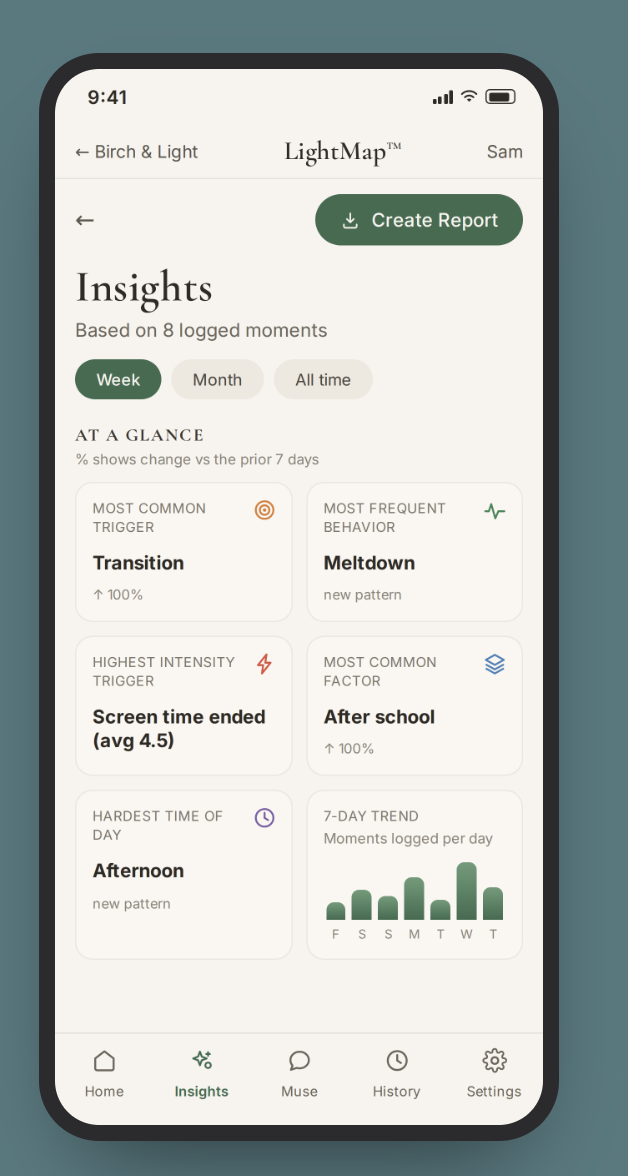

Part of the award-winning Birch & Light Method, honored with the Mom's Choice Gold Award for excellence in family resources.
A story to read together
Sometimes the easiest way in is a story you read side by side.
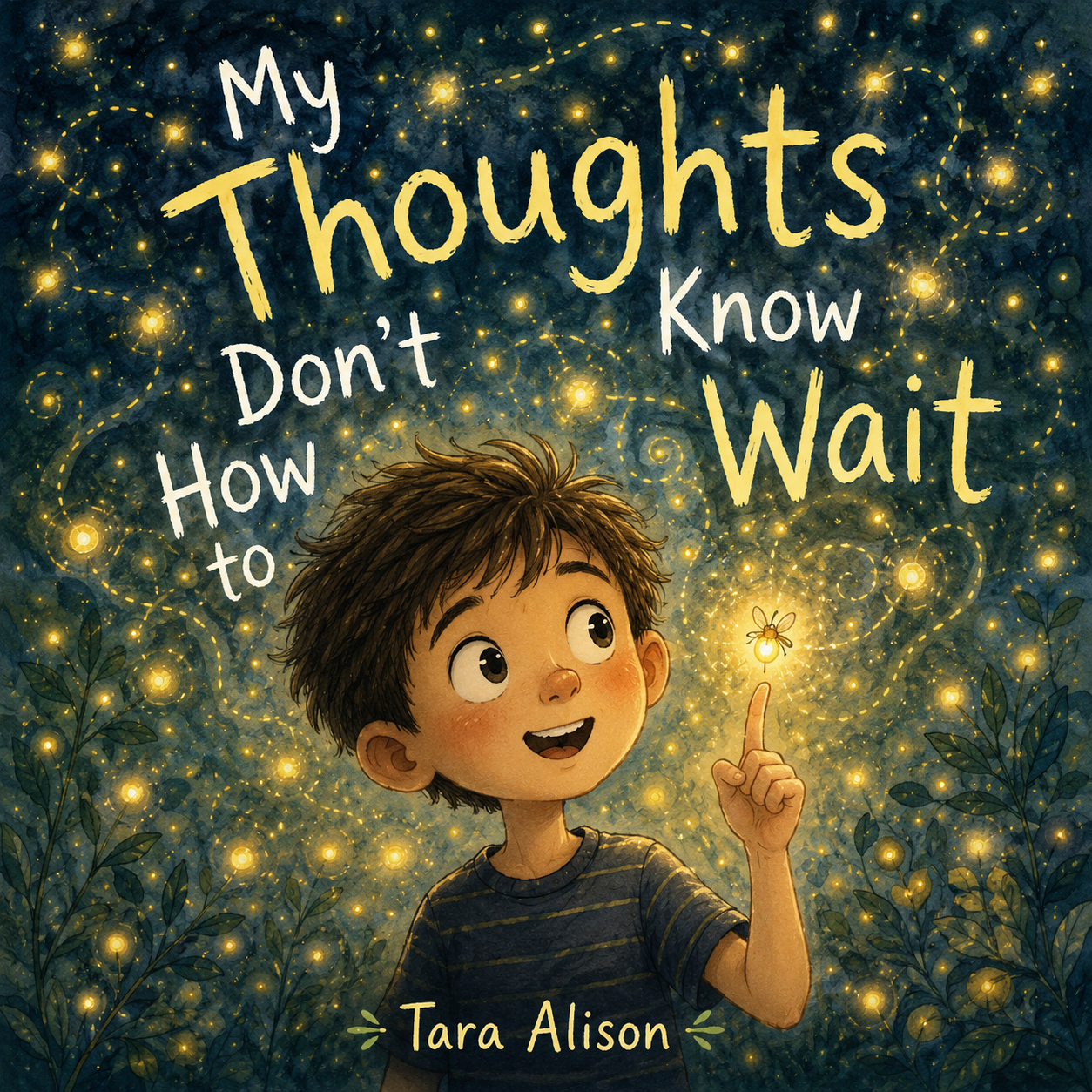 My Thoughts Don't Know How to Wait
Simon's thoughts arrive bright and fast — and feel like they will disappear if he doesn't say them right away. One quiet night beside fireflies, he discovers a small, surprising space between noticing a thought and chasing it.
Read the story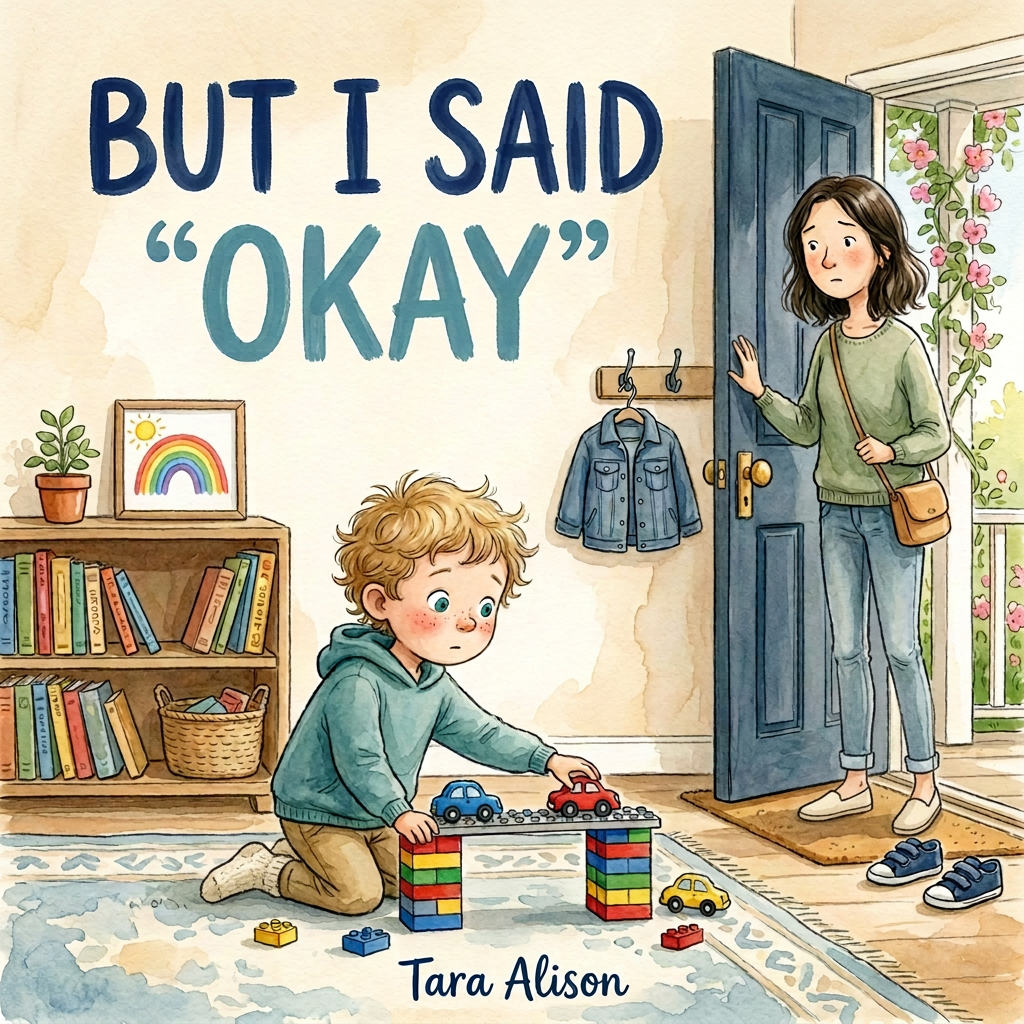 But I Said “Okay”
Owen always says okay. He means it every time. But his attention is still inside the bridge, the dragon, the cave, the music — until Mom realizes that helping him leave one thing matters more than asking him to start the next.
Read the story
If today was one of those days
A few more from the library, free to read.
Researched and drafted with AI assistance, reviewed before publication. Editorial standards