.jpg)
If a dose increase makes your child worse, call the prescriber now rather than waiting it out or lowering the dose yourself. Settling-in advice covers mild effects that fade, like sleepiness, not new aggression or dramatic mood swings. If anyone is in danger, go to urgent care.
The dose went up, and within days a different child showed up. More aggression, wilder mood swings, a household walking on eggshells. And now you are caught between two pieces of advice that both feel wrong: the instruction to give any medication change a couple of weeks to settle, and the voice in your head saying you are not sure the family lasts a couple of days. Parents in this spot usually frame their options as a choice: tough it out, or quietly move the dose back down ourselves.
There is a third option, it is the correct one, and it resolves the whole dilemma: call the prescriber now. Not in two weeks. Now. Here is why that is not overreacting, and how to make the call count.
Does "give it time" apply to a big behavior change?
The settling-in advice is real and it exists for a reason. Many medications, when started or increased, produce mild, expected effects that genuinely do fade as the body adapts: some sleepiness, a little irritability, appetite shifts, a wobbly week. If a family bailed at every soft bump, no medication would ever get a fair trial, so clinicians reasonably say give it time.
But that advice was calibrated for the soft bumps. It was never meant to cover a marked behavioral change: significant new aggression, dramatic mood swings, anything that frightens you, anything pointed at safety. Those belong in a different category, and the category has a different instruction. The way to hold both truths: expected-and-fading gets patience; new-and-escalating gets a phone call. Four days of a genuinely different child is not a wait-and-see situation, whatever the general rule says.
Why you call instead of adjusting it yourself
The temptation to just go back to the old dose is completely understandable, it worked better, and it is sitting right there in the cabinet. Resist it anyway, for three reasons. Some medications need to be changed carefully rather than abruptly, which is exactly the kind of thing the prescriber knows and you should not have to guess.
A solo change also muddies the picture: if things improve after you quietly drop back, the prescriber is now working from a story with a missing chapter. And most practically, you do not need to freelance, because this is precisely what the office wants to hear about. A distinct behavioral change within days of a dose change is textbook call-us material.
Practices have nurse lines for it. Weekend on-call lines exist for it. You are not bothering anyone; you are doing the reporting the whole system is built around. The only exception that skips the phone tree: if anyone's safety is at risk, that is urgent care, full stop.
While you're here, take the guide
What's Underneath is free: the three body-state triggers under most meltdowns, what to say in the minute before it tips over, and how to reset afterward.

You'll get the guide instantly, plus five free articles in your inbox every week. Real challenges (meltdowns, school mornings, picky eating, big feelings) and how to actually handle them. Unsubscribe anytime.
What does the research say about monitoring a dose change?
The largest trial of ADHD treatment strategies, the MTA study, tested what careful medication management looks like in children aged 7 to 9 with ADHD, combined type. Doctors in the medication arm worked out the best dose for each child during the first month. After that they met with families monthly, talked with the parent and the child, and adjusted the medication when a child was having difficulties. The NIMH summary of the study notes that this close monitoring allowed early detection of side effects.
Your call is the same kind of monitoring. A sharp change reported early gives the prescriber what they need to adjust the plan.
Make the call worth making
The difference between "the new dose is making him aggressive" and a report the prescriber can act on is about ninety seconds of preparation. Have these ready: the date of the increase and the doses involved. When the behavior change started relative to it. Whether the hard stretches cluster at a time of day, because timing patterns relative to when the dose is given are exactly what lets a clinician distinguish too-much from wearing-off from something else, and each of those has a different fix. Two or three concrete examples with severity, not adjectives. And anything else that changed the same week, a school transition, a sleep disruption, an illness, because honest reporting includes the confounds.
With that in hand, the prescriber has real options, and they are not limited to forward or backward. Doses can be stepped differently, split differently, timed differently, or the plan can change entirely. Which option fits is their call. Getting them the clean data to make it is yours.
The reframe that lowers the temperature
A bad reaction to a dose increase feels like the medication failing, or worse, like proof the whole road was wrong. Usually it is neither. Dose response is individual, especially in children, and the difference between helping and hurting can be genuinely narrow.
The reaction you are watching is not a verdict. It is information, arriving fast and loud, and reported promptly it tends to lead somewhere useful: the right dose, the right timing, or the right different plan. Families who hit this wall and make the call mostly do not look back on it as the week everything fell apart. They look back on it as the week the plan got corrected.
The timeline that makes these calls effective, dose dates, behavior windows, severity, what else changed, is exactly what LightMap holds. Log as you go and the ninety-second summary writes itself.
Sources: American Academy of Pediatrics Clinical Practice Guideline for ADHD, on titration and monitoring; FDA prescribing information for methylphenidate and amphetamine stimulant products; peer-reviewed research on stimulant rebound, irritability, and dose-response in children (PMC); the Multimodal Treatment of ADHD (MTA) study on careful titration and follow-up. MTA Cooperative Group, "A 14-month randomized clinical trial of treatment strategies for attention-deficit/hyperactivity disorder," Archives of General Psychiatry, 1999, volume 56, issue 12, pages 1073-1086. American Academy of Pediatrics, Clinical Practice Guideline for ADHD, Pediatrics, 2019, volume 144, issue 4, article e20192528.
For education and reflection, not medical advice. Our terms
See what's underneath
Walk into the next appointment with answers
LightMap reads your hard days together and gives you answers. Start with one moment today.
Start with 3 moments Not sure where to start? Ask me.Message Tara on WhatsApp. It really is me, I read everything and will personally respond.Click here to message Tara →

Part of the award-winning Birch & Light Method, honored with the Mom's Choice Gold Award for excellence in family resources.
A story to read together
Sometimes the easiest way in is a story you read side by side.
 My Thoughts Don't Know How to Wait
Simon's thoughts arrive bright and fast — and feel like they will disappear if he doesn't say them right away. One quiet night beside fireflies, he discovers a small, surprising space between noticing a thought and chasing it.
Read the story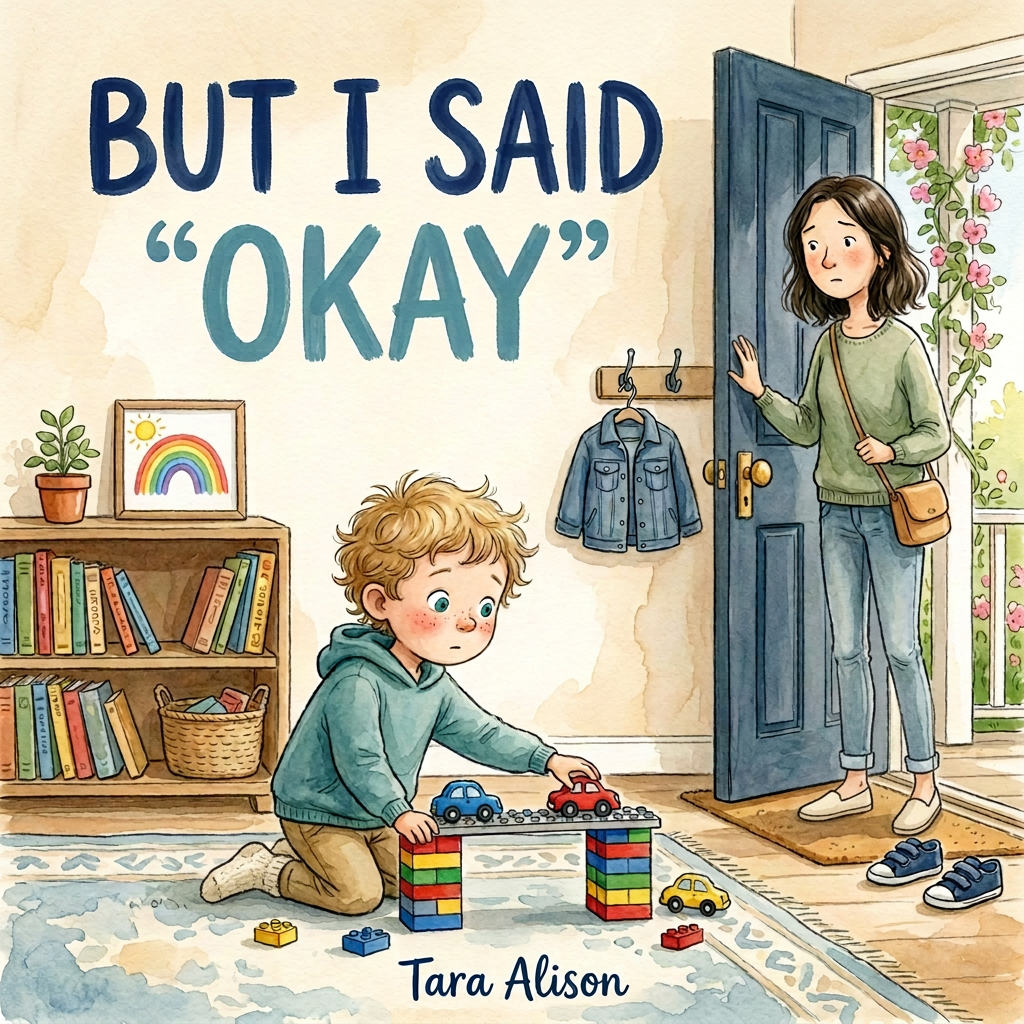 But I Said “Okay”
Owen always says okay. He means it every time. But his attention is still inside the bridge, the dragon, the cave, the music — until Mom realizes that helping him leave one thing matters more than asking him to start the next.
Read the story
If today was one of those days
A few more from the library, free to read.
Researched and drafted with AI assistance, reviewed before publication. Editorial standards