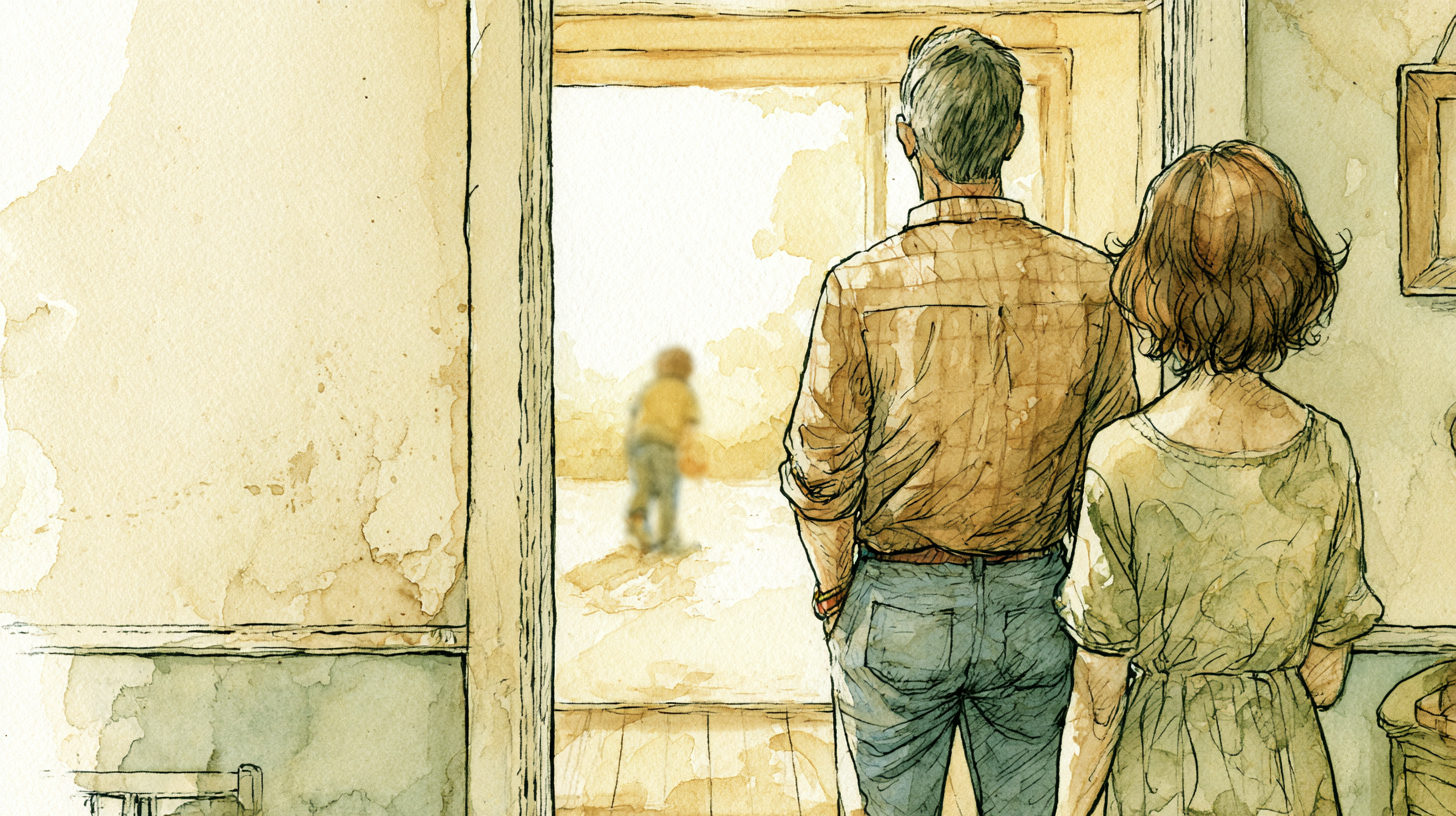
When one parent sees defiance and the other sees anxiety, you are usually both right. The same behavior often starts as real overwhelm, then picks up a learned pattern when a meltdown ends a demand. Ask whether your child can do the task in this moment, respond to the overwhelm first, and hold the expectation once your child is calm.
Your child does the thing again — the refusal, the explosion, the flat "no" that derails the whole evening. And before either of you has said a word, you already know you're about to interpret it in two opposite ways.
One of you sees a kid who's anxious, overwhelmed, genuinely unable to do what was asked. The other sees a kid who's testing limits, being manipulative, getting away with something. Same moment. Same child. Two completely different explanations — and the explanation you each land on points straight at a different response.
This is maybe the most common version of parents seeing different children, and it's worth slowing down on, because the gap between "behavior" and "anxiety" usually isn't what it looks like. Here is what I want you to consider.
What this often looks like
- One parent wants to hold the line — a consequence, a firm expectation — while the other wants to ease off, comfort, accommodate. Each thinks the other's instinct is making things worse.
- The "behavior" parent worries the "anxiety" parent is raising a kid who'll never learn to cope. The "anxiety" parent worries the "behavior" parent is punishing a child for something they can't control.
- You contradict each other in real time, mid-meltdown, and the child is caught between two adults pulling in opposite directions.
- Each of you quietly believes that if the other would just get on board, the problem would start to improve.
Why do two parents see two different children?
Here's the part that changes the whole conversation: the same behavior really can come from both places, and often does. A child can be genuinely anxious and learning that a meltdown ends a demand. Overwhelm and the discovery that overwhelm works are not mutually exclusive — they grow together, in the same kid, in the same moment.
So when one parent says "he can't" and the other says "he won't," they're often both partly right. The behavior usually starts as a true inability — a nervous system that's genuinely flooded — and over time, a child also learns what that flooding accomplishes. Neither parent is wrong. They're each gripping one end of a thing that has two ends.
Which end you instinctively grab usually comes down to your own history and your role in the day. If you grew up being told to toughen up, you may be primed to see toughness as the answer. If you grew up feeling unseen in your own distress, you may be primed to see the distress first. And the parent in the daily trenches often sees the overwhelm up close, while the parent who arrives later sees the negotiation that follows — so they're genuinely watching different phases of the same event.
What tends to help
- Stop treating it as either/or. The most useful reframe is that it's almost always both — real overwhelm and a learned pattern layered on top. Once you both accept that, you're no longer arguing about which one is true. You're figuring out the mix.
- Respond to the capacity question, not the motive question. Instead of "is he anxious or manipulating," ask "in this specific moment, can he do the thing or not?" If he genuinely can't, no consequence will help. If he can but won't, support without a clear expectation won't help either. The same child needs different things on different days.
- Agree on a both/and approach. Meet the overwhelm in the moment — stay close, lower the demand, help them regulate — and hold the expectation once they're regulated. This isn't a compromise where each parent gives up half. It's the response the child actually needs, and it requires both of your instincts.
- Watch the sequence together. Often the disagreement dissolves when both parents see, in the same event, that the overwhelm comes first and the learned part comes second. You stop fighting about which one it is and start seeing the order it happens in.
While you're here, take the guide
What's Underneath is free: the three body-state triggers under most meltdowns, what to say in the minute before it tips over, and how to reset afterward.

You'll get the guide instantly, plus five free articles in your inbox every week. Real challenges (meltdowns, school mornings, picky eating, big feelings) and how to actually handle them. Unsubscribe anytime.
What tends not to help
Each parent doubling down on their single lens. The "behavior" parent escalating consequences on a genuinely flooded child adds load to an overwhelmed system and makes the next meltdown bigger. The "anxiety" parent removing every expectation teaches a child that distress is the way out of anything hard. Both pure approaches fail, which is exactly why one parent alone can't fix it.
Contradicting each other in the moment also makes everything worse. A dysregulated child cannot use two adults issuing opposite instructions — it adds chaos to a nervous system that's already past capacity. Whatever you decide, decide it as one front, and have the disagreement later, away from the child.
And weaponizing the words doesn't help — "you're coddling him," "you're punishing him for being anxious." These land as accusations and shut down the only conversation that matters: what does this specific kid need in this specific moment.
When should you bring in a clinician?
If you genuinely can't tell where the line is — whether your child is mostly unable or mostly choosing, and how much of each — a clinician who can observe and assess your child can give you a clearer read than either parent's instinct alone. That's not a failure of parenting. The line between can't and won't is genuinely hard to see from inside the family, and an outside eye can be clarifying for both of you.
It's also worth getting help if the disagreement has calcified to the point where you can't respond as a team at all — where every hard moment becomes a standoff between the two of you. The child pays for that gap, and closing it is sometimes easier with a neutral third person helping you build a shared playbook.
Where LightMap helps
The can't-versus-won't argument is almost impossible to settle in the heat of a single moment, because in any one incident, you each see what your lens is tuned to see. It only becomes clearer over time, across many moments, when the pattern starts to show its shape.
Seeing several weeks at once can reveal what no single meltdown can. When the hard moments cluster around specific conditions — poor sleep, hunger, the same overwhelming transition, the end of a long social day — that points toward genuine overwhelm. When they cluster around specific demands regardless of the child's state, that points toward something more learned. Usually you'll see both, and seeing both, together, is what finally gets two parents responding to the same child instead of two different theories of them.
Every behavior is a clue.
The difference between can't and won't usually shows up in the pattern, not the single moment. Explore LightMap at birchandlight.com/lightmap.
Frequently asked questions
Is my child anxious or just being manipulative?
For most kids who struggle this way, it's genuinely both, layered together — real overwhelm that a child has also learned can end a demand. The more useful question than "which is it" is "in this exact moment, can he do what's being asked or not," because that's what tells you whether he needs support or a held expectation. The answer changes from day to day.
We respond in completely opposite ways. Whose approach is right?
Usually neither approach is right alone, and that's the key. A flooded child needs the comfort and lowered demand that one parent instinctively offers, and needs the expectation held once they're regulated, which the other parent instinctively protects. The effective response uses both of your instincts in sequence rather than picking one of you to be correct.
How do we stop contradicting each other in front of our child?
Agree on a simple default to use in the moment — usually: meet the overwhelm first, hold the expectation after — so you're not negotiating mid-meltdown. Then have the real discussion later, privately. A dysregulated child can't make use of two adults arguing, so presenting one front matters more in the moment than getting the response perfectly right.
Sources: De Los Reyes A, Kazdin AE. Informant discrepancies in the assessment of childhood psychopathology: a critical review, theoretical framework, and recommendations for further study. Psychological Bulletin, 2005, 131, 483-509, which shows that different observers of the same child often report different behavior, because behavior varies by setting and by who is watching. Lebowitz ER, Woolston J, Bar-Haim Y, et al. Family accommodation in pediatric anxiety disorders. Depression and Anxiety, 2013, doi 10.1002/da.21998, on how parents respond to a distressed child and how that response relates to symptom severity.
For education and reflection, not medical advice. Our terms
See what's underneath
Stop guessing what set it off
LightMap reads your hard days together and gives you answers. Start with one moment today.
Start with 3 moments Not sure where to start? Ask me.Message Tara on WhatsApp. It really is me, I read everything and will personally respond.Click here to message Tara →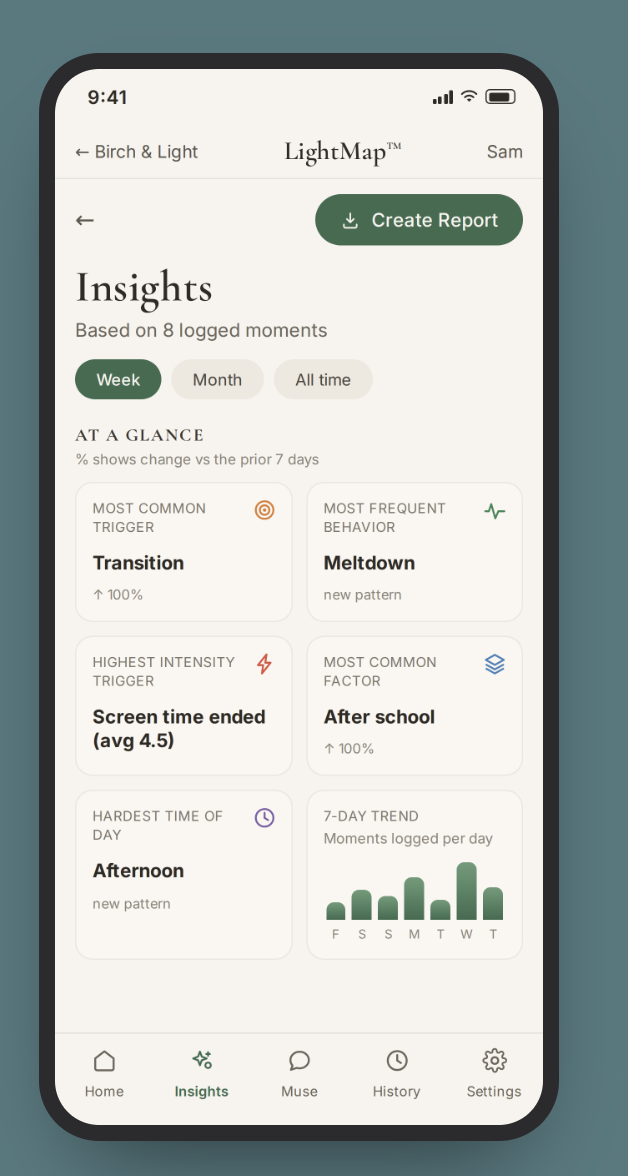

Part of the award-winning Birch & Light Method, honored with the Mom's Choice Gold Award for excellence in family resources.
A story to read together
Sometimes the easiest way in is a story you read side by side.
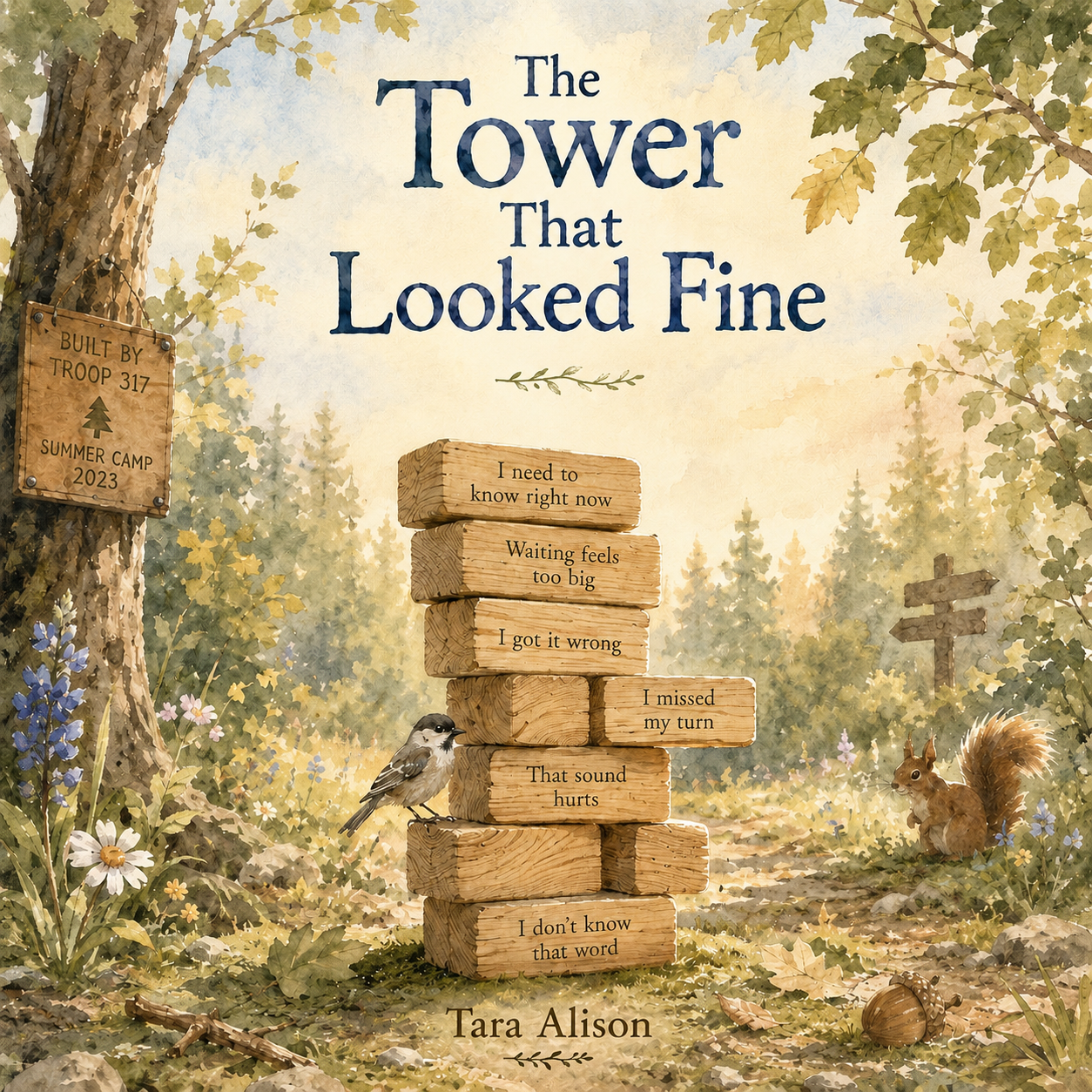 The Tower That Looked Fine
A tower in a quiet clearing tries to stay steady through every small thing nobody else seems to notice — until one tiny breath of wind causes her to fall, and a gentle hand begins to gather the blocks back.
Read the story The Boy at the Edge
A boy finds calm by watching the world move from a window. When his stillness is mistaken for defiance, the moment escalates — and he learns that being calm doesn’t always protect you from being told no.
Read the story
If today was one of those days
A few more from the library, free to read.
Researched and drafted with AI assistance, reviewed before publication. Editorial standards