
We were asking the wrong question
For months, our family question was a diagnostic one. Is this autism? Is this OCD? Is this anxiety? Every hard moment got sorted into a bucket, and none of the buckets ever quite fit. The triggers were too broad. One day it was a transition, the next it was a sound, the next it was a word she did not know, the next it was waiting two minutes for an answer.
When the triggers for a child's dysregulation seem to include everything, it is tempting to conclude that nothing connects them. That conclusion is usually wrong. It just means the connection is not visible one moment at a time.
What 156 logged moments showed us
We had been logging moments in LightMap for months: the trigger, the behavior, the contributing factors, what helped, what did not. Individually, the entries looked like chaos. A refused demand. A device change. A misheard sentence. A question a doctor could not answer with total certainty.
Read together, a different shape appeared. The report kept describing the same sequence: small stressors stacking quietly, then a collapse point that looked, from the outside, like an explosion over nothing. Cognitive frustration, sensory input, emotional pressure, waiting, and unresolved tension piling up until her nervous system gave out.
And running underneath a surprising number of those moments was something we had never named: she could not tolerate not knowing. Not knowing a word. Not knowing who won a game. Not knowing whether a medical answer was certain. The distress was not about the answer. It was about the state of uncertainty itself.
While you're here, take the guide
What's Underneath is free: the three body-state triggers under most meltdowns, what to say in the minute before it tips over, and how to reset afterward.
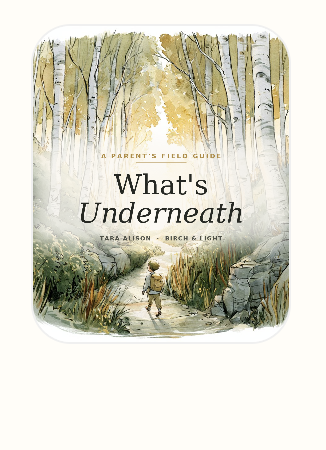
You'll get the guide instantly, plus five free articles in your inbox every week. Real challenges (meltdowns, school mornings, picky eating, big feelings) and how to actually handle them. Unsubscribe anytime.
The concept we had never heard of
There is a name for this in the research literature: intolerance of uncertainty. It is a well studied psychological construct, especially in OCD and anxiety research, describing people who experience uncertainty itself as threatening. Not bad outcomes. The not knowing.
We had been living with this pattern for years and had never once heard the term in an evaluation, a therapy session, or a report. It surfaced because the tracking data made the pattern impossible to miss, and because we brought that data into a conversation instead of relying on memory and impressions.
Why this matters for treatment
This is the part that changed things for us. A diagnosis tells you what category your child falls into. A mechanism tells you what to actually work on.
If the driving process is intolerance of uncertainty, then the goal is not finding better answers to impossible questions. It is building the capacity to tolerate not having them. That points toward specific, evidence based approaches, and it gives a therapist something concrete to evaluate rather than a pile of unconnected complaints.
We are not treating this as a conclusion. It is a hypothesis, and it belongs in the hands of her clinicians. But it is a testable, specific, research backed hypothesis, and we would never have found it by living moment to moment.
What this means for your family
If your child's triggers seem endless and unrelated, the pattern may not be visible from inside any single hard day. It shows up in the aggregate: in time of day, in what stacks before the explosion, in which repairs work and which never do. You do not need to arrive at your next appointment with a theory. You need to arrive with data. Sometimes the data hands you the theory.
If you want to see the patterns underneath your child's hardest moments, LightMap was built for this.
For education and reflection, not medical advice. Our terms
See what's underneath
Stop guessing what set it off
LightMap reads your hard days together and gives you answers. Start with one moment today.
Start with 3 moments Not sure where to start? Ask me.Message Tara on WhatsApp. It really is me, I read everything and will personally respond.Click here to message Tara →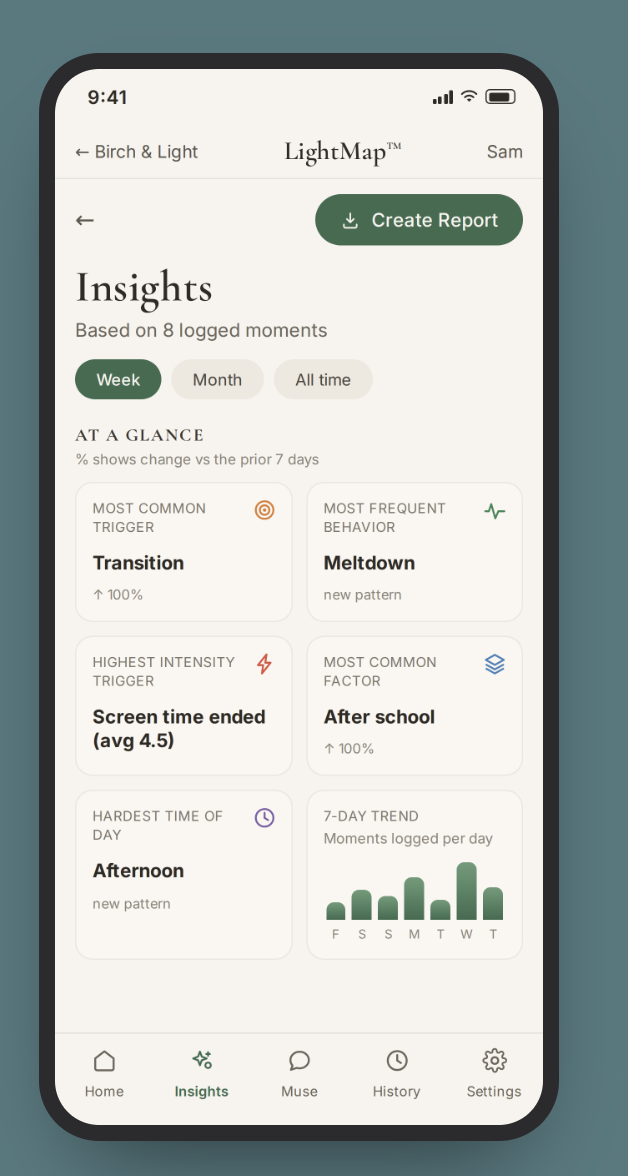

Part of the award-winning Birch & Light Method, honored with the Mom's Choice Gold Award for excellence in family resources.
A story to read together
Sometimes the easiest way in is a story you read side by side.
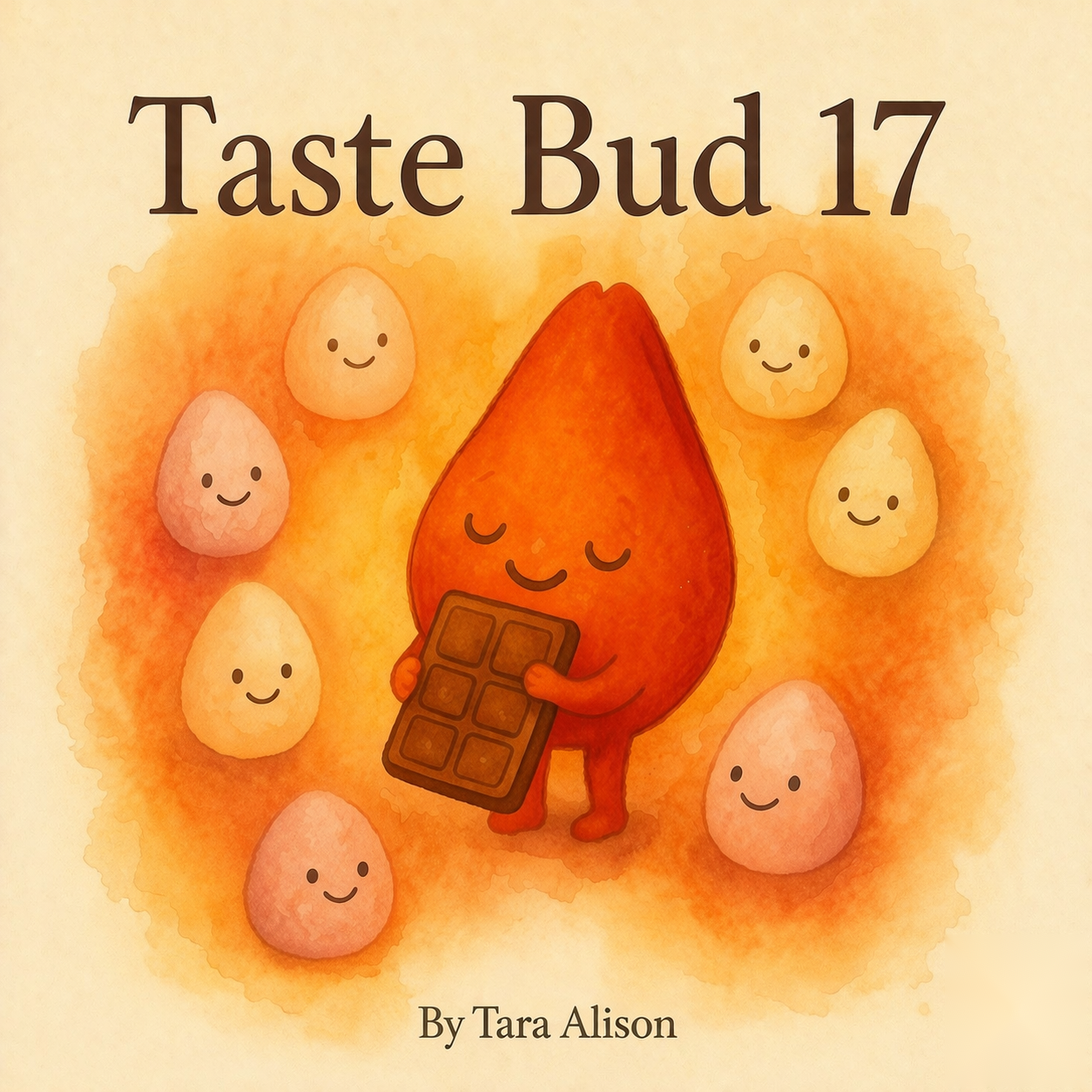 Taste Bud 17
Taste Bud 17 feels everything more — and learns that big sensory feelings deserve the same care as everyone else’s.
Read the story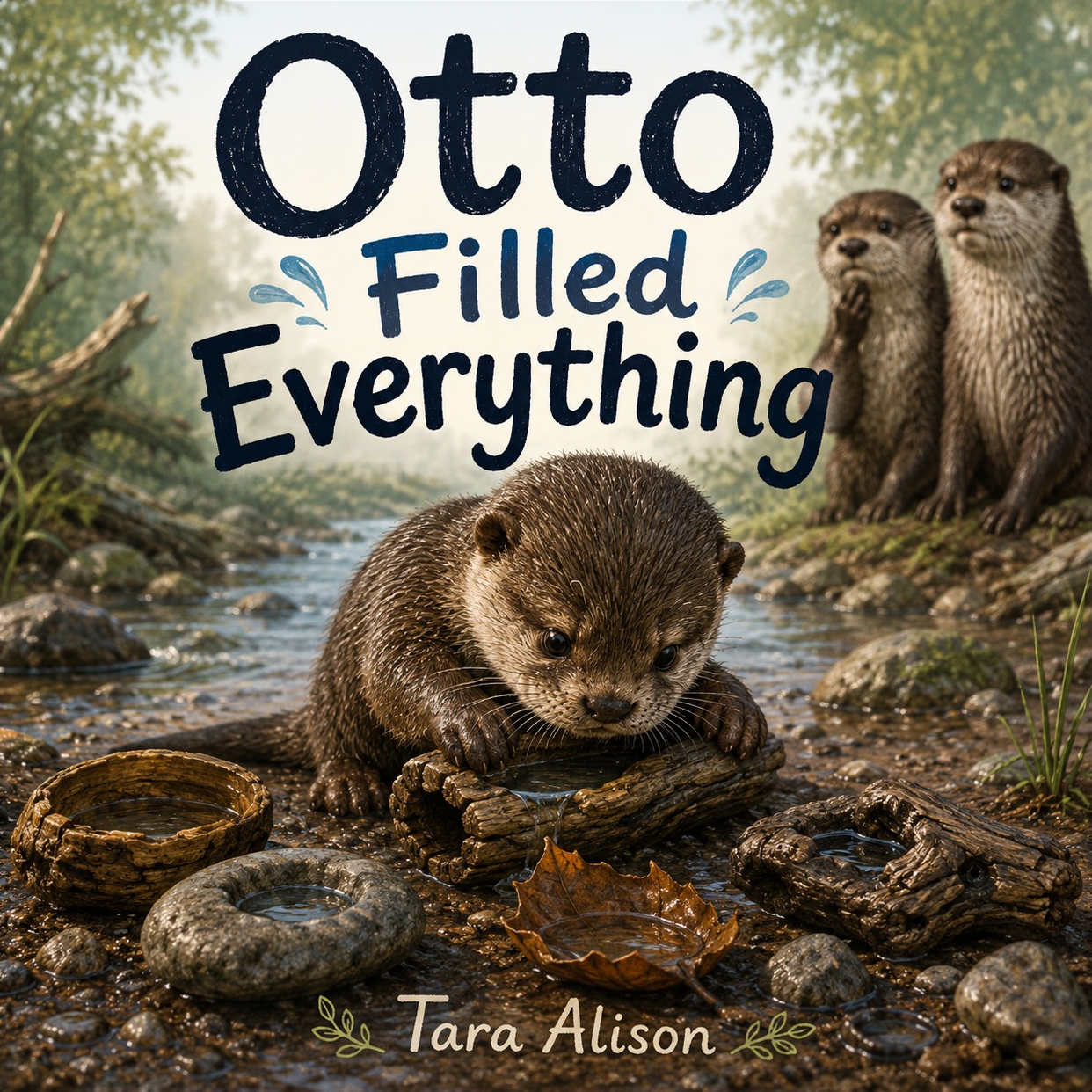 Otto Filled Everything
Otto can't stop filling things with water. His family doesn't understand — until Grandma Willow helps them listen to what his body is actually asking for.
Read the story
If today was one of those days
A few more from the library, free to read.
Researched and drafted with AI assistance, reviewed before publication. Editorial standards