.jpg)
Here is a pattern some parents notice and then almost apologize for noticing. On days without the ADHD medication, the house is chaos. Louder, messier, more scattered, a small tornado moving room to room. And the child at the center of it is, somehow, happier. Noisy in a good way. Then the medication is back, and the volume drops, the focus returns, and something else arrives with it: a shorter fuse, a harder edge, a child who bristles at every request and seems to be scanning the room for a fight.
If that is your house, you are not imagining it, and you are not ungrateful for a medication that clearly does part of its job. You are looking at real data. The question is what the data means, because "angrier on the medication" has several possible engines, and they lead to different conversations with the prescriber.
Engine one: it is a known side effect, and some kids are more prone to it
Irritability is on the label. For most children on stimulants it does not show up, or shows up mildly and fades. But a subset of kids get a genuine mood cost: edginess, a flattened or dysphoric feel, tears that come faster, anger that arrives at a lower threshold. Research on autistic children with ADHD has found something worth knowing here: stimulants can still work for them, but response rates tend to be lower and side effect rates higher than in children with ADHD alone, sometimes at the very same doses. A child who carries more than one diagnosis is not being dramatic when the medication lands differently. Their nervous system genuinely may be more sensitive to it.
Engine two: rebound
Stimulants leave the body on a schedule, and for some kids the exit is rough. The classic picture is a child who held it together all day and then, in the late afternoon or early evening, comes apart: irritable, weepy, explosive, ravenous. If the hostility clusters in a predictable window a few hours after the dose, or as it wears off, you may be watching rebound rather than the medication itself. That distinction matters enormously to a prescriber, because rebound has its own fixes, including formulation and timing changes.
Engine three: the dose is doing too much
There is a version of "medicated" that overshoots. The child is focused, yes, but also rigid, flat, joyless, or wound tight. Parents sometimes describe it as the sparkle going missing. A dose that is slightly too high can produce exactly the picture of a quieter but angrier child, and the fix is often not a different medication but less of this one. Telling a settling-in effect from a stop-now effect is the call most parents are left to make alone, and it has a shape.
Engine four: the PDA lens
For demand-avoidant kids there may be one more layer, and it is the one almost nobody writes about. Distractibility, for all the trouble it causes, can work as a pressure valve. An unmedicated child registers a demand, and then a bird flies past the window and the demand loses its grip. Medication improves attention, and attention is not selective about what it locks onto. A child who can now sustain focus can also sustain focus on the thing being asked of them, the expectation hanging in the air, the feeling of being steered. The demand does not slide off anymore. It sits there, and the pressure builds.
To be honest about the state of the evidence: this mechanism lives mostly in clinical observation and in thousands of parent reports that rhyme with each other, not in large trials. PDA itself is still fighting for research attention. But if your child's avoidance and hostility sharpen specifically when their attention is pharmaceutically improved, this lens is worth bringing up, in exactly those words, with whoever prescribes.
While you're here, take the guide
What's Underneath is free: the three body-state triggers under most meltdowns, what to say in the minute before it tips over, and how to reset afterward.

You'll get the guide instantly, plus five free articles in your inbox every week. Real challenges (meltdowns, school mornings, picky eating, big feelings) and how to actually handle them. Unsubscribe anytime.
One honest complication
Before concluding the medication is the villain, look at what else differs between medicated and unmedicated days. For many families, medication days are school days, full of demands, transitions, and social effort, while skipped days are low-demand days at home. That is two variables moving at once. The comparison gets much cleaner when you can look at days that share the same setting: a medicated day at home versus an unmedicated day at home. If the hostility tracks the medication even when the environment holds still, you have something solid to report. If it tracks the school day instead, that is a different and equally useful answer.
What to bring to the prescriber
Not a feeling, a timeline. A week or two of notes that capture: dose and time given, what the morning looked like, what the late afternoon looked like, whether it was a school day or a home day, and two or three concrete moments with a rough intensity rating. Prescribers adjust confidently when they can see a pattern, and they have real options: lowering the dose, changing the release formulation, shifting the timing, adding coverage for the rebound window, or trying a non-stimulant, several of which are known to be gentler on irritability.
Two things not to do. Do not stop or adjust the medication on your own; even planned days off are worth having on the record with the prescriber, both for safety and because their observations only help if they know the schedule. And do not let anyone, including the voice in your own head, tell you that a focused child who is miserable is a success. The point of medication was never compliance. It was a better life. A child who can concentrate but has lost their ease in their own home is not a finished result, it is a mid-course reading, and prescribers expect mid-course corrections.
The version of this that goes well
Plenty of families have walked this exact loop and landed somewhere good: a lower dose, a different formulation, a different medication entirely, or a decision that the current cost is not worth the current benefit and it is time to try another route. What got them there was not toughing it out and not quietly quitting. It was noticing the pattern, writing it down, and handing it to the person with the prescription pad.
The medicated-day versus off-day pattern is exactly the kind of thing memory distorts and a log makes obvious. LightMap lets you tag each entry with whether medication was on board, and within a couple of weeks you have something you can hand directly to the pediatrician.
Sources: Research Units on Pediatric Psychopharmacology (RUPP) Autism Network trial, Archives of General Psychiatry (2005); clinical research on stimulant medication rebound effects.
For education and reflection, not medical advice. Our terms
See what's underneath
Stop guessing which demand did it
LightMap reads your hard days together and gives you answers. Start with one moment today.
Start with 3 moments Not sure where to start? Ask me.Message Tara on WhatsApp. It really is me, I read everything and will personally respond.Click here to message Tara →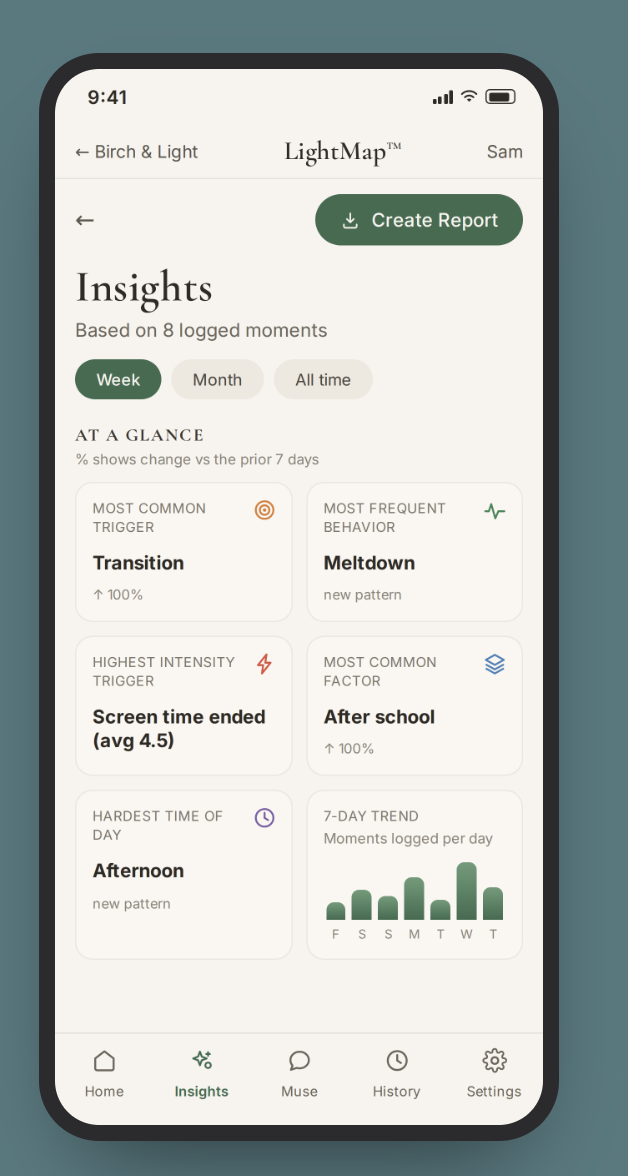

Part of the award-winning Birch & Light Method, honored with the Mom's Choice Gold Award for excellence in family resources.
A story to read together
Sometimes the easiest way in is a story you read side by side.
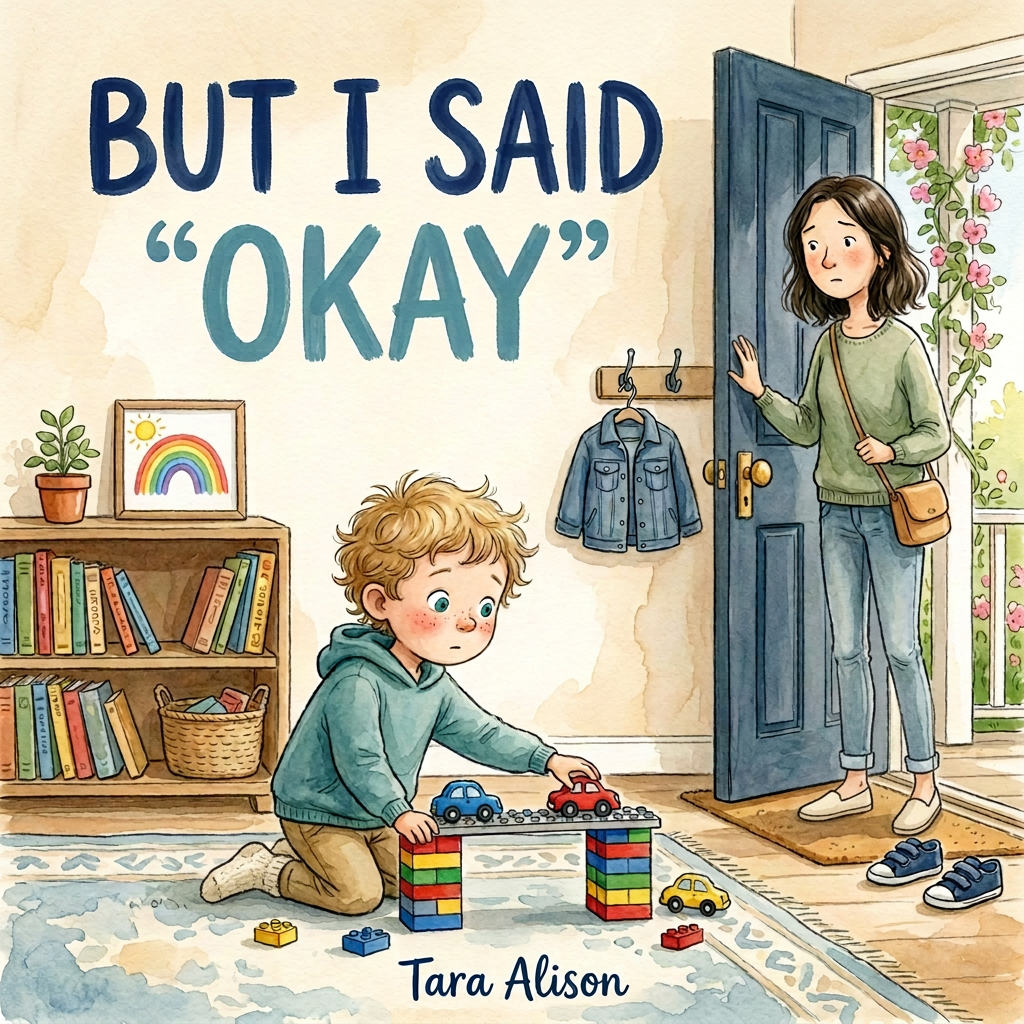 But I Said “Okay”
Owen always says okay. He means it every time. But his attention is still inside the bridge, the dragon, the cave, the music — until Mom realizes that helping him leave one thing matters more than asking him to start the next.
Read the story The Tower That Looked Fine
A tower in a quiet clearing tries to stay steady through every small thing nobody else seems to notice — until one tiny breath of wind causes her to fall, and a gentle hand begins to gather the blocks back.
Read the story
If today was one of those days
A few more from the library, free to read.
Researched and drafted with AI assistance, reviewed before publication. Editorial standards