
There is a version of parenting a high-needs kid that almost never gets talked about, because it sounds so strange from the outside: the child who must be doing something, going somewhere, getting something, every waking hour, and the parent who has quietly become a full-time entertainment director with a shrinking bank account.
The trampoline park. The arcade. A friend over, or else. Another outing, another purchase, another drive across town, because the alternative is a meltdown that can level the afternoon, and some days you simply do not have the reserves to withstand one. Some of these kids even start auditing the household, tracking when money comes in and what is left over, so they can calculate what the next hit of new can be. And underneath all of it, a parent whose own anxiety is climbing daily, because the machine only runs in one direction: more.
If that is your house, two things before anything else. You are not spoiling your child; you are surviving a nervous system with a genuinely different relationship to stimulation. And the treadmill you are on has an exit, though it is not the one most advice points to.
Why boredom feels like pain to this brain
For a child wired with ADHD, and often more so when autism and demand-avoidance are in the mix, under-stimulation is not mild discomfort. An interest-hungry brain in an idle moment can experience something closer to distress, restless, crawling, intolerable, and the fastest relief is novelty: a new place, a new thing, a new plan. Each burst of new genuinely helps, briefly. Then the baseline resets, the new thing becomes an old thing, and the brain needs the next one, usually a little bigger.
That is why buying your way to calm never lands you anywhere. It is not that your child is ungrateful or manipulative; it is that novelty purchased from outside is a consumable, and the tank it fills has a leak. The meltdown when you say no is not (only) about the trampoline park. It is a nervous system anticipating the pain of an empty afternoon and fighting to prevent it, with a demand-avoidant overlay that experiences your "no" as control on top of threat.
The auditing behavior, the questions about money, paydays, what things cost, usually is not greed either. It is certainty-seeking. A kid who depends on external stimulation is trying to forecast his supply, the way any of us track the thing we cannot cope without. It helps to answer some of it, because mystery fuels the interrogation more than information does.
The exit is not less stimulation. It is different sourcing.
The standard advice, teach him to tolerate boredom, is technically true and practically useless as a starting point, because you cannot tolerance-train a nervous system that is in distress. The workable move is to change where stimulation comes from: less purchased, less parent-delivered, more self-serve, more renewable.
Build the at-home heavy hitters. The purchased outings these kids chase are usually delivering two things: intense body input and novelty. A lot of that is buildable at home for a one-time cost that replaces dozens of paid visits: a mini trampoline, a pull-up bar in a doorway, a beanbag to crash into, a bike ridden hard. Big-body movement is the most reliable regulation these kids have, and it is the piece worth investing in before anything else.
Make a menu, not a schedule. Sit down together in a calm moment and build a big visible list of things he can do, sorted however he likes, big energy, building, screens, outside. When the restlessness hits, the move changes from "entertain me" to "check the menu." For a demand-avoidant kid this matters doubly: choosing off a menu he co-authored is autonomy; being handed a suggestion is a demand. Expect the menu to be rejected in hot moments at first. It earns trust over weeks, not days.
Feed the deep interest. The most durable stimulation source is an interest with no bottom, a sport, a game he can master, building, animals, a skill. One consuming interest quietly replaces a dozen outings, because mastery is the one form of novelty that renews itself. Notice what he goes deep on and invest there disproportionately.
Put the novelty on a rhythm you control. Rather than novelty-on-demand (which trains constant asking), make the exciting things predictable: the outing is Saturday, the friend day is Wednesday. A visible rhythm gives the certainty his auditing was searching for, and it moves you out of the role of vending machine that sometimes cruelly refuses.
While you're here, take the guide
What's Underneath is free: the three body-state triggers under most meltdowns, what to say in the minute before it tips over, and how to reset afterward.

You'll get the guide instantly, plus five free articles in your inbox every week. Real challenges (meltdowns, school mornings, picky eating, big feelings) and how to actually handle them. Unsubscribe anytime.
Holding a no without losing the afternoon
Even with all of that, there will be nos, and a demand-avoidant kid does not receive them gracefully. Nos land softer when they are the calendar's ("the outing day is Saturday") rather than yours in the moment; when they come with an immediate on-ramp to something physical ("not the trampoline park, and I will race you to the corner right now"); and when your own tone stays boring, because your escalation is stimulation too. None of this makes meltdowns vanish. It makes them less frequent and less totalizing, which is what progress actually looks like here.
When it turns physical
Be honest with yourself about one line: aggression aimed at a parent or real damage in the home is past the point where activity strategies are the whole answer. That level of dysregulation, especially as kids get older and stronger, deserves professional support, an evaluation if you are still on a waiting list (push on that wait, ask about cancellations), and a clinician who understands demand-avoidant profiles rather than one who will prescribe a sticker chart. In the moment, safety beats teaching: fewer words, more space, protect people first and possessions second, and debrief hours later, not during. Getting help for this is not an escalation or a betrayal. It is what the situation is asking for.
Your nervous system is the other patient
A parent living with daily dread, managing another person's stimulation needs from wake-up to bedtime, is running on a system designed for emergencies, permanently. The guilt-flavored thought, "sometimes I give in because I cannot face the meltdown," is not weakness; it is what any exhausted human does, and it is information: your reserves are the constraint on every strategy above. Whatever refills you, an honest hour of respite, your own person to talk to, tag-teaming with anyone available, is not self-indulgence. It is maintenance on the only piece of equipment this whole operation runs on.
Tracking the pattern helps too, in a notebook or a tool like LightMap: which days ended in meltdown, what the morning looked like, what actually filled him versus what just cost money. Families are usually surprised, the trigger is rarely the outing itself, and the data points at cheaper levers than the next admission ticket.
Your child is not broken and neither are you. He has a high-demand engine, and right now you are the only fuel source it knows. The work, slow, unglamorous, absolutely doable, is teaching that engine to fuel itself.
Teaching that engine to fuel itself happens in increments too small to feel. Logging the stretches he manages alone in LightMap is how you watch them lengthen.
For your child: The Current Helped is about a starfish pulled off his familiar rock, and the father who lets the current carry them both instead of dragging him back.
Sources: Zentall's optimal stimulation theory; Sonuga-Barke's delay aversion model; research on sensory seeking behavior in children (American Journal of Occupational Therapy; PMC); PDA Society (UK).
For education and reflection, not medical advice. Our terms
See what's underneath
Stop guessing which demand did it
LightMap reads your hard days together and gives you answers. Start with one moment today.
Start with 3 moments Not sure where to start? Ask me.Message Tara on WhatsApp. It really is me, I read everything and will personally respond.Click here to message Tara →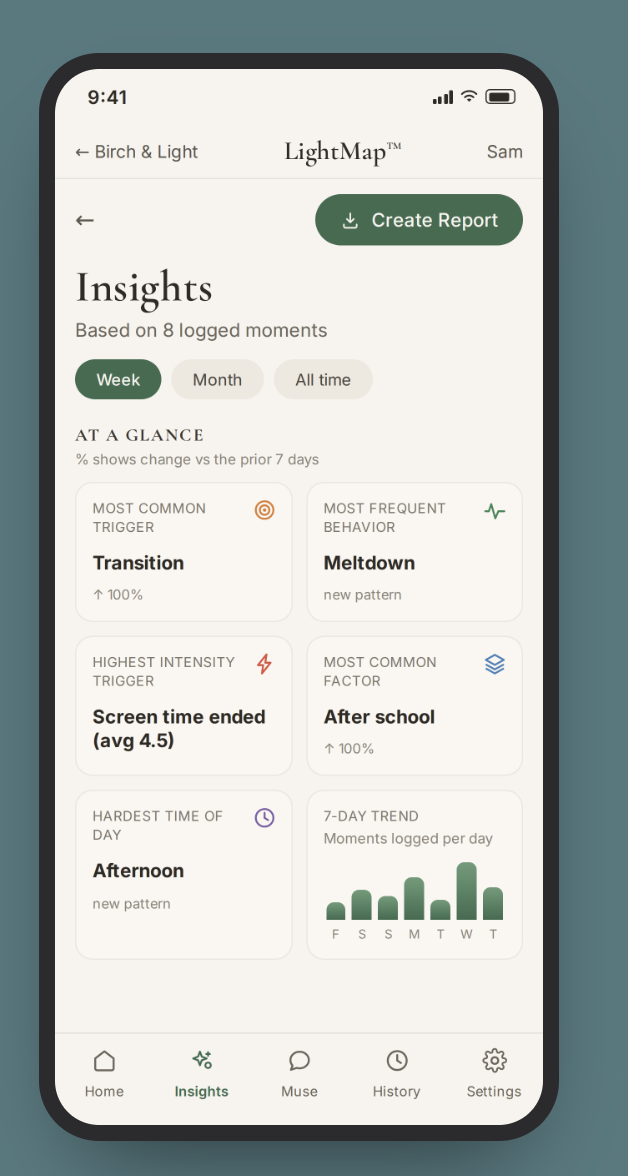

Part of the award-winning Birch & Light Method, honored with the Mom's Choice Gold Award for excellence in family resources.
A story to read together
Sometimes the easiest way in is a story you read side by side.
 Otto Filled Everything
Otto can't stop filling things with water. His family doesn't understand — until Grandma Willow helps them listen to what his body is actually asking for.
Read the story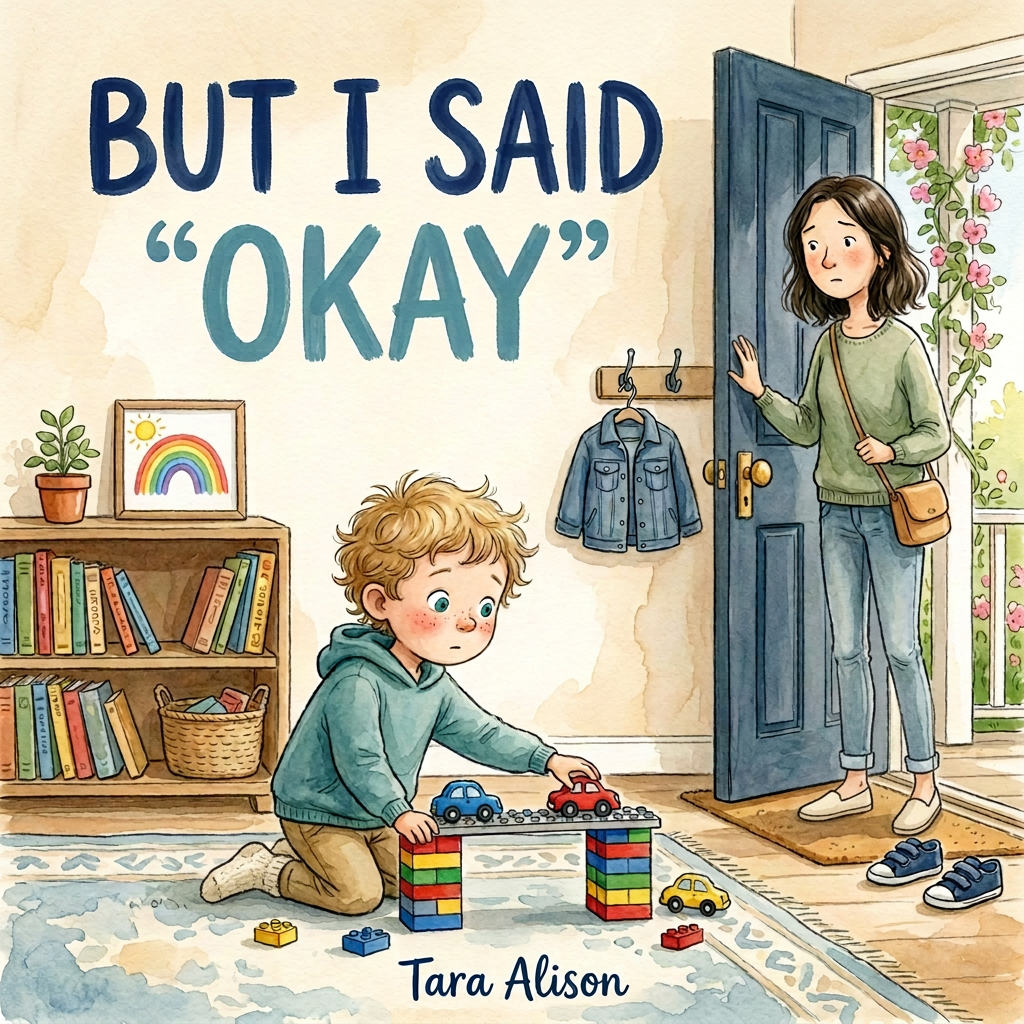 But I Said “Okay”
Owen always says okay. He means it every time. But his attention is still inside the bridge, the dragon, the cave, the music — until Mom realizes that helping him leave one thing matters more than asking him to start the next.
Read the story
If today was one of those days
A few more from the library, free to read.
Researched and drafted with AI assistance, reviewed before publication. Editorial standards