
There is a particular kind of exhaustion that the parenting books do not prepare you for. It is not the exhaustion of not knowing what to do. It is the exhaustion of knowing exactly what to do, doing it faithfully, every single day, and watching your child still struggle, still melt down, still come apart. You have read the material. You use low-demand parenting. You have trained yourself to speak in declarative language instead of commands. You advocate until you are hoarse. And your child is still having violent outbursts, and you are still on your knees at the end of the day wondering what you are doing wrong.
Here is the first thing, and hold it tightly: you are not doing anything wrong. The belief that doing everything right should produce a calm child is the quiet lie underneath so much parental despair, and it needs dismantling.
Doing it right was never supposed to erase the hard
Somewhere along the way, an unspoken promise slips in: if you learn the strategies and apply them well, the difficulty will resolve. So when your child is still dysregulated after months of you doing everything correctly, the math seems to point one direction. It must be you. You must not be doing it well enough.
That math is wrong, because the premise is wrong. Low-demand parenting, declarative language, accommodation, these are not cures. They are supports. They do not remove a child's neurology; they make it more bearable to live inside. A demand-avoidant nervous system is still demand-avoidant on the best-run day in the calmest household. What good support changes is not whether the hard moments happen, but how often, how intensely, and how safely everyone gets through them.
Think of it this way. A family managing a serious ongoing medical condition well does not thereby make the condition vanish; they make life livable alongside it, and the hard days still come. Your excellent PDA parenting is doing exactly that. The absence of a magically calm child is not evidence of your failure. It is evidence that you are parenting a real child with a real profile, as well as it can be done.
Why the violence persists even when you are doing it all
The outbursts are often the part that makes parents doubt everything, because surely if the approach were working, the violence would stop. But aggression in an overwhelmed young child is not usually a sign the strategy failed. It is the nervous system's overflow when demand, internal or external, exceeds capacity, and even the most beautifully low-demand life still contains demand: the demand of being a small person in a big confusing world, of a body that wants something it cannot have, of feelings too big for the container.
We go deep on the safety side of this in the plan for when de-escalation fails, and it is worth reading, because keeping everyone physically safe during the overflow is its own skill, separate from preventing it. The short version: your job in the violent moment is not to teach or to fix, it is to keep bodies safe while the storm passes, and needing to do that regularly is not a mark against your parenting.
The outburst-then-masking pattern
Many parents describe exactly this arc: a violent overflow, and then a hard refusal to talk about it, a retreat back into holding it all together. It can feel like the child slamming a door on the very connection you are offering.
It helps to understand what that masking-after is doing. For a young child, the outburst is terrifying to be inside of, and going quiet and composed afterward is often self-protection, a way of pulling the self back together and away from the enormity of what just happened. Trying to process it right after, however gently, can feel like one more demand landing on a system that just barely survived the last one. The talking, if it comes at all, comes much later, sideways, in tiny pieces, never as a debrief in the raw aftermath. Masking is exhausting work, and a child who unmasks violently at home and remasks immediately is showing you how much it costs them to hold it together the rest of the time. That they fall apart with you is, painful as it is, a sign you are their safe place.
While you're here, take the guide
What's Underneath is free: the three body-state triggers under most meltdowns, what to say in the minute before it tips over, and how to reset afterward.

You'll get the guide instantly, plus five free articles in your inbox every week. Real challenges (meltdowns, school mornings, picky eating, big feelings) and how to actually handle them. Unsubscribe anytime.
About the professional who dismissed you
And then there is the appointment. You walk in carrying months of careful observation, the input of an OT, a previous psychologist, your own hard-won understanding, and a professional waves it away, offers a fraction of what you asked for, and hands you advice that lands like a slap. It is one of the most deflating experiences in this whole journey, and it is unfortunately common.
A few things worth knowing. First, a dismissive first appointment is not a verdict on your child or your credibility. It is one professional, on one day, often one who does not know much about demand avoidance, which is still poorly understood in a lot of clinical settings. Their brush-off is information about their knowledge, not about your child's reality.
Second, you are allowed to keep going. You can request the additional referral you were denied, in writing if needed. You can seek a different clinician, ideally one with genuine experience in autism, ADHD, and demand-avoidant profiles, and it is fair to ask, before booking, whether they have that experience. You can bring the reports from the professionals who do see what you see, since documentation from an OT or psychologist who knows your child carries weight a parent's account alone sometimes is not granted. Assessment pathways and what you are entitled to differ from country to country, so it is worth finding out how the referral and second-opinion process works where you are, but the underlying truth travels: one dismissive door is not the only door.
Third, and gently, even well-meaning standard advice can be wrong for your specific child. Generic suggestions handed out without curiosity about the whole profile often miss the point entirely for a demand-avoidant kid. You know your child. A professional who did not take the time to understand him has not out-observed you.
The thing to carry
If you are doing low demand, declarative language, and relentless advocacy for a young child with this profile, you are not a struggling parent who cannot get it right. You are an extraordinarily skilled parent doing some of the hardest work there is, for a child whose brain makes ordinary life genuinely harder, and the difficulty that remains is not your failure. It is the terrain. Your good parenting is not failing to flatten the mountain; it is what is getting you both up it.
Let the impossible standard go, the one that says you should be producing calm. Replace it with a truer measure: are you keeping him safe, staying connected through the storms, and coming back every time. By that measure, from everything in your own description, you are doing it. For the days it does not feel like enough, this is here too.
This is heavy to carry, and if the exhaustion is wearing you down, talking it through with a professional who actually understands this profile, or another parent who lives it, can genuinely help.
In the weeks when it feels like nothing is working, a record is the only thing that can tell you otherwise. LightMap is a place to keep one.
Sources: Peer-reviewed research on caregiver burnout and chronic stress in families of children with high support needs (PMC); PDA Society (UK); research on parenting stress and self-efficacy where child response to intervention is limited (PMC).
For education and reflection, not medical advice. Our terms
See what's underneath
Stop guessing which demand did it
LightMap reads your hard days together and gives you answers. Start with one moment today.
Start with 3 moments Not sure where to start? Ask me.Message Tara on WhatsApp. It really is me, I read everything and will personally respond.Click here to message Tara →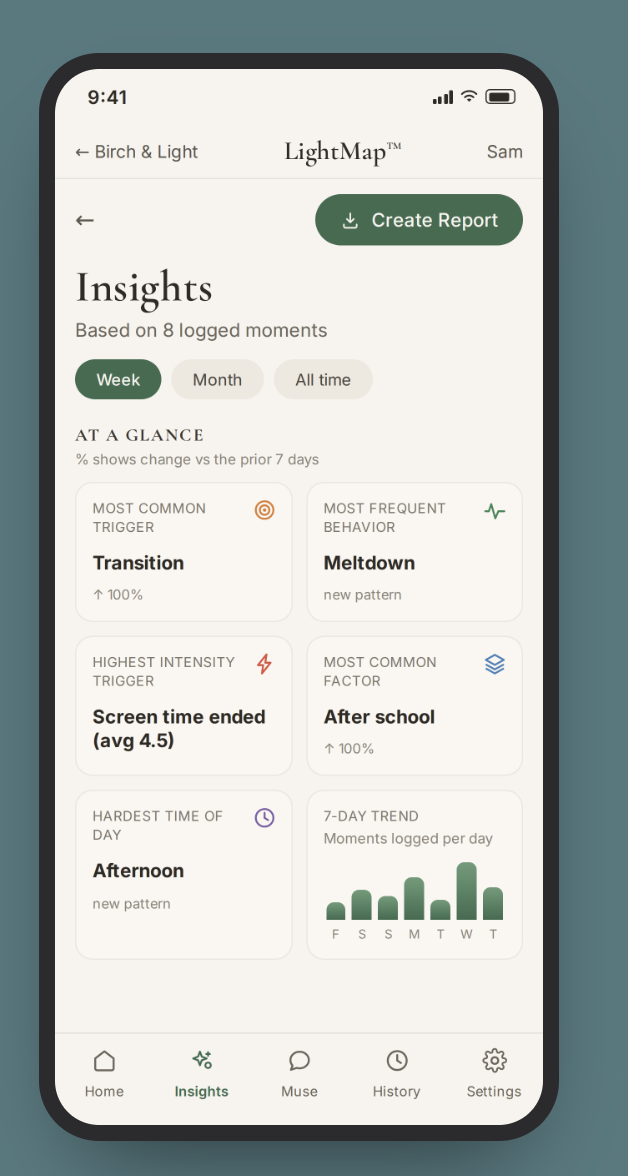

Part of the award-winning Birch & Light Method, honored with the Mom's Choice Gold Award for excellence in family resources.
A story to read together
Sometimes the easiest way in is a story you read side by side.
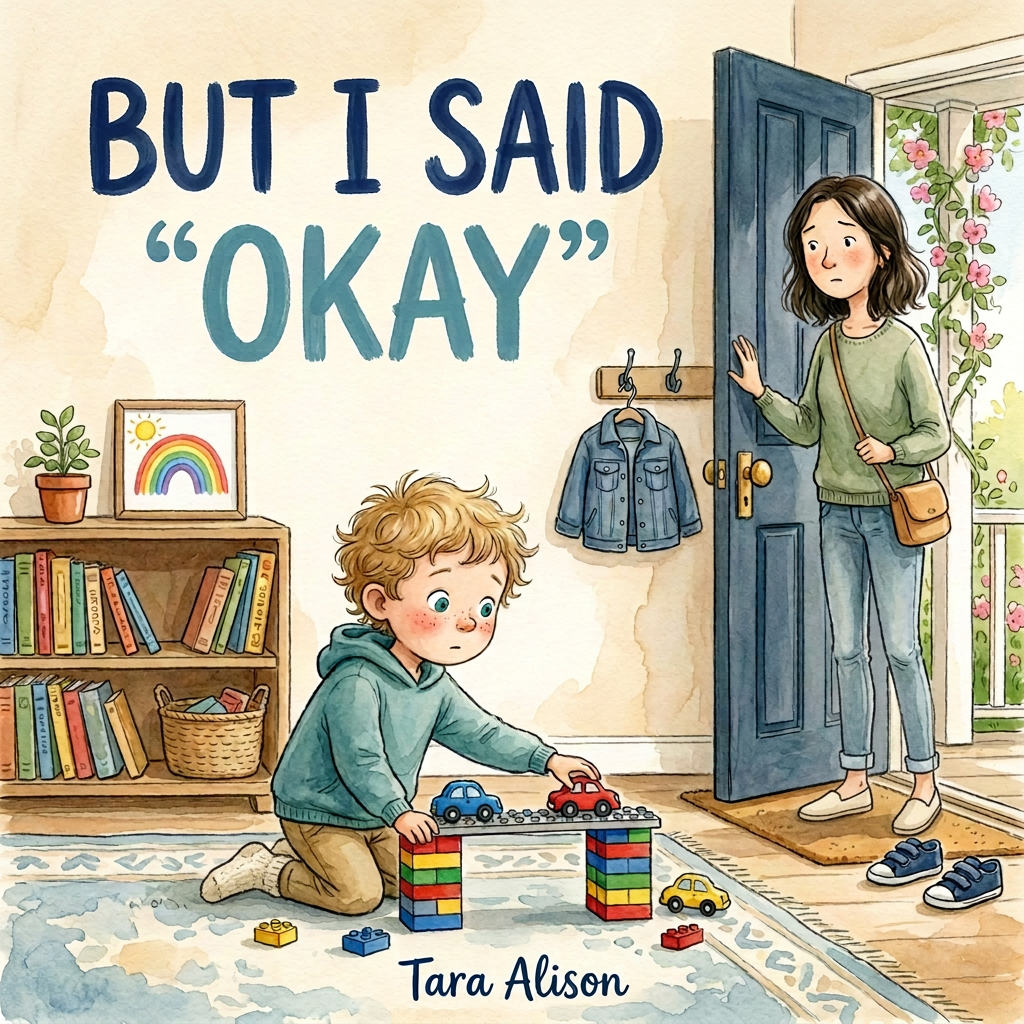 But I Said “Okay”
Owen always says okay. He means it every time. But his attention is still inside the bridge, the dragon, the cave, the music — until Mom realizes that helping him leave one thing matters more than asking him to start the next.
Read the story The Tower That Looked Fine
A tower in a quiet clearing tries to stay steady through every small thing nobody else seems to notice — until one tiny breath of wind causes her to fall, and a gentle hand begins to gather the blocks back.
Read the story
If today was one of those days
A few more from the library, free to read.
Researched and drafted with AI assistance, reviewed before publication. Editorial standards