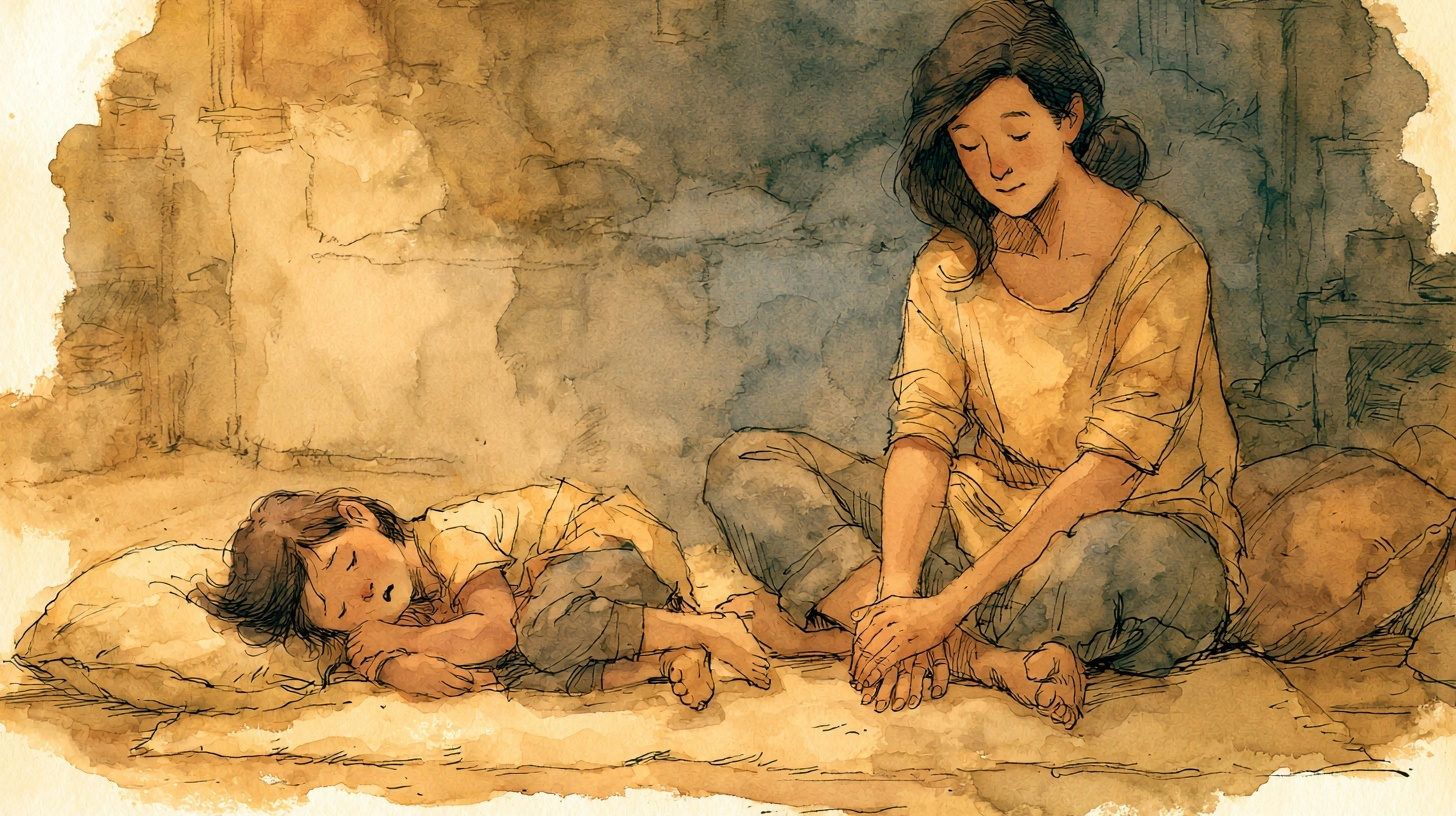
There is a question parents ask quietly, usually late at night, usually after: what are you supposed to do when none of it works? You have learned the scripts. You have gotten genuinely good at de-escalation. And still, some storms arrive that no technique can turn around, and suddenly the job is not calming anyone down. It is keeping bodies safe until it passes.
If you are in that place, first, the shame you are carrying does not belong to you. A child in a full meltdown is not choosing behavior any more than a person having a seizure is choosing to fall, and a parent who could not prevent a neurological storm has not failed at parenting. So let us talk about the part almost no one teaches: the safety plan.
The goal during the storm is not what you think
Once a meltdown crosses into aggression, the goal is no longer stopping it, teaching anything, or even soothing. Those all belong to before and after. During, the goal shrinks to exactly one thing: everyone stays safe while the storm burns itself out. Accepting that smaller goal is not giving up. It is the difference between fighting the weather and getting everyone inside.
The real work happens between meltdowns
Safety during is mostly built during calm. A practical checklist:
Choose the storm room. Identify the safest space in your home for this to happen: fewest hard corners, fewest throwable objects, a door that does not lock from inside. When a meltdown begins, you are gently steering toward that room, or clearing it.
Audit for projectiles and hazards. Walk your home asking one question: if this were thrown or kicked, what happens? Heavy decor, glass, anything at head height in the usual meltdown zones. You are not stripping your house. You are editing the three rooms where storms actually happen.
Build the sibling plan in advance. If there are other children, they need a rehearsed move: a specific room, something genuinely good waiting in it (a tablet reserved for exactly this, a snack box), and a calm phrase that sends them there. Rehearse it in peacetime like a fire drill, framed as their important job. The something-good matters, because their exit must never feel like punishment for a storm that was not theirs.
Agree on roles if there are two adults. One person takes the child, one takes the siblings. Decided now, not negotiated mid-crisis.
During: move the world, not the child
The core principle, and the one that changes the most for families who adopt it: it is almost always safer and more effective to move everything else away from the child than to physically control the child.
Clear the room of people first, objects second. Drop the lights, drop your voice, drop your words to almost none. Stay low and sideways rather than looming and frontal. If hitting or kicking is aimed at you, create distance or use a cushion as a shield rather than grabbing limbs, because grabbing reliably escalates a nervous system that already reads the world as threat. Your silence and stillness are doing more than any words could.
While you're here, take the guide
What's Underneath is free: the three body-state triggers under most meltdowns, what to say in the minute before it tips over, and how to reset afterward.

You'll get the guide instantly, plus five free articles in your inbox every week. Real challenges (meltdowns, school mornings, picky eating, big feelings) and how to actually handle them. Unsubscribe anytime.
About physical restraint, honestly
Sometimes there is a moment of true imminent danger: a child heading for a window, a sibling cornered, a road. In that moment, using your body to block or briefly hold your child is protection, and you should not carry shame for it. But the guardrails matter enormously. Holding is a last resort for imminent physical danger only, never for compliance and never as consequence. It is the minimum needed, released the second the danger passes. And it will often intensify the storm before it ends it, which is exactly why it stays in the emergency-only drawer.
Here is the important signal: if you are finding that physical intervention is becoming a regular feature of meltdowns, that is not a technique problem for you to solve with better holds. That is the threshold where families deserve professional backup, an OT working on regulation, a clinician who understands demand-avoidant and neurodivergent profiles, and a formal safety plan built for your actual home. Needing that help is common, and asking for it is the strong move.
The cold drink and the cartoon are not a reward
Many parents end a long storm by offering something cold to drink or eat and putting on a show, and then lie awake worrying they have rewarded aggression. Let this go, completely. Cold and sweet genuinely helps a flooded nervous system downshift, and a familiar show is sensory anchoring. You cannot reinforce a behavior that was never chosen in the first place. What you did has a name, and the name is co-regulation. It was the right call.
After: three repairs, not one
The child needs quiet reconnection with almost no language and absolutely no postmortem lecture. "That was so hard. You're safe. I love you." The full conversation, if it happens at all, happens another day, briefly.
The siblings need their own repair: acknowledgment that it was scary, praise for running their plan, and protected time with you that has nothing to do with their sibling.
And you need repair too, which parents always skip. Your body just went through a threat response of its own. The crying afterward is not weakness. It is discharge, and it is allowed.
If the storms only happen at home
One more thing, because it keeps so many families from getting help: a child who holds it together beautifully in public and detonates only at home is not disproving a diagnosis. That pattern has a name, masking followed by restraint collapse, and clinicians who know their way around neurodivergence recognize it immediately. What helps them see what you see: short videos when safe to take them, and a simple log of dates, triggers, duration, and intensity. If tracking by hand feels like one job too many, LightMap was built for exactly this, and the pattern report it produces is the kind of evidence an evaluator can actually use. Home-only storms are still real, still valid grounds for evaluation, and still very much workable.
If you want a companion for seasons like this one, What's Underneath: A Parent's Field Guide to the Hard Moments is a short, calm map for the moments when things fall apart.
Safety plans get sharper with data. Logging what preceded each episode in LightMap is how the early warning signs become visible ahead of the escalation rather than after it.
For education and reflection, not medical advice. Our terms
See what's underneath
Next time, you will know what set it off
LightMap reads your hard days together and gives you answers. Start with one moment today.
Start with 3 moments Not sure where to start? Ask me.Message Tara on WhatsApp. It really is me, I read everything and will personally respond.Click here to message Tara →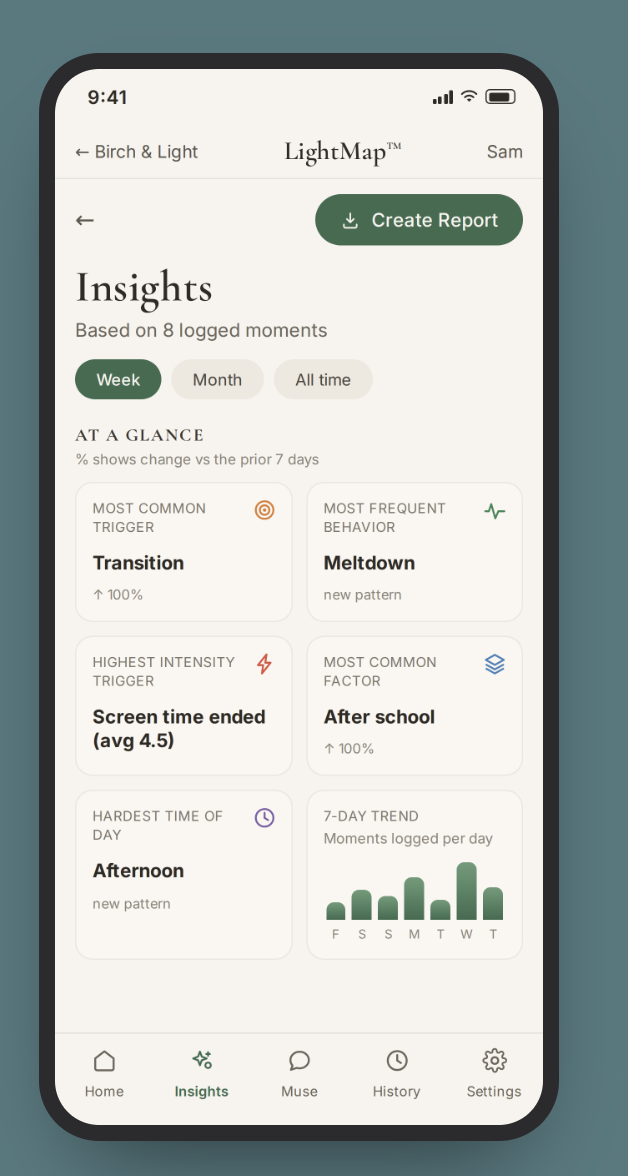

Part of the award-winning Birch & Light Method, honored with the Mom's Choice Gold Award for excellence in family resources.
A story to read together
Sometimes the easiest way in is a story you read side by side.
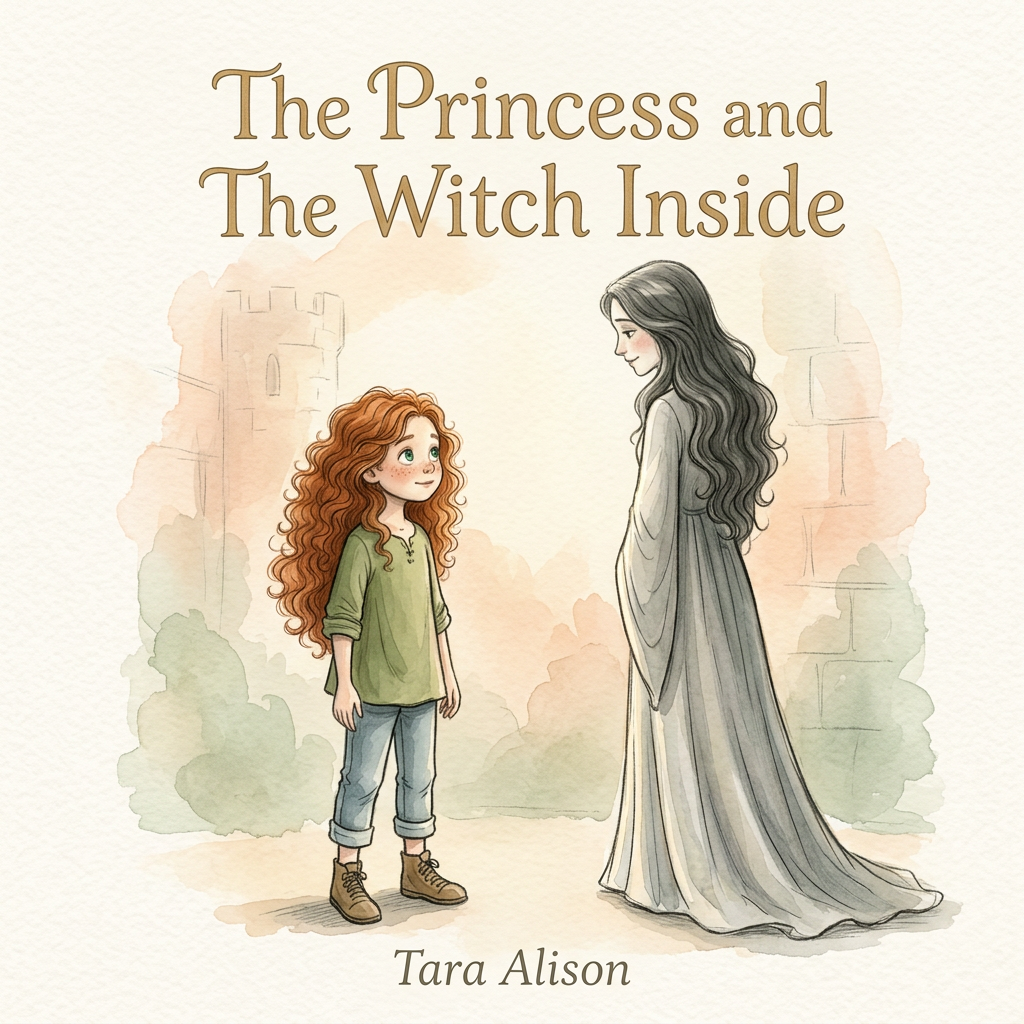 The Princess and the Witch Inside
Esme is loved, but a fast protective part keeps rushing in before she gets a turn. A quiet visitor helps her meet the witch inside — not as an enemy, but as a worried protector — and find her way back to the people she wanted to be with all along.
Read the story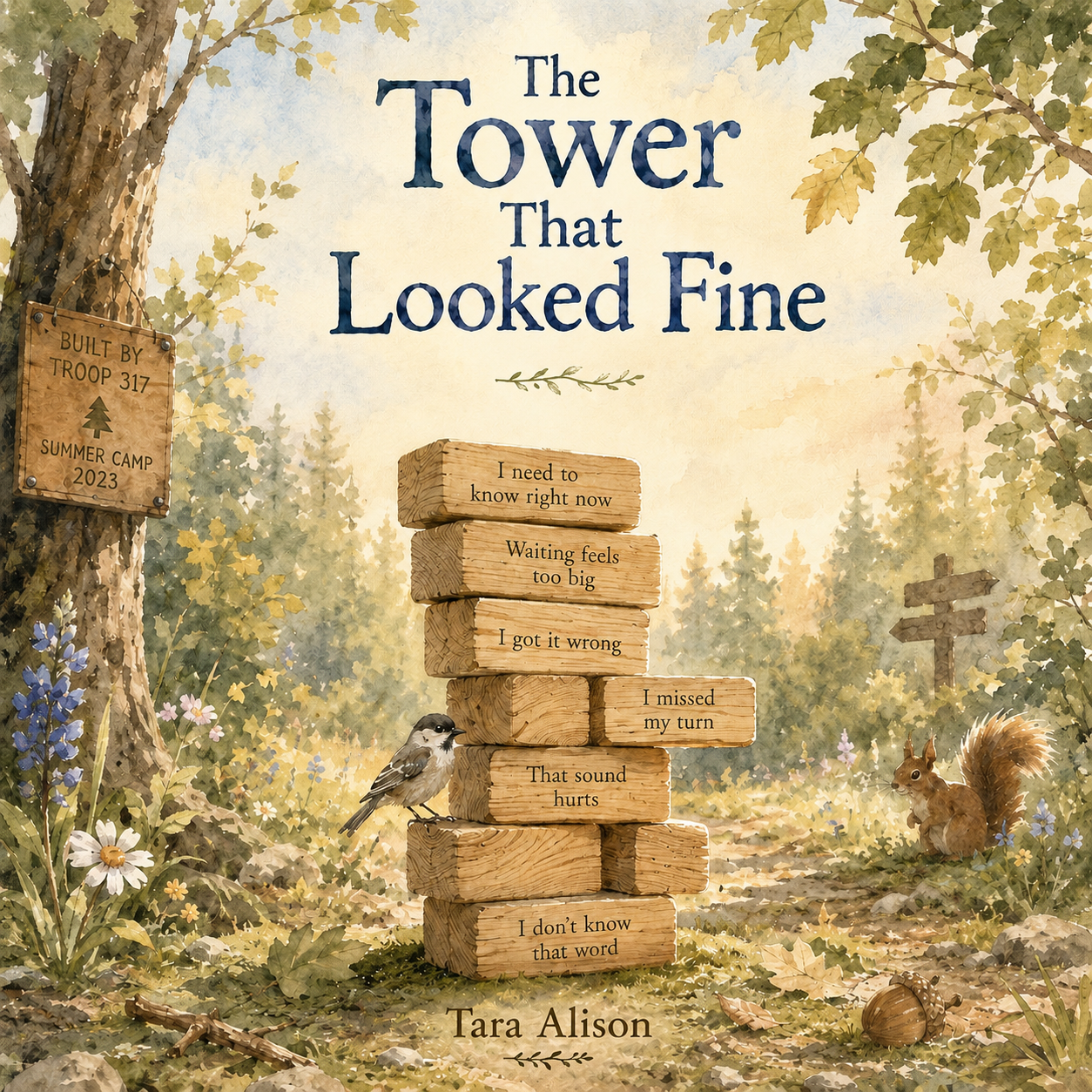 The Tower That Looked Fine
A tower in a quiet clearing tries to stay steady through every small thing nobody else seems to notice — until one tiny breath of wind causes her to fall, and a gentle hand begins to gather the blocks back.
Read the story
If today was one of those days
A few more from the library, free to read.
Researched and drafted with AI assistance, reviewed before publication. Editorial standards