If you're searching for a meltdown tracker app, you're probably in the middle of a hard stretch — and you don't want to fill out a 40-field form just to write down what happened. You want something fast, kind, and actually useful.
That's why we built LightMap. Tracking is where it starts. What it became is the heart of the Birch & Light membership: a tool that turns your family's hardest moments into patterns, patterns into understanding, and understanding into stories, songs, and coaching your child can actually feel. Every new account starts with 2 free weeks.
What to look for in a meltdown tracker
Whatever tool you choose — ours or anyone's — hold it to three standards:
- It should collect the good days, not just the hard ones. The pattern that changes everything usually hides in what went right. A tool that only logs your worst moments will only ever reflect your worst moments back at you.
- It should know your child, not just your entries. The new school, the sibling situation, the medication change — background matters. If you have to re-explain your child every time, the tool isn't learning; you're just typing.
- It should reach your child, not just you. The change you're hoping for has to happen in them, not only in your strategy. Almost nothing on the market clears this bar.
How LightMap works
1. Log a moment in about a minute
Tap one button, pick a few tags, add a note if you want. Hard moments and bright spots — a full log takes about a minute, usually once the moment has passed and you have a breath.
2. Watch the patterns surface
After a handful of moments, LightMap starts showing you which triggers come up most, what time of day is hardest, and what tends to help your child reset. If your co-parent logs too, both perspectives build one picture.
3. Get support grounded in a real method
Suggestions draw on the frameworks behind the Birch & Light Method — Internal Family Systems (Dr. Richard Schwartz) and Polyvagal theory (Dr. Stephen Porges) — and when a pattern surfaces, LightMap points you to the storybooks and songs in our library written for exactly that feeling. Starting points, never prescriptions. And never a lecture for your child — a story instead.
More than a tracker: the full family file
Everything lives in one place that only gets smarter:
- Context notes — longer-form background LightMap always knows, separate from your moment logs, so its understanding deepens instead of resetting.
- A Care Profile — medications, sensitivities, and your child's baseline, woven into what the patterns mean.
- Muse — your coaching companion for the 6pm conversations, grounded in your child's actual history, with an "Explain this to…" feature that rewrites any insight for a teacher, a grandparent, or your child themselves.
- A shared file for the people who love your child — invite your co-parent to log their own moments in the same file, and share read-only reports or Muse conversations with a therapist or teacher when it helps.
- A full desktop workspace — log on your phone when you have a minute, then sit down Sunday night at a real screen to review the week or prepare for an IEP meeting. Same account, both screens, nothing to download.
While you're here, take the guide
What's Underneath is free: the three body-state triggers under most meltdowns, what to say in the minute before it tips over, and how to reset afterward.
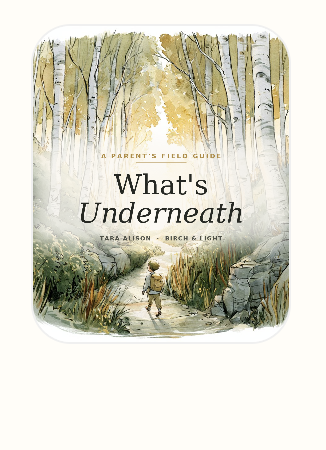
You'll get the guide instantly, plus five free articles in your inbox every week. Real challenges (meltdowns, school mornings, picky eating, big feelings) and how to actually handle them. Unsubscribe anytime.
Pricing
One membership includes everything: LightMap, Muse coaching, 30+ storybooks with original songs, and our full article library. After your 2 free weeks it's $99/year or $12.99/month. Cancel anytime in one tap from Settings.
About all the new parenting apps
You may have noticed them — every month lately brings a new AI parenting app promising check-ins, patterns, and personalized strategies. Honestly, we think that's good news. It means the world is finally catching up to what parents of kids who feel everything more have always known: the pattern matters.
But here's the honest difference. Nearly all of them are trackers or chatbots — useful, and we compare them fairly below. What we haven't seen anywhere else is the combination: a tracker and a coaching companion and a library of stories and songs, all grounded in one integrated method, all learning from the same family file, and all reaching your child — not just you. A pattern without a method is a chart. A method without your child in it is a lecture. We built the whole thing.
Trackers show you the pattern. Only one membership changes it.
| What it does | Birch & Light | AI check-in apps | Advice chatbots | Visual schedule tools | Parenting books |
|---|---|---|---|---|---|
| Log moments & surface patterns | routines only | ||||
| Guidance in the hard moment | generic | ||||
| Advice specific to your child | per chat | ||||
| Storybooks written for your child (30+) | |||||
| Original songs for big feelings | |||||
| Library of 100+ evidence-honest articles | |||||
| Helps the child, not just the parent | |||||
| A named founder & method behind it | |||||
| Remembers your family over time | schedules | ||||
| Bright spots: log what went right | |||||
| Rich detail on each logged moment | |||||
| Context notes: background it always knows | inferred only | per chat | |||
| Medication & health baseline in one place | |||||
| Co-parent & caregivers can log too | share only | varies | |||
| Share read-only reports with therapists & teachers | |||||
| Method stories your child experiences | |||||
| Full desktop workspace, not just a phone app | web chat | varies | |||
| Stories & articles matched to your child's patterns |
included·partial limited· not offered
Categories describe common product types as of July 2026, based on how those products present themselves.
Get started in 30 seconds
Open LightMap and create an account with just an email and password. Your 2 free weeks start immediately, your data stays private, and it syncs across every device you own.
Frequently asked questions
Can I really try LightMap free?
Yes. Every new account starts with 2 free weeks of the full membership — LightMap, Muse, the storybooks and songs, and the article library. After the trial it's $99/year or $12.99/month. Cancel anytime in one tap from Settings.
With so many AI parenting apps out there, why choose LightMap?
Because everything else we've seen does one thing. Trackers show you patterns. Chatbots give you scripts. Both are useful, and both stop at your phone. LightMap is the only tool we know of that combines the tracker, the coaching, and a library of stories and songs in one family file — grounded in an integrated method rather than generic advice — so the understanding reaches your child, not just you. The comparison table above shows the honest picture, category by category.
What does a meltdown tracker actually do?
You log what happened, when, and what was going on around it — and just as importantly, you log the bright spots. Over time the patterns surface: which situations tend to lead to meltdowns, and what genuinely helps your child reset.
How is LightMap different from a parenting journal?
Journals are great for processing your own feelings, but they don't surface patterns. LightMap is structured: each entry uses the same fields, so trends across triggers, time of day, and what helped appear on their own — without re-reading weeks of notes.
Can my co-parent use it too?
Yes, and this is one of our favorite parts. You can share read-only reports with a therapist or teacher — or invite your co-parent into the same family file, where they log their own moments. Both perspectives build one picture, which makes the patterns dramatically more accurate.
Is my child's data private?
Yes. Your data is private to your account. Anything you share is shared deliberately, through a secure link you control.
What ages is this for?
Any age. Feelings don't age out, and neither does the method — parents use LightMap with toddlers, big kids, and teens, and many find it most valuable during demanding seasons like school transitions, new diagnoses, or sensory-heavy stretches, whenever those arrive.
For education and reflection, not medical advice. Our terms
See what's underneath
Next time, you will know what set it off
LightMap reads your hard days together and gives you answers. Start with one moment today.
Start with 3 moments Not sure where to start? Ask me.Message Tara on WhatsApp. It really is me, I read everything and will personally respond.Click here to message Tara →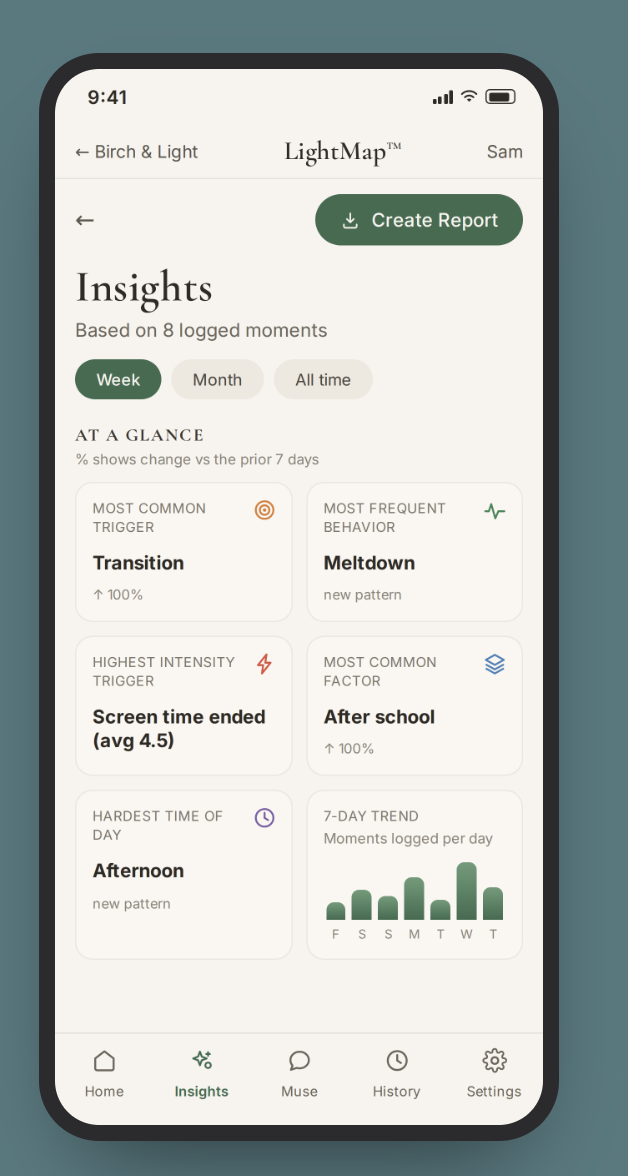

Part of the award-winning Birch & Light Method, honored with the Mom's Choice Gold Award for excellence in family resources.
A story to read together
Sometimes the easiest way in is a story you read side by side.
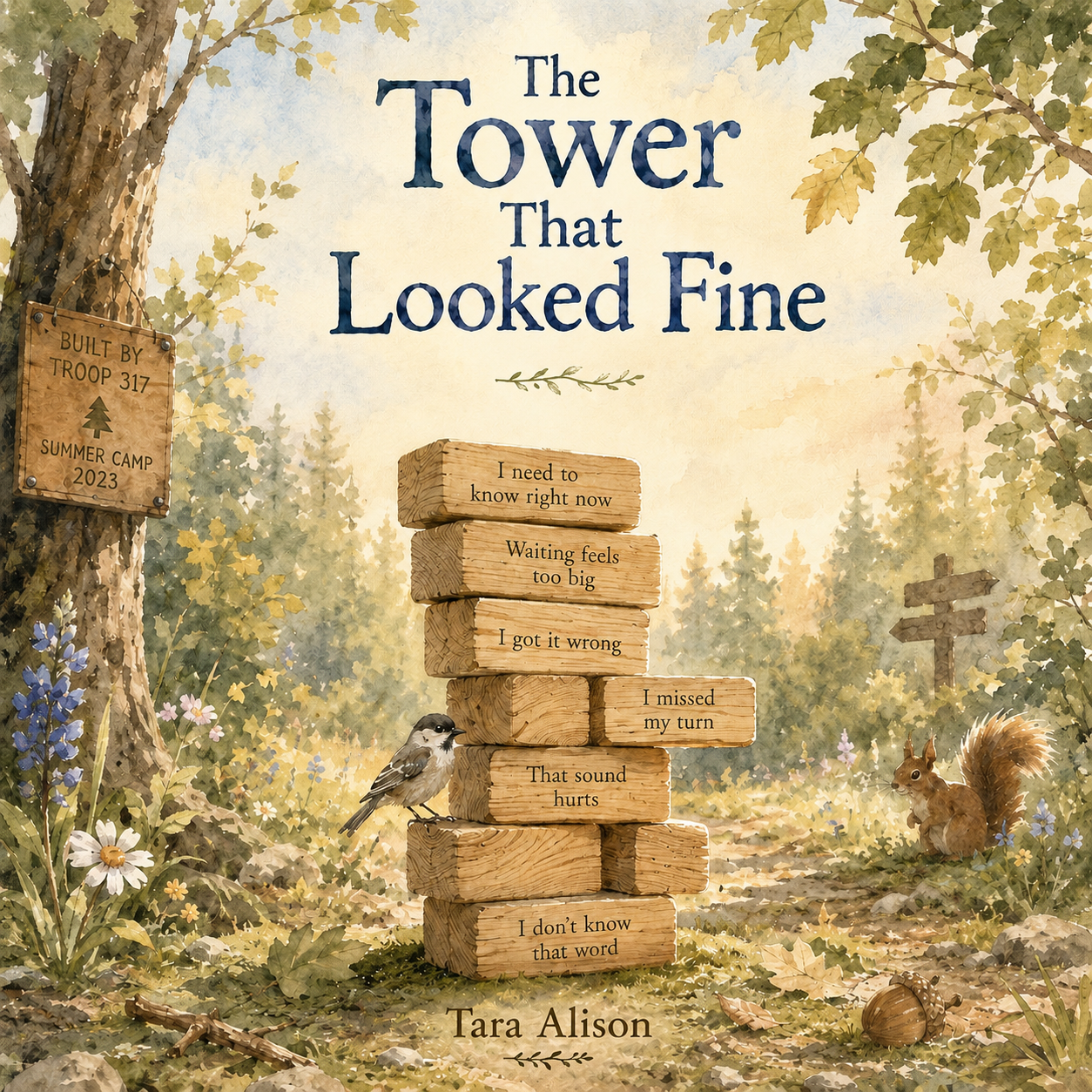 The Tower That Looked Fine
A tower in a quiet clearing tries to stay steady through every small thing nobody else seems to notice — until one tiny breath of wind causes her to fall, and a gentle hand begins to gather the blocks back.
Read the story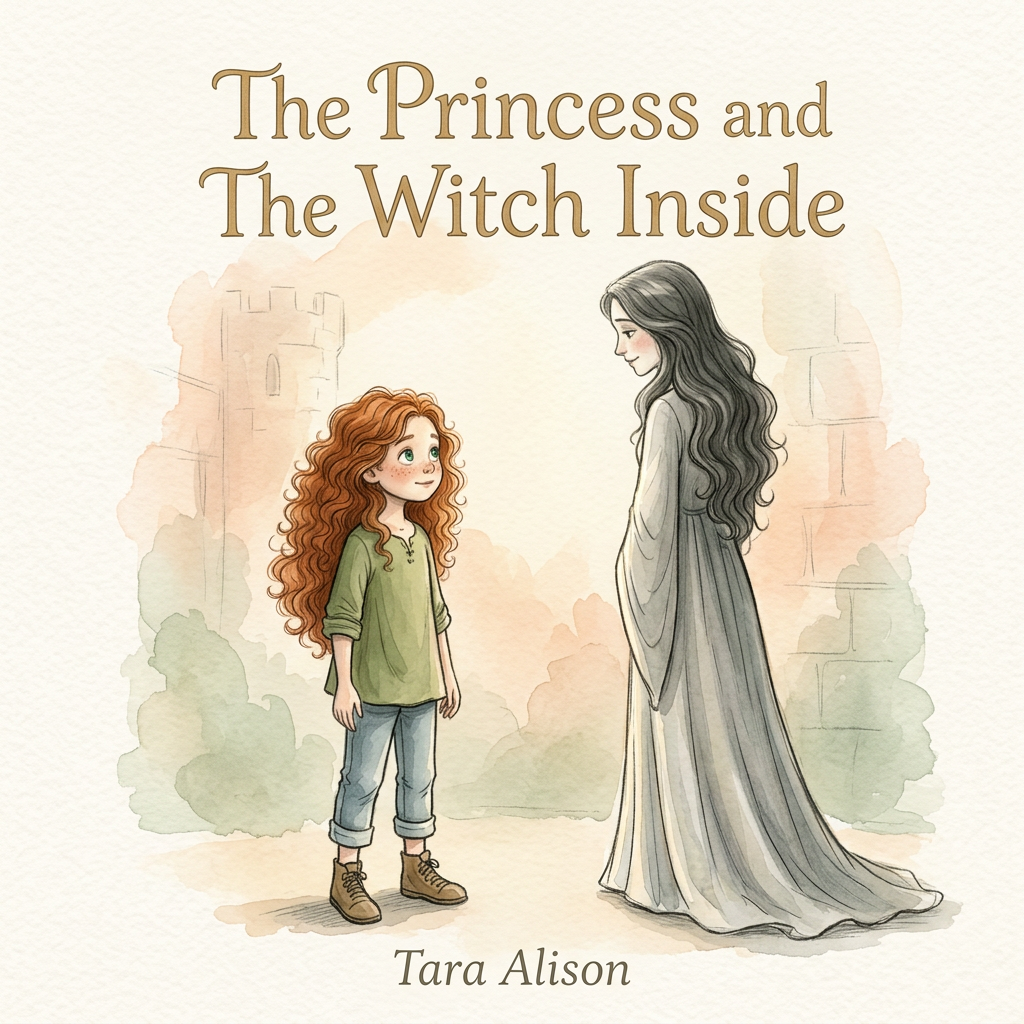 The Princess and the Witch Inside
Esme is loved, but a fast protective part keeps rushing in before she gets a turn. A quiet visitor helps her meet the witch inside — not as an enemy, but as a worried protector — and find her way back to the people she wanted to be with all along.
Read the story
If today was one of those days
A few more from the library, free to read.
- Emotional RegulationHow to Choose a Parenting App for a Kid Who Feels Everything More
- Emotional RegulationIntuitive Telepathy: When Your Child Knows What You Never Said
- Emotional RegulationWhen De-Escalation Fails: Keeping Everyone Safe During a Violent Meltdown
- NeurodivergenceYour ADHD Child Just Got an Autism Diagnosis Too
Researched and drafted with AI assistance, reviewed before publication. Editorial standards