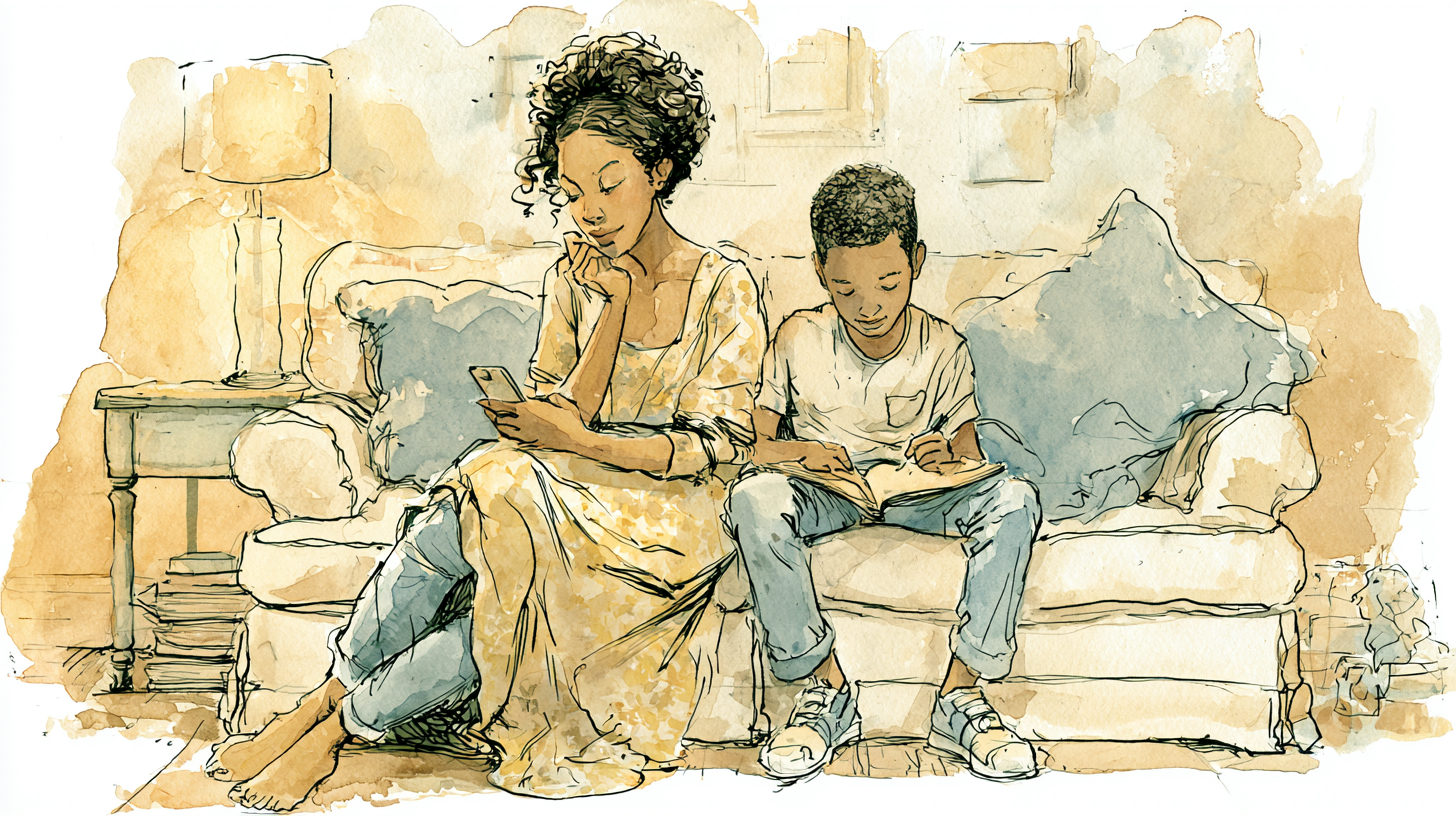
It usually starts at 2am. You've just gotten through another hard night, and you're in bed with your phone, typing something like "app for kid meltdowns" into the search bar. What comes back is a wall of options that all sound the same: track behaviors, get insights, feel supported.
I've been that parent. I have five kids, and more than one of them feels everything more. Over twenty years I've tried nearly every kind of help there is, which is eventually why I built my own. So let me save you some 2am scrolling and walk through what's actually out there, honestly — including where each kind of tool genuinely helps and where it quietly stops.
The real question isn't "which app"
It's "which kind of help." Almost everything you'll find falls into four buckets, and each one solves a different piece of the problem.
AI check-in apps
You log a hard moment, the app learns your child's patterns, and it suggests what to try. This is genuinely useful. Pattern recognition is real: when you can see that meltdowns cluster after school on low-sleep days, you stop feeling ambushed and start feeling prepared. If your only goal is a smarter log, these do the job.
Advice chatbots
You describe what's happening and get a tailored script or strategy. Also genuinely useful, especially at 6pm when your own words have run out. The limit is memory and depth: most give you a good answer for tonight but hold no running picture of your child, and none of them hand your child anything at all.
Visual schedule tools
Timers, routines, picture schedules. For many kids, especially those who need predictability, these are quietly life-changing for mornings and bedtime. But they're structure tools, not understanding tools. They won't help you make sense of a Tuesday that fell apart for no visible reason.
Parenting books
Still the deepest thinking you can buy for fifteen dollars, and many are written by people who have spent their lives on this. The limit is the one you already know: the book was written for a composite child, and you are raising a specific one. Books give you the philosophy. They can't tell you what last Thursday meant.
While you're here, take the guide
What's Underneath is free: the three body-state triggers under most meltdowns, what to say in the minute before it tips over, and how to reset afterward.

You'll get the guide instantly, plus five free articles in your inbox every week. Real challenges (meltdowns, school mornings, picky eating, big feelings) and how to actually handle them. Unsubscribe anytime.
What to actually look for
After two decades of trying things, here's my honest checklist for a kid who feels everything more:
- It should log bright spots, not just problems. Almost every tracker is built on a deficit lens: log the meltdown, log the refusal, log what went wrong. But the pattern that changes everything is usually hiding in what went right. If a tool only collects your hardest moments, it will only ever reflect your hardest moments back at you.
- It should hold context, not just events. "Meltdown, 4pm" tells you almost nothing. The skipped lunch, the substitute teacher, the bad night of sleep — and the standing background that never changes — are where understanding starts.
- It should know your child's baseline. Medications, sensitivities, what a regular week looks like. Patterns only mean something against a backdrop.
- Everyone who loves your child should be able to log. If you co-parent, or a grandparent does Thursdays, the picture is incomplete unless everyone who sees your child can contribute to it. A tool that lives in one parent's phone captures half a childhood.
- It should give something to your child, too. This is the one almost nothing offers. Most tools help you manage your child. Very few help your child understand themselves. Stories, songs, language for big feelings: the change you're hoping for ultimately has to happen in them, not just in your strategy.
Trackers show you the pattern. Only one membership changes it.
| What it does | Birch & Light | AI check-in apps | Advice chatbots | Visual schedule tools | Parenting books |
|---|---|---|---|---|---|
| Log moments & surface patterns | routines only | ||||
| Guidance in the hard moment | generic | ||||
| Advice specific to your child | per chat | ||||
| Storybooks written for your child (30+) | |||||
| Original songs for big feelings | |||||
| Library of 100+ evidence-honest articles | |||||
| Helps the child, not just the parent | |||||
| A named founder & method behind it | |||||
| Remembers your family over time | schedules | ||||
| Bright spots: log what went right | |||||
| Rich detail on each logged moment | |||||
| Context notes: background it always knows | inferred only | per chat | |||
| Medication & health baseline in one place | |||||
| Co-parent & caregivers can log too | share only | varies | |||
| Share read-only reports with therapists & teachers | |||||
| Method stories your child experiences | |||||
| Full desktop workspace, not just a phone app | web chat | varies | |||
| Stories & articles matched to your child's patterns |
included·partial limited· not offered
Categories describe common product types as of July 2026, based on how those products present themselves.
Where Birch & Light fits
I built Birch & Light because I needed all of those things in one place and couldn't find them. LightMap logs the hard moments and the bright spots, holds the context and the health baseline, and lets a co-parent log in the same family file. Muse is there for the 6pm conversations — and more than once, mid-episode, I've stepped away for a minute while another adult held down the fort and checked in with Muse before walking back in. And the part I care about most: thirty-plus storybooks and original songs made for the child who feels everything more, so the understanding doesn't stop at your phone.
If a simpler tool covers what your family needs right now, truly, use it. Any of the categories above can help. But if you've read this far, you're probably raising the kid the generic tools weren't written for. That's exactly who this was built for.
Every membership starts with 2 free weeks. Nothing is charged today, and you can cancel in Settings in two taps. Start here, or watch the full walkthrough first.
For education and reflection, not medical advice. Our terms
See what's underneath
Next time, you will know what set it off
LightMap reads your hard days together and gives you answers. Start with one moment today.
Start with 3 moments Not sure where to start? Ask me.Message Tara on WhatsApp. It really is me, I read everything and will personally respond.Click here to message Tara →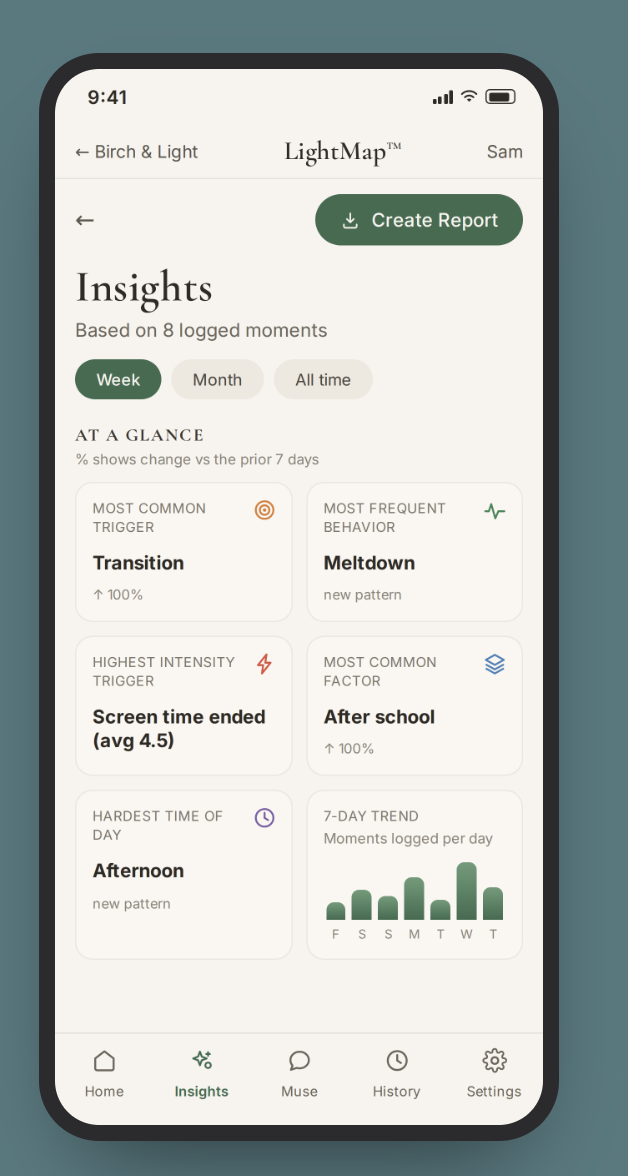

Part of the award-winning Birch & Light Method, honored with the Mom's Choice Gold Award for excellence in family resources.
A story to read together
Sometimes the easiest way in is a story you read side by side.
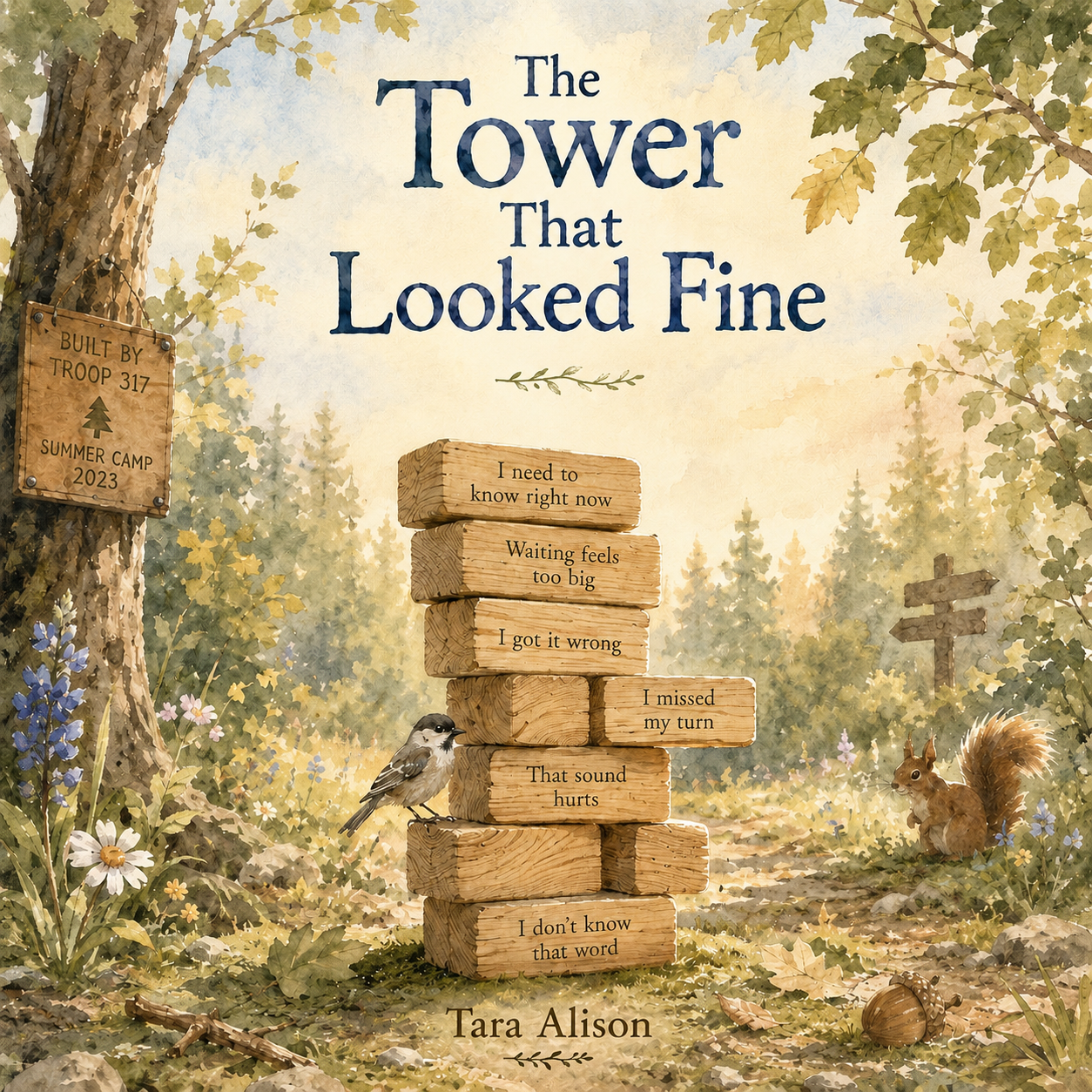 The Tower That Looked Fine
A tower in a quiet clearing tries to stay steady through every small thing nobody else seems to notice — until one tiny breath of wind causes her to fall, and a gentle hand begins to gather the blocks back.
Read the story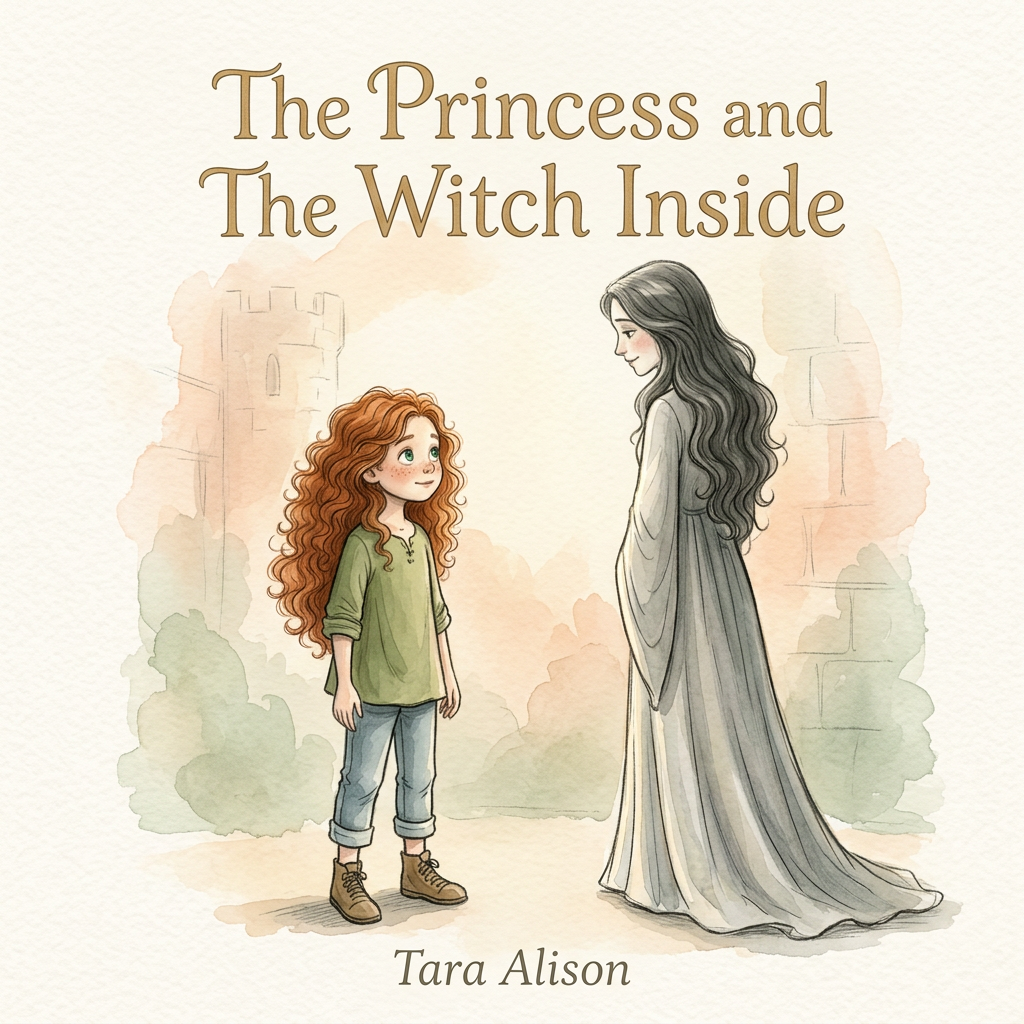 The Princess and the Witch Inside
Esme is loved, but a fast protective part keeps rushing in before she gets a turn. A quiet visitor helps her meet the witch inside — not as an enemy, but as a worried protector — and find her way back to the people she wanted to be with all along.
Read the story
If today was one of those days
A few more from the library, free to read.
- Emotional RegulationIntuitive Telepathy: When Your Child Knows What You Never Said
- Emotional RegulationWhen De-Escalation Fails: Keeping Everyone Safe During a Violent Meltdown
- Emotional RegulationMeltdown vs Tantrum: How to Tell the Difference
- NeurodivergenceYour ADHD Child Just Got an Autism Diagnosis Too
Researched and drafted with AI assistance, reviewed before publication. Editorial standards