ODD is a diagnosis that requires a pattern of angry, defiant, or vindictive behavior lasting at least six months, beyond what is typical for the child. PDA is an anxiety-driven avoidance of everyday demands, and it is not in the American diagnostic manual. A label born in one stressful visit deserves a question about the pattern behind it.
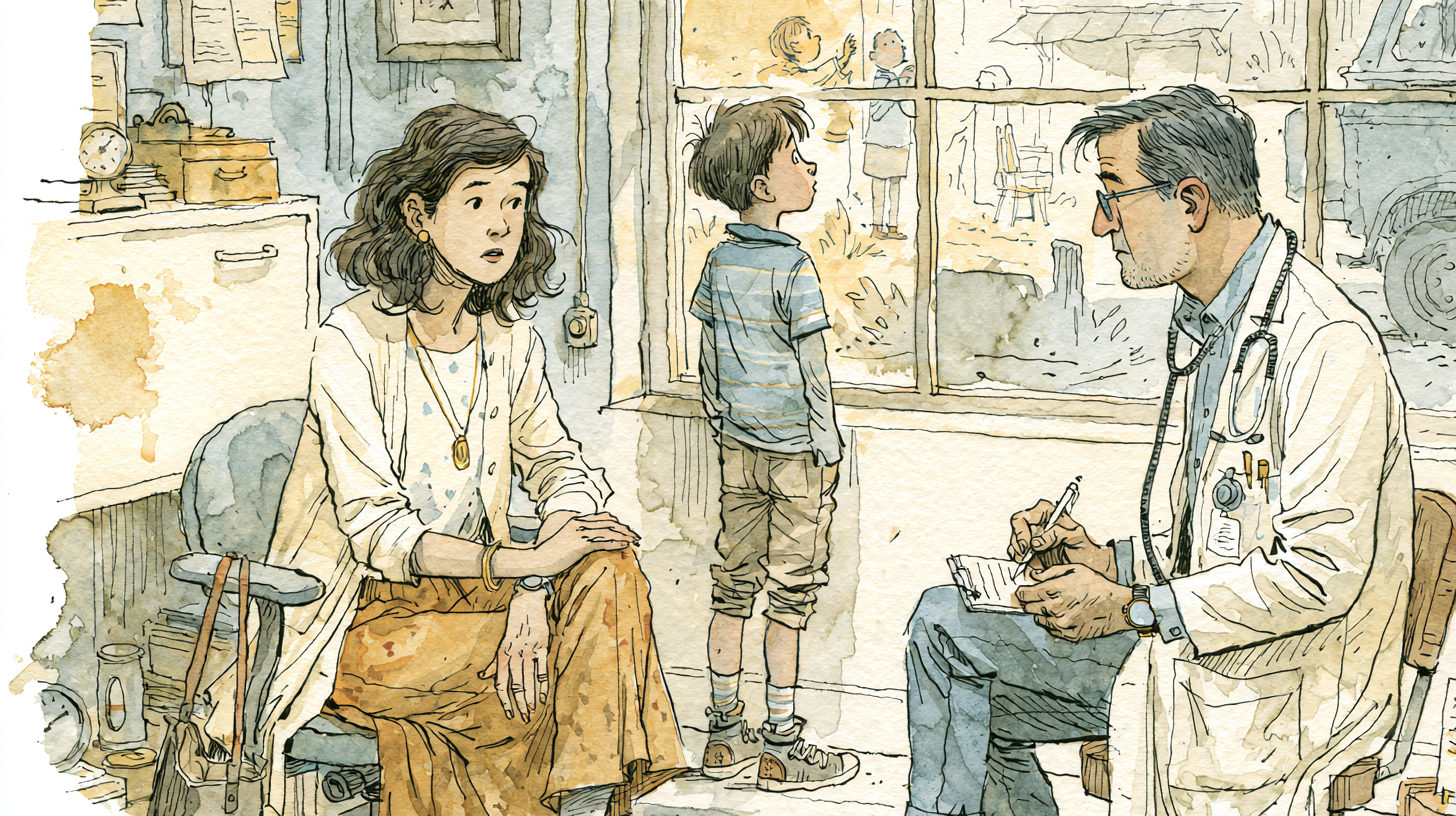
It happens fast. Your child, already carrying an autism or ADHD diagnosis, has a rough appointment. Maybe they ignored the clinician''s questions because the fish tank was more interesting. Maybe the strange room put them on edge and the edge showed. And a few minutes of observed behavior later, a new word is in the chart: ODD. Oppositional defiant disorder. You drive home with a label that describes a child you do not entirely recognize, and a quiet alarm ringing: that is not what was happening in that room.
Before anything else, know this: your instinct to question a label that was born in a single stressful visit is not denial. It is good clinical thinking. Here is what the labels actually mean, why they get confused, and how to help a provider see past a twenty-minute snapshot.
What ODD is actually supposed to describe
ODD is not a diagnosis for a child who had a bad day. The formal criteria require a persistent pattern, lasting at least six months, of angry or irritable mood, argumentative or defiant behavior, or vindictiveness, at a frequency and intensity beyond what is typical for the child''s age. Clinicians are also expected to consider where the behavior shows up and whether something else explains it better. That last part matters enormously for children who are already autistic or have ADHD, because an autistic child who does not respond to questions in an unfamiliar office is displaying autism in an unfamiliar office. A child whose attention has locked onto the novelties of a new room is displaying ADHD in a new room. Neither is evidence of a defiance disorder.
DSM-5-TR does not bar a child with autism or ADHD from also carrying an ODD diagnosis, but it does ask clinicians to judge whether the oppositional behavior goes beyond what is typical for that child's existing condition before adding ODD on top of it. That judgment call is where over-diagnosis creeps in, a risk that researchers studying the autism and ODD overlap have flagged directly.
So a legitimate, non-confrontational question exists here, and you are allowed to ask it: what did you observe that meets the six-month, cross-setting pattern the criteria require?
What is PDA, and why does everyone keep suggesting it?
PDA, pathological demand avoidance, is a profile many families and a growing number of clinicians find describes their child far better. It is not in the American diagnostic manual, and some providers dismiss it for that reason alone. But the pattern it names is real and recognizable: an anxiety-driven, almost allergic response to demands and expectations, including gentle ones, fun ones, and ones the child placed on themselves. The engine is not a desire to defy authority. It is a nervous system that experiences demands as threats to safety and autonomy.
One point should not get lost here: the research behind PDA is thin. The 2003 case series that first described it has not been independently replicated at scale, and a 2026 systematic review found that later studies used tools built from that same original description rather than independently validated ones, a pattern the review called circular reasoning. None of that means the pattern parents describe is not real. It means the label itself is still provisional, the same status PDA holds in the diagnostic manuals: useful for planning care, not yet proven as a distinct condition.
The practical difference between the two labels shows up in what helps. Classic ODD-style approaches lean on firm limits, consistent consequences, and reward systems. For a PDA child, those exact tools reliably make everything worse, because every consequence and every reward is one more demand, one more hand on the steering wheel. Families who have lived this can usually answer one diagnostic question instantly: when you increased the pressure, did the behavior improve or escalate? Escalation under pressure, and cooperation returning when autonomy returns, is the PDA signature. It is also the single most useful observation you can hand a clinician, because it is about mechanism, not vocabulary.
While you're here, take the guide
What's Underneath is free: the three body-state triggers under most meltdowns, what to say in the minute before it tips over, and how to reset afterward.

You'll get the guide instantly, plus five free articles in your inbox every week. Real challenges (meltdowns, school mornings, picky eating, big feelings) and how to actually handle them. Unsubscribe anytime.
Why the distinction matters more than it seems
Labels drive treatment plans. An ODD framing tends to generate behavior plans built on compliance, and for an anxiety-driven child those plans do not just fail, they teach the child that adults respond to distress with more pressure. The same child under a PDA-informed or anxiety-informed lens gets a completely different plan: reduced demand load, collaborative approaches, autonomy preserved wherever possible, and the results tend to look like the child everyone hoped was in there. Same child, two labels, two roads. If behavioral therapy is already in place and the meltdowns have got worse rather than better since it started, that is a known pattern with this profile rather than a sign your child is not trying.
How do you help a provider see the whole picture?
Providers are not the enemy here, and most are genuinely movable when the evidence in front of them changes. What they had was one room and twenty minutes. What you have is the longitudinal data. The goal is to close that gap.
Bring a written pattern, not a rebuttal. A one-page summary works: what the behavior looks like at home, at school, with grandparents, in settings your child knows well versus new ones. Include the pressure test directly: here is what happens when we hold firm on demands, here is what happens when we reduce them. If school sees a different child than the office saw, ask a teacher for two or three written sentences. Short video of ordinary moments can be worth pages, both the hard moments and the cooperative ones, because the claim you are making is not that your child never struggles, it is that the struggle has a shape, and the shape is anxiety, not opposition.
Then ask questions rather than making assertions. What pattern led you to ODD over anxiety-driven avoidance? Would you be open to input from the school before finalizing? Could we treat the label as provisional while we gather more observation?
Clinicians can defend a conclusion, but very few will refuse more data. And if this one does, if the heels stay planted regardless of what you bring, that is its own answer. A second opinion is not an act of war. It is standard practice, and with a child this complex it is simply due diligence.
The child under the labels
One more thing, because it can get lost in the fight over words. Whatever ends up in the chart, your child is the same person they were before the appointment: curious enough to be captivated by a new room, anxious enough to need time before trusting one. You are not choosing between labels. You are choosing between explanations, and the right explanation is the one that, when you act on it, makes your child''s life easier. That is the test. Hold every label to it.
The cross-setting pattern is exactly what a provider cannot see from the office, and exactly what LightMap captures: log moments across home, school, and new places, note what preceded them and what helped, and walk into the next appointment holding the whole picture.
For the child whose calm gets read as defiance, we made a picture book about that moment: The Boy at the Edge, a story experience with a parent guide, songs, and conversation cards.
For your child: Elliot's Paths is about a boy whose no arrives before he has had any chance to choose, and the grandmother who is the first adult to see the path from where he is standing.
Sources: DSM-5-TR criteria and differential-diagnosis guidance for oppositional defiant disorder; Newson, Le Marechal and David, "Pathological demand avoidance syndrome," Archives of Disease in Childhood, 2003 (PMC1763174), the original descriptive case series; O'Nions et al., "Pathological demand avoidance: exploring the behavioural profile," Autism, 2014, an exploratory study finding overlap between PDA, autism and conduct-problem groups rather than a clean mechanistic split; Rotella and Company, systematic review, Journal of Autism and Developmental Disorders, 2026, flagging circular reasoning in how later studies identified PDA; Ross Greene, Collaborative and Proactive Solutions, on lagging skills.
For education and reflection, not medical advice. Our terms
See what's underneath
Stop guessing which demand did it
LightMap reads your hard days together and gives you answers. Start with one moment today.
Start with 3 moments Not sure where to start? Ask me.Message Tara on WhatsApp. It really is me, I read everything and will personally respond.Click here to message Tara →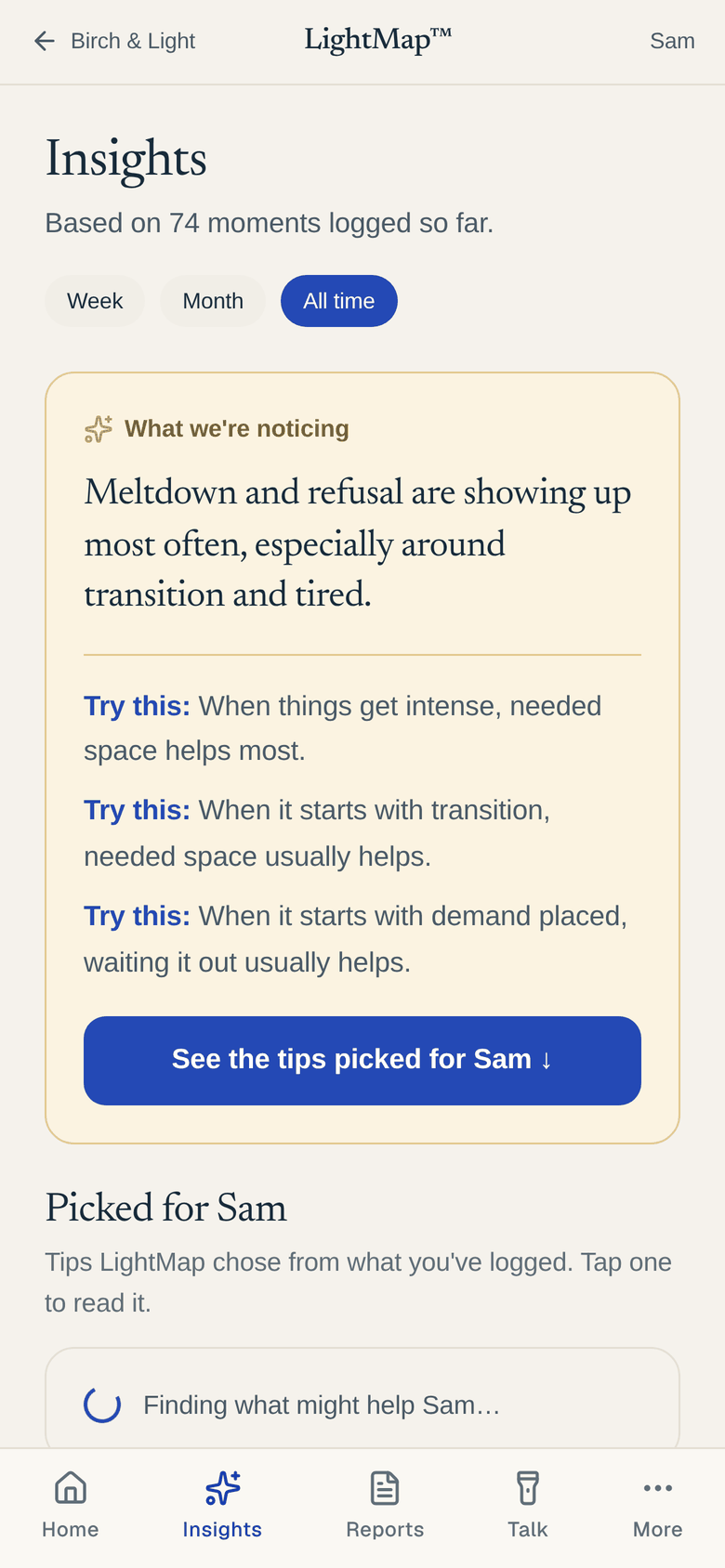

Part of the award-winning Birch & Light Method, honored with the Mom's Choice Gold Award for excellence in family resources.
A story to read together
Sometimes the easiest way in is a story you read side by side.
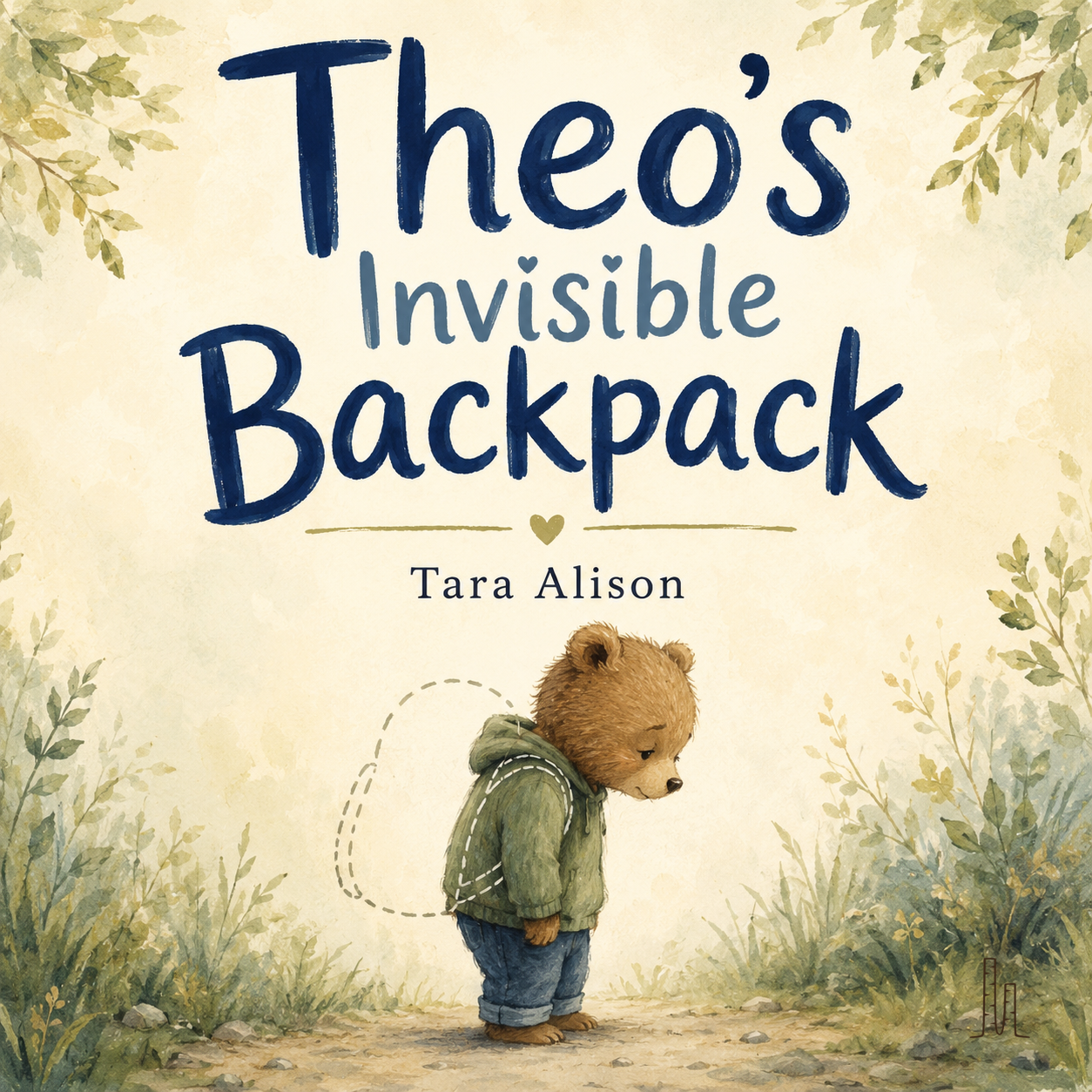 Theo's Invisible Backpack
Theo carries every hurtful word as a stone in an invisible backpack — until the day his mama really sees how heavy it has become, and they begin sorting the stones together.
Read the story The Mosquito Who Thought He Was a Dragonfly
Raised by dragonflies after a summer storm, Miro learns one night that the world sometimes sees him differently than the family who loves him — and that being misunderstood isn’t the same as being bad.
Read the story
If today was one of those days
A few more from the library, free to read.
Researched and drafted with AI assistance, reviewed before publication. Editorial standards