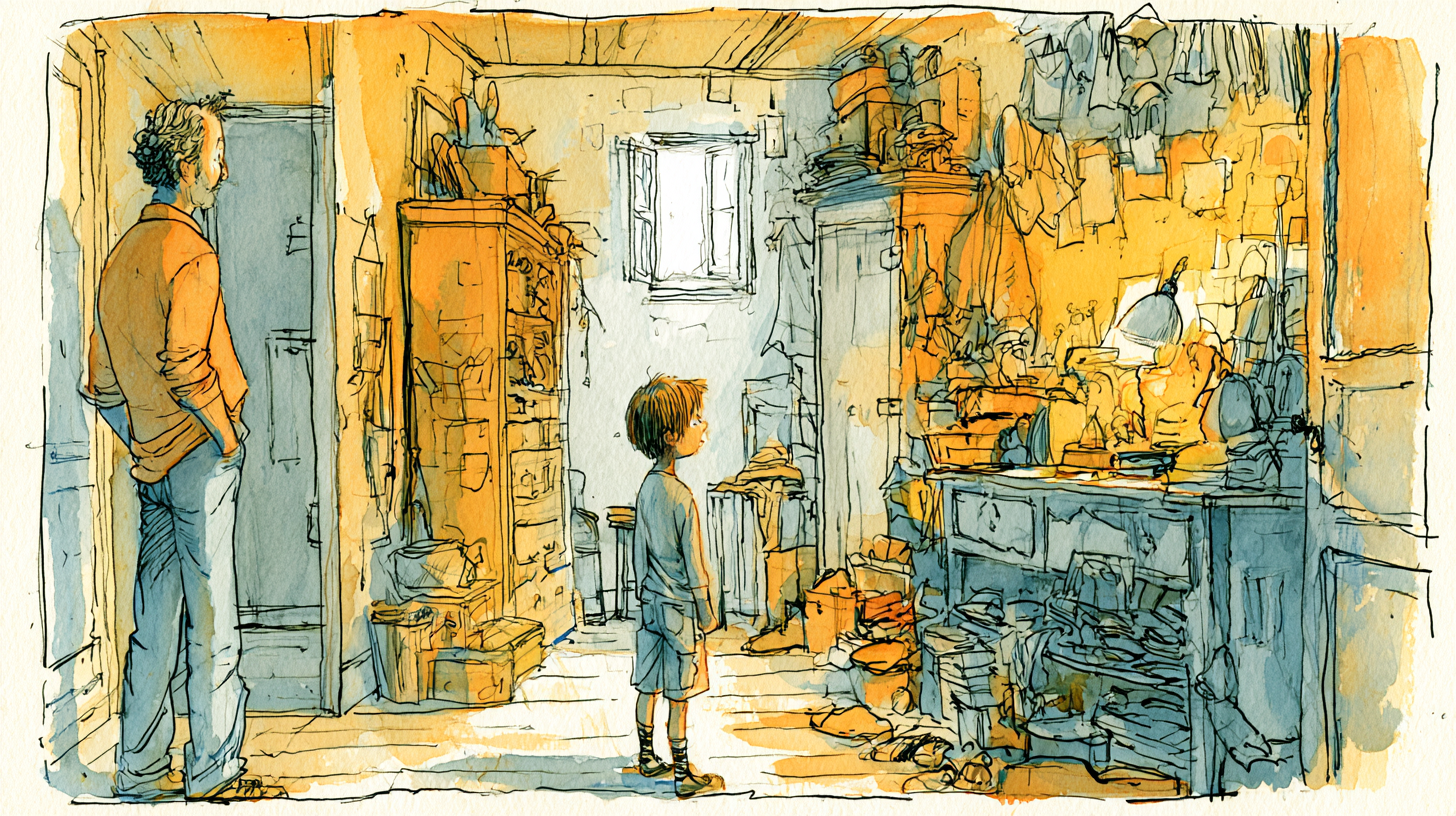
Here is the puzzle, and if you are living it you already know it by heart. The autistic side of your child needs routine, predictability, and a clear plan communicated in advance. The ADHD side craves novelty and spontaneity, and cannot reliably remember the routine even when it happens every single day, which means it needs prompts. And the PDA side hears every prompt as a demand, and every demand as a threat to refuse.
So the advice you find for each profile actively breaks the others. Build a visual schedule, says the autism guidance, but a schedule is a wall of demands to a PDA nervous system. Add novelty and movement, says the ADHD guidance, but novelty is a plan change, and plan changes cost you an hour of recovery. Reduce demands, says the PDA guidance, but with executive function challenges in the mix, no prompts often means nothing happens at all, and now your child is panicking at bedtime about the assignment that never got started.
If you have felt like you are failing because no strategy works, hear this first: the strategies were each designed for one profile at a time. Your child is running all three at once. The problem is not your execution. The problem is that balancing traits against each other is the wrong frame entirely.
Stop balancing traits. Track the nervous system.
Autism, ADHD, and PDA look like three different children with three different rulebooks, but underneath they share one currency: a nervous system asking, moment to moment, "am I safe, and am I in control of what happens to me?" The routine-seeking, the novelty-seeking, and the demand-refusal are all strategies for answering that question. Routine makes the world predictable. Novelty and movement feed an under-stimulated brain that feels unbearable when idle. Refusal restores autonomy the instant it feels taken.
That gives you a working hierarchy when the needs conflict, and they will conflict daily:
Regulation first. Autonomy second. Structure third. A dysregulated child cannot use structure. A child whose autonomy feels threatened will burn the structure down to reclaim it. But a child who is regulated and feels in charge of herself can often tolerate, and even lean on, far more structure than you would predict. When you cannot meet all three needs, meet them in that order, because the later ones only work on the foundation of the earlier ones.
Make the structure, then get out from in front of it
The single most useful move for this trifecta is to externalize demands so they stop coming from you. A prompt from a parent is a social demand, the most triggering kind. The same information from an object is often tolerable.
A visual rhythm chart the child helped design, a timer she sets herself, a checklist that lives on the wall rather than in your mouth. The words shift from "go brush your teeth" to "the chart says teeth are next," or better, to declarative language that carries no command at all: "huh, it is almost eight." You are not tricking her. You are removing the interpersonal pressure from information she genuinely needs, so her working memory gets its prompt without her autonomy taking the hit.
Put the novelty inside the routine
The autism-ADHD contradiction softens when you separate the container from the contents. Keep the container fiercely predictable: same order of the day, same anchors, same transitions. Vary the contents inside it: which subject first, which park, which of two dinners, movement breaks she chooses. Predictable frame, variable filling. The autistic side gets its known world; the ADHD side gets its novelty; and because the variation arrives as her choice, the PDA side gets autonomy instead of a plan change imposed from outside.
Shrink decisions the same way. A wide-open field of options is not freedom to a child with decision paralysis, it is suffering. Two choices, both pre-approved by her, is autonomy she can actually use. For what this looks like in the hard moments rather than in the planning, co-regulating a PDA child covers the same principles under pressure.
While you're here, take the guide
What's Underneath is free: the three body-state triggers under most meltdowns, what to say in the minute before it tips over, and how to reset afterward.

You'll get the guide instantly, plus five free articles in your inbox every week. Real challenges (meltdowns, school mornings, picky eating, big feelings) and how to actually handle them. Unsubscribe anytime.
The freeze, the deadline panic, and the refusal underneath
The pattern so many of these kids show around schoolwork, long stretches of restless, distracted non-starting, followed by last-minute panic, followed by refusal right when the pressure peaks, makes sense once you see the machinery. Interest and urgency are the two fuels an ADHD brain starts on, so nothing ignites until the deadline supplies urgency. But by then the pressure has crossed into threat, and threat is exactly what a PDA system refuses. She is not wasting her day. She is stuck between an engine that will not start without pressure and an alarm that will not tolerate it.
What helps is lowering the stakes of starting rather than raising the stakes of finishing: tiny visible first steps, working alongside her (body doubling is one of the few strategies all three profiles like), and letting the schedule live in shorter, chosen blocks rather than one looming mountain. Progress here is measured in less cortisol, not more output, and output usually follows.
When eating is medical, not optional
A special note if food is tangled into this, especially for a child whose growth, weight, or medical needs make regular eating non-negotiable: you are right that full autonomy over eating is not on the table, and that is not a PDA-parenting failure. Lower every demand around eating except eating itself: no commentary, no coaching at the table, safe preferred foods without negotiation, calories made easy and portable rather than ceremonial. And bring in professional help, a feeding-informed OT or dietitian who understands neurodivergence, because sensory food aversion plus demand avoidance plus medical stakes is genuinely a specialist problem, not a willpower one.
Raging one minute, giggling the next
The whiplash, level-ten fury, then bright easy chatter five minutes later as if nothing happened, alarms parents because it looks like suppression. Sometimes it is simpler than that. Many neurodivergent kids experience emotions in intense, monotropic states: the feeling is total while it lasts and genuinely gone when the state switches. The storm passing fast does not always mean it was shoved down.
The honest caveat: a child who exits every storm cheerful and refuses all conversation about feelings may also be learning that her inner world is too dangerous to open. You usually cannot tell which from the outside, so do not force the post-mortem. Debriefs right after a meltdown are demands about the most threatening topic there is. Instead, keep offering low-demand connection, side by side in the car, during a game, no eye contact required, and let the occasional half-sentence about feelings come to you. Over months, they do.
The tightrope is real, and you cannot walk it perfectly
Capacity in these kids fluctuates by the day and by the hour, which means the line between "expecting too much" and "expecting too little" moves constantly, and you will misjudge it regularly no matter how attuned you are. That is not failure; that is the actual terrain. Aim for repair rather than precision: when you overshoot, name it and adjust, and let her watch you do it. Tracking patterns over time, even informally, in a notebook or a tool like LightMap, often reveals that the fluctuations are less random than they feel, and that alone can return a sense of footing.
A child this complicated is easy to love and very, very hard to parent, and both of those are true at once. The fact that you are still searching for the shape of what she needs is not evidence you are failing her. It is what not failing her looks like from the inside.
When two profiles want opposite things, which one is driving changes by the day rather than by the child. Logging it in LightMap is how you learn to read which one you are dealing with before you respond.
Sources: DSM-5-TR criteria for autism spectrum disorder and ADHD; research on autism and ADHD co-occurrence and competing support needs (PMC); Murray and colleagues on monotropism (Autism; PMC); PDA Society (UK).
For education and reflection, not medical advice. Our terms
See what's underneath
Stop guessing which demand did it
LightMap reads your hard days together and gives you answers. Start with one moment today.
Start with 3 moments Not sure where to start? Ask me.Message Tara on WhatsApp. It really is me, I read everything and will personally respond.Click here to message Tara →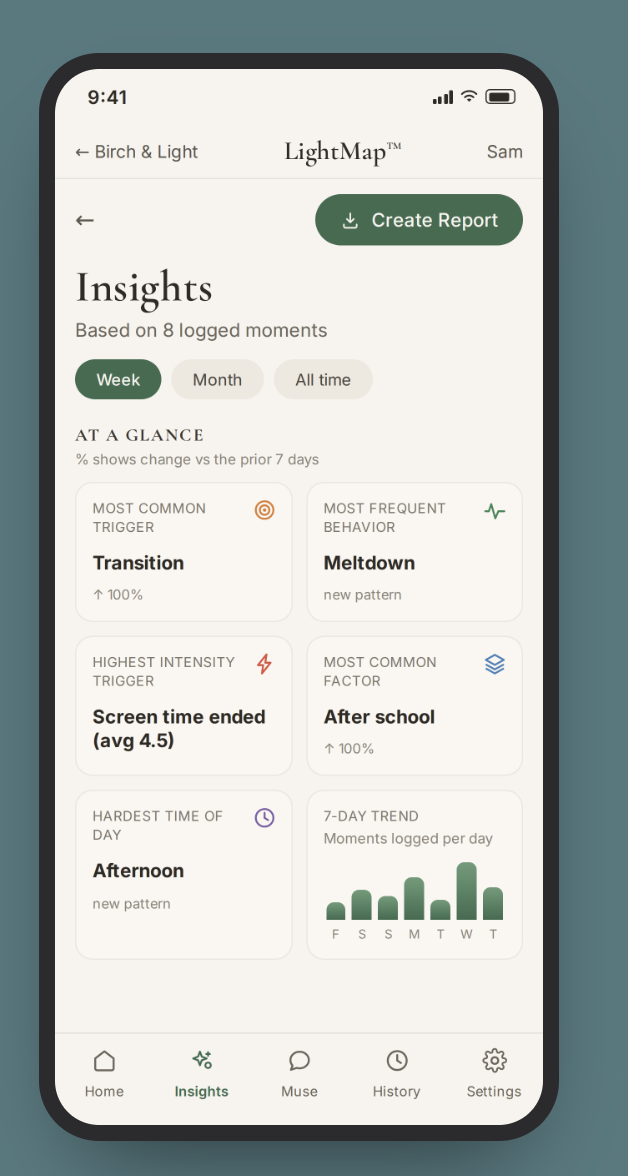

Part of the award-winning Birch & Light Method, honored with the Mom's Choice Gold Award for excellence in family resources.
A story to read together
Sometimes the easiest way in is a story you read side by side.
 But I Said “Okay”
Owen always says okay. He means it every time. But his attention is still inside the bridge, the dragon, the cave, the music — until Mom realizes that helping him leave one thing matters more than asking him to start the next.
Read the story The Tower That Looked Fine
A tower in a quiet clearing tries to stay steady through every small thing nobody else seems to notice — until one tiny breath of wind causes her to fall, and a gentle hand begins to gather the blocks back.
Read the story
If today was one of those days
A few more from the library, free to read.
Researched and drafted with AI assistance, reviewed before publication. Editorial standards