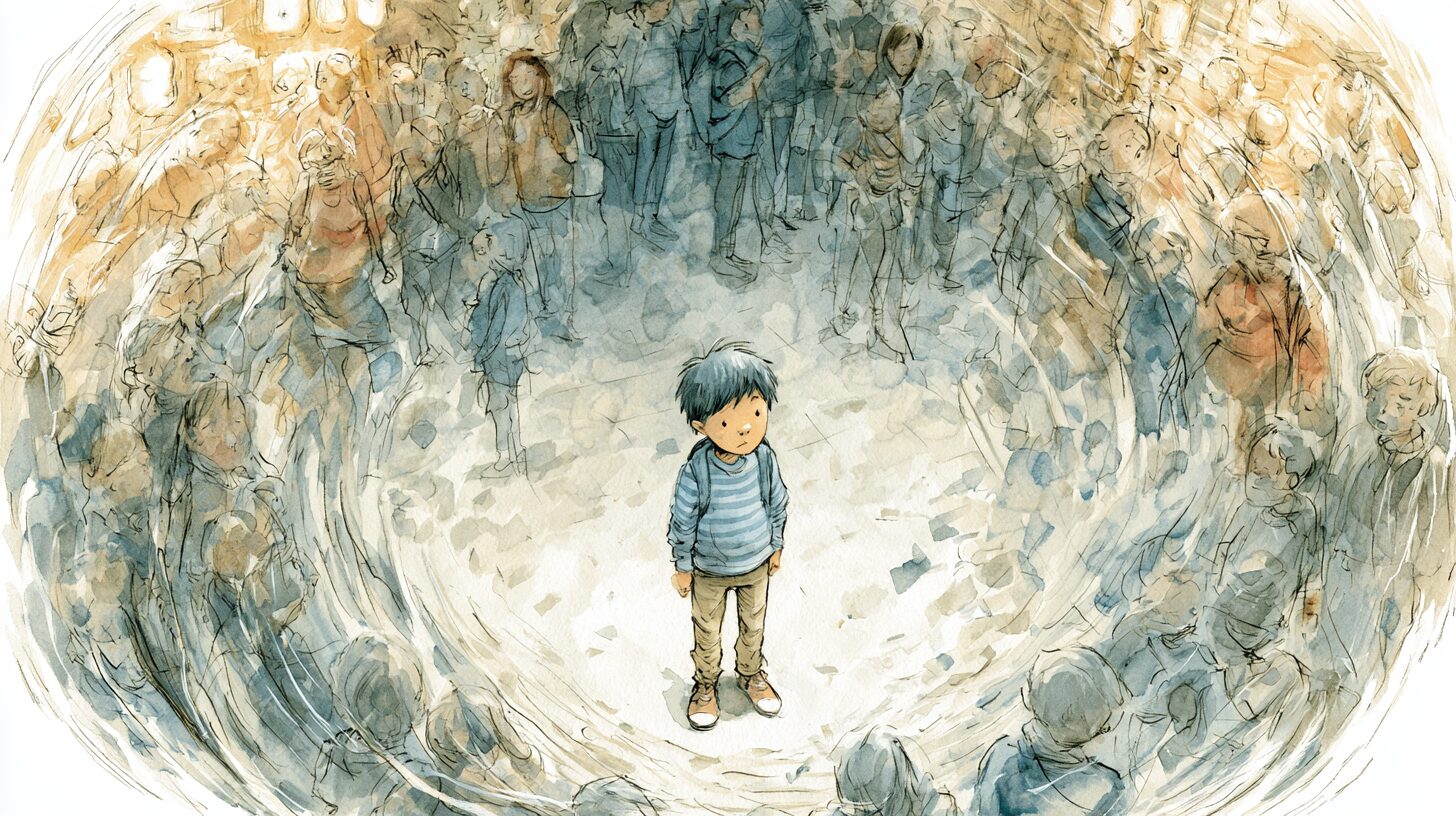
Two kids, same house, same parents, same rules. One moves through the day easily. The other treats every request like a threat, and the gap between them is not something you did differently, it is something that happened before either of them ever met you.
If your child spent time in care, moved through multiple homes, or lived through instability before you became their parent, and their behavior now looks like every PDA or ODD description you have read, you are not imagining the overlap. You are also not required to pick a single label and close the door on the other one.
Why trauma and PDA can look identical from the outside
Both produce the same visible picture: refusal that escalates when pushed, a need for control that reads as defiance, meltdowns triggered by ordinary requests, and charm or compliance in public that collapses at home. Underneath, both are understood as a nervous system treating a demand as a threat rather than a simple request, and responding with fight, flight, or freeze instead of cooperation. A child who spent years unsure whether the adults around them would stay, feed them, or keep them safe learned, correctly at the time, that control was survival. That wiring does not switch off the day a placement becomes permanent.
Why neither label fully explains the other
This is genuinely contested ground, and it is worth knowing that before you walk into another appointment. Some PDA researchers and advocates push back hard on trauma being used to explain away PDA, pointing out that children with well-documented secure early histories and no trauma exposure still show the exact same profile, which argues for PDA as its own thing rather than a trauma symptom wearing a different name. At the same time, clinicians working specifically with children from care settings see PDA-shaped behavior emerge in kids with significant early adversity and no autism diagnosis at all. The honest answer is that both can produce the same behavior through different mechanisms, and a child with both a plausible PDA profile and a documented trauma history does not need to be sorted into exactly one box before they can get help. A clinician who insists on picking only one, especially one who dismisses the trauma history outright the way yours reportedly did before you pushed back, is doing your child a disservice either way.
What actually helps regardless of which framework fits
- Lower the demand load first. Both a threatened nervous system and a PDA nervous system calm down when the number of things being asked of them drops, not when they are pushed harder to comply.
- Offer control instead of extracting compliance. Choices, collaboration, and declarative language over direct instruction reduce the sense of threat either way.
- Predictability over spontaneity. A child whose early life was unpredictable, or whose brain treats unpredictability as danger, needs to know what is coming, not be surprised by it, even pleasantly.
- Safety-building takes time you cannot rush. If trust was broken repeatedly before you, it gets rebuilt through thousands of small, boring, consistent moments, not through any single technique or conversation.
The sibling comparison trap
One twin doing well and one struggling this much is not evidence that you are parenting one of them wrong. Children arrive with different histories even when they share a birth date, different in-utero experiences, different placements, different individual temperaments layered on top of shared adversity. Comparing them, even just internally, tends to add shame to an already exhausting situation without giving you any actual information you can use.
While you're here, take the guide
What's Underneath is free: the three body-state triggers under most meltdowns, what to say in the minute before it tips over, and how to reset afterward.

You'll get the guide instantly, plus five free articles in your inbox every week. Real challenges (meltdowns, school mornings, picky eating, big feelings) and how to actually handle them. Unsubscribe anytime.
Your marriage needs its own support, not just hers
Research on adoptive families consistently finds that raising more than one child with significant needs is an independent risk factor for parenting stress, and that the quality of the couple relationship is one of the strongest protective factors against burnout, meaning it runs in both directions. Whatever support she gets next, it is worth finding something for the two of you as a couple as well, separate from her treatment plan, since a marriage absorbing this much strain needs its own care rather than whatever is left over after everyone else is tended to.
When you feel like you are ready to give up
Wanting to stop, even while knowing you will not, is not a moral failure and it is not a secret you need to carry alone. It is what sustained, high-demand caregiving produces in exhausted people who love the child in front of them anyway. Naming that feeling to a therapist, a support group, or even just out loud to your partner tends to loosen its grip, while carrying it silently tends to tighten it.
Where LightMap helps
When one child's behavior is this intense, it is easy for every hard moment to blur into one continuous crisis. Logging what actually precedes a meltdown, the specific demand, the time of day, what had happened in the hour before, starts to separate the pattern from the fog, and gives you and her treatment team something concrete to work from instead of a general sense that everything is bad all the time.
Every behavior is a clue.
When the pattern is logged instead of carried alone, it gets easier to see what she actually needs, and easier to remember what is working. Explore LightMap at birchandlight.com/lightmap.
Frequently asked questions
Should we keep pushing for an autism diagnosis, or does the trauma history explain everything?
Keep pursuing both lines of assessment rather than letting either one close off the other. A trauma history does not rule out autism or PDA, and a PDA profile does not rule out the lasting effects of early instability. A clinician experienced with children from care settings should be able to hold both possibilities at once.
Our therapist initially said the behaviors were "just behaviors" and not trauma responses. Should we find someone new?
It is worth asking directly whether your current therapist has specific training in complex trauma and early relational adversity, not just general child behavior. If they cannot answer that clearly, a second opinion from someone who specializes in adoption or foster care competent therapy is a reasonable next step, even if you keep the current provider for other things.
Is it normal that they do so much better at school than at home?
Yes, and it is usually a sign that home is where they feel safe enough to let the effort of holding it together drop, not evidence that school has better techniques. It is worth asking the school directly what they are doing differently so you can compare notes, but do not assume the gap means something is wrong with how things are handled at home.
How do we know if we need more support as a couple specifically?
If conversations about her behavior are turning into conflict between the two of you, if you are avoiding talking about the hard days to keep the peace, or if you cannot remember your last conversation that was not about the kids, those are all reasonable signs that couples-specific support, not just parenting support, is worth pursuing now rather than later.
Sources: peer-reviewed research on parenting stress in adoptive families and the protective role of dyadic relationship quality (Current Psychology; PMC); Cadenza Center and Center for Connection and Wellness on differentiating PDA, ODD, and trauma-related behavior; PDA Society (UK).
For education and reflection, not medical advice. Our terms
See what's underneath
Stop guessing which demand did it
LightMap reads your hard days together and gives you answers. Start with one moment today.
Start with 3 moments Not sure where to start? Ask me.Message Tara on WhatsApp. It really is me, I read everything and will personally respond.Click here to message Tara →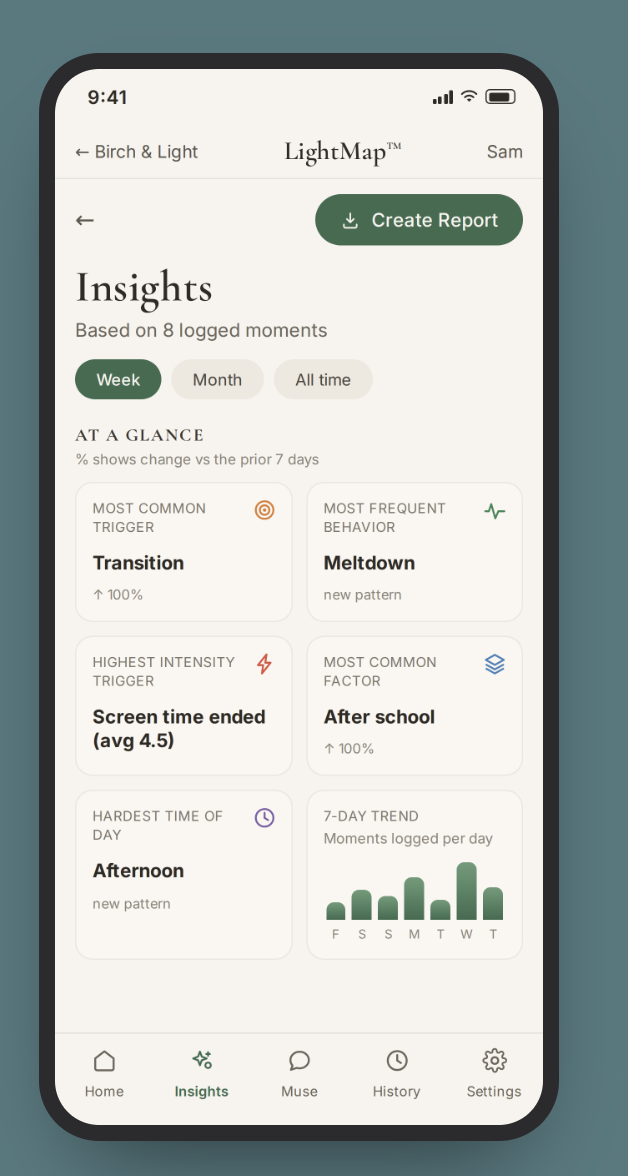

Part of the award-winning Birch & Light Method, honored with the Mom's Choice Gold Award for excellence in family resources.
A story to read together
Sometimes the easiest way in is a story you read side by side.
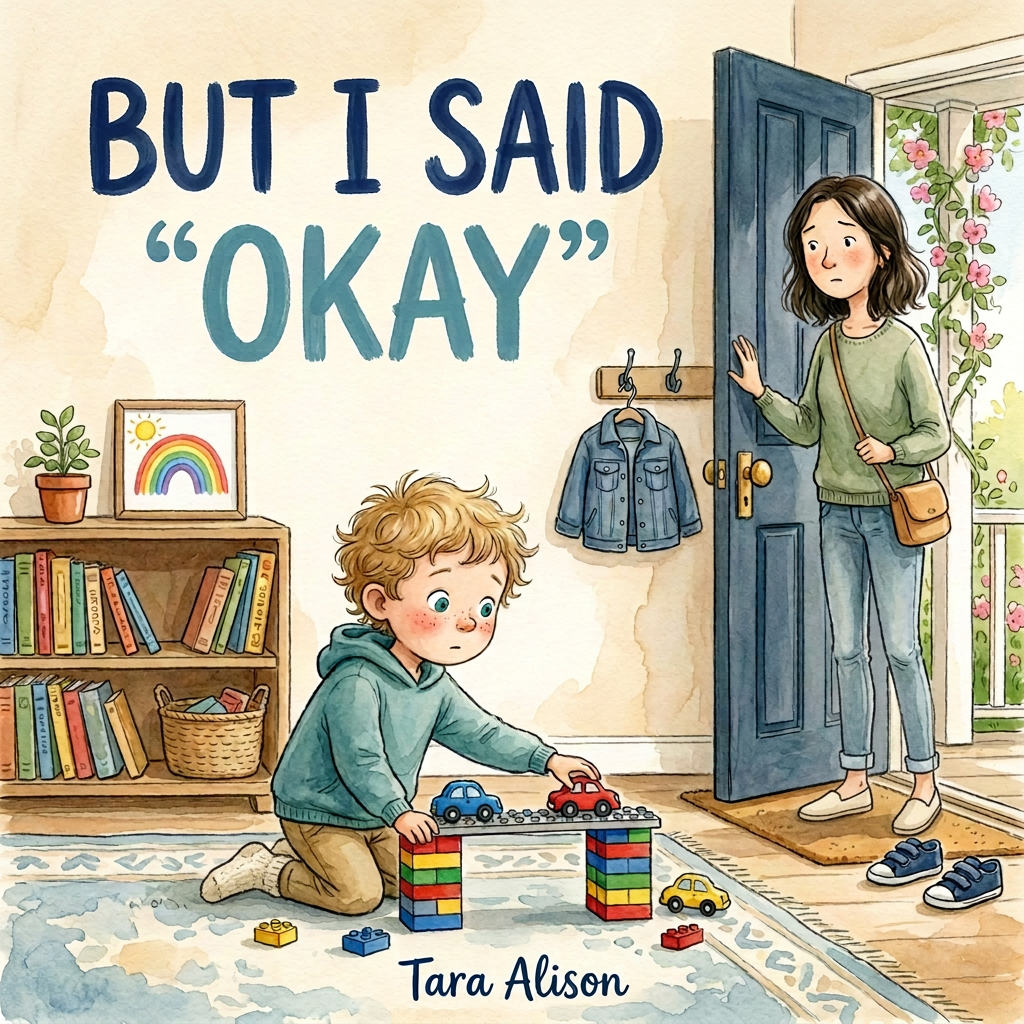 But I Said “Okay”
Owen always says okay. He means it every time. But his attention is still inside the bridge, the dragon, the cave, the music — until Mom realizes that helping him leave one thing matters more than asking him to start the next.
Read the story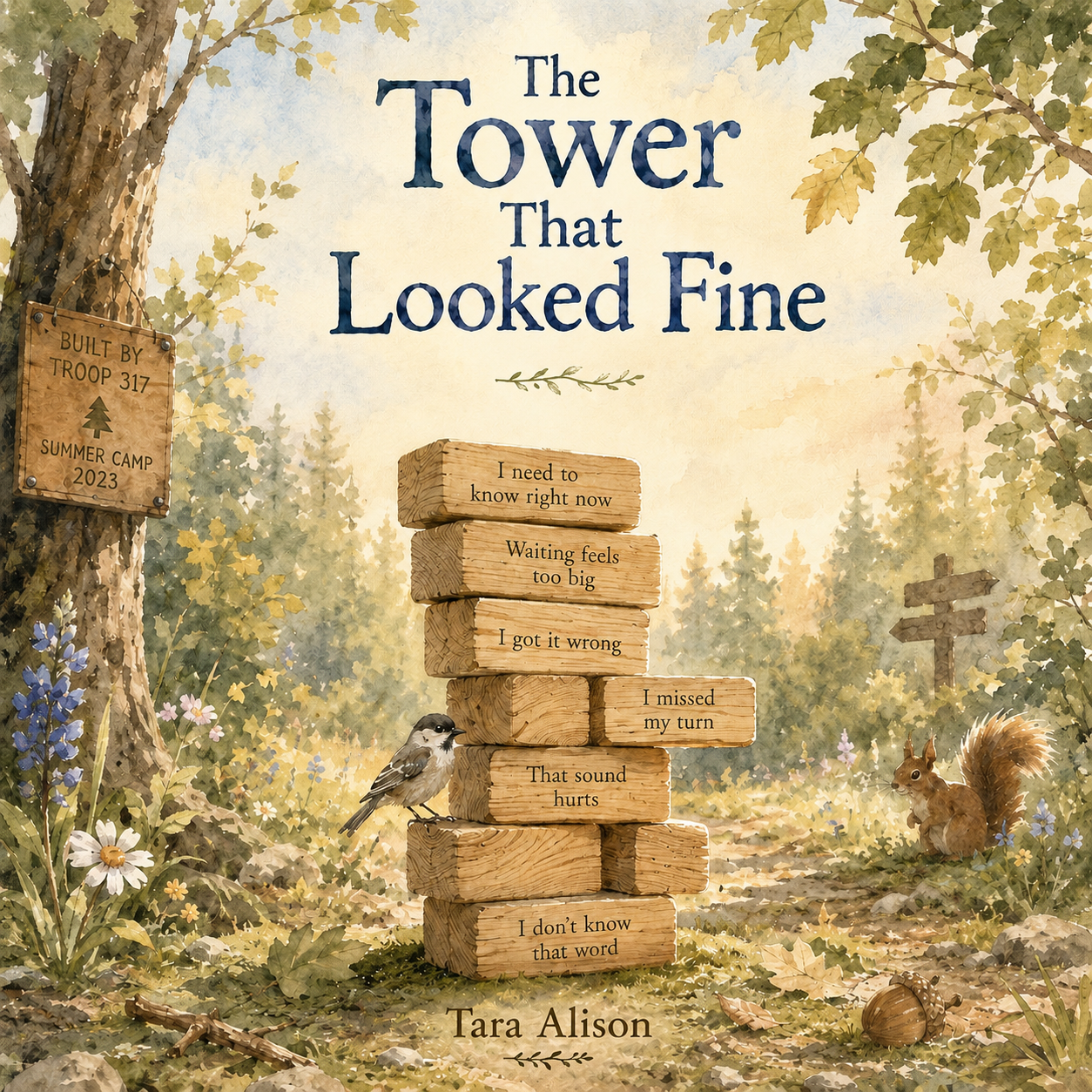 The Tower That Looked Fine
A tower in a quiet clearing tries to stay steady through every small thing nobody else seems to notice — until one tiny breath of wind causes her to fall, and a gentle hand begins to gather the blocks back.
Read the story
If today was one of those days
A few more from the library, free to read.
Researched and drafted with AI assistance, reviewed before publication. Editorial standards