
You did the right thing. You got your child into therapy, you are showing up to the sessions, and something is even changing: the meltdowns are less frequent. But the ones that still come are bigger. Louder. More explosive. The house is walking on eggshells harder than ever, and a quiet doubt is forming that you are afraid to say out loud in case it sounds ungrateful: is this working, or is it making something worse?
With a demand-avoidant child, that doubt deserves to be taken seriously, because the pattern you are seeing, fewer but more intense explosions early in behavioral therapy, is one PDA-informed clinicians and experienced families know well. It is not proof that therapy is bad, or that your therapist is bad. It is often a sign that the approach was built for a different kind of child.
Why standard behavioral approaches collide with PDA
Most behavioral therapy runs on a simple engine: set expectations, reinforce compliance, reward the desired behavior. For most kids, that engine works, because most kids' difficult behavior is not driven by the expectations themselves. PDA flips that. In a demand-avoidant child, the demand is the trigger. The nervous system reads expectations, even gentle ones, even rewarded ones, as threats, and responds with the fight-or-flight cascade that looks like defiance and lands like a bomb. Now put that child in a therapy built from expectations: session goals, practice tasks, sticker charts, praised compliance. From her side, the pressure in her life just went up, not down. Many PDA kids respond by working harder to hold it together, in session and at school, where the audience is unfamiliar, and the suppressed pressure discharges where it always does: at home, with the safe people, in fewer but far bigger explosions. Compliance is improving on the chart. The volcano is loading underneath it.
An honest note on the evidence: PDA research is young, and the case for demand-reduction approaches rests more on clinical experience and consistent family outcomes than on large trials. But the backfire pattern above is reported so widely, by families and by the clinicians who specialize in these kids, that seeing it in your own house is a signal worth acting on, not a coincidence to wait out. If your child carries an ODD label rather than a PDA one, the difference between those two labels is the reason the plan was built this way in the first place.
The conversation to have with your current therapist
You do not need to fire anyone this week. You need answers to three questions, asked plainly. First: is this approach adapted for demand avoidance, and if so, how, because "we treat all kids individually" is not an answer. Second: what is the goal we are working toward, compliance or regulation, because with PDA those are different destinations and compliance-first usually raises the temperature. Third: what is the plan for reducing my child's baseline pressure, not just managing the explosions after it. A therapist who engages seriously with those questions is worth staying with. A therapist who waves them off is telling you something. And if you need a way to name what you are seeing, the sentence is: since we started, meltdowns are less frequent but significantly more intense, and I have read that this pattern can mean the approach is adding demand pressure rather than reducing it. What do you think?
While you're here, take the guide
What's Underneath is free: the three body-state triggers under most meltdowns, what to say in the minute before it tips over, and how to reset afterward.

You'll get the guide instantly, plus five free articles in your inbox every week. Real challenges (meltdowns, school mornings, picky eating, big feelings) and how to actually handle them. Unsubscribe anytime.
What PDA-adapted support actually looks like
The approaches that PDA-informed clinicians recommend share one spine: they treat anxiety as the engine and demands as the accelerant. In practice that means lowering the overall demand load at home for a season, not forever, and not out of surrender, but the way you would reduce weight on a broken leg while it heals. It means indirect and collaborative framing instead of instructions, real choices instead of commands, humor and novelty as delivery vehicles, and picking the very few non-negotiables, safety, mostly, while letting the rest breathe. Families are often afraid this is spoiling. It is the opposite of spoiling: it is matching the environment to the nervous system in front of you so the nervous system can settle enough to grow. The eggshell feeling you live with is the sound of a baseline that is too high. Accommodation lowers the baseline, and a lower baseline is where fewer and smaller explosions actually come from.
The medication question
If your child also carries diagnosed anxiety, wondering about medication is not a failure of parenting, it is a reasonable clinical question, and it has a correct address: a prescriber, your pediatrician or a child psychiatrist, not a comment section. What makes that appointment productive is data. Two weeks of notes on when the explosions come, what preceded them, how long they last, and what the anxiety looks like between storms will do more for the conversation than any amount of describing from memory. PDA runs on anxiety at its core, which is why treating the anxiety, behaviorally, environmentally, and sometimes medically, is often where PDA-informed clinicians look, and why the question you are asking is a better question than you think.
Does it get easier?
Here is the honest version. For most families who find their way to an approach that fits, yes, it gets easier, and often dramatically, but not the way people expect. The child does not transform into a compliant kid. The war shrinks. The explosions get fewer and shorter because the pressure feeding them drops, the eggshells thin out, and you slowly stop flinching at calm moments. It is not linear, there are regressions, and it asks you to parent in a way the people around you may not understand. But the families a few years down this road will mostly tell you the same thing: the turn came when they stopped fighting the avoidance and started disarming the demands, and the child who emerged on the other side of that shift was calmer, funnier, and more connected than the war years let anyone see.
The two weeks of notes that make the therapist conversation and the prescriber conversation work are what LightMap is built for: log the moments as they happen, and walk in with the pattern instead of a memory.
Sources: PDA Society (UK); clinical literature on family accommodation and anxiety treatment (Lebowitz et al.).
For education and reflection, not medical advice. Our terms
See what's underneath
Stop guessing which demand did it
LightMap reads your hard days together and gives you answers. Start with one moment today.
Start with 3 moments Not sure where to start? Ask me.Message Tara on WhatsApp. It really is me, I read everything and will personally respond.Click here to message Tara →

Part of the award-winning Birch & Light Method, honored with the Mom's Choice Gold Award for excellence in family resources.
A story to read together
Sometimes the easiest way in is a story you read side by side.
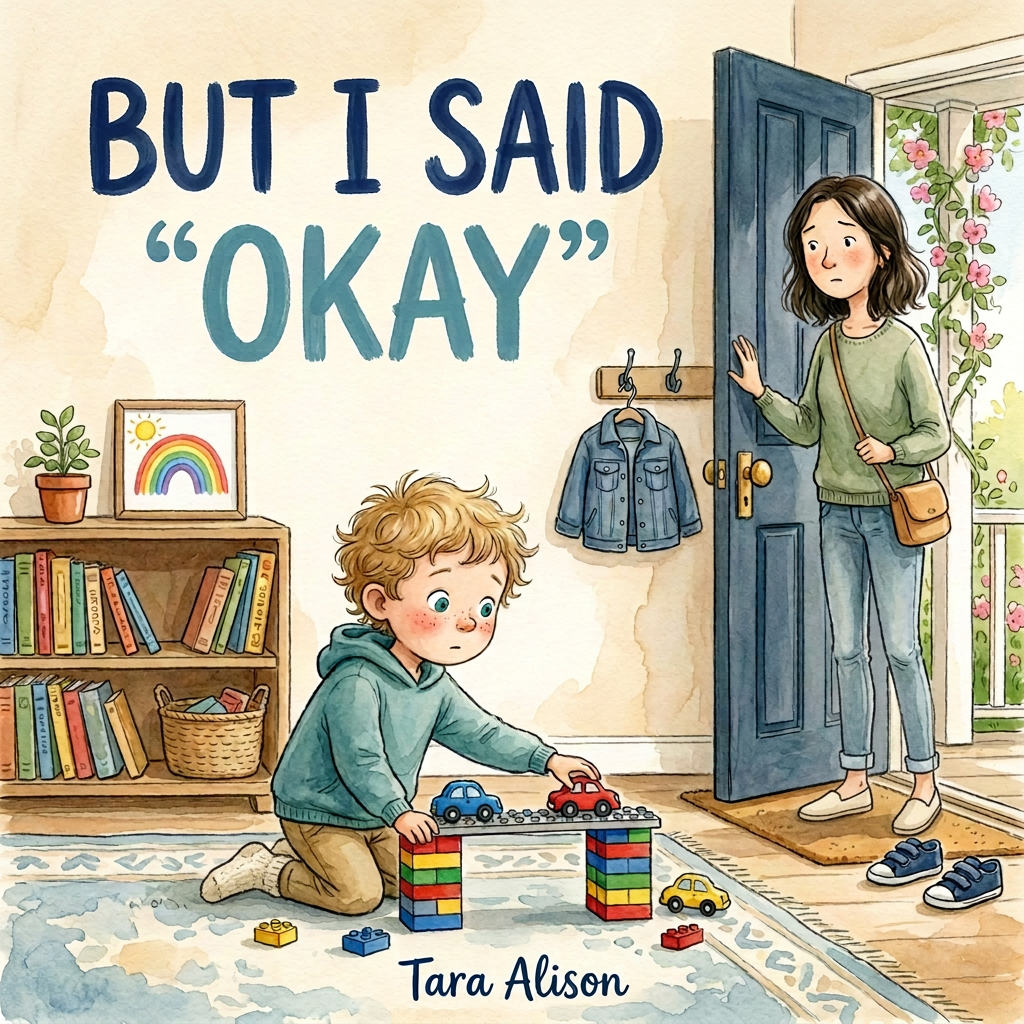 But I Said “Okay”
Owen always says okay. He means it every time. But his attention is still inside the bridge, the dragon, the cave, the music — until Mom realizes that helping him leave one thing matters more than asking him to start the next.
Read the story The Tower That Looked Fine
A tower in a quiet clearing tries to stay steady through every small thing nobody else seems to notice — until one tiny breath of wind causes her to fall, and a gentle hand begins to gather the blocks back.
Read the story
If today was one of those days
A few more from the library, free to read.
Researched and drafted with AI assistance, reviewed before publication. Editorial standards