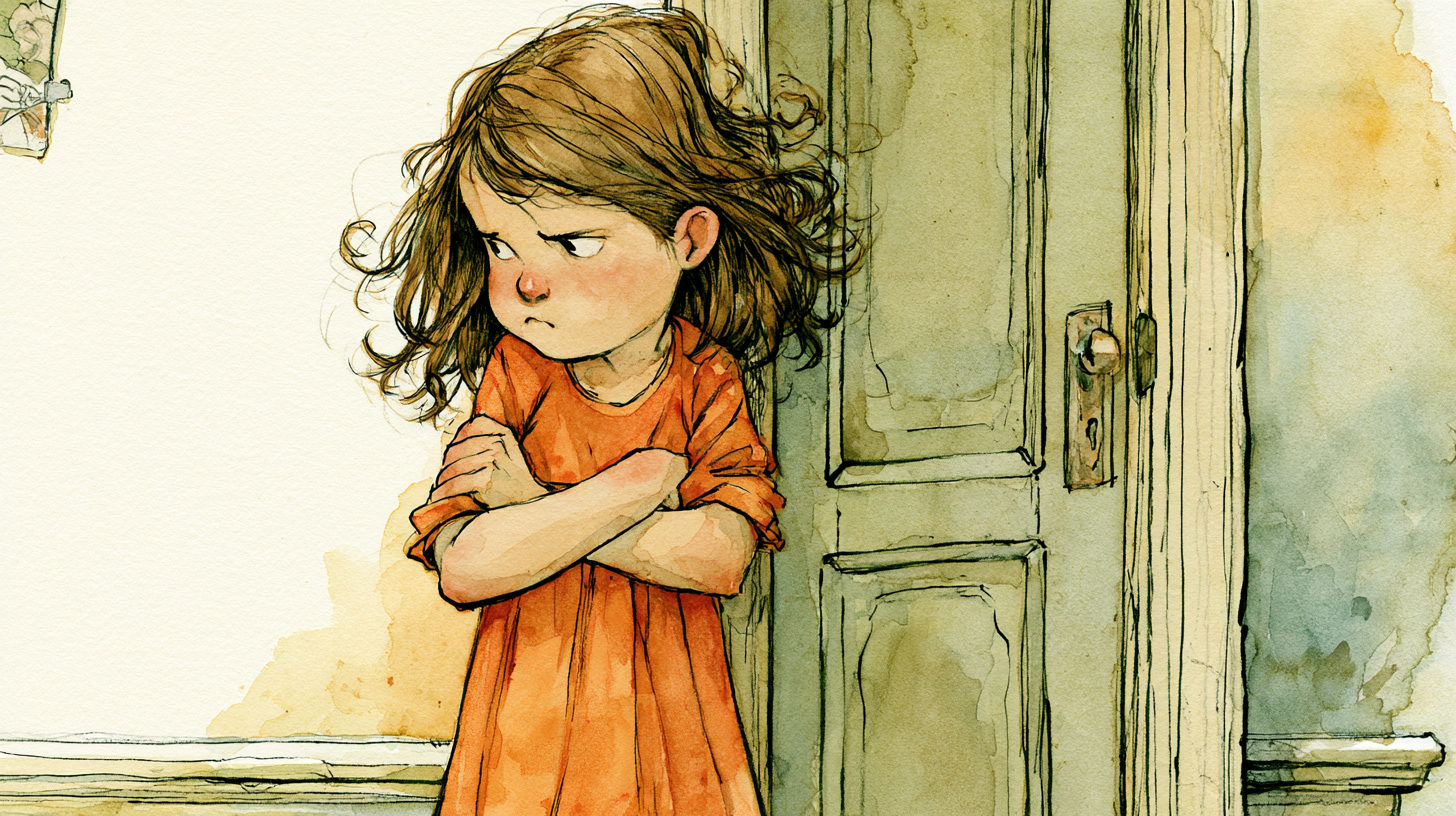
You ask your child to put on their shoes, and before the sentence is even finished, the answer is no. Not a considered no — an instant, reflexive wall of resistance. It happens with the smallest requests, even ones for things they actually want to do. 'Time for ice cream' can trigger the same refusal as 'time for bed.' And the harder you push, the harder they dig in, until a tiny ask has become a full standoff.
If this is a pattern in your home — not occasional defiance but a near-automatic resistance to being asked to do almost anything — it can be genuinely bewildering, and most ordinary discipline seems to make it worse. There's a reason for that. For some children, demands trigger something that isn't defiance at all. It's closer to anxiety, and it responds to the opposite of what defiance would.
What's Actually Happening
For these children, a demand — any demand, even a small or pleasant one — sets off a feeling of threat. Being told what to do, having an expectation placed on them, registers not as a simple request but as a loss of control that their nervous system experiences as genuinely alarming. The resistance is an anxiety response: an automatic move to regain the control that the demand seemed to take away.
This is why it can look so irrational from the outside. The child refuses things they want. They resist requests that are clearly in their interest. They escalate over stakes that seem far too low. But it makes sense once you see that the issue isn't the content of the demand — it's the demand itself. The threat isn't bedtime or shoes or even the broccoli. It's the feeling of being controlled.
The resistance usually isn't about the request. It's about the loss of control the request represents — which the nervous system experiences as threat.
Why It's Not Defiance
It matters enormously to distinguish this from ordinary defiance, because the two look similar and call for opposite responses. Defiance is a choice — a child deciding not to comply, often to test limits or assert themselves. What we're describing is more like a panic response: an anxiety-driven, often not-fully-chosen reaction to the threat a demand represents.
A defiant child can choose to comply and is declining to. An anxiety-driven, demand-avoidant child is, in the moment, in the grip of something closer to fight-or-flight. They may genuinely be unable to make themselves do the thing, not because they won't, but because the demand has triggered a threat response that overrides everything else. Treating that as willful defiance — and applying pressure, consequences, and insistence — pours fuel on the anxiety and makes the resistance worse.
Why Pushing Harder Backfires
The standard response to a child who won't do what they're told is to increase the pressure: repeat the demand, add a consequence, insist. For most situations, that's reasonable. For a demand-avoidant child, it's counterproductive, because the pressure is the problem. More demand means more threat, means more anxiety, means more resistance. You end up in an escalating spiral where the harder you push, the more impossible compliance becomes.
The way out isn't more force. It's less. Reducing the sense of demand — and giving back some of the control that feels lost — is what actually lowers the resistance, because it addresses the anxiety underneath rather than fighting the behavior on top.
While you're here, take the guide
What's Underneath is free: the three body-state triggers under most meltdowns, what to say in the minute before it tips over, and how to reset afterward.

You'll get the guide instantly, plus five free articles in your inbox every week. Real challenges (meltdowns, school mornings, picky eating, big feelings) and how to actually handle them. Unsubscribe anytime.
What Tends to Help
Reduce the language of demand. How something is phrased makes an enormous difference. 'Shall we see if we can find your shoes?' lands completely differently than 'Put your shoes on now.' Indirect, collaborative, low-pressure phrasing reduces the threat that triggers the resistance.
Offer genuine choices. Choices give back the control that demands take away. 'Do you want to do it now or in five minutes? The blue cup or the red one?' A child who gets to choose feels less controlled, and the anxiety that drives the refusal eases.
Depersonalize the demand. When the requirement comes from something other than you — a timer, a list, a routine, 'the recipe says' — it's less of a direct interpersonal demand and easier to accept. The control isn't being imposed by a person, so it triggers less threat.
Build in flexibility and time. Rigid, immediate demands are the hardest. Where you can, allow room — for the child to get there in their own way, on a slightly looser timeline. The less cornered they feel, the less they need to resist.
Pick your demands. Not everything has to be a demand. Reducing the sheer number of requirements, and letting the small stuff go, preserves your child's limited capacity to tolerate the demands that genuinely matter.
Lower the pressure when resistance spikes. Counterintuitively, backing off in the moment — rather than escalating — often de-escalates faster. Once the threat recedes, the child can frequently come to the thing on their own.
The Shift Worth Making
A child who resists every demand, even the small and pleasant ones, usually isn't defiant in the ordinary sense. They're a child for whom demands trigger genuine anxiety — a threat to their sense of control that their nervous system reacts to automatically. The resistance is a response to that threat, not a choice to disobey.
When you can see it that way, the whole approach inverts. Instead of pushing harder, you lower the pressure. Instead of insisting, you offer choice and flexibility and collaboration. Not because limits don't matter, but because for this child, reducing the demand is the thing that actually makes the demand possible.
Every behavior is a clue.
If your child resists almost any request, LightMap can help you track what kinds of demands trigger the most resistance and what phrasing helps — so the pattern beneath it becomes easier to see. Explore LightMap at birchandlight.com/lightmap.
For your child: Elliot's Paths is about a boy whose no arrives before he has had any chance to choose, and the grandmother who is the first adult to see the path from where he is standing.
Sources: Brehm's theory of psychological reactance; Newson et al. on pathological demand avoidance (PMC); PDA Society (UK); research on threat-response activation and perceived loss of autonomy (PMC).
For education and reflection, not medical advice. Our terms
See what's underneath
Stop guessing which demand did it
LightMap reads your hard days together and gives you answers. Start with one moment today.
Start with 3 moments Not sure where to start? Ask me.Message Tara on WhatsApp. It really is me, I read everything and will personally respond.Click here to message Tara →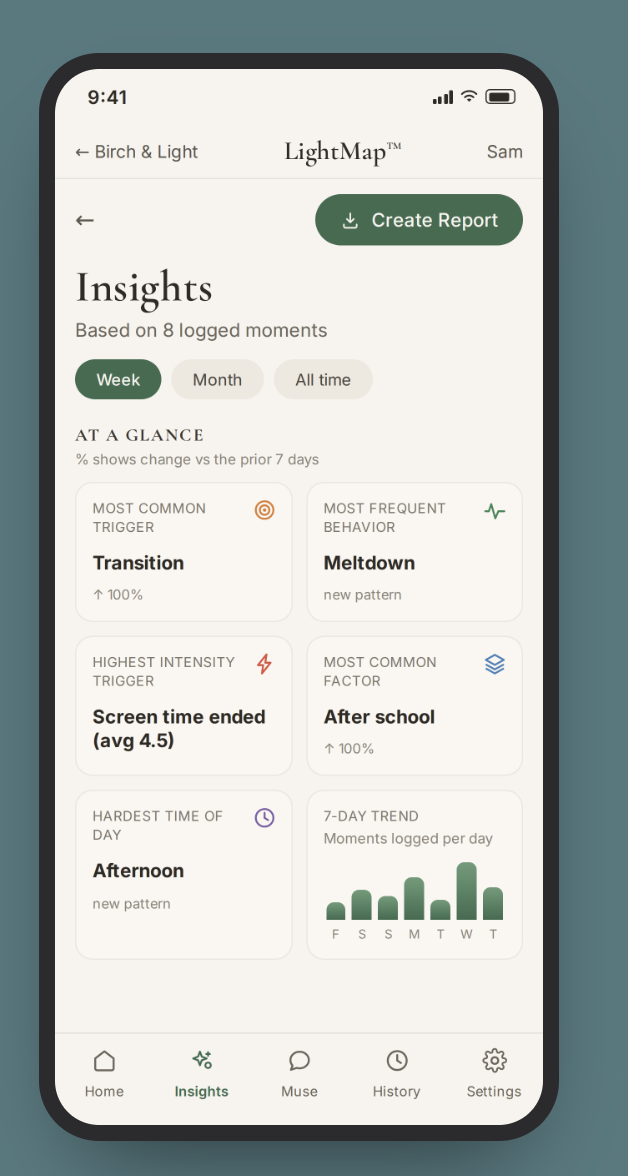

Part of the award-winning Birch & Light Method, honored with the Mom's Choice Gold Award for excellence in family resources.
A story to read together
Sometimes the easiest way in is a story you read side by side.
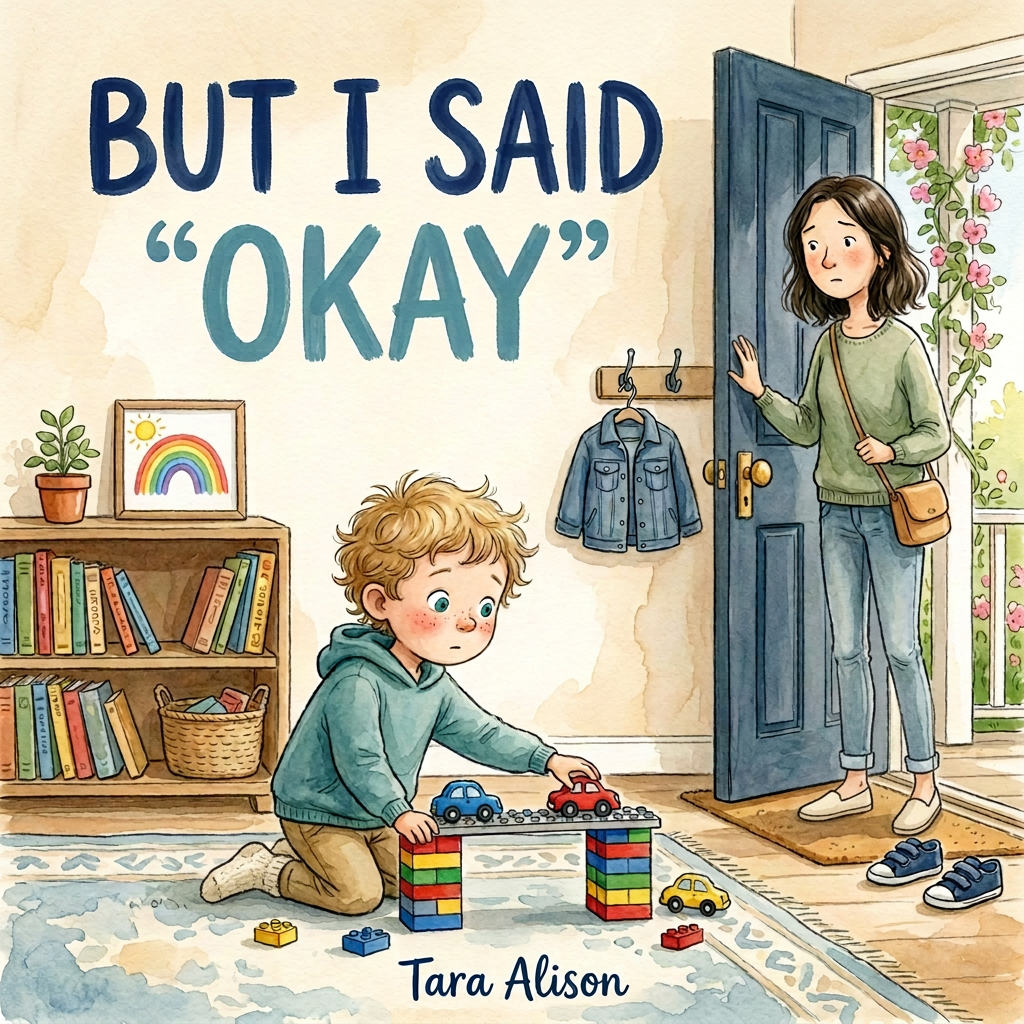 But I Said “Okay”
Owen always says okay. He means it every time. But his attention is still inside the bridge, the dragon, the cave, the music — until Mom realizes that helping him leave one thing matters more than asking him to start the next.
Read the story The Tower That Looked Fine
A tower in a quiet clearing tries to stay steady through every small thing nobody else seems to notice — until one tiny breath of wind causes her to fall, and a gentle hand begins to gather the blocks back.
Read the story
If today was one of those days
A few more from the library, free to read.
Researched and drafted with AI assistance, reviewed before publication. Editorial standards