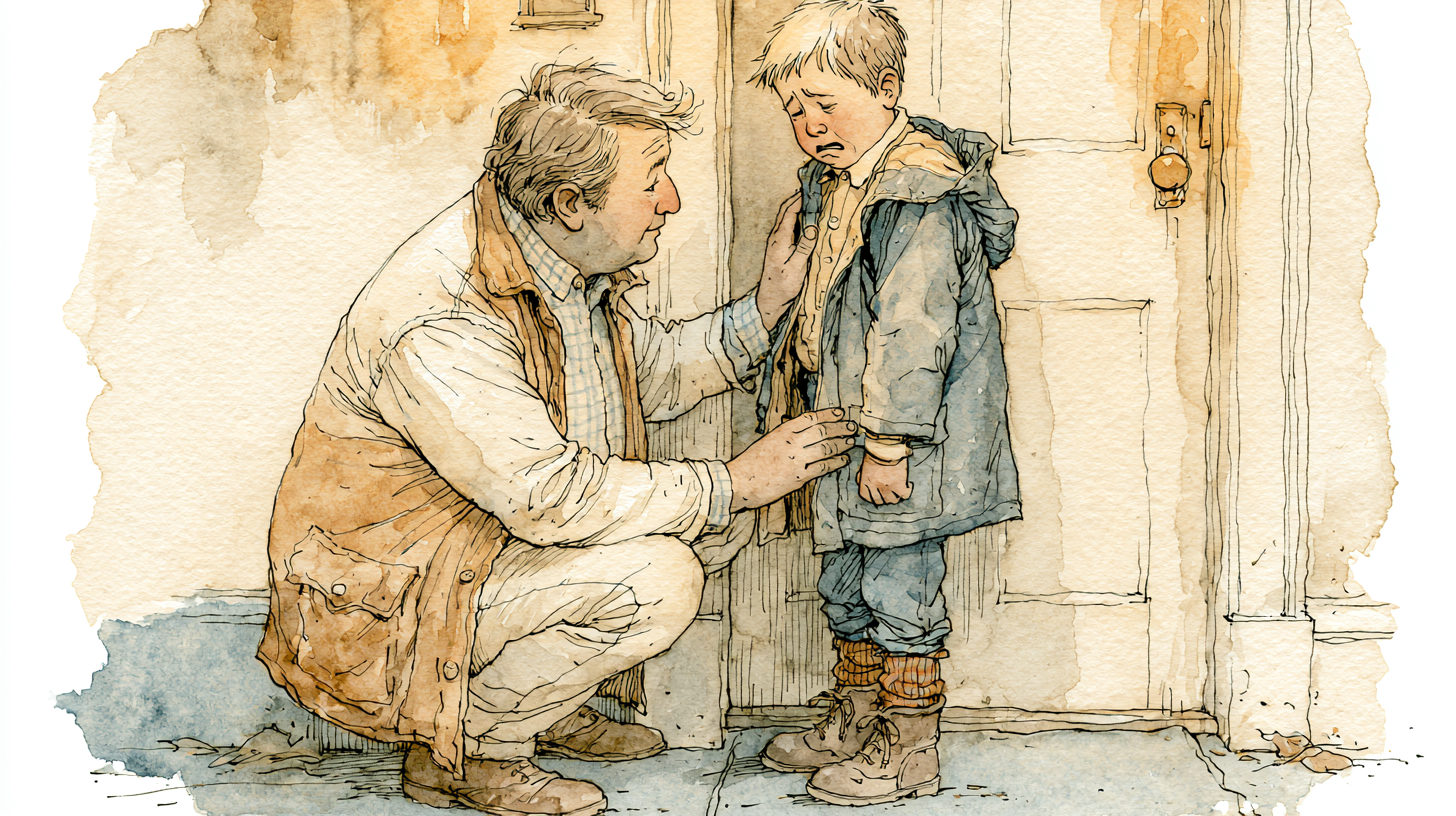
Small plan changes trigger big reactions because, for many anxious and autistic children, a plan is what keeps an unpredictable world manageable. A change breaks that safety, and the meltdown is the nervous system reacting to lost certainty rather than to pizza or a different route home.
You said tacos. Dinner became pizza, which your child loves more than tacos. Meltdown anyway.
You drove a different way home. The playdate moved from 2pm to 3pm. The field trip bus was a different color than announced. Each time, a reaction so much bigger than the change that you find yourself saying the thing every parent of one of these kids says: "It's not a big deal!"
Which is true. And also completely beside the point, because for your child's nervous system, it is a big deal, and understanding why changes what you do about it.
Why is a small change such a big deal to my child?
For flexible kids, a plan is a suggestion. For rigid, anxious, and many neurodivergent kids, a plan is infrastructure. Knowing what comes next is how they manage a world that otherwise arrives as too much, too fast, too unpredictable. The plan is not information. The plan is safety equipment.
When the plan changes, even in their favor, the equipment fails. What you see as "pizza instead of tacos" their system registers as "the map was wrong, what else is wrong?" The meltdown is not about pizza. It is the sound of certainty collapsing.
Researchers call this intolerance of uncertainty. In a study of 64 autistic and 85 typically developing children aged 6 to 14, it tracked closely with anxiety in both groups, and more strongly in the autistic group (Neil and colleagues, 2016).
The invisible work of switching
There is a second cost you cannot see. Your child already ran tonight in their head. Tacos, the taste, the sequence, the evening. A change means demolishing that pre-lived version and building a new one, in seconds, on demand, usually while an adult is saying "it's not a big deal." That demolition has a real cognitive price, and kids with less flexible thinking pay far more for it than we do. Grief for the imagined version plus the labor of the rebuild, arriving together: that is what a plan-change meltdown is made of.
What helps in the moment
Stop selling the upgrade. "But you LIKE pizza more" argues taste while they are grieving certainty. Instead, name the real thing: "You were expecting tacos, and it changed. Changes feel bad even when the new thing is good." Being understood shortens storms; being marketed to extends them.
Give the new plan a shape fast. The panic lives in the gap between old plan gone and new plan unknown. Close it: "New plan: pizza at 6, same movie after, same everything else." You are handing back the infrastructure.
Let the feeling finish. Even handled perfectly, there may be tears. That is the demolition cost being paid. It is not a failure of your technique.
While you're here, take the guide
What's Underneath is free: the three body-state triggers under most meltdowns, what to say in the minute before it tips over, and how to reset afterward.

You'll get the guide instantly, plus five free articles in your inbox every week. Real challenges (meltdowns, school mornings, picky eating, big feelings) and how to actually handle them. Unsubscribe anytime.
How do I build flexibility without forcing it?
Forecast changes like weather. "Heads up, small chance dinner changes tonight." Advance notice, even vague, lets their system pre-load the possibility. Surprise is the expensive part; you are buying it down.
Build change into the plan itself. Some families add a literal wildcard: a "surprise slot" in the day or the weekend where the content is unknown but the existence of the unknown is scheduled. The child practices tolerating uncertainty inside a container of certainty. It sounds paradoxical. It works.
Rehearse tiny, low-stakes changes on good days. Different bowl, different seat, socks in a new drawer, announced cheerfully and survived together. Flexibility is a muscle. It cannot be built during a crisis, only between them.
Protect capacity on high-change days. First days, trips, holidays, substitute teachers. If the day is going to be one long plan change, lower every other demand. A child spending everything on adapting has nothing left for teeth-brushing diplomacy.
How do I tell the other adults in my child's life?
Tell teachers, sitters, and relatives what a plan means to your child before a change happens, not after. A short note does the job: "Plan changes cause real distress for her. Please give notice when you can, say what stays the same, and expect a few minutes to recover." Substitute teachers and schedule shifts at school are common triggers, so ask whether changes to the day can be posted ahead of time. A visual schedule that marks the unusual parts of the day helps many children, because the change shows up on the page before it shows up in the room.
When it is part of something bigger
If plan changes are just one entry in a longer list, resistance to small requests, everything becoming a negotiation, a child who seems to need control over things that do not matter, you may be looking at a demand-avoidant profile rather than simple rigidity, and the playbook shifts from "building flexibility" to "reducing perceived threat." Start here to see if it fits.
Not sure whether it's all changes or specific kinds? LightMap can tell you: log the meltdowns, tag what changed, and find out if the trigger is timing, surprise, social plans, or transitions. Each has a different fix.
For your child: When Wildflower Day Ended for Gus is about a young bee who cannot bear the day being over, and the mother who sits in the ache with him instead of hurrying him out of it.
Sources: DSM-5-TR autism criteria on insistence on sameness; research on intolerance of uncertainty in autistic children (PMC); Pellicano and Burr on predictive processing accounts of autism (Trends in Cognitive Sciences; PMC); research on transition difficulty in children (PMC). Also: Boulter C, Freeston M, South M, Rodgers J, Journal of Autism and Developmental Disorders 2014;44(6):1391-1402. Neil L, Choque Olsson N, Pellicano E, Journal of Autism and Developmental Disorders 2016;46:1962-1973. Pellicano E, Burr D, Trends in Cognitive Sciences 2012;16(10):504-510.
For education and reflection, not medical advice. Our terms
See what's underneath
Stop guessing which demand did it
LightMap reads your hard days together and gives you answers. Start with one moment today.
Start with 3 moments Not sure where to start? Ask me.Message Tara on WhatsApp. It really is me, I read everything and will personally respond.Click here to message Tara →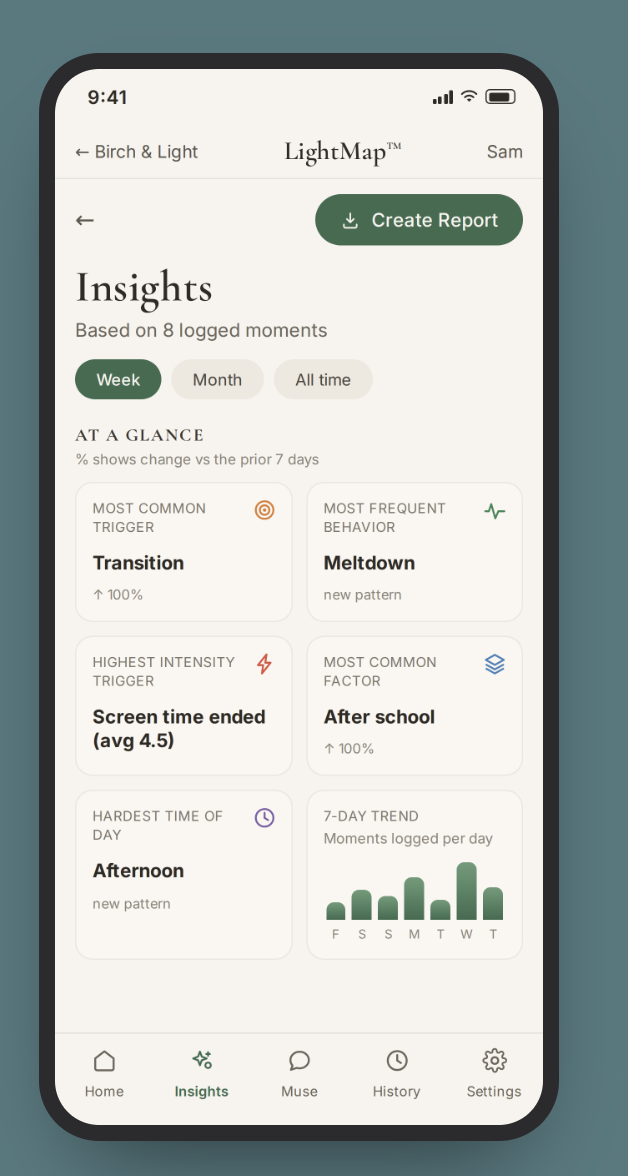

Part of the award-winning Birch & Light Method, honored with the Mom's Choice Gold Award for excellence in family resources.
A story to read together
Sometimes the easiest way in is a story you read side by side.
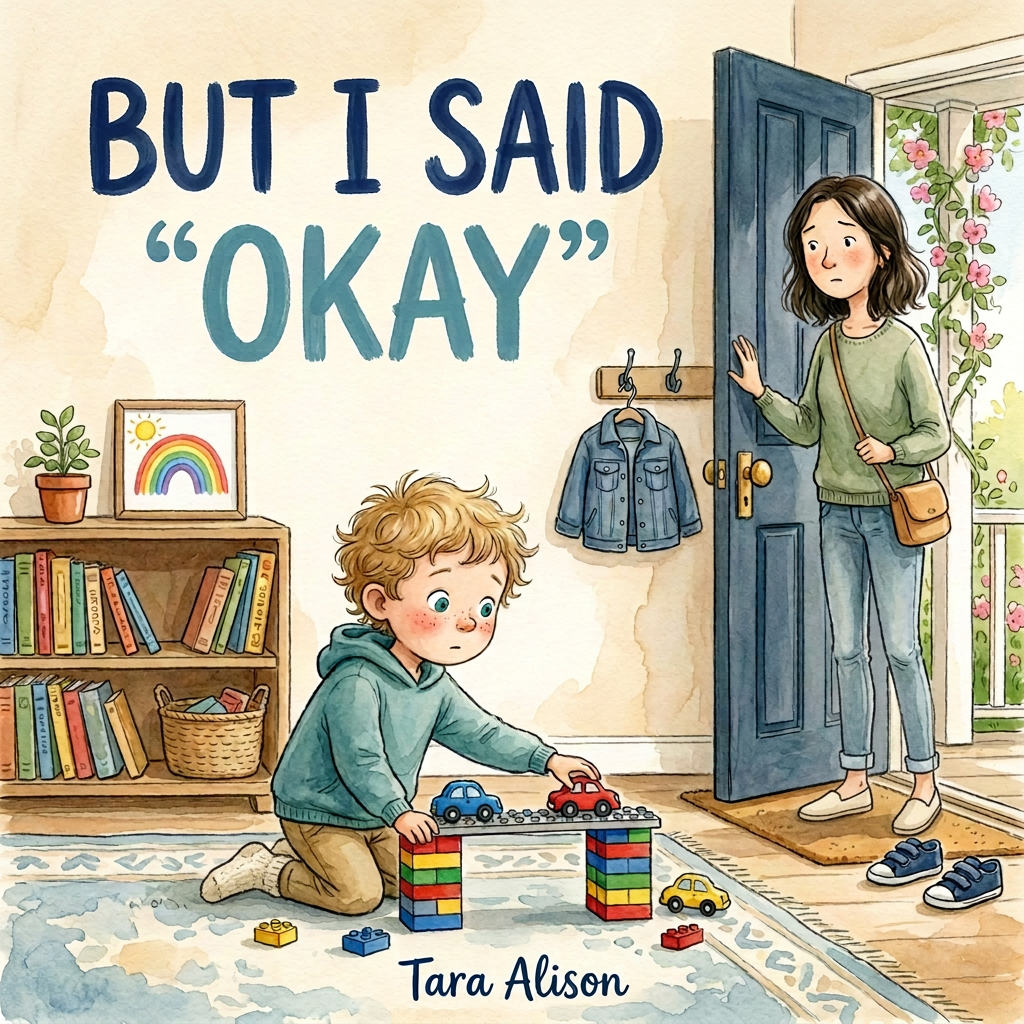 But I Said “Okay”
Owen always says okay. He means it every time. But his attention is still inside the bridge, the dragon, the cave, the music — until Mom realizes that helping him leave one thing matters more than asking him to start the next.
Read the story The Tower That Looked Fine
A tower in a quiet clearing tries to stay steady through every small thing nobody else seems to notice — until one tiny breath of wind causes her to fall, and a gentle hand begins to gather the blocks back.
Read the story
If today was one of those days
A few more from the library, free to read.
Researched and drafted with AI assistance, reviewed before publication. Editorial standards