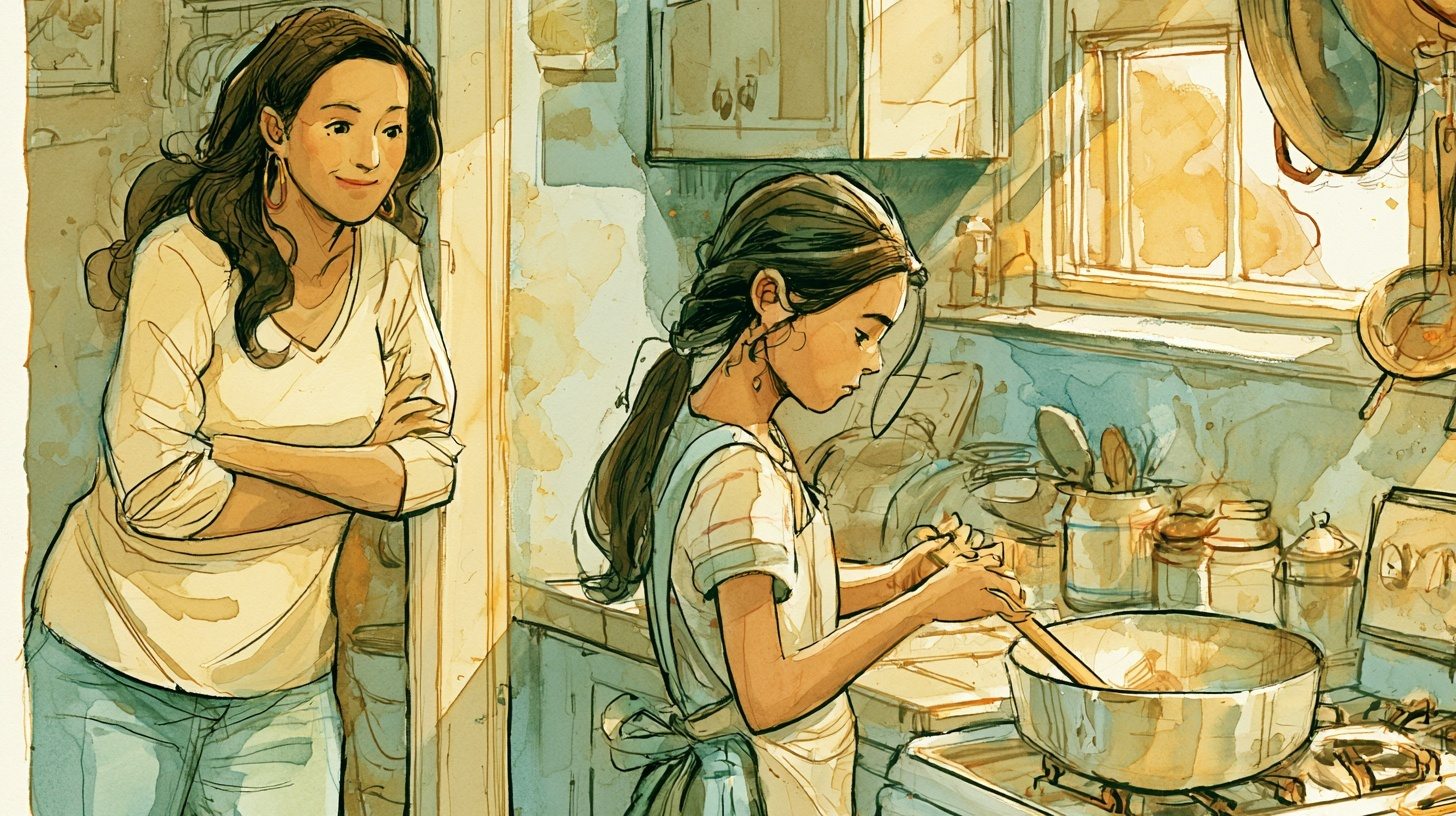
The problem with only logging the hard stuff
When you start tracking your child's difficult moments, something uncomfortable happens after a few weeks. You open the log and see a wall of outbursts, refusals, and sharp words. It starts to feel like an indictment. Of your child, of your parenting, of your family. Some parents quit tracking at this point, not because it stopped being useful, but because it hurt to look at.
The log was never the whole picture. It was only the picture you were asked to record.
What changes when you log the wins
The fix is structural: track the bright spots with the same discipline you track the hard moments. The evening your child changed her own medical device without being asked. The weekend cousins stayed over and nothing went sideways. The morning she got up on her own alarm. The night she came to say goodnight, sweet and unprompted, after a brutal week.
Individually, these feel too small to write down. That is precisely why they need to be written down. Hard moments announce themselves. Wins slip past quietly, and a tired parent's memory will not hold them.
What a strengths log actually shows you
After a month or two, the bright spots stop being isolated anecdotes and become a second data set, and it tells you things the difficulty log cannot:
- Capability under the right conditions. A child who melts down over demands at home but spends six calm hours with visiting relatives is not a child who cannot regulate. She is a child whose regulation depends on conditions, and now you can start naming them.
- Skills that are growing. Apologizing unprompted. Naming a trigger before it hits. Cooking her own meal. These are new skills appearing in real time, and a log makes the growth visible instead of drowned out.
- Evidence against the worst-day story. On the nights you find yourself thinking nothing is working, the bright spot log is a factual rebuttal written in your own hand.
While you're here, take the guide
What's Underneath is free: the three body-state triggers under most meltdowns, what to say in the minute before it tips over, and how to reset afterward.
You'll get the guide instantly, plus five free articles in your inbox every week. Real challenges (meltdowns, school mornings, picky eating, big feelings) and how to actually handle them. Unsubscribe anytime.
Why this matters clinically, not just emotionally
A strengths record is not a feel-good exercise. Clinicians need it. A therapist looking at difficulty data alone sees severity. A therapist looking at difficulty data next to a bright spot record sees range: where the child succeeds, under what conditions, and which capacities are already there to build on. Treatment plans built on existing strengths work better than plans built only on deficits.
It matters for your child too. A teenager who suspects she is only ever documented at her worst is right to resent it. A record that also holds her best is a fairer record, and someday, a kinder one to look back on.
The shift
You are not tracking to build a case against your child. You are tracking to understand her. Understanding requires both halves: what overwhelms her, and what she can already do. Log both, and the story changes from a list of problems to a map of a whole kid.
LightMap tracks bright spots, regulation wins, and new skills right alongside the hard moments. See the whole picture.
For education and reflection, not medical advice. Our terms
See what's underneath
Stop guessing what set it off
LightMap reads your hard days together and gives you answers. Start with one moment today.
Start with 3 moments Not sure where to start? Ask me.Message Tara on WhatsApp. It really is me, I read everything and will personally respond.Click here to message Tara →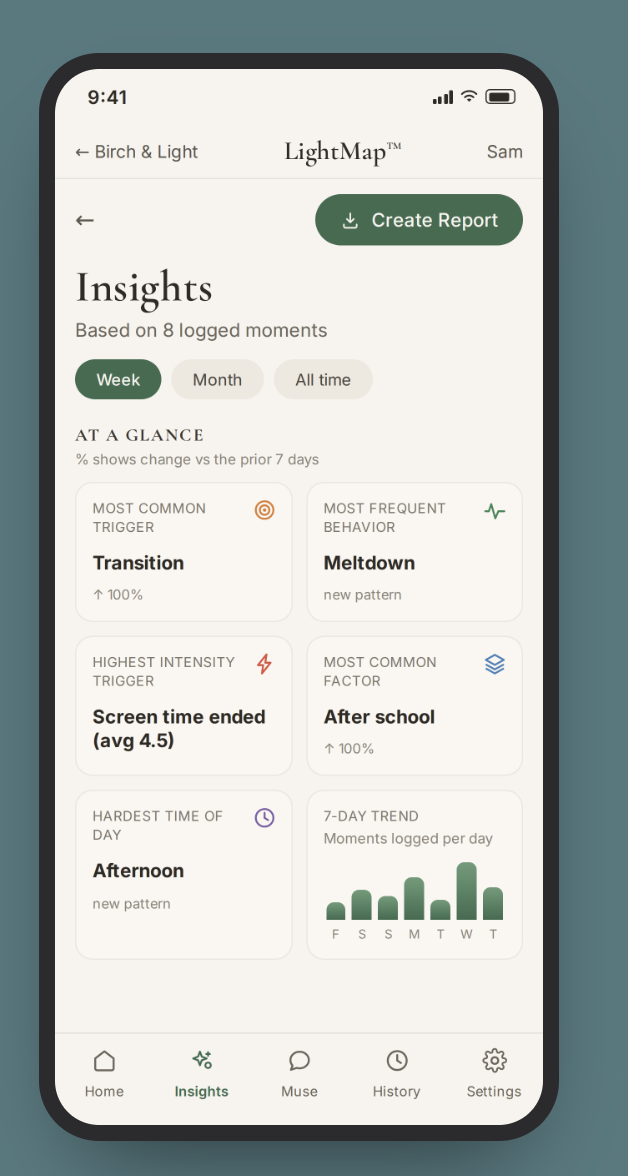

Part of the award-winning Birch & Light Method, honored with the Mom's Choice Gold Award for excellence in family resources.
A story to read together
Sometimes the easiest way in is a story you read side by side.
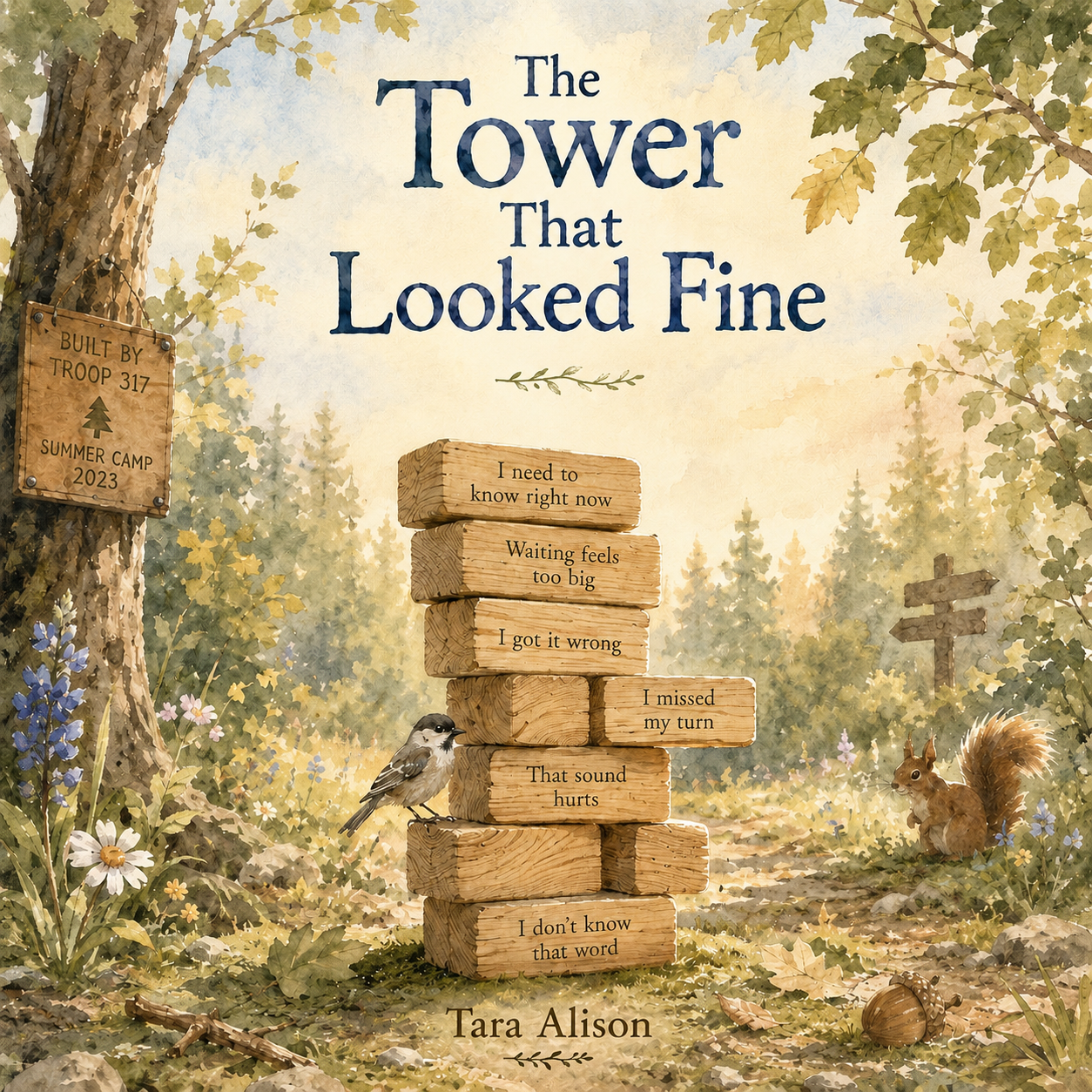 The Tower That Looked Fine
A tower in a quiet clearing tries to stay steady through every small thing nobody else seems to notice — until one tiny breath of wind causes her to fall, and a gentle hand begins to gather the blocks back.
Read the story The Boy at the Edge
A boy finds calm by watching the world move from a window. When his stillness is mistaken for defiance, the moment escalates — and he learns that being calm doesn’t always protect you from being told no.
Read the story
If today was one of those days
A few more from the library, free to read.
Researched and drafted with AI assistance, reviewed before publication. Editorial standards