
The pattern looks like a contradiction: a student who loves her major, hyperfocuses her way to excellent grades one term, then loses her grip on her own attention so completely that exams fail and a whole term slips away. Parents watching from a distance swing between pride and panic, and the student herself is usually carrying something worse: the growing terror that she is one bad semester from being dismissed from a program she loves.
If the diagnosis arrived during college rather than childhood, start with the fact that explains everything: she is not falling apart because she got lazy at nineteen. She is falling apart because college is precisely engineered to remove every external structure that was quietly doing her executive functioning for her. At home there were parents, bells, teachers who chased missing work, a schedule someone else maintained. College hands all of that to the student's own prefrontal cortex, and an ADHD prefrontal cortex is exactly the part that cannot carry it alone. This is why so many bright ADHD students are diagnosed in their first or second year: the scaffolding came down and the underlying wiring finally showed. The inconsistency itself, brilliant when interested, lost when not, is not a character flaw. Interest-driven attention is the core of how this brain works.
The single highest-leverage move, and almost nobody makes it in time
Every university has a disability or accessibility services office, and a documented ADHD diagnosis qualifies. Registering unlocks formal accommodations: extended time on exams, testing in reduced-distraction rooms, priority registration, sometimes flexibility on attendance and deadlines. Those help. But the deeper reason to register is protective, and it speaks directly to the fear of dismissal. A student who is registered with accessibility services before the next crisis has a completely different standing than one who shows up after failing. Academic standing committees, dismissal appeals, and petitions all treat a documented, registered disability seriously; an undocumented one arrives sounding like an excuse. And for the term that already went wrong: ask the office about retroactive or medical withdrawal. Many universities can convert a failed term into withdrawn credits when a newly diagnosed condition explains it, which lifts it out of the GPA and out of the dismissal math. Not every school, not every case, but it is asked and granted far more often than families realize, and the accessibility office is where that conversation starts.
The cruel irony, and the one place a parent belongs in the middle of it
Here is what stalls most students: registering requires gathering documentation, filling forms, booking an intake appointment, and following up, a multi-step administrative project requiring exactly the executive functions ADHD impairs. The disability blocks the road to the disability office. This is the legitimate opening for a parent of an adult student. Not doing college for her, but sitting beside her for one evening while the forms get done, being the body in the room that makes the boring task finishable. One evening of that beats a semester of reminding.
While you're here, take the guide
What's Underneath is free: the three body-state triggers under most meltdowns, what to say in the minute before it tips over, and how to reset afterward.

You'll get the guide instantly, plus five free articles in your inbox every week. Real challenges (meltdowns, school mornings, picky eating, big feelings) and how to actually handle them. Unsubscribe anytime.
Study mechanics that actually fit this brain
Generic study advice fails ADHD students because it assumes a brain that runs on importance. This one runs on interest, urgency, novelty, and accountability, so the tactics that work build those in. Externalize everything: one calendar, every deadline, visible daily, because an ADHD brain cannot track a semester internally and time-blindness means week ten arrives without warning. Break the term into visible checkpoints so the invisible long arc becomes a series of short ones. Use body doubling shamelessly: studying alongside another person, in a library or even on a video call, supplies the accountability her attention runs on, and it is the cheapest intervention in the entire toolkit. Treat hyperfocus as a resource to schedule around rather than a fluke: protect her best hours for the hardest work and let the deep dives happen on purpose. And teach her the two-day rule: the moment something slips, tell someone within two days, a professor, an advisor, anyone official, because the same email that gets grace and extensions in week two gets nothing in week ten. ADHD students lose more to silence than to symptoms.
What a parent of an adult student can actually do
At this age you are a consultant, not a manager, and the relationship is the asset that everything else rides on. Ask which she wants in a given call, help or just an ear, and honor the answer. Keep being the safe place to report a slipping week early, because shame is what turns one bad week into a lost term, and a student who can say it out loud to someone who does not panic gets to the two-day email in time. Support the treatment side without running it: a newly diagnosed adult deserves a real conversation with a clinician about the full toolkit, and many campuses also offer ADHD coaching and counseling that nobody uses because nobody mentions it. And say the reframe out loud, more than once, because she needs it in her mother's voice: she made it two years into a demanding program with no diagnosis, no accommodations, and no map. That is not a struggling student. That is a strong one who has been running uphill carrying weight nobody could see, and the weight finally has a name.
If there are younger kids coming up behind her, this is also the argument for pattern-keeping early: the record you build now, of what helps, what derails, and when, is the map your child carries into every classroom after yours. LightMap was built for exactly that.
Sources: Section 504 of the Rehabilitation Act and the Americans with Disabilities Act Amendments Act; US Department of Education Office for Civil Rights guidance on the transition from IDEA to postsecondary education; peer-reviewed research on academic outcomes and executive function demands for postsecondary students with ADHD (Journal of Attention Disorders; PMC).
For education and reflection, not medical advice. Our terms
See what's underneath
Walk into the next appointment with answers
LightMap reads your hard days together and gives you answers. Start with one moment today.
Start with 3 moments Not sure where to start? Ask me.Message Tara on WhatsApp. It really is me, I read everything and will personally respond.Click here to message Tara →

Part of the award-winning Birch & Light Method, honored with the Mom's Choice Gold Award for excellence in family resources.
A story to read together
Sometimes the easiest way in is a story you read side by side.
 My Thoughts Don't Know How to Wait
Simon's thoughts arrive bright and fast — and feel like they will disappear if he doesn't say them right away. One quiet night beside fireflies, he discovers a small, surprising space between noticing a thought and chasing it.
Read the story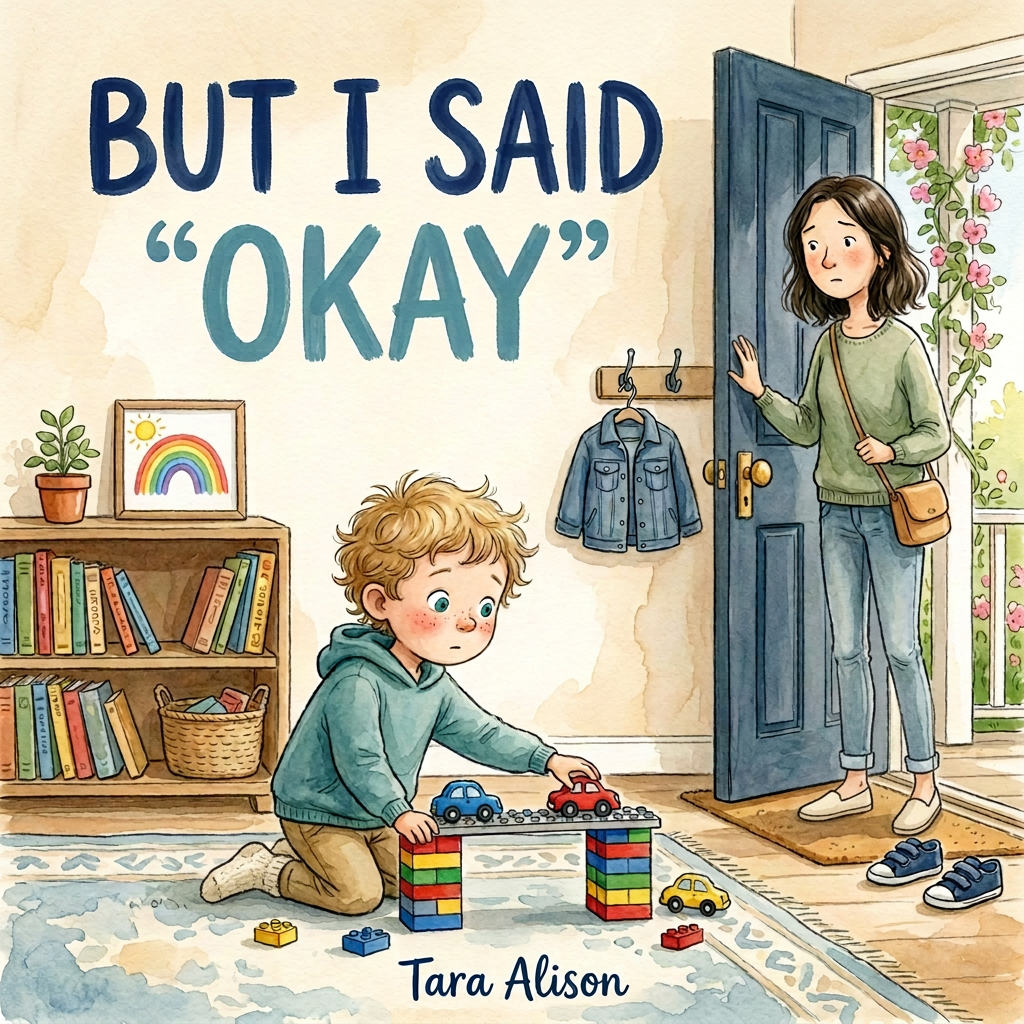 But I Said “Okay”
Owen always says okay. He means it every time. But his attention is still inside the bridge, the dragon, the cave, the music — until Mom realizes that helping him leave one thing matters more than asking him to start the next.
Read the story
If today was one of those days
A few more from the library, free to read.
Researched and drafted with AI assistance, reviewed before publication. Editorial standards