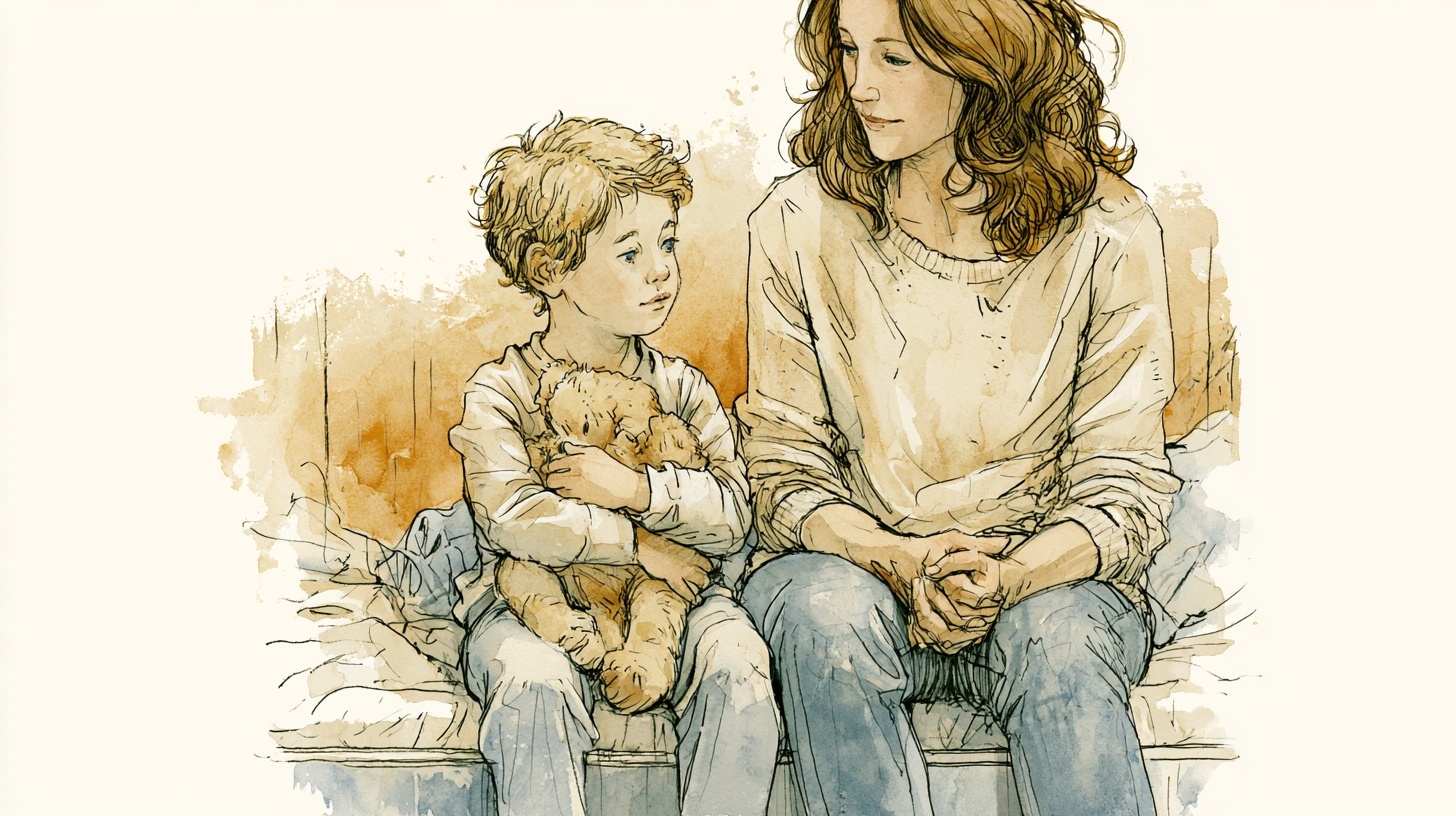
He tells you there is a voice in his head now, one that will not let him alone. He is four. He did not have the words for this a few months ago, and now he does, and what he is describing is intrusive thoughts urging him toward things he does not want to do, along with a ritual that has to be repeated over and over until it "feels right," even when part of him seems to know it does not make sense.
This is not a new problem stacked on top of the old ones. It is the same illness wearing a different symptom.
What sudden onset OCD in PANS often looks like
- Intrusive thoughts. Unwanted images or urges that feel foreign to the child, not an expression of who they are.
- Compulsions that can be physically risky. Repeating an action until it "feels right," holding his breath, touching something hot or sharp, sometimes in ways that override a child's own sense of self-preservation.
- A pattern tied to the flare, not a steady baseline. Symptoms that spike hard and then ease, rather than the slower, gradual build typically seen in OCD that develops outside of PANS.
- Uneven ability to describe it. A younger child may only be able to say "a voice" or "a switch," while an older child might describe the thoughts more precisely. The language does not need to be sophisticated for the symptom to be real.
The different themes intrusive thoughts can take
Intrusive thoughts are not one single thing, and they are not limited to violent content. Clinicians generally group them into a few broad categories: harm (fear of hurting someone, or something terrible happening through carelessness), contamination (fear of germs, illness, or spreading something dangerous), symmetry and "just right" concerns (needing something to feel even, complete, or done a certain way), and taboo thoughts, which can include aggressive, religious, or sexual content that feels completely foreign and horrifying to the child having them.
The sexual category is the one parents are least prepared for and the one kids are most ashamed to say out loud. A child can experience an unwanted thought of a sexual nature that disturbs them deeply and become convinced it means something terrible about who they are. It does not. This is one of the most well documented OCD themes in both children and adults, and it is the opposite of desire, a thought the child is desperately trying to push away, not one they want or would ever act on. What separates this from something to actually be concerned about is the child's own reaction, distress, disgust, and attempts to avoid or undo the thought, rather than any interest in it. If your child discloses something like this, the most protective thing you can do is stay calm, tell them clearly that the thought does not mean anything about who they are, and let your PANS or mental health provider know so it can be tracked and addressed like any other symptom in this flare, rather than something to carry alone in silence.
One of the most disorienting parts for parents is that these thoughts do not require any prior exposure to sexual content, abuse, or even basic sexual information to occur. OCD does not need lived experience to generate distressing content, it only needs something the child would find horrifying, and for most children that includes anything touching on bodies or safety, concepts many kids pick up in only the vaguest form from basic body-safety lessons at school or daycare. A child with no exposure to anything remotely explicit can still generate a thought that feels intensely vivid and real to them, and describe it with a distress that can be alarming to hear. That intensity is a feature of how the symptom works, not on its own an indication that something happened. If anything your child describes ever raises real questions for you, it is always appropriate to loop in your pediatrician or a child psychologist to look at the full picture, since OCD content and an actual safety concern are evaluated differently, and a professional can help you tell which one you are looking at.
Intrusive thoughts and hallucinations are both real PANS symptoms, and they are not the same thing
Hallucinations are a separate, recognized symptom category in PANS, distinct from intrusive thoughts, and they show up in a meaningful share of children during a flare. They can be visual, brief, nightmare-like images seen while fully awake, or auditory, hearing a voice or sound with no source, including hearing their own name called out when no one is there, or a threatening voice saying something upsetting. Most of these episodes are transient and pass within minutes to hours. When intrusive thoughts and hallucinations occur in the same flare, the combination can be genuinely terrifying for a child to sit inside of. Both are recognized neuropsychiatric symptoms that can occur in this illness, and both deserve to be described to your doctor in specific, concrete detail rather than downplayed. One important caution: a hallucination is never something to simply attribute to PANS and wait out, especially the first time one occurs. New or worsening hallucinations warrant prompt medical evaluation regardless of a PANS diagnosis, because other causes need to be ruled out, including medication side effects or withdrawal, seizure activity, high or low blood sugar in a child with diabetes, sleep deprivation, delirium from an acute illness, or an emerging primary psychiatric condition. Knowing PANS can cause hallucinations does not mean this particular hallucination is from PANS, and that distinction is the doctor's to make, not something to settle at home.
Why PANS causes these symptoms
PANS is understood to involve inflammation affecting the basal ganglia, the part of the brain heavily involved in habit formation, movement regulation, and the neural loops implicated in OCD, along with broader neuroinflammation that can touch perception and mood as well. When these regions are inflamed, obsessive, compulsive, and even hallucinatory symptoms can appear abruptly, at a severity and speed that looks nothing like typical childhood worry or fear escalating over time. This is part of why PANS-related psychiatric symptoms are treated differently from primary OCD or anxiety, the underlying driver is inflammatory, and symptoms often respond to treating the flare itself rather than starting with behavioral therapy alone.
While you're here, take the guide
What's Underneath is free: the three body-state triggers under most meltdowns, what to say in the minute before it tips over, and how to reset afterward.
You'll get the guide instantly, plus five free articles in your inbox every week. Real challenges (meltdowns, school mornings, picky eating, big feelings) and how to actually handle them. Unsubscribe anytime.
Keeping him safe during compulsions
Any compulsion that pushes toward something genuinely unsafe, breath-holding, touching something hot, running toward traffic, needs direct, close supervision without exception during an active flare. This is not overprotective, it is appropriate given that a compulsion strong enough to override a child's own instinct for safety cannot be trusted to stop on its own in the moment.
Start tracking what you are seeing in specific terms, which compulsions, how often, what the intrusive thoughts or hallucinations involve, any pattern in when they spike, since this becomes information your PANS doctor needs to judge how the flare is progressing and whether treatment needs to be more aggressive.
What helps in the moment
- Stay calm and low reactivity. A big emotional response from you, even out of fear, can intensify the cycle. A steady, matter of fact tone helps more than alarm does.
- Separate the illness from the child. Using his own language for it, and naming it as the illness talking, not him, helps protect his sense of self while this is happening.
- Redirect rather than argue. Trying to logically talk a four year old out of an intrusive thought rarely works and can add distress. Gently redirecting attention while keeping him physically safe is usually more effective in the moment.
- Loop in the treating doctor quickly. New or escalating symptoms during a flare are clinically meaningful and often change the treatment plan, this is not something to wait out quietly.
What tends not to help
Punishing or shaming the behavior treats a neurological symptom as a discipline issue, which does not work and adds a layer of guilt on top of something he cannot control. Assuming it is a phase and not flagging it to his doctor risks missing a sign that the flare is intensifying. And starting intensive OCD-specific therapy in the middle of an acute flare, before the underlying inflammation is being addressed, often has limited effect until the flare itself starts to settle.
When to loop in the doctor immediately
Any new compulsion that puts a child in physical danger warrants a same-day call, not a wait for the next appointment. A rapid escalation in intrusive thoughts, new hallucinations, or a combination of both can be a sign that the current treatment is not covering this flare and may need adjustment, whether that means antibiotics, a steroid burst, or moving up a planned IVIG.
Where LightMap helps
Symptoms that spike and ease with the flare are exactly the kind of pattern that is hard to hold in your head alone but valuable to track over time. Logging when intrusive thoughts, compulsions, or hallucinations appear alongside other flare markers, sleep, mood, tics, helps you and your doctor see the shape of this flare instead of just living inside it.
Every behavior is a clue.
When the pattern is logged instead of carried alone, it gets easier to see what this flare actually needs. Explore LightMap at birchandlight.com/lightmap.
Frequently asked questions
Is OCD a real PANS symptom or a separate diagnosis layered on top?
Sudden onset OCD and intrusive thoughts are one of the core diagnostic markers used to identify PANS and PANDAS, not a separate condition that has shown up alongside it. It is part of the same flare.
My child disclosed a sexual intrusive thought. Should I be worried about them?
No. Unwanted sexual thoughts are one of the most well documented and researched OCD themes in both children and adults, and the hallmark of this symptom is that the child is horrified by the thought, not drawn to it. Distress and avoidance are the signal that this is OCD content, not desire. Report it to your provider the same way you would any other symptom, calmly and without shame.
Are hallucinations part of this too, or is that something separate to worry about?
Hallucinations are their own recognized symptom within PANS, separate from OCD, and they occur in a meaningful portion of children during flares. Research presented on PANS symptom patterns has found roughly a third of patients experience visual and/or auditory hallucinations during flares, most often transient, lasting minutes to hours rather than persisting. That said, do not assume a hallucination is "just the PANS." New or worsening hallucinations need prompt medical evaluation every time, since medication effects, seizures, blood sugar swings, severe sleep deprivation, acute illness, and emerging primary psychiatric conditions can all produce them too, and telling those apart requires a clinician. Report every episode in concrete detail rather than filing it under an existing diagnosis.
My child has never been exposed to anything sexual. How could a thought like this even happen?
This is one of the most common and confusing questions parents ask, and the answer is that OCD does not require exposure to generate distressing content, it only needs something the child would find deeply upsetting to think about. Even a vague, undeveloped sense that "bad touching" exists, picked up from basic body-safety lessons, is enough raw material. A thought that feels like a vivid, specific event is not on its own evidence that something happened, it is evidence of how effectively this symptom can attach itself to a child's worst fears. If you ever have real doubt, a pediatrician or child psychologist can help sort out what you are looking at.
My child cannot explain why they are doing the compulsion. Is that normal?
Yes. Especially in younger children, the drive behind a compulsion often is not something they can articulate, they may only be able to say it "feels wrong" not to do it. The inability to explain it does not make it less real or less worth taking seriously.
Should we start OCD-specific therapy right away?
Many PANS-literate providers recommend focusing on treating the underlying flare first, since psychiatric symptoms driven by active inflammation often do not respond well to behavioral therapy alone until the flare itself is being addressed. Ask your treating doctor how they want to sequence this for your child specifically.
Sources: American Academy of Pediatrics PANS Clinical Report; International OCD Foundation; Child Mind Institute; Stanford Medicine PANS Clinic.
For education and reflection, not medical advice. Our terms
Before the next flare
Bring your doctor a timeline, not a memory
LightMap turns scattered hard days into a pattern you can see. Start by logging one moment tonight.
Log today's hard moment, no account needed Not sure where to start? Ask me.Message Tara on WhatsApp. It really is me, I read everything and will personally respond.Click here to message Tara →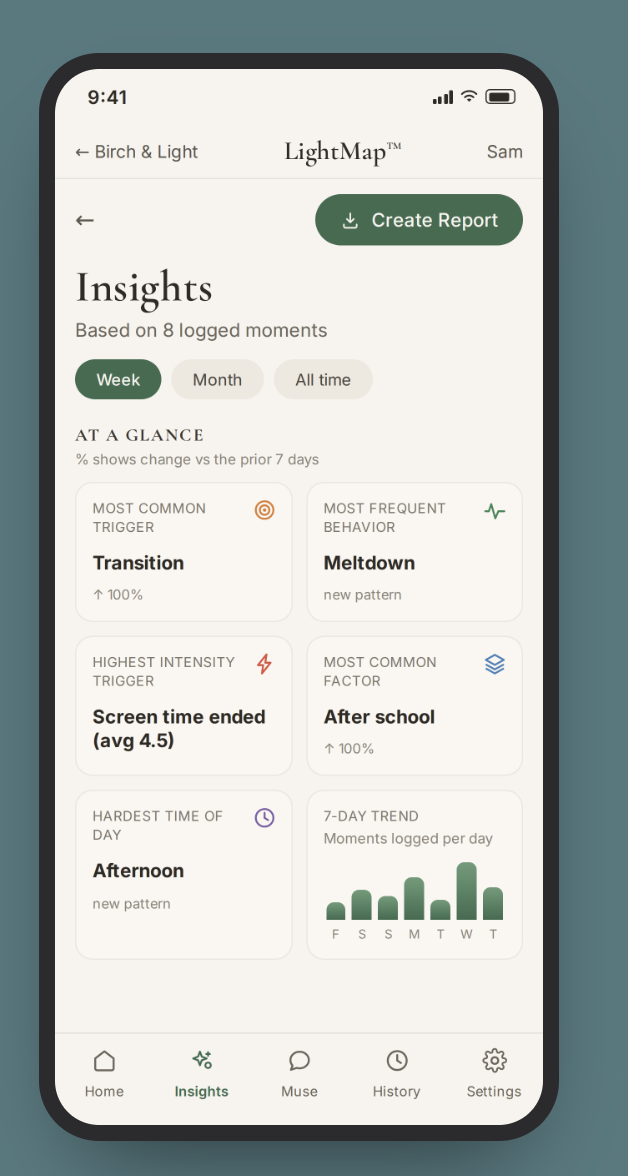

Part of the award-winning Birch & Light Method, honored with the Mom's Choice Gold Award for excellence in family resources.
A story to read together
Sometimes the easiest way in is a story you read side by side.
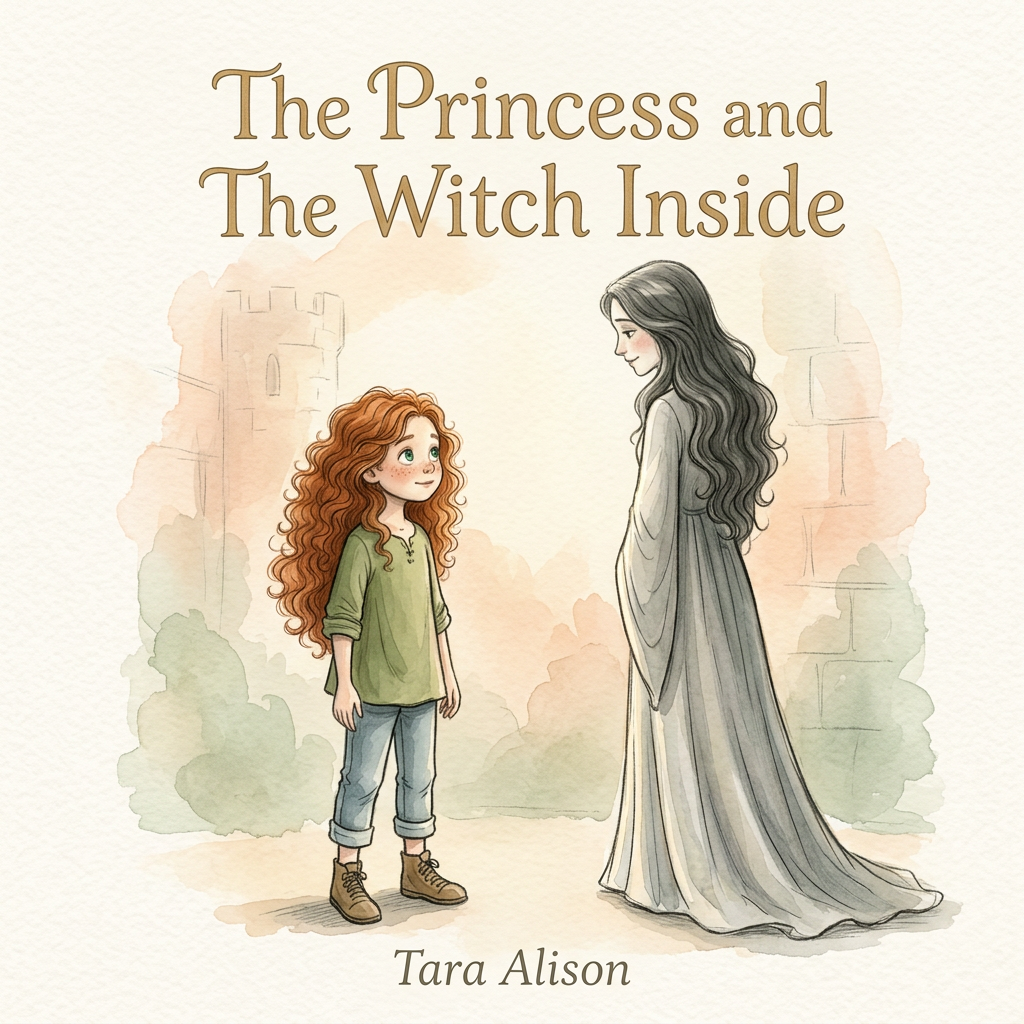 The Princess and the Witch Inside
Esme is loved, but a fast protective part keeps rushing in before she gets a turn. A quiet visitor helps her meet the witch inside — not as an enemy, but as a worried protector — and find her way back to the people she wanted to be with all along.
Read the story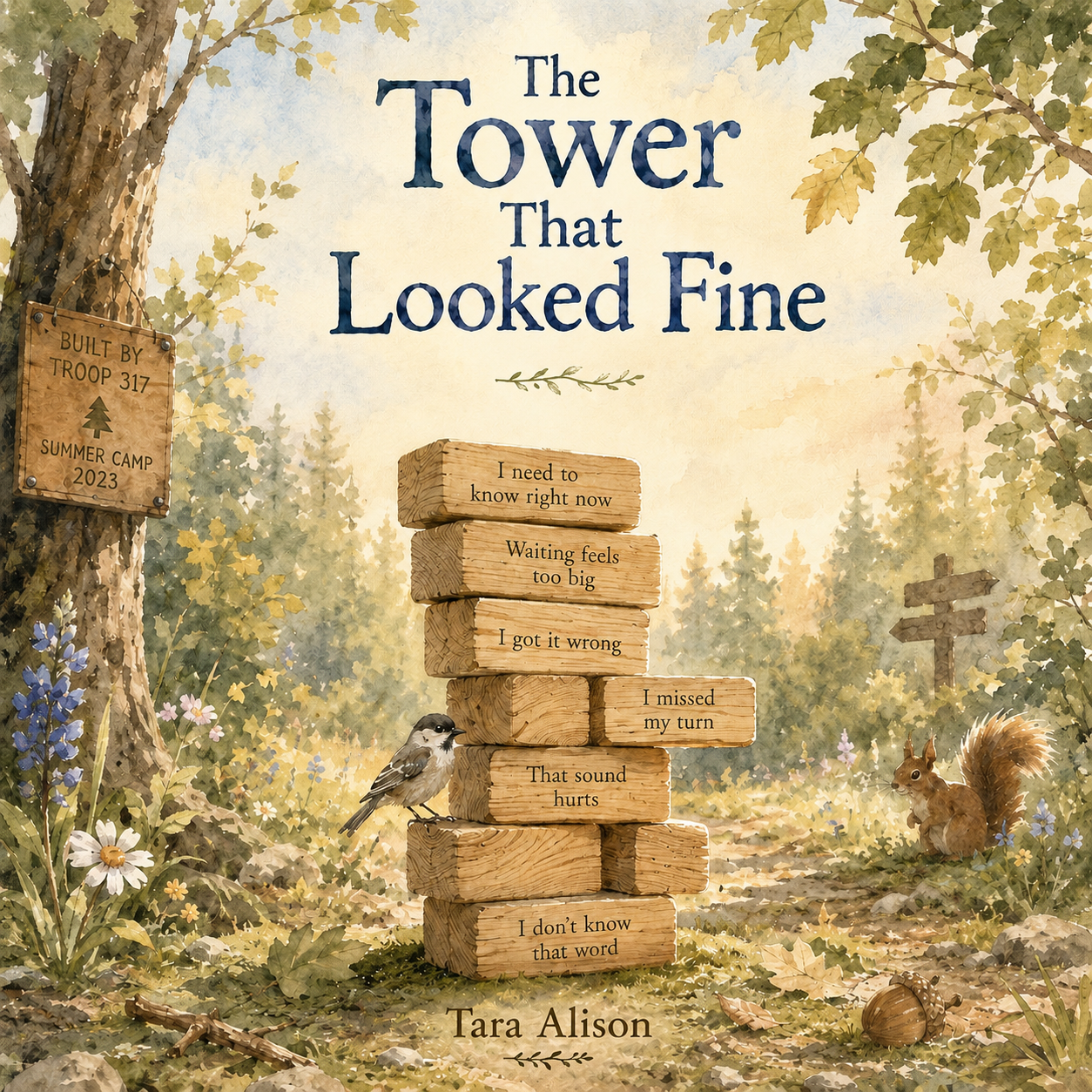 The Tower That Looked Fine
A tower in a quiet clearing tries to stay steady through every small thing nobody else seems to notice — until one tiny breath of wind causes her to fall, and a gentle hand begins to gather the blocks back.
Read the story
Researched and drafted with AI assistance, reviewed before publication. Editorial standards