Kids who cannot be left alone together are usually close in age, bored, and rewarded for provoking each other. Conflict pays off with a reaction, and fighting is the only way they have practiced connecting. The fix is not more supervision. It is changing who gets paid, giving them shared jobs, and rebuilding your time away in small steps.
You know the experiment because you have run it a hundred times. The room is calm. You step out to move the laundry. Before the dryer door closes you hear it start: the shriek, the thud, the slammed door, someone yelling a name.
So you stop leaving. You eat standing in the doorway. You time your errands around another adult being home. Somewhere along the way you became less of a parent and more of a human circuit breaker, the only component keeping the whole system from shorting out.
If your kids are close in age and somewhere in the eight-to-thirteen zone, and they cannot seem to share a room without combat, this article is for you.
Why is this age the peak of it?
Sibling conflict tends to run hottest when kids are close in age and close in size. Nobody clearly outranks anybody, so every interaction is a live negotiation over status, territory, and fairness. Around the tween years another engine kicks in: kids start working hard to be different from each other. Psychologists call it deidentification. To a ten-year-old, the sibling who is most like them can feel like the biggest threat to being their own person, which turns ordinary proximity into friction.
Then add the simplest ingredient of all: boredom. A sibling is the most available entertainment in the house, and provoking them works every single time. Push the button, get the explosion. It is reliable, it is dramatic, and it costs nothing. Most constant low-grade sibling warfare is not hatred. It is a stimulation habit with a very generous payout schedule.
Why separating them keeps failing
Here is the strange part almost every parent of close-in-age kids discovers: you send them to opposite ends of the house and ten minutes later they have found each other again. That is not defiance. The sibling relationship is usually also their primary connection, the person they most want to interact with. They are not seeking distance. They are seeking contact, and conflict is the only channel they have practiced.
That reframe matters because it changes the goal. The job is not keeping them apart. It is teaching them a second channel.
Change who gets paid
Provocation continues because it earns a reaction. The child who pokes gets a payout when the other one erupts, and the eruptor gets a payout when you charge in to deliver justice. As long as those payments keep flowing, no lecture will compete.
Two moves shrink the economy. First, rehearse the walk-away with the child who usually erupts, the way you would rehearse a fire drill: when your brother starts, you go to your spot, and coming to get me instead of blowing up counts as a win. Practice it in calm moments, not mid-fight. Second, when you do respond, respond to both kids the same boring way. No trial, no verdict, no dramatic scene. The show closing is what makes the button less fun to push.
While you're here, take the guide
What's Underneath is free: the three body-state triggers under most meltdowns, what to say in the minute before it tips over, and how to reset afterward.
You'll get the guide instantly, plus five free articles in your inbox every week. Real challenges (meltdowns, school mornings, picky eating, big feelings) and how to actually handle them. Unsubscribe anytime.
Structure beats supervision
Conflict spikes in unstructured proximity, two kids and nothing to do. It drops when the same two kids share a task with defined roles. A meal one of them leads. A build project. A fort with a job list.
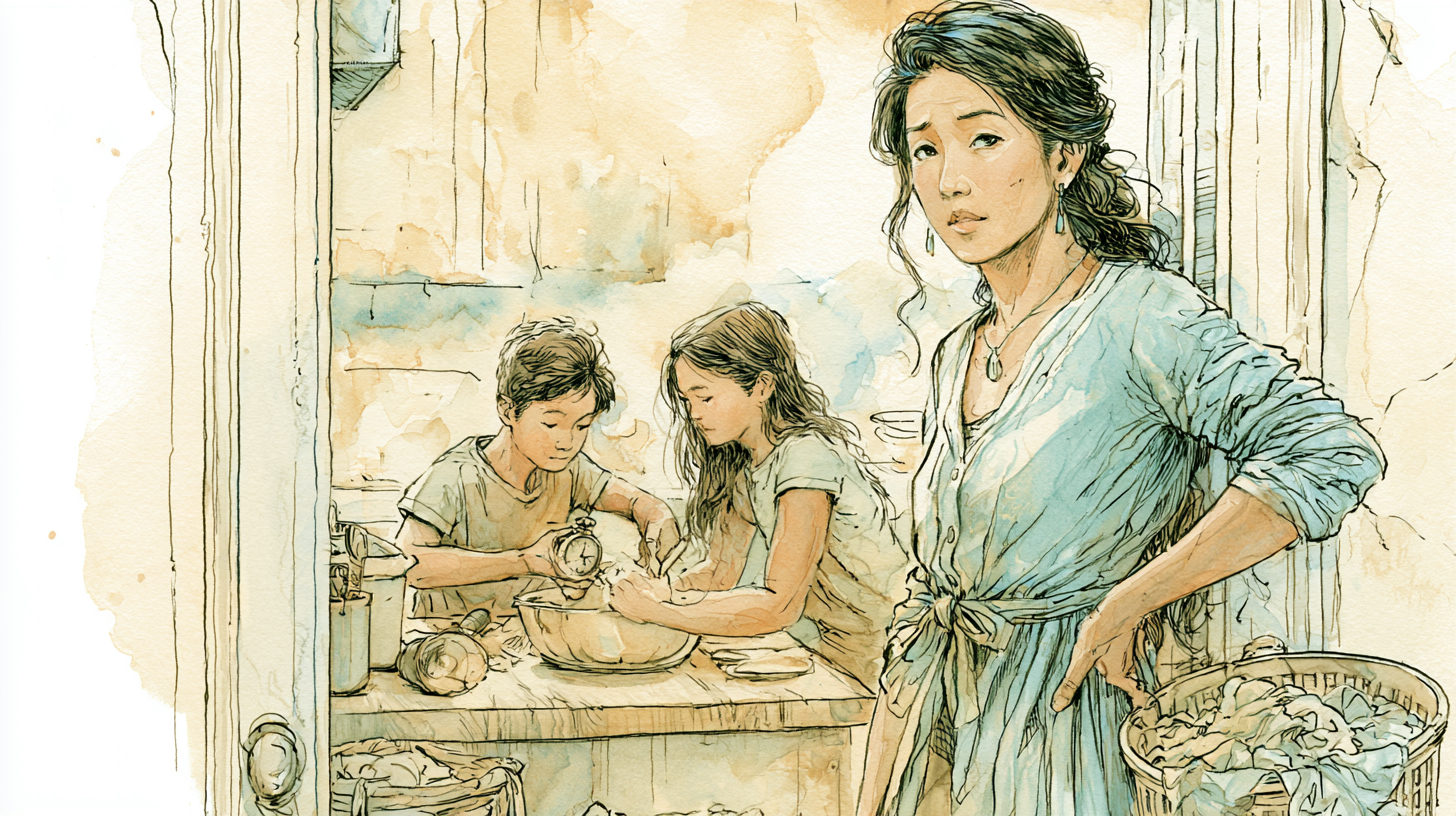
You are not forcing togetherness, you are giving their contact a channel that is not combat. Some of the least sentimental sibling repair happens over a mixing bowl, because cooperation snuck in dressed as a job.
What the research says
Sibling relationships carry more weight than a noisy house suggests. A review by Feinberg, Solmeyer, and McHale tied sibling dynamics to children's internalizing and externalizing behavior and to substance use, and it noted that few prevention programs address siblings at all. The conflict you referee matters, and so does the closeness underneath it.
The American Academy of Pediatrics offers advice that matches the approach above. It suggests choosing teamwork-based activities, giving each child a meaningful role in a shared project, letting siblings try to solve minor disputes on their own, and stepping in as a calm, neutral party when they cannot.
How do I rebuild my exits?
You cannot go from full-time referee to a peaceful shower in one jump, and asking kids who have never held the peace alone to hold it for an hour is asking them to fail. So train it like a muscle. Announce a three-minute absence. Give each child a micro-mission before you go: you are in charge of the timer, you are in charge of the snack plate.
Come back on time, name what went right, and gradually stretch the interval. The missions matter more than they look. A child with a job has status, and a child with status has less need to take it from a sibling.
The honest part
Two honest notes. First, none of this works in a week. Payoff habits fade on a scale of weeks of consistency, and the fighting often gets briefly louder before it gets quieter, because kids test whether the old buttons still work.
Second, there is a line worth respecting. Typical sibling conflict, even physical scuffling, is common at this age. But if one child is repeatedly getting hurt, if there are injuries, if one kid is afraid of the other, or if one is always the target and never the instigator, that is beyond management tricks and worth raising with your pediatrician. Asking for help with that is not overreacting. It is the assignment.
One thing that helps more than it should: fights are rarely random. They cluster around hunger, transitions, screens ending, and certain times of day. Tracking a week of when they ignite, with a tool like LightMap, often reveals a pattern you can get ahead of instead of refereeing after the fact.
You are not failing because you cannot leave the room. You are carrying a load the system built. The way out is not better supervision. It is slowly making your presence unnecessary, three boring minutes at a time.
For your child: The Nut Bar is about two squirrels and two birds frozen over the same peanut bar, each certain the others are about to take it all.
Sources: Feinberg ME, Solmeyer AR, McHale SM, "The Third Rail of Family Systems: Sibling Relationships, Mental and Behavioral Health, and Preventive Intervention in Childhood and Adolescence," Clinical Child and Family Psychology Review, 2012, volume 15, issue 1, pages 43-57. American Academy of Pediatrics, "Sibling Relationships: How to Help Your Kids Build Healthy Bonds," HealthyChildren.org.
For education and reflection, not medical advice. Our terms
See what's underneath
Stop guessing what set it off
LightMap reads your hard days together and gives you answers. Start with one moment today.
Start with 3 moments Not sure where to start? Ask me.Message Tara on WhatsApp. It really is me, I read everything and will personally respond.Click here to message Tara →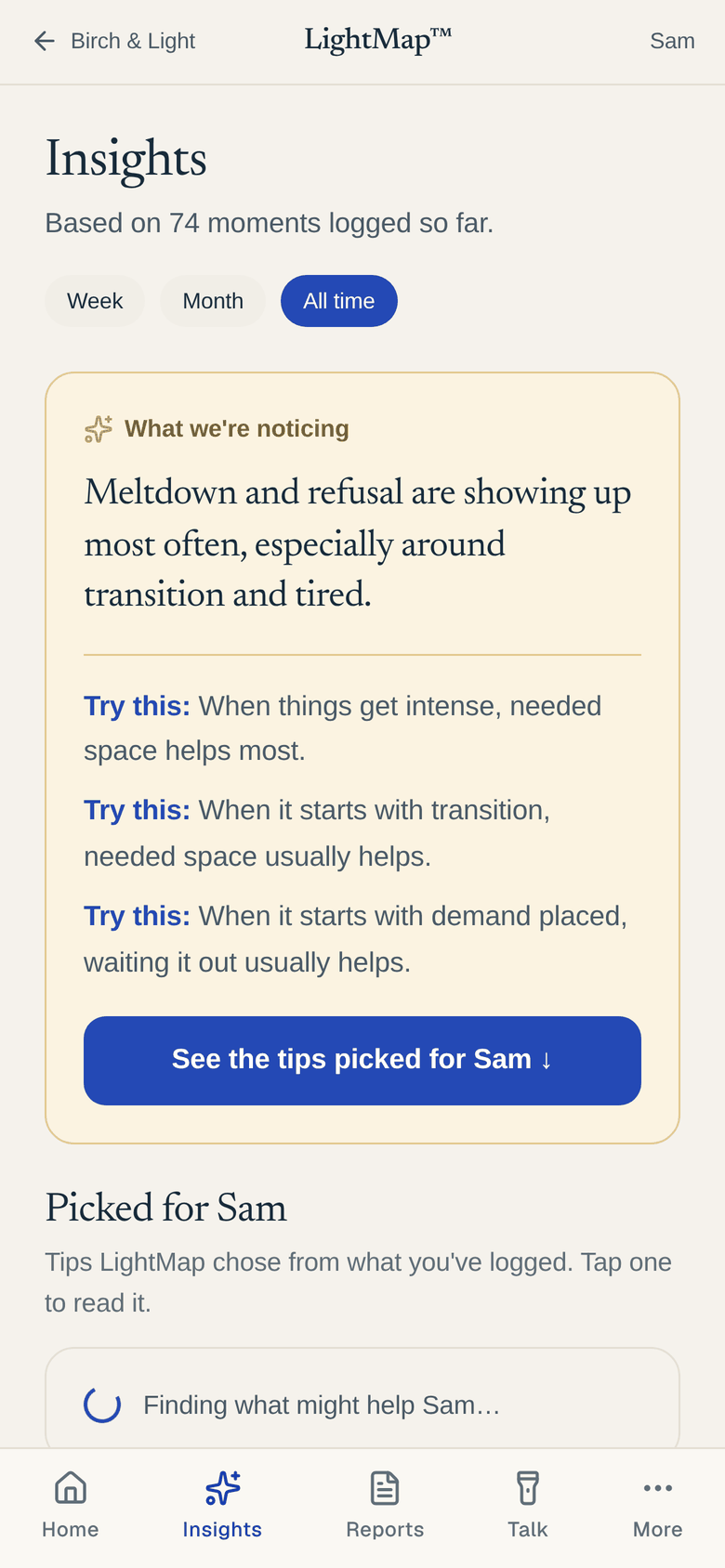

Part of the award-winning Birch & Light Method, honored with the Mom's Choice Gold Award for excellence in family resources.
A story to read together
Sometimes the easiest way in is a story you read side by side.
 The Tower That Looked Fine
A tower in a quiet clearing tries to stay steady through every small thing nobody else seems to notice — until one tiny breath of wind causes her to fall, and a gentle hand begins to gather the blocks back.
Read the story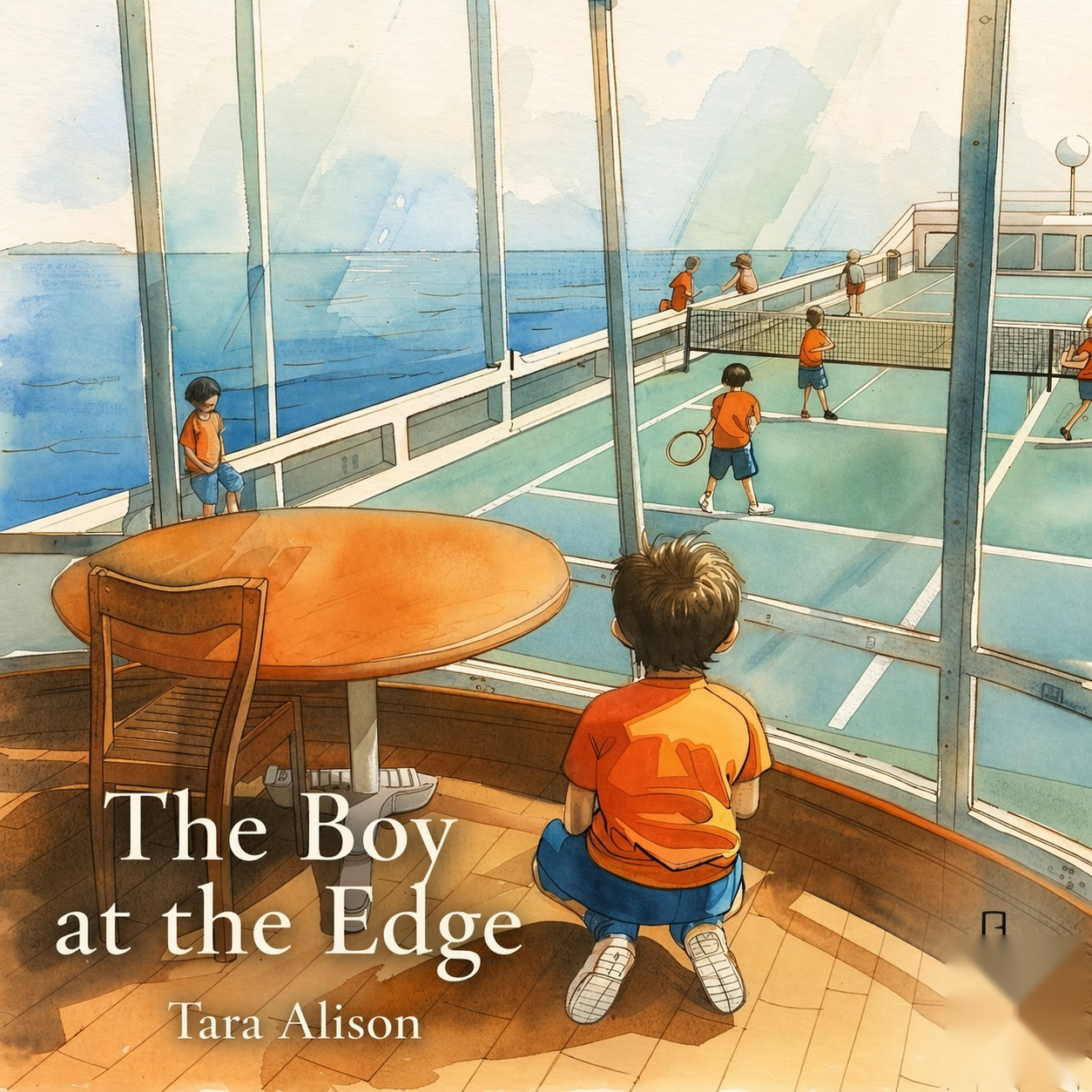 The Boy at the Edge
A boy finds calm by watching the world move from a window. When his stillness is mistaken for defiance, the moment escalates — and he learns that being calm doesn’t always protect you from being told no.
Read the story
If today was one of those days
A few more from the library, free to read.
Researched and drafted with AI assistance, reviewed before publication. Editorial standards