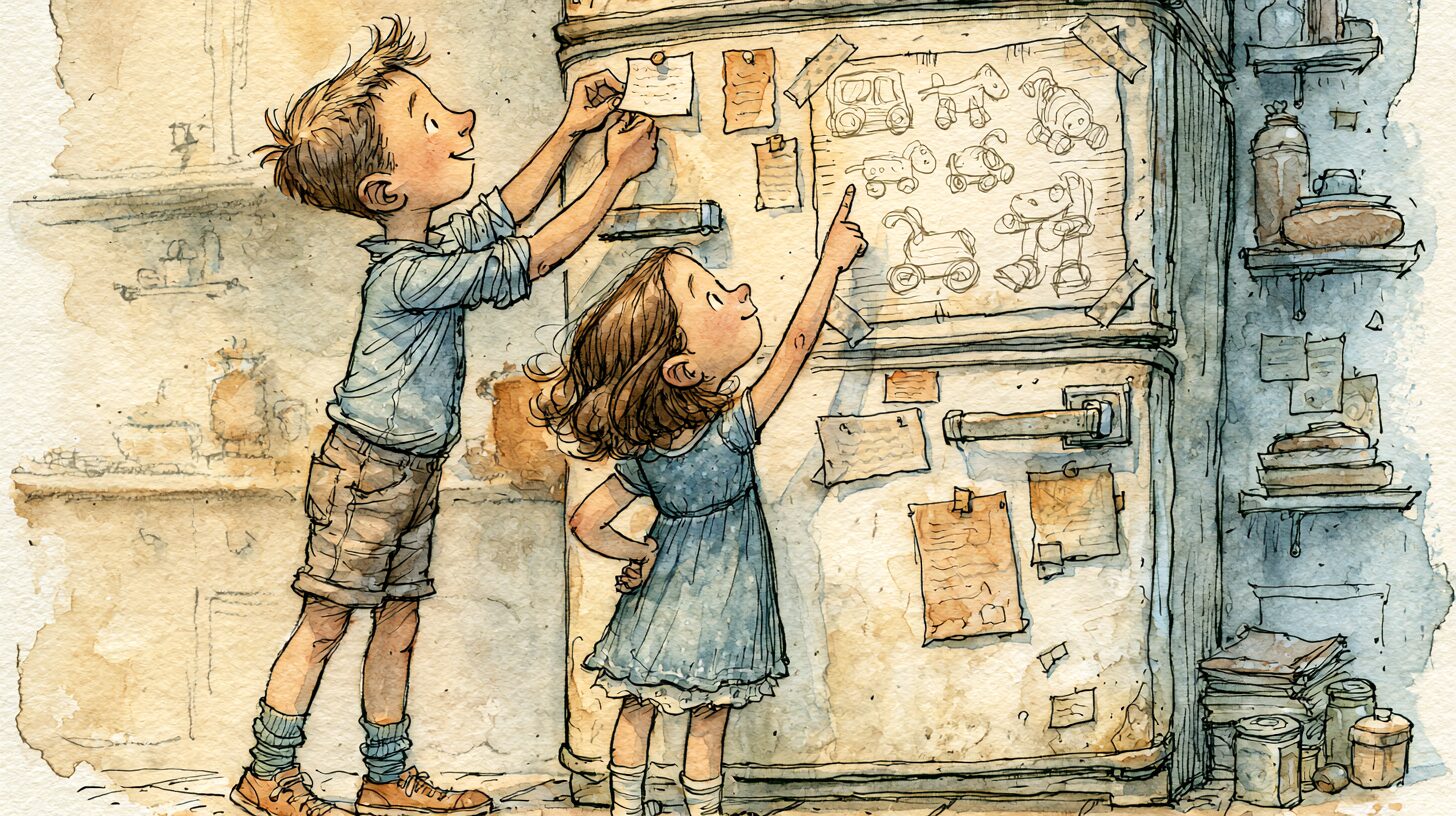
You did everything right.
You made it together. You let him pick the stickers. You put it somewhere he could see it. You were consistent, you were encouraging, you celebrated every win. You followed the system exactly the way it was supposed to work.
And it worked for about two weeks.
And then it didn't.
The stickers stopped meaning anything. The chart became wallpaper. The behavior it was designed to change either stayed the same or quietly migrated to somewhere the chart couldn't reach. And now you're standing in front of a colorful laminated grid wondering what you did wrong.
You didn't do anything wrong.
The chart failed because charts are designed for a specific kind of child in a specific kind of situation — and your child may not be that child.
What Behavior Charts Are Actually Built On
Behavior charts operate on a straightforward behavioral principle: reward desired behavior consistently and it will increase. Ignore or remove reward from undesired behavior and it will decrease.
This works. For many children, in many situations, it works reliably and well. The research behind it is real.
But the research was largely developed with neurotypical children whose nervous systems respond to external reward in relatively predictable ways. Children who are motivated by earning things. Children who can connect a sticker received today with a behavior they produced an hour ago. Children who can hold the goal in mind across time and adjust their behavior toward it.
Not all children are those children.
Why Charts Often Don't Work for Sensitive or Neurodivergent Kids
There are several specific reasons behavior charts tend to underperform — or fail entirely — with children whose nervous systems work differently.
The reward isn't motivating enough to compete with what the behavior is doing. For children whose behavior is driven by anxiety, sensory overload, emotional flooding, or demand avoidance, the behavior is not a choice being made in pursuit of something. It is a response to an internal state. A sticker cannot compete with a nervous system in alarm. The child is not weighing the sticker against the behavior and choosing the behavior. The behavior is happening before that calculation is even available.
The connection between behavior and reward is too abstract. For children with executive function differences, connecting a sticker on a chart to a behavior that happened earlier in the day — or building toward a reward that is days away — requires a level of temporal reasoning that may genuinely not be available yet. The reward exists in a future that doesn't feel real. The behavior is happening now.
The chart adds shame when it should add motivation. A child who looks at a chart full of empty boxes, or who watches a sibling's chart fill up while theirs doesn't, is not being motivated to try harder. They are being shown, visually and publicly, that they are failing. For children who already carry a chronic sense of not being good enough, this is not a neutral experience. It is confirmation of what they already feared.
The chart makes the relationship feel conditional. For children who are sensitive to approval and connection, a chart can shift the felt quality of the parent-child relationship in ways that are counterproductive. Instead of feeling unconditionally loved and safe, the child begins to feel that the relationship has terms. That love and approval are being rationed based on performance. This can produce anxiety, not motivation.
The chart targets the behavior without addressing what's driving it. This is the most fundamental problem. If a child is hitting his brother because he is chronically overwhelmed and has no other way to discharge the overwhelm, a chart that rewards not-hitting does not give him a way to discharge the overwhelm. It just adds external pressure to an already pressured system. The hitting may reduce for a while — because the child is trying hard — and then return, often with more intensity, when the trying-hard runs out.
While you're here, take the guide
What's Underneath is free: the three body-state triggers under most meltdowns, what to say in the minute before it tips over, and how to reset afterward.
You'll get the guide instantly, plus five free articles in your inbox every week. Real challenges (meltdowns, school mornings, picky eating, big feelings) and how to actually handle them. Unsubscribe anytime.
What the Chart Tells You When It Fails
When a behavior chart fails, it is not evidence that your child is unmotivated or that you implemented it poorly. It is evidence that the behavior being targeted is not primarily a motivation problem.
Behavior that doesn't respond to reward-based systems is almost always behavior that is driven by something internal — something in the nervous system, in the emotional experience, in the sensory environment — that the reward system cannot reach.
That is useful information. It points you away from motivation strategies and toward regulation strategies. Away from "how do I make the desired behavior more rewarding" and toward "what is making the undesired behavior necessary."
What Sometimes Works Instead
Understanding what the behavior is communicating. Before replacing the chart with another system, spend some time getting curious about what the behavior is actually doing for your child. What need is it meeting? What state is it responding to? What would have to be different for the behavior not to be necessary?
Addressing the regulation underneath. If the behavior is driven by dysregulation — by overwhelm, anxiety, sensory overload, emotional flooding — the intervention that helps is one that addresses the regulation, not the behavior. Co-regulation, sensory support, reducing demand during high-stress periods, building the child's own capacity to recognize and manage their internal states over time.
Shortening the time horizon dramatically. If you want to use reward-based approaches with a child who has executive function differences, the reward needs to be immediate and concrete. Not a sticker toward a prize at the end of the week. A specific, tangible thing that happens right now, connected directly to the moment of the desired behavior.
Making it private. If shame is part of what's making the chart counterproductive, removing the public, visible element — the chart on the fridge that everyone can see — and replacing it with something that exists only between you and your child can reduce the shame load significantly.
Letting it go entirely. Sometimes the most useful thing you can do with a failing behavior chart is take it down. Return to connection. Rebuild the felt sense of safety and unconditional regard. And approach the behavior from there — not from a system, but from a relationship.
The Bigger Picture
Behavior charts are tools. Like all tools, they are right for some jobs and wrong for others. A chart that fails is not a failure of your parenting. It is information about your child — about what motivates them, about what drives the behavior, about what kind of support actually reaches them.
That information is worth more than the chart ever was.
Every behavior is a clue.
If behavior management approaches keep falling short, LightMap can help you start looking beneath the behavior to what might actually be driving it — and what your child's nervous system might need instead. Explore LightMap at birchandlight.com/lightmap.
For education and reflection, not medical advice. Our terms
See what's underneath
Stop guessing what set it off
LightMap reads your hard days together and gives you answers. Start with one moment today.
Start with 3 moments Not sure where to start? Ask me.Message Tara on WhatsApp. It really is me, I read everything and will personally respond.Click here to message Tara →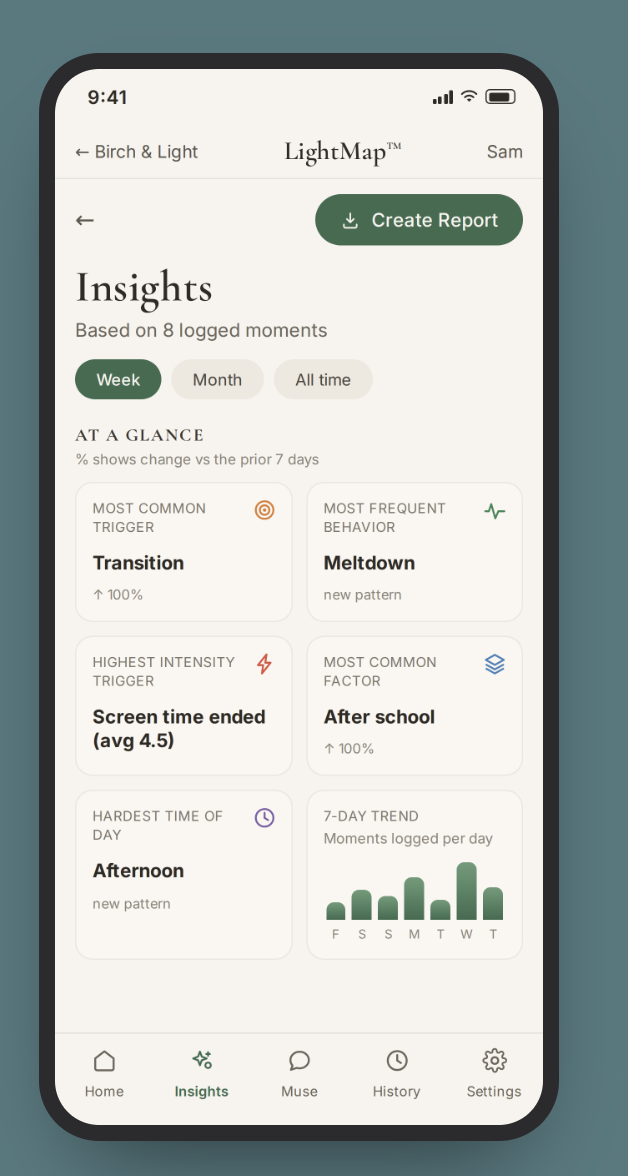

Part of the award-winning Birch & Light Method, honored with the Mom's Choice Gold Award for excellence in family resources.
A story to read together
Sometimes the easiest way in is a story you read side by side.
 June and the Window That Took Time
When June receives special Valentine’s Day window clings from Grandma, she learns that some things take time, help, and persistence.
Read the story Oliver Octopus Used Arm Number Three
Oliver always drew with Arm Number Three. When his teacher tells him to use Arm Number One instead, something hard slowly grows into something strong.
Read the story
If today was one of those days
A few more from the library, free to read.
Researched and drafted with AI assistance, reviewed before publication. Editorial standards