
Parenting advice creates conflict because it rarely arrives as neutral information. The parent who shares it has had weeks to absorb it, and the parent who receives it hears it cold, often as a verdict on everything they have done so far. Both of you want the same thing, which is help for your child.
You found something that finally explained your kid. An article, a podcast, a post from another parent that made you sit up and think yes — that's exactly it. You brought it to your partner, full of relief, and instead of the shared lightbulb you expected, you got a flat look and a change of subject.
Now the thing that helped you feel understood has become one more thing the two of you don't agree on.
This happens constantly, and it's one of the strangest dynamics in parenting a complex child: good advice, the kind that genuinely helps, can drive a wedge between two parents instead of bringing them together. Here is what I want you to consider about why.
What this often looks like
- One parent becomes the "researcher" — books, accounts, episodes, approaches — and the other starts to feel lectured by a steady stream of new information.
- Every piece of advice the researching parent shares lands on the other one as an implied criticism: here's more proof you've been doing it wrong.
- The non-researching parent digs in, not because the advice is bad, but because agreeing now feels like conceding every past argument at once.
- The researching parent feels alone and unsupported — "I'm the only one even trying to understand our child" — while the other feels managed and judged.
Both of you wanted the same thing: to help your kid. The advice was supposed to be the bridge. Instead it became the fault line.
Why does good advice turn into a fight?
Advice almost never arrives as neutral information between two parents. It arrives loaded with history. When one parent hands the other a new approach, the other doesn't just hear "here's an idea." They hear "the way you've been doing it is wrong," even when no one said that, because every new method implicitly indicts the old one.
There's also a pace problem. The researching parent has often been sitting with an idea for weeks — reading, absorbing, slowly coming around to it — before they bring it up. To them, it feels obvious by the time they share it. But the other parent is hearing it cold, for the first time, and being asked to embrace it immediately. What feels like resistance is often just the gap between someone who's had a month to adjust and someone who's had thirty seconds.
And underneath it, there's usually a quieter wound. The parent who isn't the researcher can start to feel like they've been cast as the problem in their own family — the one who doesn't get it, doesn't read, doesn't try. Rejecting the advice becomes a way of rejecting that role.
What actually helps when you want to share something?
- Lead with the problem, not the solution. Instead of "I read that we should do X," try "I've been stuck on why mornings are so hard — can we think about it together?" An invitation to solve something jointly lands completely differently than a finished answer handed down.
- Give your partner the journey, not just the destination. Share what made you come around — the moment it clicked, the doubt you had first. People resist conclusions handed to them but engage with a story they can walk through alongside you.
- Let them discover some of it themselves. Sometimes the most effective thing is to stop forwarding articles and simply say "something I read shifted how I see this — want me to tell you about it, or would you rather look yourself?" Agency lowers the defenses.
- Separate "this helped me" from "you should do this." "This gave me a way to understand him that I didn't have before" is a gift. "This is what you should be doing" is an instruction. The same article can be either, depending entirely on how it's framed.
While you're here, take the guide
What's Underneath is free: the three body-state triggers under most meltdowns, what to say in the minute before it tips over, and how to reset afterward.
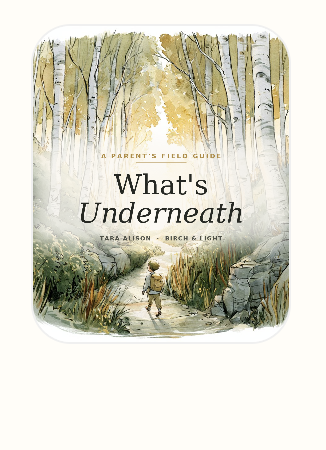
You'll get the guide instantly, plus five free articles in your inbox every week. Real challenges (meltdowns, school mornings, picky eating, big feelings) and how to actually handle them. Unsubscribe anytime.
What tends not to help
Volume. Sending a steady stream of links, episodes, and screenshots doesn't accumulate into agreement — it accumulates into the feeling of being managed. Past a certain point, every new thing you forward makes your partner less likely to engage, not more, because it confirms a role they don't want: the one who needs to be fixed.
Quoting an expert at your partner mid-disagreement also backfires. "Well, the book says..." turns the conversation into you-plus-an-authority against them, and almost no one concedes to being outnumbered like that. The advice might be exactly right. It still won't land while it's being used as leverage.
And treating your partner as a project — someone to be slowly educated into correctness — poisons the whole thing, even when your intentions are good. People can feel when they're being worked on, and they tend to resist it on principle, regardless of whether the underlying point is sound.
When additional support may be needed
If you've reached the point where one parent can't share anything they've learned without the other one bracing, the conversation about your child has probably gotten tangled up with something older between the two of you. A couples therapist can help you sort out which is which — what's really a disagreement about the kid, and what's a disagreement about being heard, respected, or seen as a capable parent.
It can also help to have a professional who knows your child be the one to introduce a new approach, precisely because they're neutral. The same idea that sparks a fight when one parent brings it home often lands cleanly when it comes from someone outside the marriage, with no history attached.
Where LightMap helps
A lot of advice-driven conflict comes down to one parent being convinced of a pattern the other hasn't seen yet. "He melts down because of transitions" is a conclusion — and conclusions are exactly what partners argue about. The other parent hasn't lived inside the same observations, so the claim feels like opinion, or worse, like blame.
What's harder to argue with is a pattern you can both look at. When the connection between the hard moments and their triggers is visible across several weeks — something you both watched accumulate rather than something one of you read about — it stops being one parent's theory and becomes a shared observation. The advice lands much more easily once you both already see the thing it's trying to explain.
Every behavior is a clue.
It's easier to agree on what helps once you can both see the same pattern it's responding to. Explore LightMap at birchandlight.com/lightmap.
Frequently asked questions
How do I share something that helped me without starting a fight?
Frame it as something that shifted your own understanding rather than something your partner should do — "this gave me a new way to see him" instead of "this is what we should try." And offer it once, then let it sit. Advice that's available but not pushed is far more likely to be picked up than advice that arrives on a schedule.
My partner won't read anything I send. What now?
Stop sending things, at least for a while. The forwarding itself may have become the friction. Instead, talk about the specific problem you're trying to solve and invite them to think it through with you. Most people will engage with a shared puzzle long before they'll engage with assigned reading.
What if I really am the one who's been doing it wrong?
Almost no parent of a complex child has been simply "doing it wrong" — more often they've been using reasonable approaches that don't fit this particular kid. Framing it that way, to yourself and your partner, takes the shame out of changing course. You're not correcting a failure. You're both updating to match the child you actually have.
For education and reflection, not medical advice. Our terms
See what's underneath
Stop guessing what set it off
LightMap reads your hard days together and gives you answers. Start with one moment today.
Start with 3 moments Not sure where to start? Ask me.Message Tara on WhatsApp. It really is me, I read everything and will personally respond.Click here to message Tara →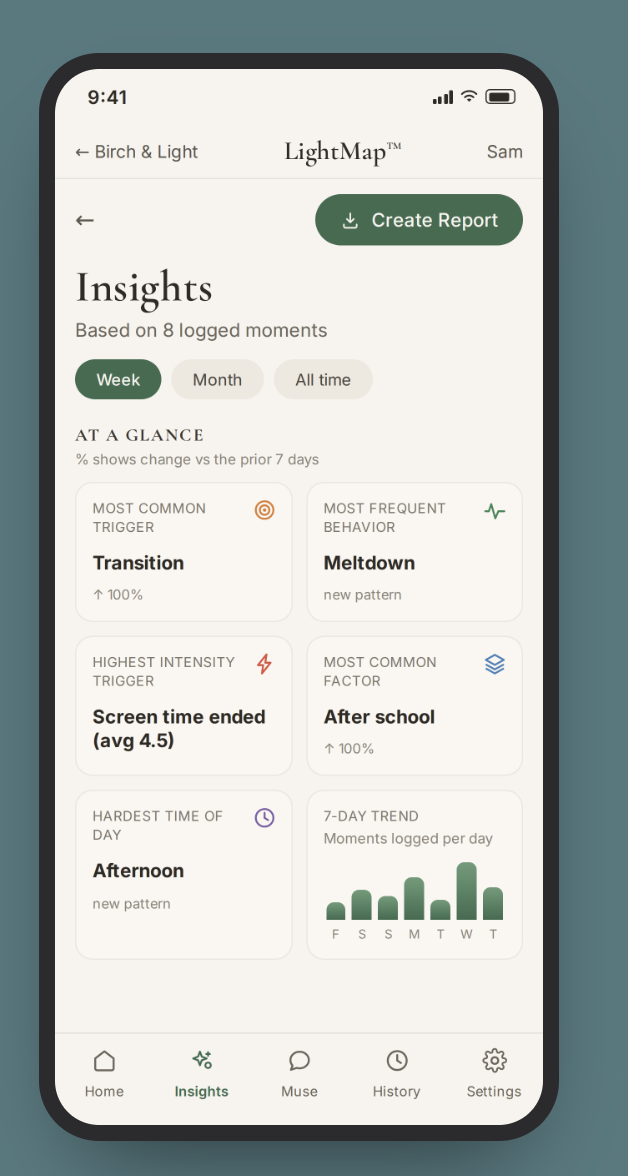

Part of the award-winning Birch & Light Method, honored with the Mom's Choice Gold Award for excellence in family resources.
A story to read together
Sometimes the easiest way in is a story you read side by side.
 Taste Bud 17
Taste Bud 17 feels everything more — and learns that big sensory feelings deserve the same care as everyone else’s.
Read the story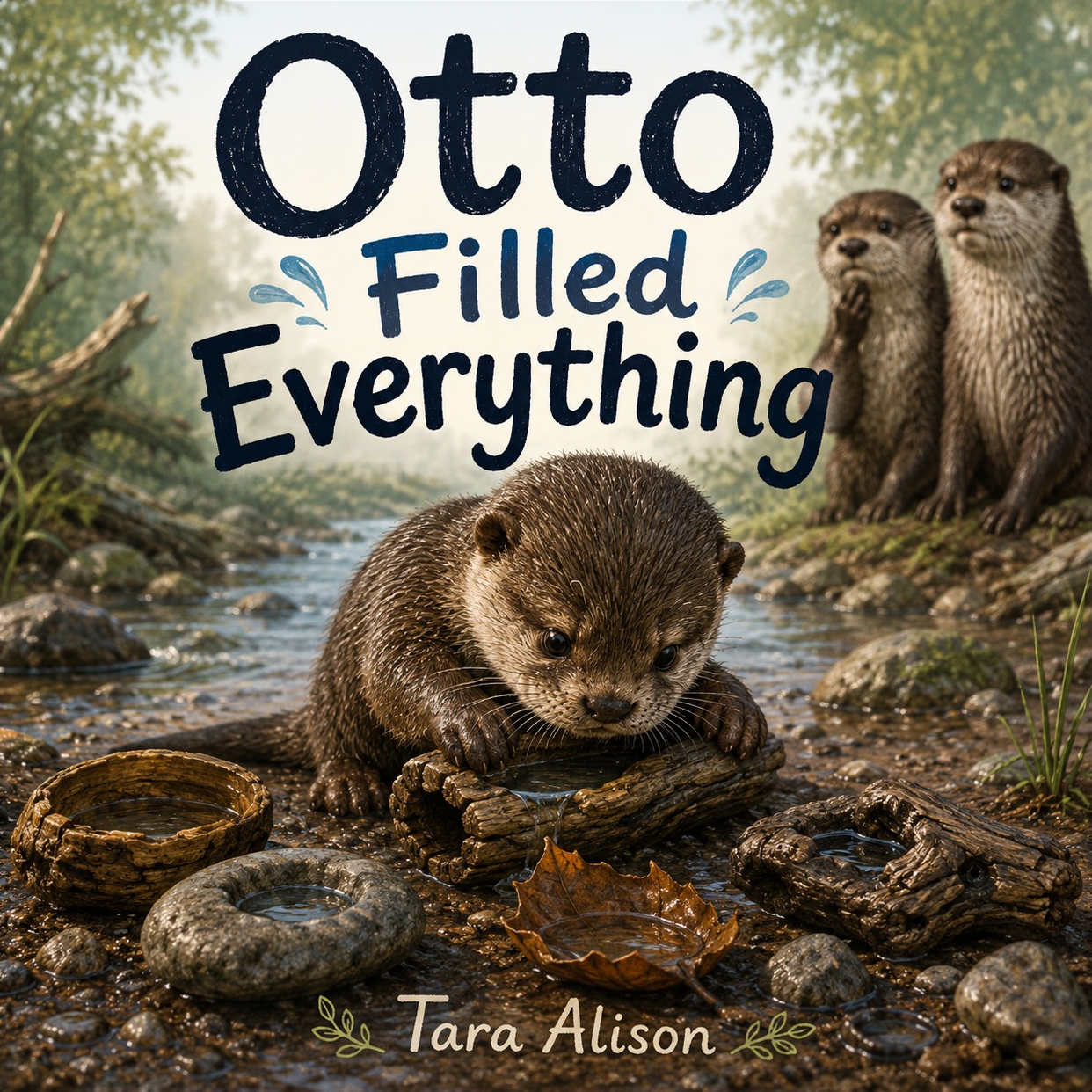 Otto Filled Everything
Otto can't stop filling things with water. His family doesn't understand — until Grandma Willow helps them listen to what his body is actually asking for.
Read the story
If today was one of those days
A few more from the library, free to read.
Researched and drafted with AI assistance, reviewed before publication. Editorial standards