.jpg)
Parties end in meltdowns for ADHD kids because holding it together takes fuel, and an ADHD tank drains fast and refills slowly. By the last half hour a small tease lands like a threat. You do not need to skip parties. Dose them: arrive early, leave while it is still good, and plan the exit.
Every ADHD family knows this exact story. The party is going beautifully. He is laughing, playing, being the kid you know he is. Other parents are smiling at him. And then, in the last half hour, something small happens, another kid teases him or talks over him, and the day detonates. Swinging, running, a scene, a silent ride home, and a parent quietly wondering whether they should just stop going to these things.
Here is the reframe that changes everything: what looks like out of the blue is almost always out of fuel.
Why parties are a perfect storm
For an ADHD child, holding it together at a party is work. Reading social signals, waiting turns, tolerating noise and heat and sugar and collisions, managing the thousand tiny negotiations of group play. Emotional regulation is not a personality trait, it is a fuel tank, and ADHD tanks drain faster and refill slower. For the first hour or two, your child is spending fuel at a ferocious rate while looking completely fine.
Then the tank hits empty. And at empty, a slight that would have rolled off him at minute twenty, a tease, being ignored, a rule dispute, lands on a nervous system with no buffer left. The brain does not process it as annoying. It processes it as threat, and the body answers with fight or flight: swing or bolt.
There is no reasoning in that moment because the reasoning equipment is offline. That is not a character flaw. That is neurology on an empty tank.
One more thing: your child is probably not lying about the other kids. Eight-year-olds do tease, exclude, and ignore. His radar for unfairness may be accurate. It is his response system, not his perception, that gets overwhelmed. You can honor his reality and still work on the response.
Not avoid. Not endure. Dose.
Parents in this spot usually see two options: stop going, or grit through the explosions. There is a third option that beats both, and it is the one that actually builds the skill: engineer the dose.
Arrive early. Walking into a forming group of three kids is a completely different task than walking into a wall of established chaos. Early arrivals get to acclimate as the volume rises instead of being hit by it all at once.
Leave on the fuel gauge, not the schedule. This is the big one. If he is having a great time at the ninety-minute mark, that is not a reason to stay, it is the moment to go. Leaving while it is still good feels wasteful and is actually the whole strategy: he banks a success memory, his brain files parties under things I can do, and the skill grows. Staying until empty banks the opposite.
Pre-brief in the car. Two minutes, calm voice: what he can do if someone teases him, where the quiet spot is, and the private signal that means come find me. Plans made in calm are the only plans that exist later.
Give him a job. The kid handing out cake or running the music has status and structure. Status is armor against slights, and structure is a handrail when the tank runs low.
Agree on the exit signal in advance, shame-free. A hand squeeze or a code word that means we are going, no explanation owed to anyone.
And be honest about the hardest formats. A bounce house is collisions plus noise plus zero structure, the highest-difficulty setting that exists. Doing the first fifteen minutes and skipping the rest is not defeat. It is matching the dose to the athlete.
While you're here, take the guide
What's Underneath is free: the three body-state triggers under most meltdowns, what to say in the minute before it tips over, and how to reset afterward.

You'll get the guide instantly, plus five free articles in your inbox every week. Real challenges (meltdowns, school mornings, picky eating, big feelings) and how to actually handle them. Unsubscribe anytime.
In the moment, and after
When the explosion happens anyway, and sometimes it will, the order of operations is: out first, words later. Reasoning mid-storm teaches nothing and prolongs everything. The learning happens hours later or the next day, in three quiet questions: what did it feel like in your body right before, what did the other kid actually do, and what do we want to try next time. That debrief, repeated over months, is where the skill actually gets built.
Will he grow out of it?
Honest answer: mostly yes, and you can speed it up. Emotional regulation in ADHD matures on a delayed curve, often a few years behind same-age peers, which is why an eight-year-old can look like a five-year-old in exactly these moments. It improves through adolescence for most kids.
But the curve is not just waiting, it is fed by practice and by wins. Every party that ends while it is still good is a deposit. Every white-knuckle marathon that ends in a blowup is a withdrawal. Same number of parties, opposite trajectories.
The pattern is findable: log each event, how long you stayed, what the fuel state was, and how it ended, in a tool like LightMap, and within a few parties you will know his actual window, which kids stack the deck, and what the best exit minute looks like.
You are not choosing between protecting him and preparing him. Dosed right, the same party does both.
For your child: When Axel's Engine Stayed On is about a boy who comes home from a huge day too tired to settle, with his engine still running.
Sources: Shaw P, Eckstrand K, Sharp W, Blumenthal J, Lerch JP, Greenstein D, Clasen L, Evans A, Giedd J, Rapoport JL. Attention-deficit/hyperactivity disorder is characterized by a delay in cortical maturation. Proceedings of the National Academy of Sciences, 2007, 104, 19649-19654, doi 10.1073/pnas.0707741104. This supports the delayed regulation curve described above. Aduen PA, Day TN, Kofler MJ, Harmon SL, Wells EL, Sarver DE. Journal of Psychopathology and Behavioral Assessment, 2018, 40(3), 440-451, on social performance problems rather than skill gaps in children with ADHD ages 8 to 12. Wolraich ML, et al. Clinical practice guideline for the diagnosis, evaluation, and treatment of attention-deficit/hyperactivity disorder in children and adolescents. Pediatrics, 2019, 144(4), e20192528, which recommends behavioral approaches for families.
For education and reflection, not medical advice. Our terms
See what's underneath
Stop guessing what set it off
LightMap reads your hard days together and gives you answers. Start with one moment today.
Start with 3 moments Not sure where to start? Ask me.Message Tara on WhatsApp. It really is me, I read everything and will personally respond.Click here to message Tara →

Part of the award-winning Birch & Light Method, honored with the Mom's Choice Gold Award for excellence in family resources.
A story to read together
Sometimes the easiest way in is a story you read side by side.
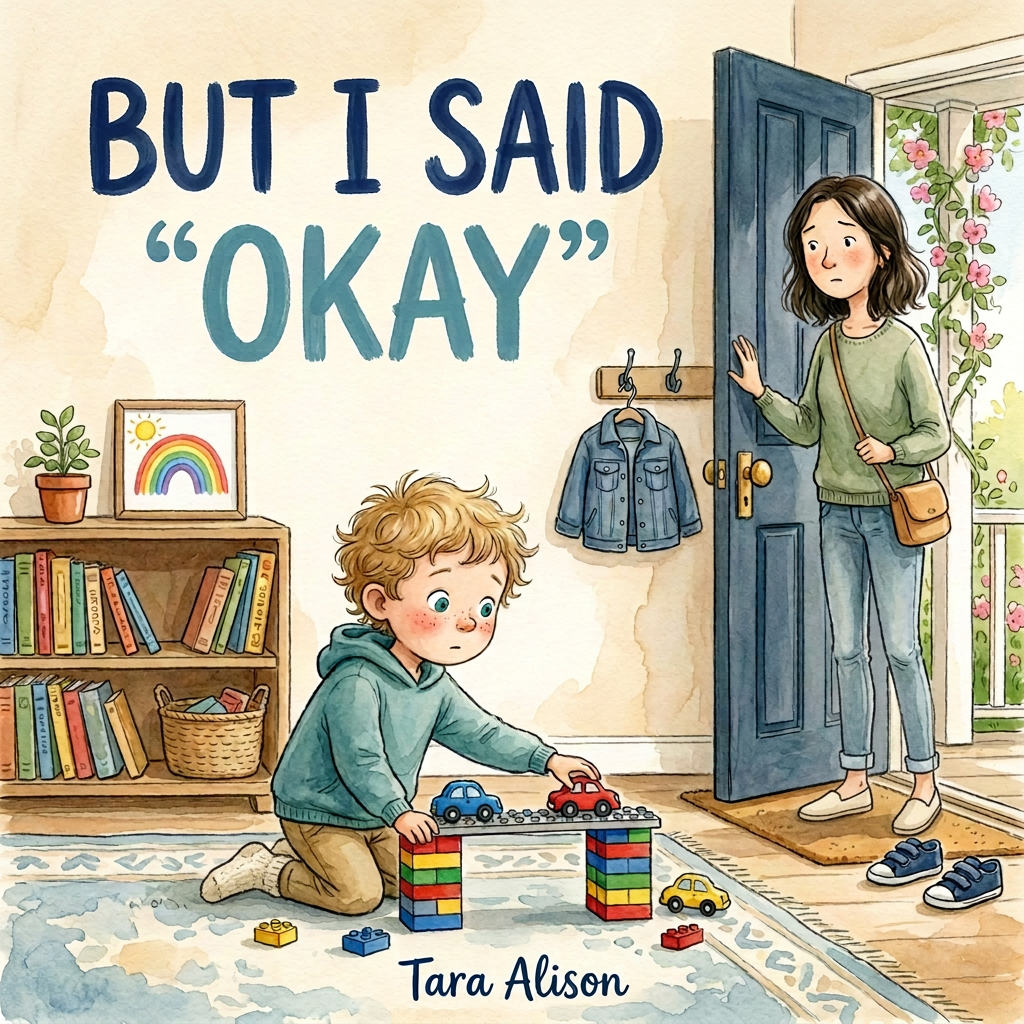 But I Said “Okay”
Owen always says okay. He means it every time. But his attention is still inside the bridge, the dragon, the cave, the music — until Mom realizes that helping him leave one thing matters more than asking him to start the next.
Read the story When Wildflower Day Ended for Gus
Gus loves Wildflower Day so much he can't bear for it to end — and learns that beautiful moments don't have to disappear when we leave them.
Read the story
If today was one of those days
A few more from the library, free to read.
Researched and drafted with AI assistance, reviewed before publication. Editorial standards