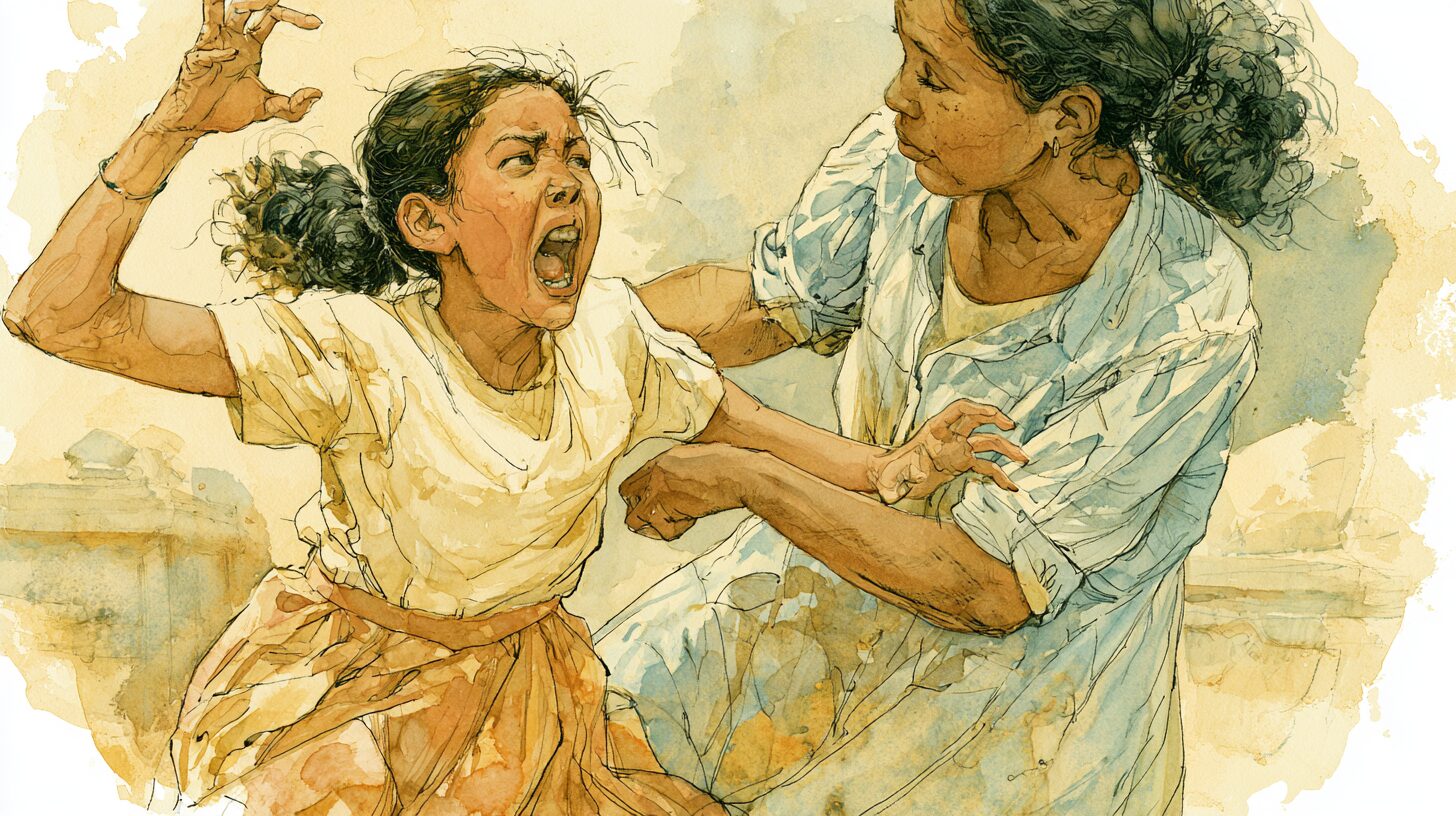
Your child hits only you because you are the person she feels safest with. She spends the day holding herself together for everyone else, and the overflow lands where she trusts she will still be loved. It is not rejection, and you can protect yourself while it changes.
There is a specific kind of lonely that comes with this one. Your child is, by every outside account, wonderful. Teachers adore her. She holds it together all day. And then she gets home to you, and the hitting starts, the kicking, the thrown objects, the daily declarations that she hates you.
You end up with actual bruises and, worse, a creeping private fear that you are somehow the problem, because it only happens with you. Meanwhile no one else sees it, so no one quite believes how bad it is.
If this is your life, there are some things worth understanding, and one of them may genuinely change how you carry it.
Why does she save the worst for you?
The single most important reframe, and the one that is almost impossible to feel in the moment something is bouncing off your chest, is this: children very often unload their worst on the person they feel safest with. The aggression aimed only at you is frequently not a sign that you are failing. It is a sign that you are the one place solid enough to hold the overflow.
All day, in environments that feel less safe, kids like this are working extraordinarily hard to keep it together, to mask, to comply, to read the room and hold the line. That effort has a cost, and the bill comes due somewhere. It comes due where it is safest to fall apart, which is with the person whose love feels unconditional and unlosable. Your child has, in a sense, paid you a brutal and backhanded compliment: she trusts that you will still be there on the other side of the storm.
It does not feel like trust. It feels like being someone's punching bag. Both are true, and understanding the first one is what lets you survive the second.
Why the "she's an angel at school" part matters
The stark split between school and home is not evidence that the home is the problem. It is the clue that tells you what is actually happening. It is a textbook picture of a child spending her entire regulatory budget holding it together in public, then coming home empty. Professionals sometimes call the after-school version of this restraint collapse, and it applies to the one-parent version too: the mask comes off with the safest person, in the safest place.
This needs saying because parents in your position are so often quietly disbelieved. The teacher who says "we never see this" is not catching you in a lie or revealing that you cause it. They are confirming that your child can hold it together when she must, and only lets go when she finally can. That is information, not an indictment.
Your safety is not negotiable, and protecting it is good parenting
Here is where the reframe must not tip into martyrdom. Understanding why she hits you does not mean you should accept being hit. A child hurling a hard object is a safety situation, full stop, and keeping yourself physically safe is not a failure of compassion, it is part of the job, for both of you. A parent who is being injured cannot regulate anyone.
You are allowed to move out of range. You are allowed to say, calmly, "I won't let you hurt me, I'm going to step back," and physically create distance while staying present in the room. You are allowed to remove dangerous objects from easy reach in advance if throwing is a pattern. None of this is punishment and none of it is rejection; it is you modeling that bodies are not for hurting, including yours. A child does not actually feel safer for having successfully hurt the person they depend on. Your boundary around your own body is part of what makes you the safe place.
While you're here, take the guide
What's Underneath is free: the three body-state triggers under most meltdowns, what to say in the minute before it tips over, and how to reset afterward.

You'll get the guide instantly, plus five free articles in your inbox every week. Real challenges (meltdowns, school mornings, picky eating, big feelings) and how to actually handle them. Unsubscribe anytime.
What helps when the aggression is aimed at one parent?
Beyond the general regulation strategies, here is what is specific to the one-parent, aggression-at-home pattern.
Front-load connection before the crash. If the aggression clusters at reunion and the after-school stretch, that window is the intervention point. Some families find that low-key, no-demand connection right at pickup and arrival, before any instruction lands, takes pressure off the moment the tank is emptiest. The first request of the evening is often the spark; softening the runway helps.
Lower the demand load in the danger windows. A reasonable request like turning off the TV for dinner can be the exact match to the powder keg, not because the request is wrong, but because it is the fortieth demand landing on an empty system. In the hardest windows, stripping the evening back to only the non-negotiables can reduce the flashpoints while you work on the bigger picture.
Get the aggression its own professional eyes. Whoever is helping with your child's care should know the specifics: any injuries, the objects thrown, whether it is escalating, and the fact that it is targeted at one parent. That is not oversharing, it is the exact clinical picture a professional needs to help. It is very reasonable to ask about a therapist or occupational therapist who works on regulation, and about parent coaching designed for this specific aggression-at-home pattern rather than general behavior management, which is often not the missing piece here.
Keep a simple log of when it happens. Whatever else is going on, noting the time of day the aggression tends to hit, and what came just before, reveals patterns fast. If your child takes any medication, tracking the aggression relative to doses is especially useful, since some medications can sharpen the evening crash as they wear off, which is exactly the kind of thing a prescriber wants to know. Even without medication, the pattern of when and after what is gold for anyone trying to help.
And the part just for you
Being hit and told she is hated every day by a child you love beyond measure is a real injury, emotional as much as physical, and being an expert in child development does not numb it. If anything it sharpens the ache, because you know exactly what you are looking at and it still hurts and still is not simply fixable. Please get your own support, a therapist, a partner, a friend who gets it, so that you are not absorbing this alone. You cannot be the safe harbor if no one is refueling you. Loving her and needing to protect yourself from her fists are not in conflict; holding both is the whole task. For the acute moments when it boils over, the safety plan for when de-escalation fails may help, and if the school-versus-home split is its own puzzle, why kids fall apart the moment they get home goes deeper on that.
This is a heavy thing to carry, and if it is wearing you down, talking it through with a professional or someone who understands can make a real difference.
When it happens, and what came immediately before, is the thing a clinician will ask for first. LightMap holds it so you are not reconstructing it under pressure in a ten minute appointment.
For your child: The Princess and the Witch Inside is about a girl with a calm room for big feelings, and the fast witch who keeps arriving first and pushing everyone away.
Sources: Hull L, Petrides KV, Allison C, et al. "Putting on My Best Normal": Social Camouflaging in Adults with Autism Spectrum Conditions. J Autism Dev Disord. 2017;47(8):2519-2534, on exhaustion and wellbeing costs of masking. Klein J, Krahn R, Howe S, Lewis J, McMorris C, Macoun S. A systematic review of social camouflaging in autistic adults and youth: Implications and theory. Dev Psychopathol. 2025;37(3):1320-1334, on depression, anxiety and stress linked to camouflaging in youth and heavier camouflaging pressure at school than at home. Both studies concern autistic people.
For education and reflection, not medical advice. Our terms
See what's underneath
Next time, you will know what set it off
LightMap reads your hard days together and gives you answers. Start with one moment today.
Start with 3 moments Not sure where to start? Ask me.Message Tara on WhatsApp. It really is me, I read everything and will personally respond.Click here to message Tara →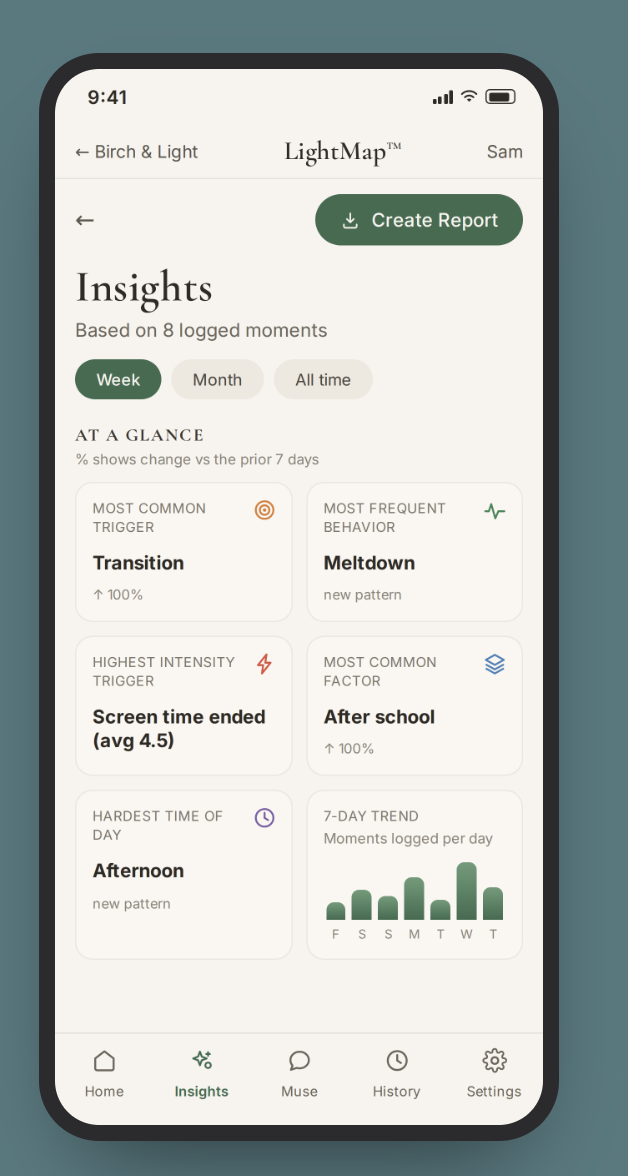

Part of the award-winning Birch & Light Method, honored with the Mom's Choice Gold Award for excellence in family resources.
A story to read together
Sometimes the easiest way in is a story you read side by side.
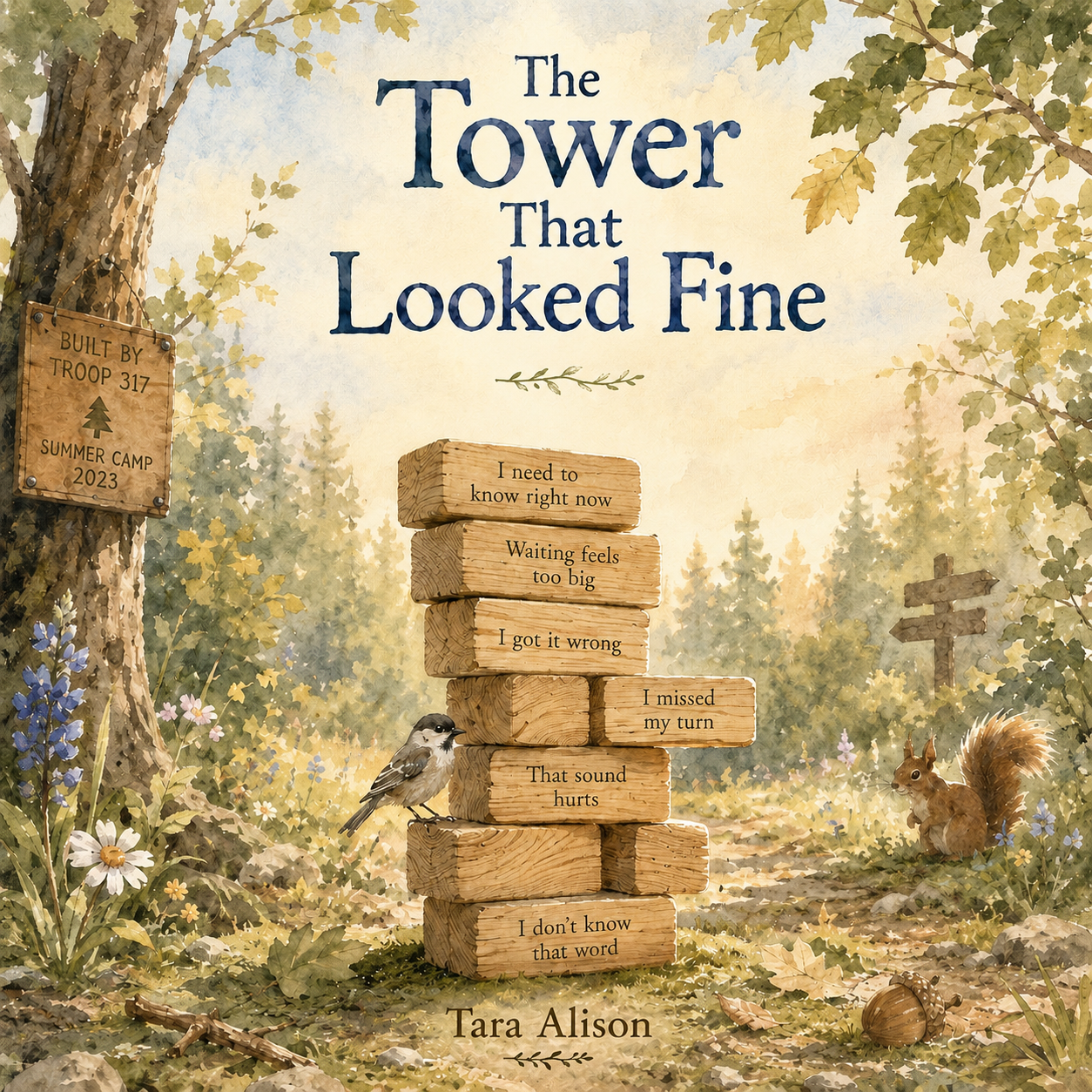 The Tower That Looked Fine
A tower in a quiet clearing tries to stay steady through every small thing nobody else seems to notice — until one tiny breath of wind causes her to fall, and a gentle hand begins to gather the blocks back.
Read the story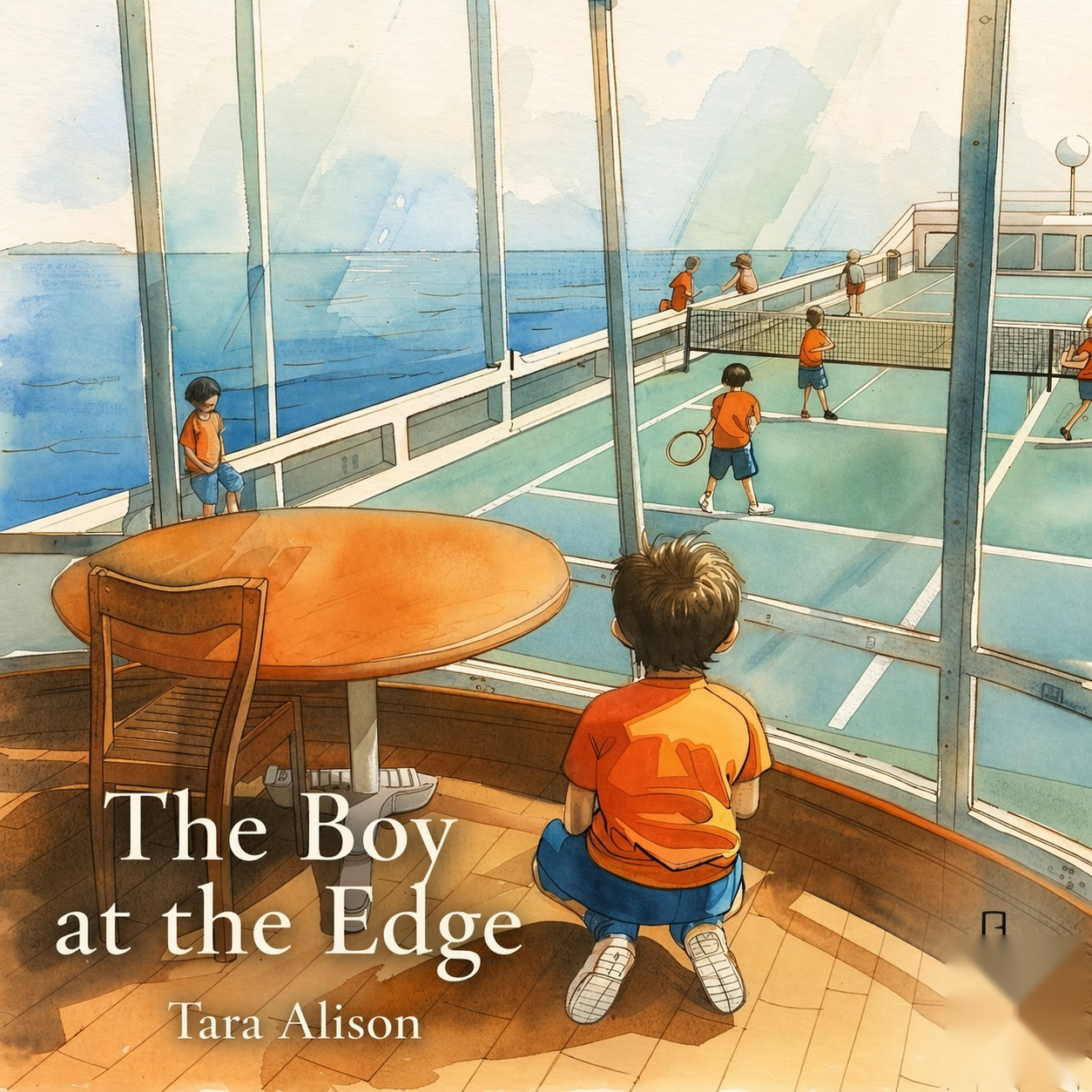 The Boy at the Edge
A boy finds calm by watching the world move from a window. When his stillness is mistaken for defiance, the moment escalates — and he learns that being calm doesn’t always protect you from being told no.
Read the story
If today was one of those days
A few more from the library, free to read.
Researched and drafted with AI assistance, reviewed before publication. Editorial standards