
The meltdown doesn't always happen at the doctor's office. Sometimes it happens the night before. Sometimes it happens in the car on the way. Sometimes your child holds it together through the entire appointment, smiles at the doctor, walks out fine — and then falls completely apart the moment you get home.
What these all have in common is that the appointment is the cause, even when it isn't the setting. A doctor's visit can trigger a meltdown across a wide window — before, during, or well after — and if you only look at the moment of the explosion, you can miss what actually set it off.
Here is what I want you to consider about why appointments are such reliable meltdown triggers, and why the timing can be so confusing.
What this often looks like
- A meltdown the night before or morning of an appointment, sometimes over something seemingly unrelated.
- An explosion in the car on the way there, or on the way home.
- A child who is eerily calm and compliant during the appointment itself, then detonates once you're back in a safe space.
- Days of heightened irritability and shorter fuses around the time of a medical visit.
- Big reactions to small things in the orbit of the appointment, out of proportion to the trigger you can see.
Why it happens
A meltdown is what happens when a nervous system exceeds its capacity — when the total load of stress, fear, and demand becomes more than the child can hold. A doctor's appointment loads that system heavily: the anticipation, the loss of control, the sensory environment, the fear of pain, the unpredictability. For a child who already runs closer to capacity than most, an appointment can be the thing that pushes them over.
The confusing part is the timing, and it usually comes down to where the load lands. Some kids hit their limit during the buildup, before they ever arrive — the anticipation alone is enough. Others get through the appointment by holding everything in, using every bit of regulation they have to keep it together in front of the doctor, and then collapse the instant they're somewhere safe enough to let go. That after-the-fact meltdown isn't a new problem. It's the bill coming due for all the holding-together they just did.
This is one of the most misread patterns in parenting an anxious child. A kid who melts down at home after a "fine" appointment looks like they're falling apart over nothing. In reality, the appointment used up everything they had, and home is simply the first place safe enough to release it. The calm in the office wasn't the absence of stress — it was stress being held at enormous cost.
There's also accumulation to consider. The irritability in the days around an appointment often reflects a nervous system already taxed by anticipation, with less margin for everything else. Small things trigger big reactions because the child was already nearly full before the small thing happened.
What tends to help
- Expect the wider window, not just the appointment. Once you know an appointment can trigger meltdowns before and after, you can plan for it — lighten the schedule around it, lower other demands, build in recovery time rather than stacking the day.
- Protect the after. If your child tends to collapse post-appointment, don't schedule anything demanding right after. Plan for a soft landing — downtime, a safe space, no errands tacked on.
- Read the at-home meltdown correctly. When a child falls apart after holding it together all day, that's not them being difficult. It's release. Meeting it with connection rather than consequences helps them discharge the load they carried.
- Lower the total load where you can. You can't remove the appointment, but you can reduce everything around it — fewer competing demands, more predictability, more support in the hours surrounding it.
- Stay close through the whole window. A child navigating an appointment needs more connection across the entire arc, not just in the room. Your steady presence before and after is part of what helps them through.
While you're here, take the guide
What's Underneath is free: the three body-state triggers under most meltdowns, what to say in the minute before it tips over, and how to reset afterward.

You'll get the guide instantly, plus five free articles in your inbox every week. Real challenges (meltdowns, school mornings, picky eating, big feelings) and how to actually handle them. Unsubscribe anytime.
What tends not to help
Treating the after-appointment meltdown as a discipline issue. When a child explodes at home after a "fine" visit, punishing that explosion misreads it entirely — they're releasing held stress, not misbehaving, and consequences for it teach them that letting go in their safe space gets them in trouble.
Stacking the day around the appointment also tends to backfire. Errands before, activities after, a packed schedule on a day that already contains a major stressor — it leaves a child with no margin and almost guarantees a blowup. The appointment deserves to be the only hard thing on the day, when that's possible.
And being blindsided every time — treating each meltdown as a fresh mystery — keeps you from getting ahead of it. Once you recognize that appointments reliably trigger meltdowns across a window, the surprise should fade, and with it the tendency to respond as if it came from nowhere.
When additional support may be needed
If the meltdowns around medical care are severe, frequent, or escalating, it's worth bringing the pattern to your pediatrician — both to address the underlying medical anxiety and to rule out anything else contributing. Severe meltdowns that are spreading beyond medical settings may also point to a nervous system that's overloaded more generally, which is worth understanding.
It can also help to get support if you're finding that almost any demand, not just appointments, sends your child over the edge. When the window of tolerance — psychiatrist Dr. Dan Siegel's term for the zone where a child can cope and stay regulated — seems very narrow across the board, a professional who can assess your child can help you understand what's driving it and what would actually expand that capacity.
Where LightMap helps
The single most useful thing for appointment meltdowns is seeing the connection that the timing hides. When the meltdown happens the night before or the afternoon after, it's genuinely easy to miss that the appointment caused it — they don't look related in the moment.
Logging the hard moments alongside what's happening that week makes the link visible. When you can see the meltdowns cluster reliably around medical events — before and after, not just during — you stop experiencing them as random bad days and start seeing the pattern. That lets you prepare for the whole window next time, protect the recovery period, and respond to the at-home collapse as the release it actually is.
Every behavior is a clue.
The meltdown before or after an appointment is part of the same event — and the pattern reveals the connection. Explore LightMap at birchandlight.com/lightmap.
Frequently asked questions
Why does my child melt down after a doctor's visit that went fine?
Many kids hold themselves together through the appointment using all the regulation they have, then release it the moment they're somewhere safe — usually home. The calm in the office wasn't the absence of stress; it was stress being held at great cost. The after-meltdown is the bill coming due, not a new problem or misbehavior.
The meltdown happened the night before the appointment. Is that related?
Very likely yes. Anticipation alone is enough to push some kids past their limit, so the meltdown can land in the buildup rather than at the event. A blowup the night before — even over something seemingly unrelated — often reflects a nervous system already loaded by the appointment that's coming.
How do I handle the meltdown without making it worse?
Meet it as release rather than misbehavior. Stay close, lower the demands, give your child a safe space to discharge what they've been holding, and skip consequences for the explosion itself. Protecting recovery time after appointments, and not stacking the day with other hard things, prevents a lot of these meltdowns from reaching full force in the first place.
For education and reflection, not medical advice. Our terms
See what's underneath
Next time, you will know what set it off
LightMap reads your hard days together and gives you answers. Start with one moment today.
Start with 3 moments Not sure where to start? Ask me.Message Tara on WhatsApp. It really is me, I read everything and will personally respond.Click here to message Tara →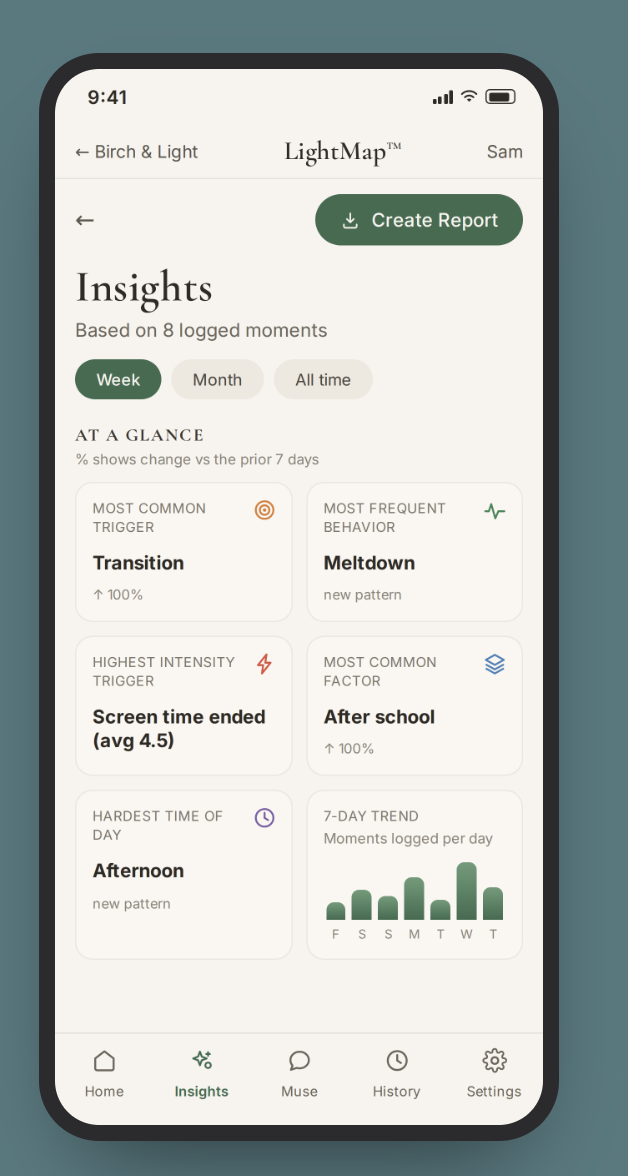

Part of the award-winning Birch & Light Method, honored with the Mom's Choice Gold Award for excellence in family resources.
A story to read together
Sometimes the easiest way in is a story you read side by side.
 The Tower That Looked Fine
A tower in a quiet clearing tries to stay steady through every small thing nobody else seems to notice — until one tiny breath of wind causes her to fall, and a gentle hand begins to gather the blocks back.
Read the story The Princess and the Witch Inside
Esme is loved, but a fast protective part keeps rushing in before she gets a turn. A quiet visitor helps her meet the witch inside — not as an enemy, but as a worried protector — and find her way back to the people she wanted to be with all along.
Read the story
If today was one of those days
A few more from the library, free to read.
Researched and drafted with AI assistance, reviewed before publication. Editorial standards