

Your child asks if they're okay. You tell them yes. Five minutes later they ask again. Then again before dinner, again at bedtime, again through the crack in the door after you've said goodnight. You answer every time, gently, because what kind of parent wouldn't. And somehow the asking is getting worse, not better.
If that's your house, you are not doing something wrong by answering. You're doing the most natural thing a loving parent can do. But there's a mechanism underneath this pattern that almost nobody explains to parents, and once you can see it, a lot of what feels baffling starts to make sense.
Tired of guessing what set your child off? Log tonight's moment in LightMap.
The reassurance loop
Anxiety and OCD both run on a simple, cruel engine: a distressing thought shows up, it creates a spike of fear, and the child looks for something that makes the fear go down. Reassurance is one of the fastest ways to make it go down. When you say "yes, you're okay," the fear drops almost immediately. Relief floods in.
The problem is what that relief teaches. The brain files it away as: the scary thought was dangerous, and asking Mom is what kept me safe. So the next time the thought shows up, the urge to ask is stronger, because last time asking worked. The relief is real, but it's short, and the price of it is a nervous system that becomes more convinced it needs the reassurance to survive the thought.
This is why answering more never solves it. Each answer is a tiny deposit into the belief that the child can't tolerate the uncertainty on their own. The asking isn't a communication problem you can satisfy with a better answer. It's a compulsion, and compulsions grow when they're fed.
Why it looks like you're helping
Everything about reassurance-seeking is designed to pull a caring adult in. The child is distressed. You have the power to end the distress in one sentence. Not answering feels like withholding comfort from a kid who's scared. So you answer, and you feel like a good parent for a few minutes, until the next ask.
Clinicians call the pattern accommodation: all the small, loving ways a family reshapes itself around a child's anxiety to keep the distress down. Answering the same question forty times. Checking the locks together. Sitting outside the bedroom. Letting them skip the thing that triggers it. Every accommodation is an act of love, and every one quietly tells the anxiety it was right to sound the alarm.
None of this means you caused your child's anxiety. You didn't. It means the way anxiety recruits the people who love a child most is one of its most effective tricks, and you got caught in it because you care. If you are now second-guessing every kindness, the line between accommodation and rescuing is a more useful frame than guilt.

There's a story for this exact struggle
HT the Hot Dog
A story for the kid who spirals into what-ifs that logic can't reach.
Free to read. You'll also get five free articles a week. Unsubscribe anytime.
What actually breaks the loop
The treatment that has the strongest evidence for this is exposure and response prevention, usually shortened to ERP. The core idea sounds harsh on paper and is anything but in practice: the child learns to sit with the uncertainty and the scary feeling without doing the compulsion, including without getting the reassurance, and discovers over and over that the feared thing doesn't happen and the fear fades on its own.
You don't do this by going cold turkey or refusing to speak to your frightened kid. A good ERP therapist helps the whole family step down the reassurance gradually and with warmth, so the child's system relearns that it can handle the discomfort. The parent's job shifts from answer-machine to steady presence: I know that feeling is really loud right now, and I know you can get through it, and I'm right here.
There are ways to respond that hold the line without going cold. Instead of answering the question for the fortieth time, you can name what's happening: that sounds like the worry asking again, and I love you too much to feed it. You can agree together, in a calm moment, on how you'll respond when the asking starts, so it's a plan you made as a team rather than a door slammed in the moment.
When it gets extreme
Sometimes the compulsion attaches to something with real stakes, and that's when families get truly stuck. An older teen who feels compelled to contact a crisis line every day, for example, where each contact sets off an exhausting chain of evaluations, and then lies awake at night dreading that they'll do it again in the morning. From the outside it can look like attention-seeking or defiance. It isn't. It's the same loop, wearing heavier clothes, and the daily contact is the compulsion.
The principle doesn't change, but the execution has to be careful, because the content touches on safety. This is exactly the situation where you want a clinician who understands both the underlying condition and OCD, someone who can build a response-prevention plan that reduces the compulsive contact without cutting off a genuine safety net. If your current team isn't trained in ERP, that's worth pushing hard on, even a single telehealth consult with someone who is can change the whole plan.
What to hold onto
If you've been answering the question every time, you didn't make your child worse. You responded to a scared kid the way love tells you to. The reason it hasn't worked is that anxiety hijacked that instinct, and no one handed you the map.
The map is this: the relief that reassurance brings is the trap, the goal is helping your child learn they can carry the uncertainty, and you don't have to figure out how to do that alone. ERP-informed support exists precisely because this loop is too strong to reason your way out of. Getting the right kind of help isn't giving up on comforting your child. It's the deepest version of comforting them, the kind that gives them their life back.
Stepping back from reassurance works slowly enough that you will not feel it working. Logging the asks in LightMap shows you the count dropping before the house feels any different.
For your child: HT the Hot Dog is about a hot dog who cannot sleep for spiralling about everything that might happen, and then arrives somewhere none of it does.
Sources: Peer-reviewed research on family accommodation in pediatric anxiety and OCD and its relationship to symptom severity (Journal of the American Academy of Child and Adolescent Psychiatry; PMC); Lebowitz et al., Supportive Parenting for Anxious Childhood Emotions, Yale Child Study Center; International OCD Foundation on exposure and response prevention; research on safety behaviors and negative reinforcement in the maintenance of anxiety (PMC).
For education and reflection, not medical advice. Our terms
See what's underneath
Find the trigger instead of chasing the fear
LightMap turns scattered hard days into a pattern you can see. Start by logging one moment tonight.
Find out why it keeps happening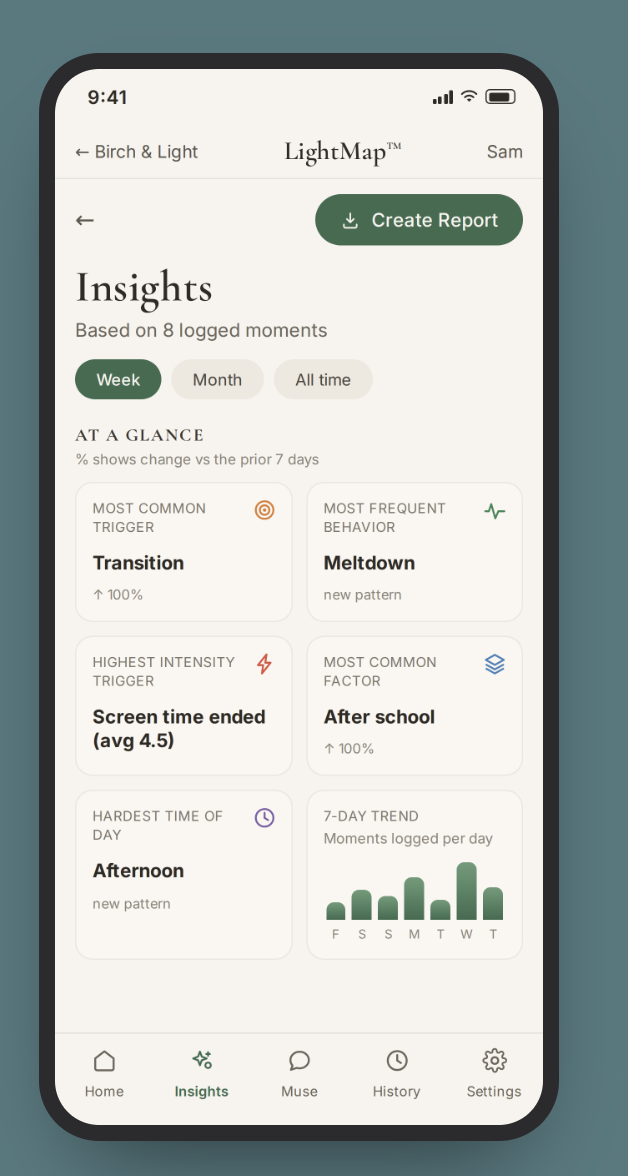

Part of the award-winning Birch & Light Method, honored with the Mom's Choice Gold Award for excellence in family resources.
Before you go, grab the free guide
The 3 body-state triggers under most meltdowns, a script for the 30 seconds before it tips over, and a reset for after. Free.

You'll get the guide instantly, plus five free articles in your inbox every week. Real challenges (meltdowns, school mornings, picky eating, big feelings) and how to actually handle them. Unsubscribe anytime.
A story to read together
Sometimes the easiest way in is a story you read side by side.
 Little Bird
Little Bird used to fly everywhere. Then the forest started to feel too big — and a wise voice helps her see that her wings remember more than her worries do.
Read the story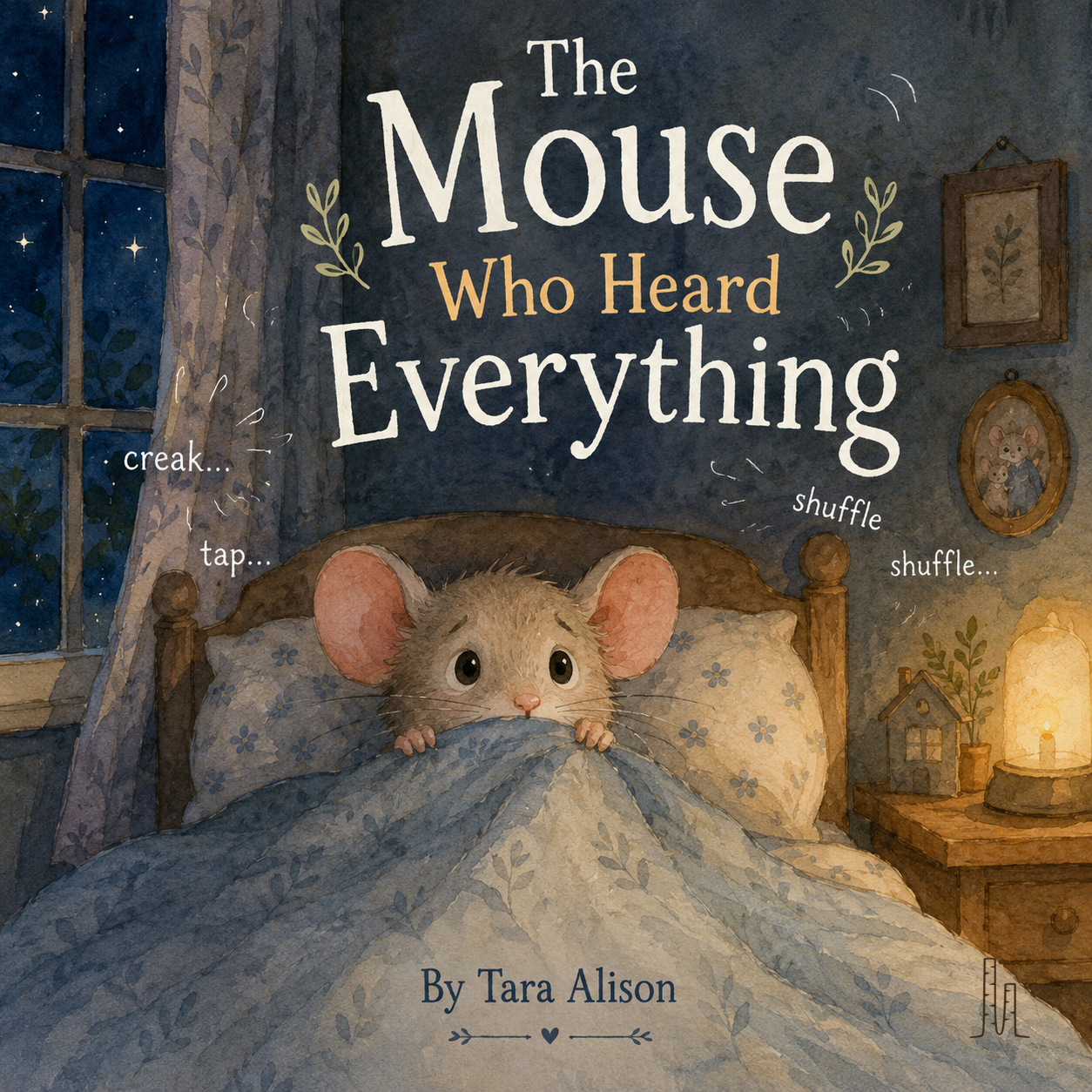 The Mouse Who Heard Everything
Mina Mouse hears every creak the old house makes at night. The story gently shows that her brain isn’t broken — it’s working overtime to keep her safe — and what changes when someone sits beside her in the dark.
Read the story
Researched and drafted with AI assistance, reviewed before publication. Editorial standards