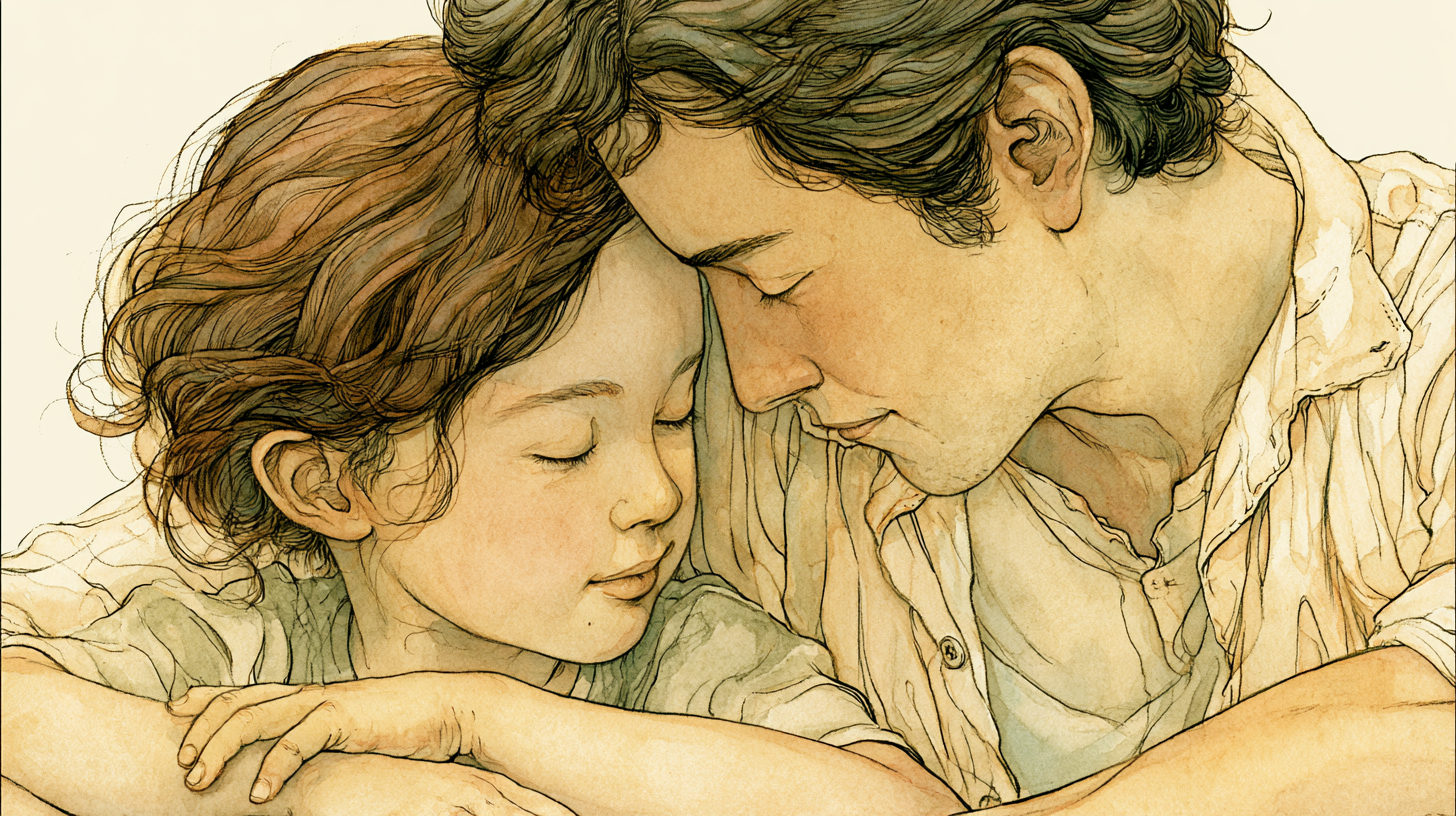
We ask it of children constantly, often without realizing it. Calm yourself down. Manage your feelings. Use your coping skills. Take a breath and pull it together. All of it assumes a capacity we expect children to have: the ability to regulate their own emotions. And when they can't — when they melt down instead of self-soothing — we tend to read it as a behavior problem, a skills gap, or a child who just won't try.
But there's an order to how this capacity develops, and most of our frustration comes from getting that order backwards. Self-regulation — the ability to manage your own emotional state — is not where children start. It's where they end up, after years of something else coming first. And that something else is co-regulation.
The Order We Get Wrong
Here's the sequence as it actually works. Children are not born able to regulate their own emotions. The brain systems responsible for self-regulation develop slowly, across years, and aren't fully online until well into the teens and beyond. A young child in the grip of a big feeling genuinely cannot, on their own, bring themselves back to calm. The hardware isn't finished.
What they can do is borrow regulation from a regulated adult. Over thousands of these experiences — flooding, and being met by a calm parent, and settling by attuning to that calm — something gradually builds. The regulation the child borrows again and again slowly becomes regulation they can generate themselves. Co-regulation, repeated across childhood, is how the capacity for self-regulation is constructed.
So the order is: co-regulation first, self-regulation later. Borrowed calm, thousands of times, becomes owned calm. You cannot skip the first step and jump to the second — and yet that's exactly what we often ask children to do.
Self-regulation isn't where children start. It's where they arrive, after years of borrowing calm from us first.
Why Expecting Self-Regulation Too Early Backfires
When we expect a child to self-regulate before they're developmentally able to, several things go wrong. We set them up to fail at something their brain can't yet do — and then, often, we treat the failure as misbehavior. The child, meanwhile, absorbs the message that they're bad at managing feelings, that their overwhelm is a personal failing, that something is wrong with them. That shame doesn't build regulation. It undermines it.
And crucially, by withholding co-regulation in the name of fostering independence — 'they need to learn to do this themselves' — we remove the very thing that builds self-regulation in the first place. We skip the step that makes the next step possible. It's a bit like refusing to hold a child's bike upright because you want them to learn balance, before they've ever felt what balance is. The support isn't the opposite of the skill. It's how the skill is learned.
While you're here, take the guide
What's Underneath is free: the three body-state triggers under most meltdowns, what to say in the minute before it tips over, and how to reset afterward.

You'll get the guide instantly, plus five free articles in your inbox every week. Real challenges (meltdowns, school mornings, picky eating, big feelings) and how to actually handle them. Unsubscribe anytime.
Co-Regulation Isn't Coddling
This is the worry that stops a lot of parents: if I keep co-regulating, won't my child become dependent? Won't they never learn to do it alone? The fear is understandable, and the answer is reassuring: co-regulation doesn't delay independence. It builds it.
Every time you co-regulate a flooded child, you're not making them more dependent — you're laying down another layer of the capacity they'll eventually own. The child who is co-regulated reliably across childhood becomes, over time, the adolescent and adult who can regulate themselves, precisely because they internalized all that borrowed calm. The children who struggle most with self-regulation later are often the ones who got the least co-regulation early — not the most. Support now is the path to independence later, not a detour from it.
What This Looks Like in Practice
Meet the age, not the ideal. Calibrate your expectations to where your child's developing brain actually is, not to where you wish it were. A young child needs a lot of co-regulation. That's not a problem to fix; it's the stage they're in.
Provide the calm now, trust the capacity to grow. Offer your steady presence in the hard moments without anxiety that you're creating dependence. You're depositing into a capacity that builds slowly and pays out later.
Let self-regulation emerge, don't force it. As children develop and accumulate co-regulation experiences, they gradually begin to do more of it themselves. You can support that emergence — naming feelings, modeling coping, inviting small independent attempts — but you can't rush the underlying development. It arrives when the brain and the experience are both ready.
Drop the shame. A child who can't yet self-regulate isn't failing. Removing the judgment from those moments — treating them as developmentally normal rather than as misbehavior — protects the very capacity you're trying to build.
The Shift Worth Making
So much parenting frustration dissolves when you get the order right. Children don't start with self-regulation and occasionally fail at it. They start unable to self-regulate at all, and build the capacity slowly, by borrowing ours — thousands of times, across years. Co-regulation isn't the thing that delays independence. It's the thing that creates it.
The next time you find yourself wishing your child could just manage their feelings on their own, it may help to remember: they will, eventually, and the way they get there is through all the times you helped them when they couldn't. Borrowed calm, again and again, is how owned calm is built.
Every behavior is a clue.
If you're watching for the slow shift from borrowed calm to your child's own, LightMap can help you track how they're settling over time — so the pattern beneath it becomes easier to see. Explore LightMap at birchandlight.com/lightmap.
Sources: Tronick's still face research on infant-caregiver emotional regulation; Kopp on the development of self-regulation in early childhood (PMC); attachment research on the caregiver as external regulator (PMC); Siegel's window of tolerance framework.
For education and reflection, not medical advice. Our terms
See what's underneath
Know which response actually works for your child
LightMap reads your hard days together and gives you answers. Start with one moment today.
Start with 3 moments Not sure where to start? Ask me.Message Tara on WhatsApp. It really is me, I read everything and will personally respond.Click here to message Tara →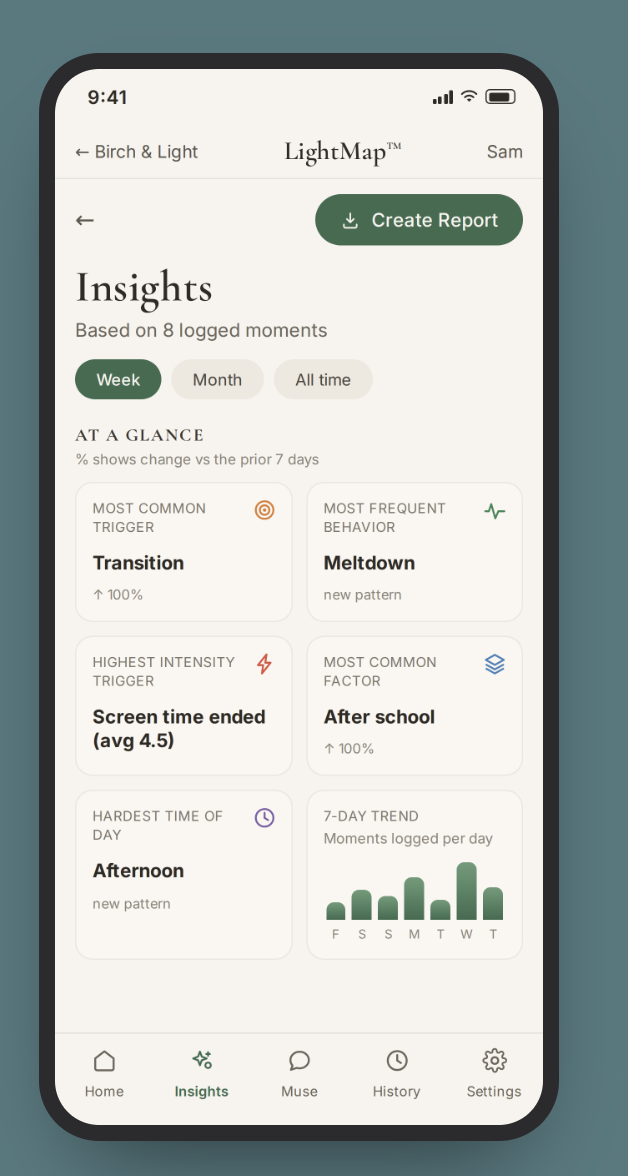

Part of the award-winning Birch & Light Method, honored with the Mom's Choice Gold Award for excellence in family resources.
A story to read together
Sometimes the easiest way in is a story you read side by side.
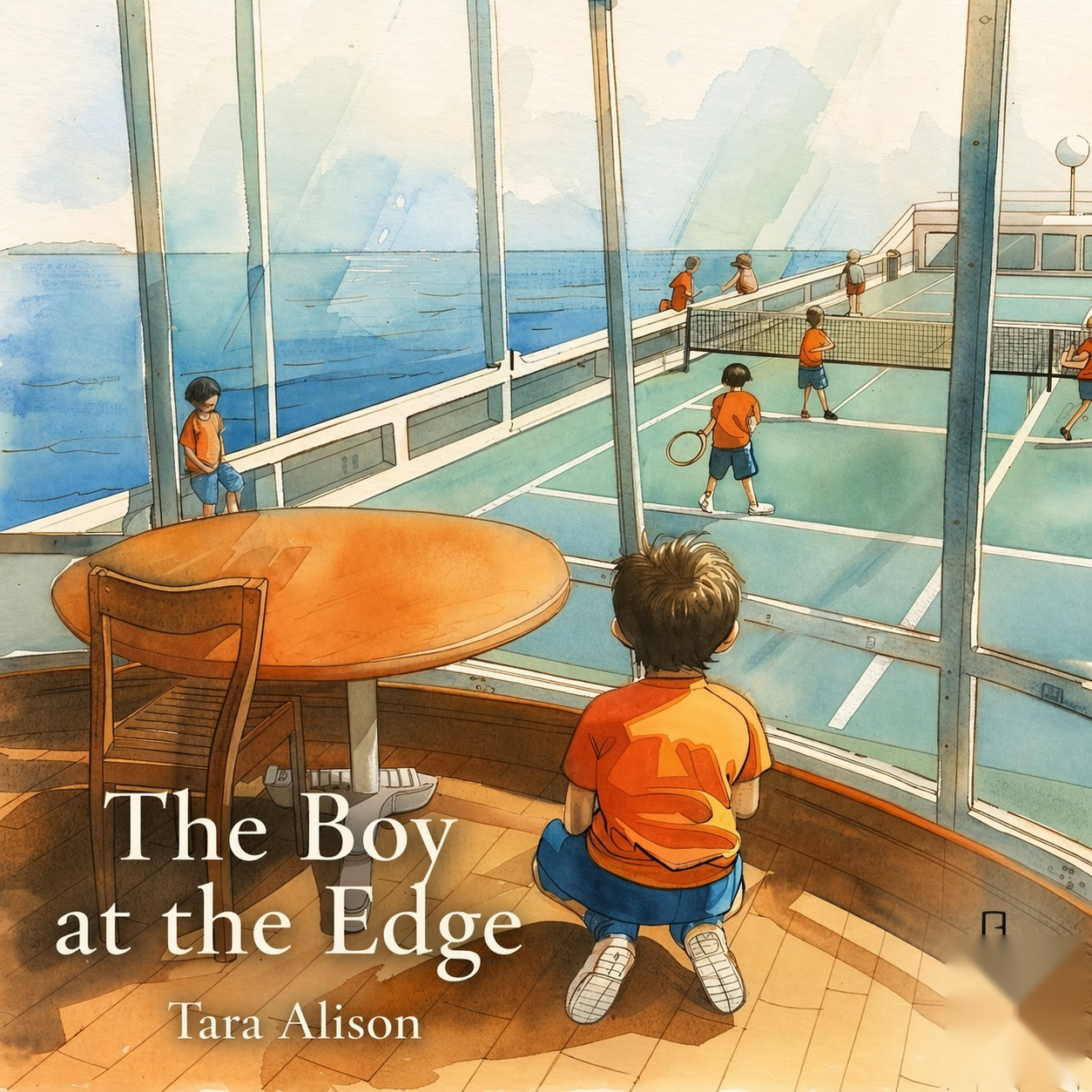 The Boy at the Edge
A boy finds calm by watching the world move from a window. When his stillness is mistaken for defiance, the moment escalates — and he learns that being calm doesn’t always protect you from being told no.
Read the story Little Bird
Little Bird used to fly everywhere. Then the forest started to feel too big — and a wise voice helps her see that her wings remember more than her worries do.
Read the story
If today was one of those days
A few more from the library, free to read.
Researched and drafted with AI assistance, reviewed before publication. Editorial standards