.jpg)
Waiting rooms are hard for anxious kids because they combine the three things an anxious nervous system handles worst: not knowing when it will end, bracing for something frightening, and constant sensory noise. By the time you are called, your child has often spent the whole wait in alarm. Shorter, structured, quieter waits help.
The appointment itself might only be ten minutes. But you've been in the waiting room for forty, and your child has been unraveling for thirty of them.
For a lot of parents, the waiting room is secretly the hardest part of the whole medical visit — harder than the exam, harder than the shot. By the time you're finally called back, your child is already past the edge, and whatever was supposed to happen in that appointment now has to happen with a kid who has nothing left.
If the waiting room reliably wrecks your child before anything medical has even started, you're not imagining it. There are real reasons this particular room is so hard. Here is what I want you to consider.
What this often looks like
- A child who walked in basically okay but comes apart the longer the wait goes on.
- Escalating restlessness — pacing, climbing, touching everything, unable to settle — that gets read as misbehavior.
- Repeated, increasingly urgent questions: how much longer, when is it our turn, can we go now.
- A child who fixates on every door opening and every name called, bracing each time it isn't theirs.
- By the time you're called, a kid who is already dysregulated, so the actual appointment starts from a deficit.
Why does the wait undo them?
The waiting room is built out of exactly the things an anxious nervous system can't stand: uncertainty and waiting. Your child doesn't know when it will be their turn, doesn't know what will happen when it is, and can't do anything to speed it up. For a kid who depends on predictability to stay regulated, open-ended waiting isn't neutral downtime — it's a slow build of dread with no clear end.
There's also the anticipation problem. The whole time they're sitting there, the frightening thing hasn't happened yet. Their body is bracing for it, holding tension, scanning for the moment it begins. Anticipation is often worse than the event itself, and the waiting room is pure anticipation — sometimes for a very long time.
Then there's the sensory load. Waiting rooms are frequently overwhelming in their own right: fluorescent lights, a television no one chose, other people's conversations, unfamiliar smells, sick kids crying, a receptionist calling names. A child who is already on edge about the appointment is now also absorbing a constant stream of sensory input they can't filter out, and the two stresses stack.
And every time a door opens or a name is called, the child's body spikes — is it now? — and then has to come back down when it isn't. Over a long wait, that's dozens of small surges of alarm. By the time their name actually is called, they've already run their nervous system ragged.
What tends to help
- Minimize the wait wherever you can. Ask for the first appointment of the day, when the office is least likely to be running behind. Call ahead to check if they're on time. Some offices will let you wait in the car and text you when they're ready — always worth asking.
- Bring the child's own regulation with you. Headphones, a familiar comfort object, a preferred screen, a fidget — whatever genuinely helps your child stay calm. The waiting room is not the place to worry about screen-time rules.
- Give the wait a shape. Open-ended waiting is the enemy. Even a rough, honest structure — "we'll read two books and then it's probably our turn" — gives an anxious child something to hold onto instead of an endless unknown.
- Create a buffer from the sensory chaos. Sit in the quietest corner, face away from the television, use headphones. Lowering the sensory load leaves your child with more capacity for the part that actually matters.
- Stay regulated yourself, especially as the wait drags. Your own frustration at the delay is contagious. A child who can feel you getting tense will climb right alongside you.
While you're here, take the guide
What's Underneath is free: the three body-state triggers under most meltdowns, what to say in the minute before it tips over, and how to reset afterward.

You'll get the guide instantly, plus five free articles in your inbox every week. Real challenges (meltdowns, school mornings, picky eating, big feelings) and how to actually handle them. Unsubscribe anytime.
What tends not to help
Telling a restless, anxious child to "just sit still and wait." The restlessness is the anxiety leaking out through their body. Demanding stillness asks them to suppress the one outlet their nervous system has found, which usually means the pressure builds and comes out somewhere worse.
Repeatedly answering "how much longer" with "soon" also tends to erode trust, because "soon" keeps not being true. If you genuinely don't know, it's often better to say so honestly and give them something concrete to do in the meantime than to keep offering a reassurance that keeps failing.
And getting visibly frustrated with the delay — sighing, complaining, checking the time over and over — hands your child more anxiety to absorb. They're already watching the clock through your body. Your agitation becomes one more thing destabilizing them.
Can the office shorten the wait for my child?
If the waiting-room piece is severe enough that it's sabotaging appointments your child genuinely needs, it's worth talking with the office directly about accommodations — many will work with families to shorten or restructure the wait for a child with significant anxiety. You're allowed to ask, and a good office will usually try to help.
It can also help to mention the pattern to your pediatrician, especially if the anticipatory anxiety is part of a bigger picture of how your child handles uncertainty and waiting across their life. Sometimes the waiting room is just one visible example of something worth understanding more broadly.
Where LightMap helps
Parents often don't realize how much of the appointment difficulty is actually the wait, because the whole visit gets remembered as one hard blur. The shot gets blamed, when really the child was already gone before the shot happened.
Tracking what actually unfolds — when your child started to struggle, what was happening at the time, how long the wait ran — can reveal that the waiting room, not the procedure, is the real pressure point. That changes your whole strategy: instead of bracing for the exam, you focus on shrinking and softening the wait, which is often the more solvable problem.
Every behavior is a clue.
Sometimes the wait, not the appointment, is what undoes a child — and the pattern makes that clear. Explore LightMap at birchandlight.com/lightmap.
Frequently asked questions
Why is my child fine in the car but a wreck in the waiting room?
The car is predictable and contained; the waiting room is open-ended uncertainty plus sensory overload plus mounting anticipation. Your child can hold it together while things still feel controllable and comes apart once they're sitting in a space that asks them to wait indefinitely for something frightening. The waiting room concentrates everything their nervous system struggles with.
Is it okay to let my child use a screen the whole time we wait?
In a medical waiting room, yes — this isn't the moment to enforce screen limits. If a preferred screen genuinely keeps your child regulated through a hard wait, it's doing useful work, leaving them with more capacity for the appointment itself. The goal in that room is to keep your child as calm as possible, by whatever genuinely helps.
Should I ask to wait somewhere other than the waiting room?
It's absolutely worth asking. Many offices will let you wait in the car and call or text when they're ready, or find a quieter spot for a child who's struggling. Calling ahead to ask about first-of-the-day appointments or whether they're running on time can also dramatically cut the wait that does the damage.
For your child: HT the Hot Dog is about a hot dog who cannot sleep for spiralling about everything that might happen, and then arrives somewhere none of it does.
Sources: de Berker and colleagues, Computations of uncertainty mediate acute stress responses in humans, Nature Communications, 2016 (an adult study finding that stress tracked unpredictability, not only the threat itself); research on the pediatric healthcare environment and its effect on child distress before procedures (PMC); Romito B, et al., American Academy of Pediatrics, Child Life Services, Pediatrics, 2021, volume 147, issue 1, article e2020040261, on psychological preparation and therapeutic play reducing fear and anxiety in medical settings.
For education and reflection, not medical advice. Our terms
See what's underneath
Find the trigger instead of chasing the fear
LightMap reads your hard days together and gives you answers. Start with one moment today.
Start with 3 moments Not sure where to start? Ask me.Message Tara on WhatsApp. It really is me, I read everything and will personally respond.Click here to message Tara →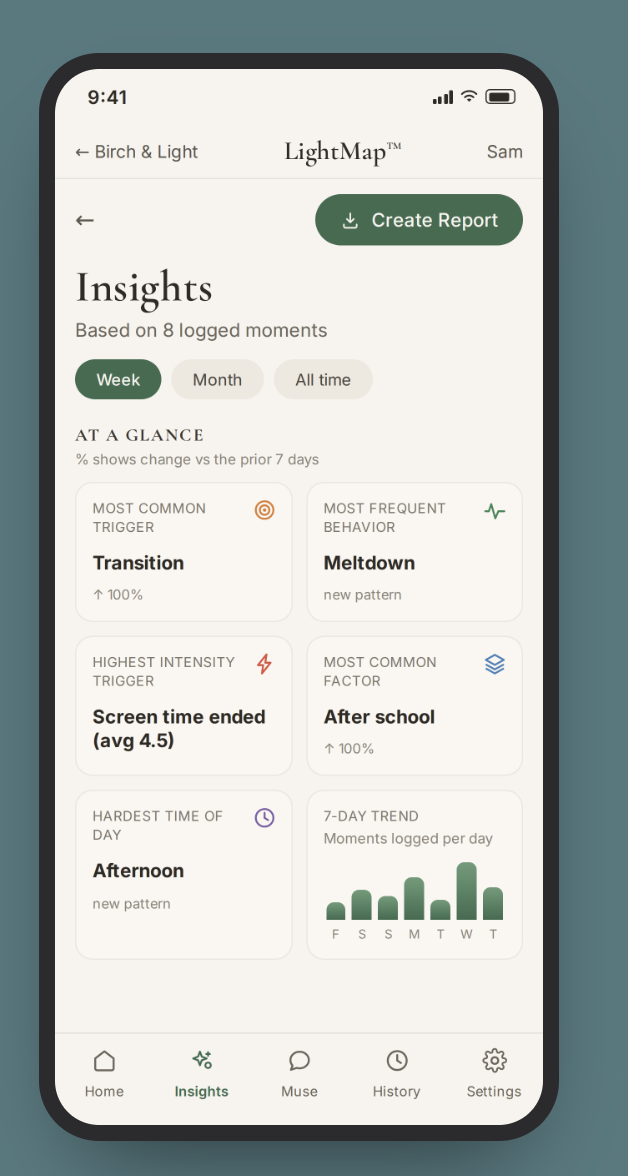

Part of the award-winning Birch & Light Method, honored with the Mom's Choice Gold Award for excellence in family resources.
A story to read together
Sometimes the easiest way in is a story you read side by side.
 My Thoughts Don't Know How to Wait
Simon's thoughts arrive bright and fast — and feel like they will disappear if he doesn't say them right away. One quiet night beside fireflies, he discovers a small, surprising space between noticing a thought and chasing it.
Read the story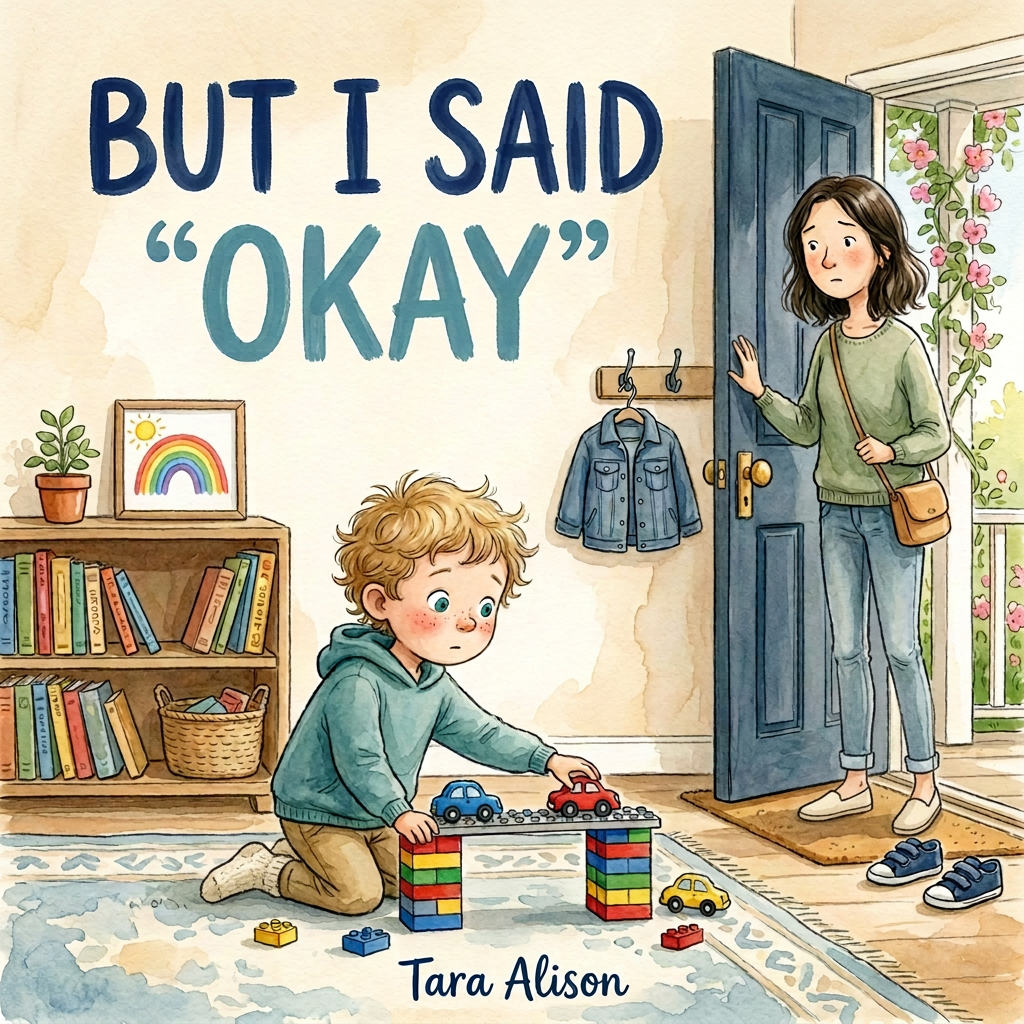 But I Said “Okay”
Owen always says okay. He means it every time. But his attention is still inside the bridge, the dragon, the cave, the music — until Mom realizes that helping him leave one thing matters more than asking him to start the next.
Read the story
If today was one of those days
A few more from the library, free to read.
Researched and drafted with AI assistance, reviewed before publication. Editorial standards